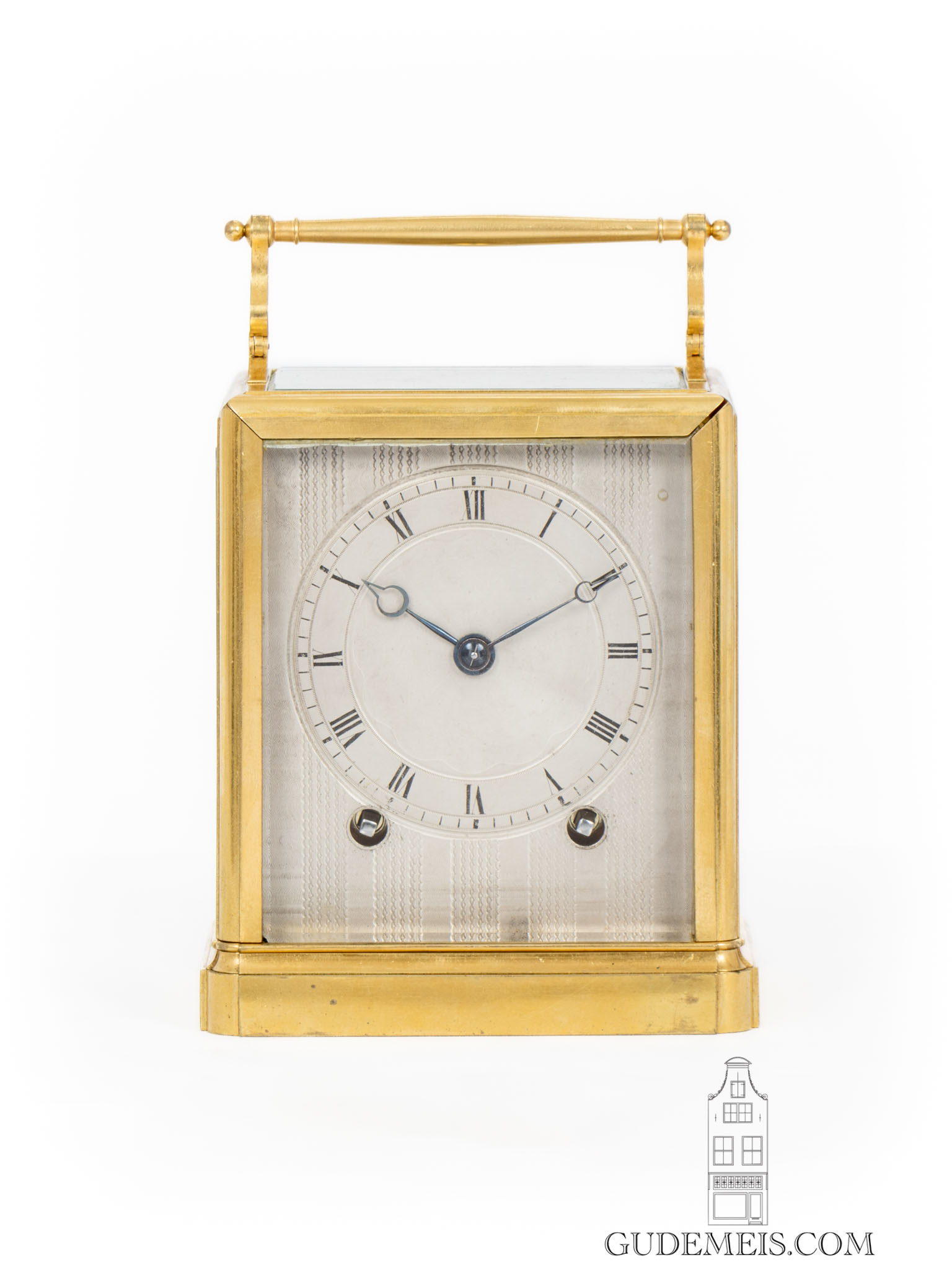
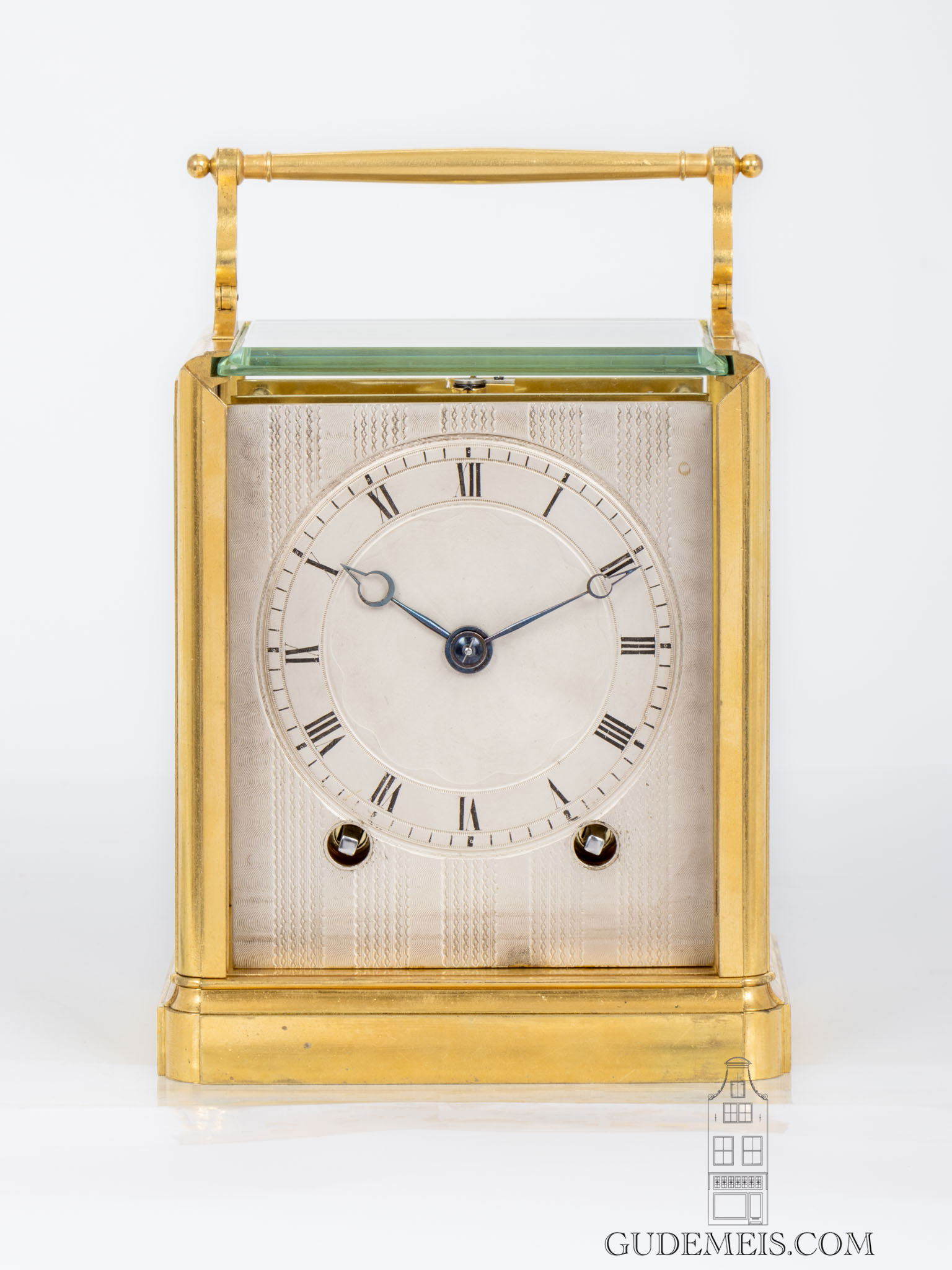
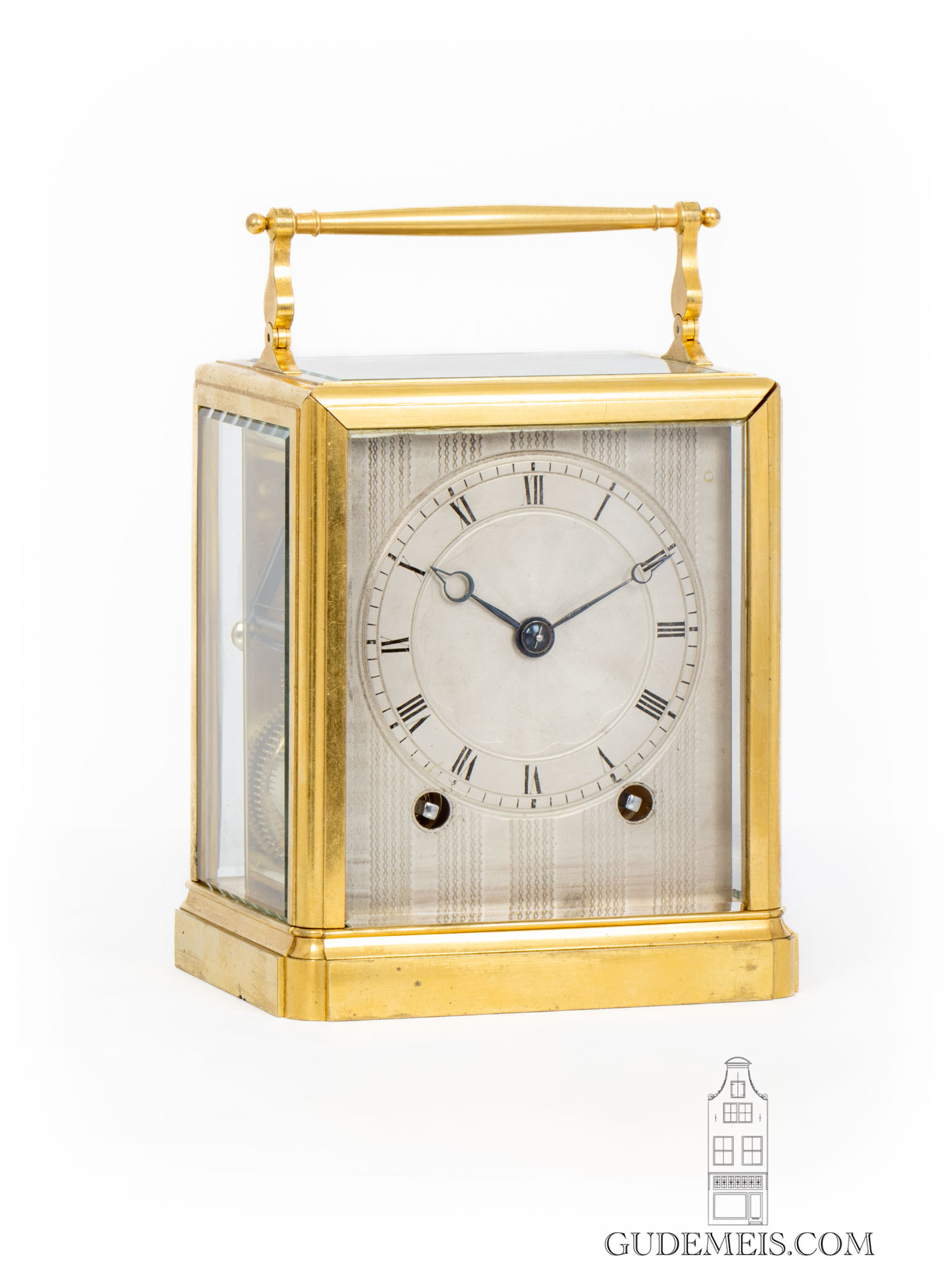
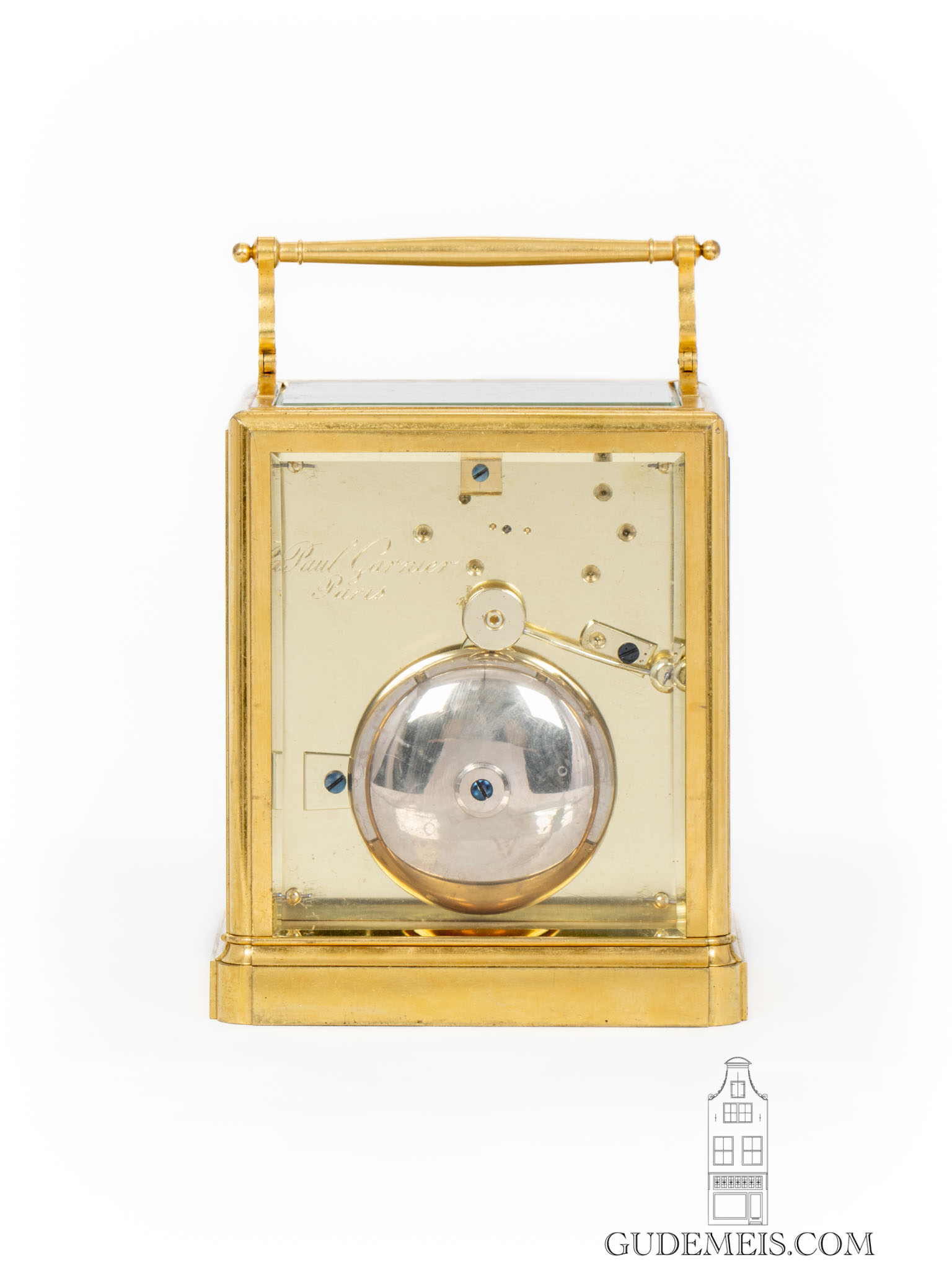
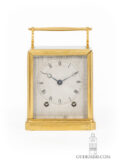
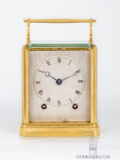
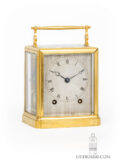
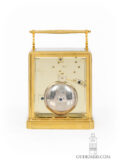
A French gilt brass ‘series I Paul Garnier’ travel clock with chaff cutter escapement, circa 1830
Description
Paul Garnier
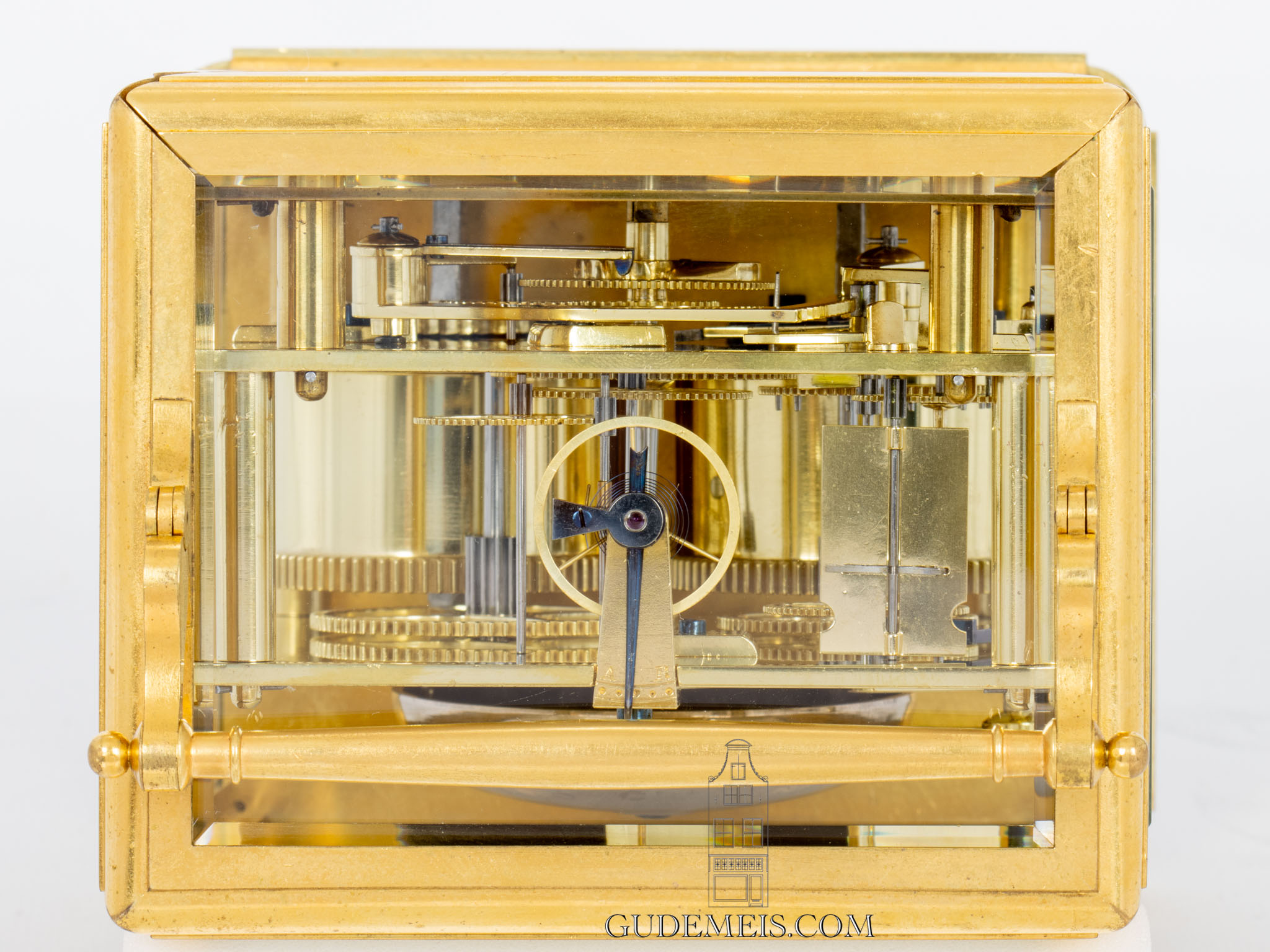
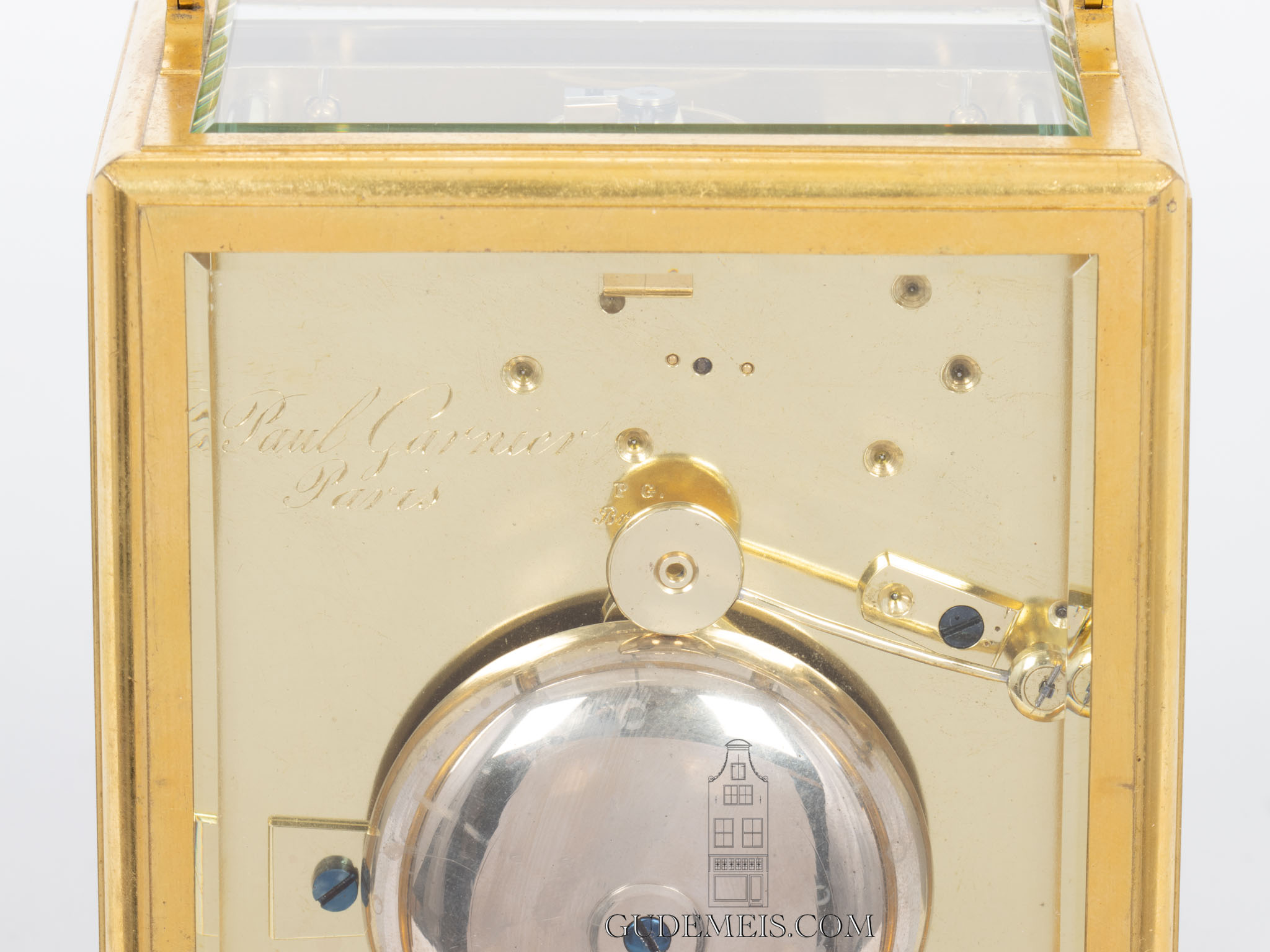
Paul Garnier was not only a skilled clockmaker, he was also a talented entrepreneur. Around 1830, he introduced a type of travel clock that would change the market. Before that, the market for travel clocks was not very large, mainly due to the high costs involved. It was mainly specialist work that not many makers were involved in. Garnier succeeded in producing a relatively inexpensive clock that was also affordable for the growing bourgeoisie. To keep the clocks affordable, he used “blanc roulants”, semi-finished movements that he finished himself. He also developed the “chaff-cutter” escapement, which was easy and inexpensive to manufacture. The name appears to be very fitting when we see it in action. Finally, he used simple, functional but elegant cases for his clocks. A jury report from 1834 mentions the large and excellent range of travel clocks he exhibited. It also states that in the two years prior, he had sold more travel clocks than had ever been sold before. Lower prices and elegant design led to much higher sales. This success encouraged other manufacturers to start producing travel clocks as well. This led to the emergence of a very large-scale travel clock production industry. This beautiful clock is one of Paul Garnier’s first travel clocks and is therefore classified by Derek Roberts as belonging to the “Series I”. The clock also features the “chaff-cutter” escapement that is so closely associated with Paul Garnier and his first clocks. This makes it not only a beautiful, elegant clock, but also an interesting object that illustrates the beginning of the ‘French carriage clock.’
Engine turned
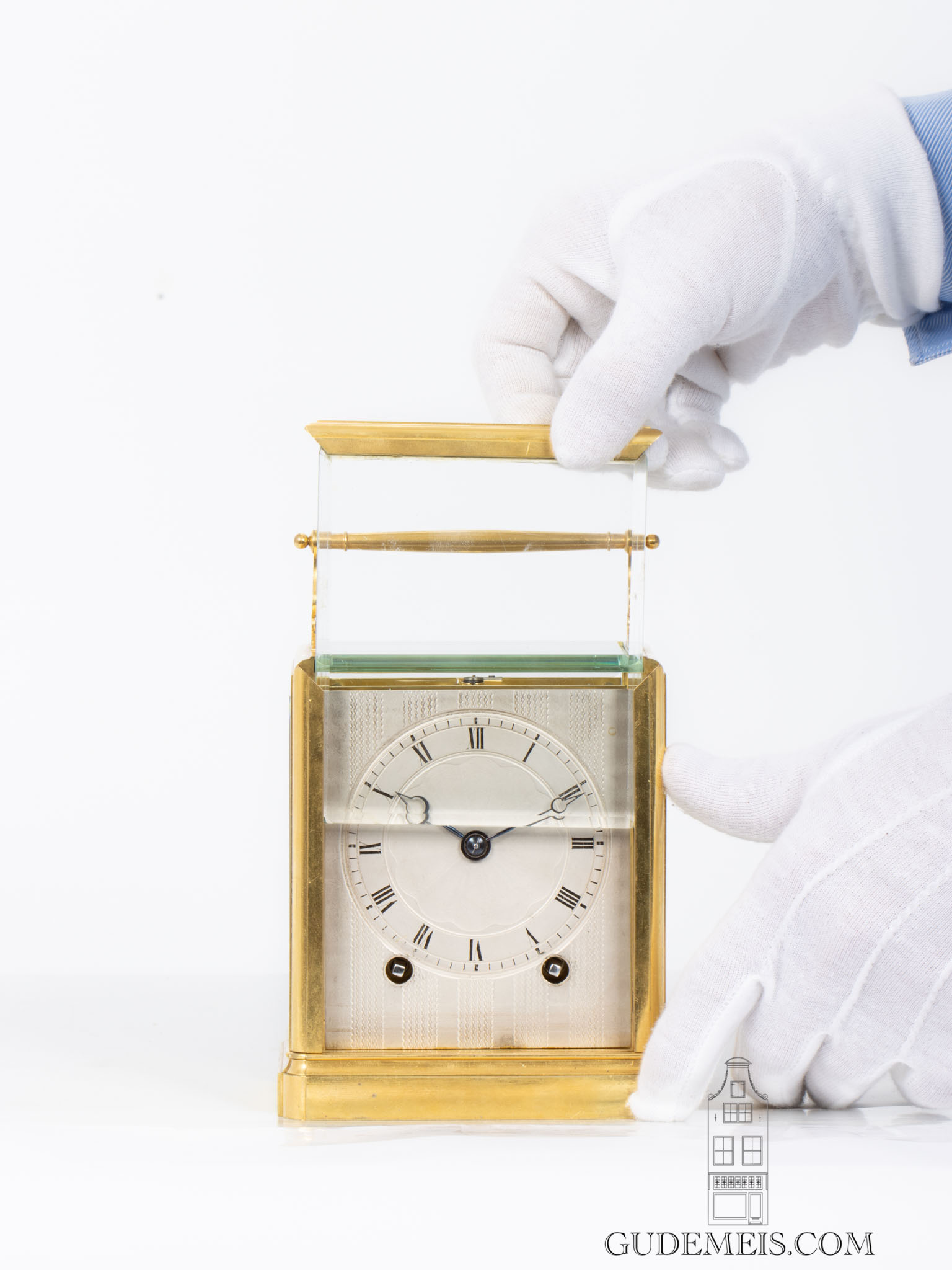
The silvered engine turned brass dial has Roman numerals. The Breguet hands are made of blued steel.
Chaff-cutter escapement
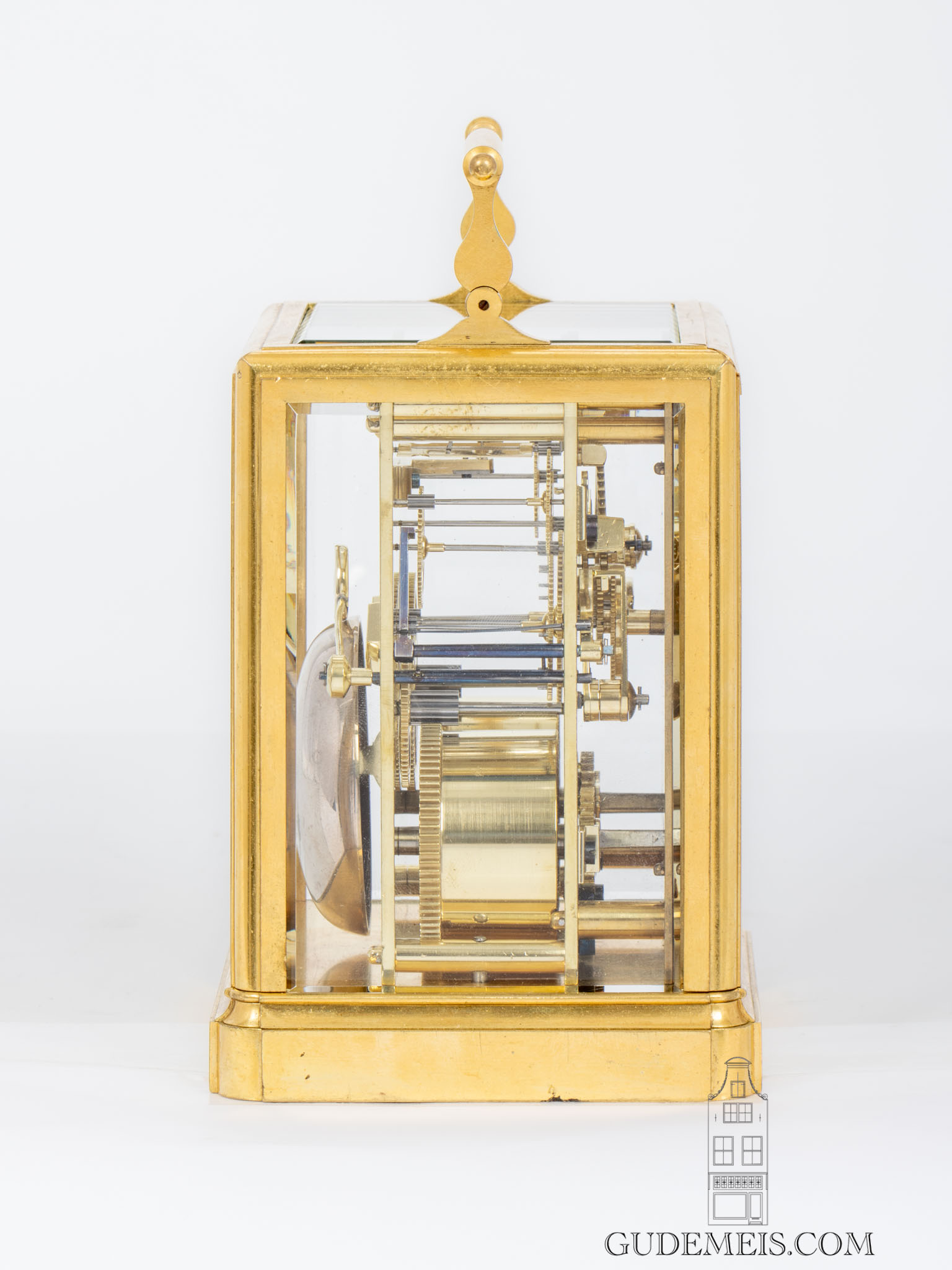
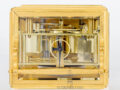
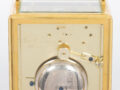
The movement is driven by two spring barrels and is of eight day duration. It is regulated by a chaff-cutter escapement in combination with a plain brass balance. The clock has half hour rack striking on a bell. The back plate is signed Paul Garnier Paris.
One-piece case
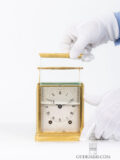
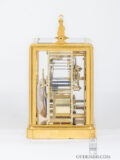
The gilt brass one-piece case consists of sharp mouldings styles and is surmounted by a turned handle. It has beveled glass panels on all sides, including the top, which allows the escapement to be clearly visible. The front panel can be slid upwards to access the hands and wind the clock. It has a profiled plinth with incised corners.