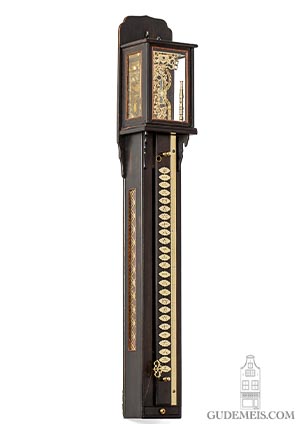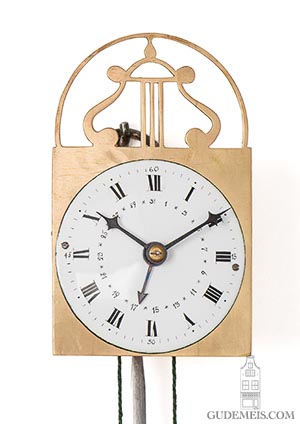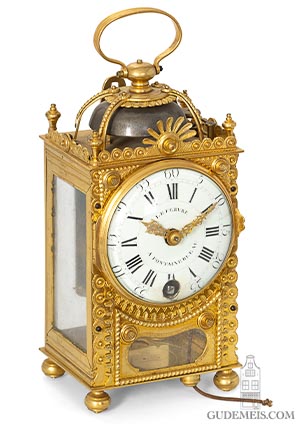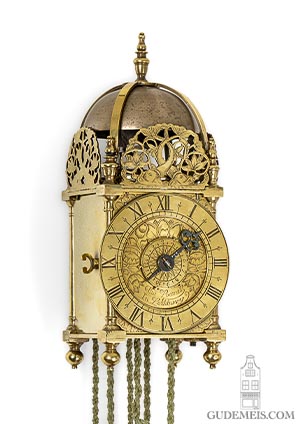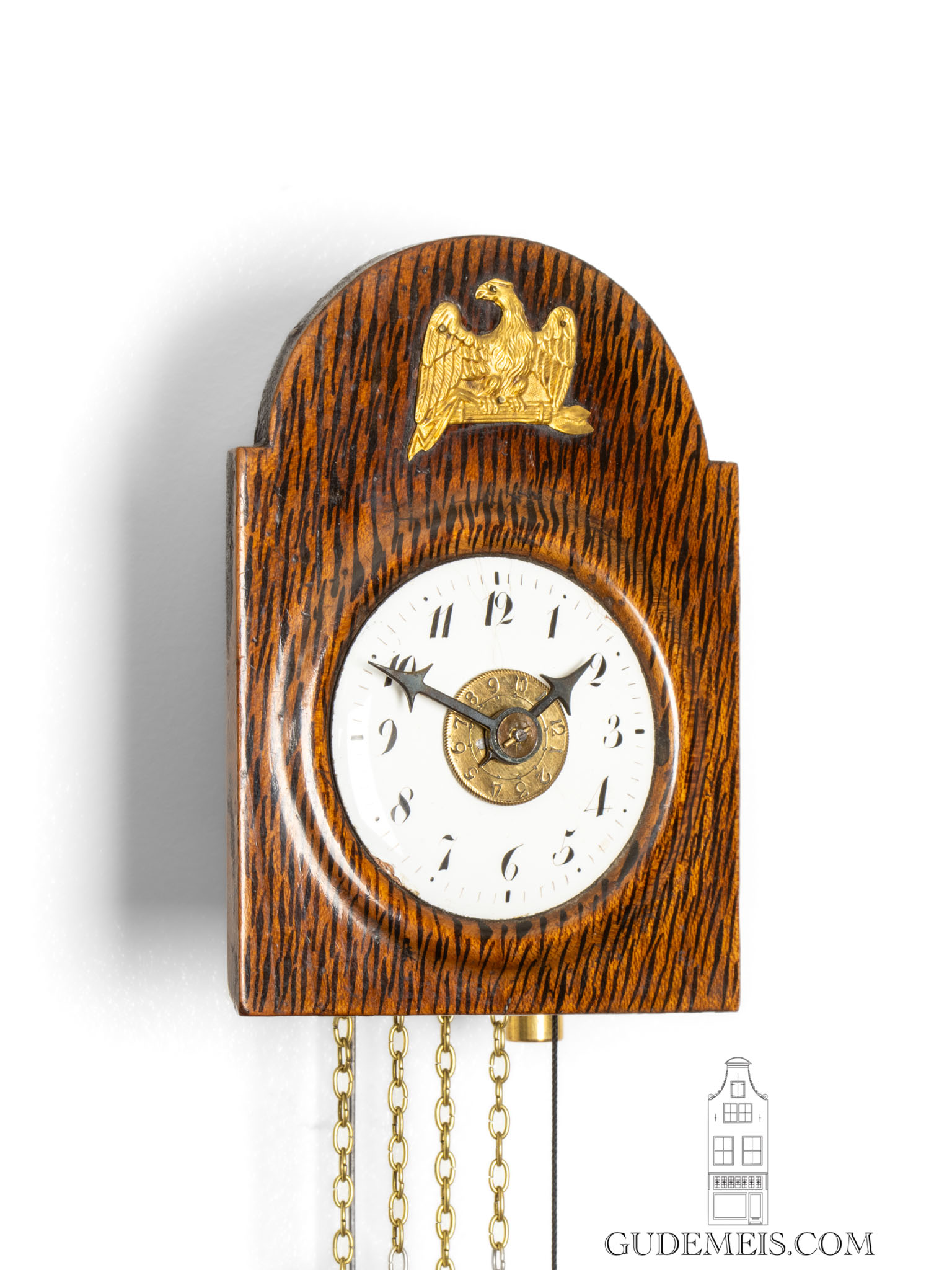
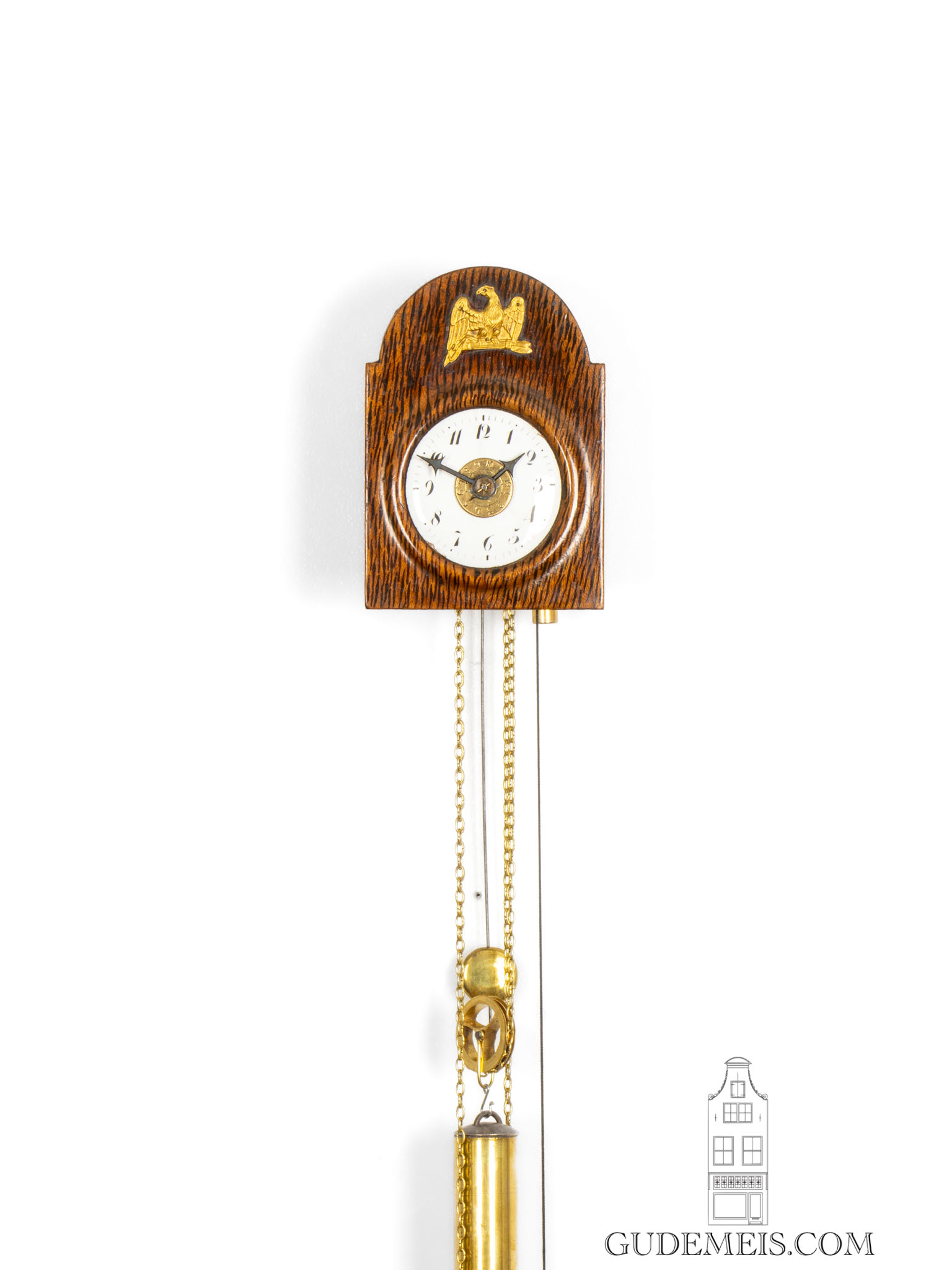
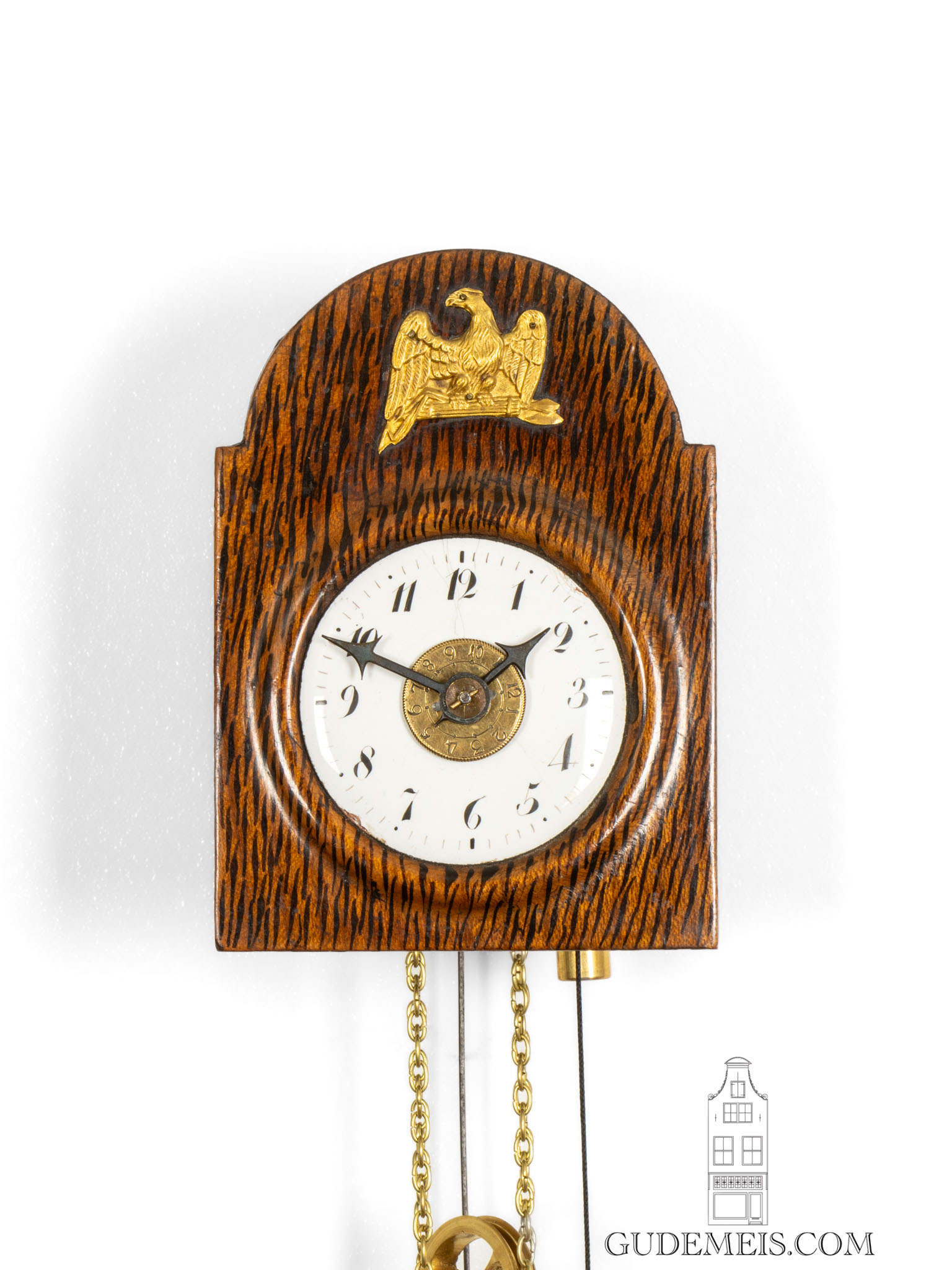
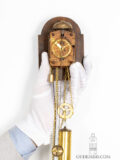
A small German Black Forest wooden striking and alarm Sorg wall clock, circa 1850.
Description
Joseph Sorg
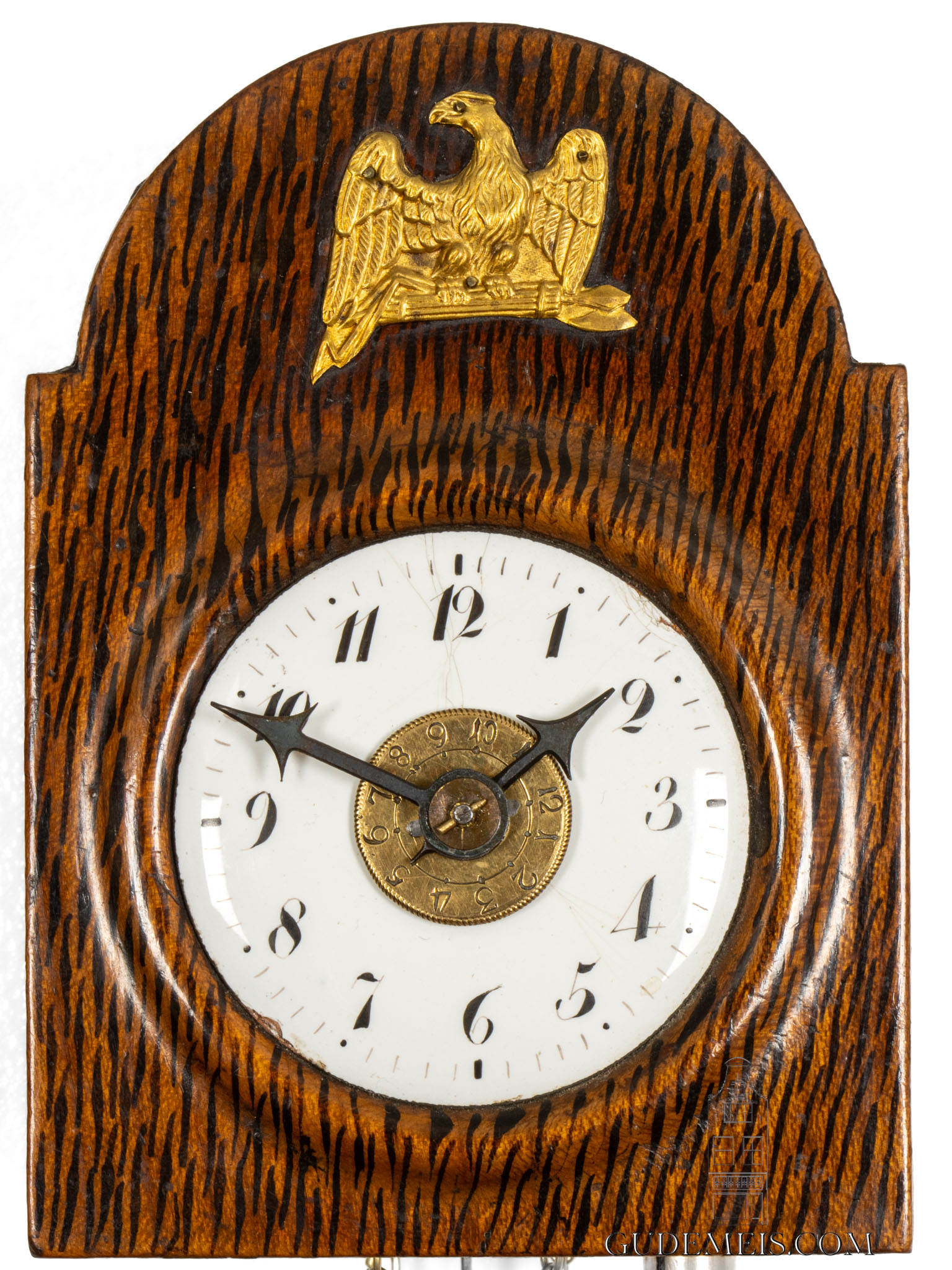
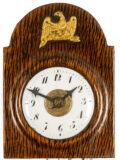
Joseph Sorg began producing small wall clocks around 1820. Although other clockmakers in the Black Forest also started making them, the name Sorg stuck to this type of clock. The type was only produced for a few decades and production remained relatively small. There are several different versions. After the so-called ‘Tropfenuhren’, clocks with a shield-shaped dial appeared. This clock has a relatively large dial painted with a wood grain pattern that imitates an exotic wood species. In this way, the makers tried to appeal to a group of potential customers who wanted a more chic clock. With both striking and an alarm, it is a complete and beautiful wall clock that is not only pleasing to the eye but also adds a joyful sound in the home.
Enamel dial
The 5.7 cm enamel dial has Arabic numerals. The arrow hands are made of blued steel and the engraved alarm disc is made of brass. The wooden broken arch frame surrounding the dial has a painted wood imitation made to resemble an exotic wood. In the arch is a brass relief eagle.
Anchor escapement
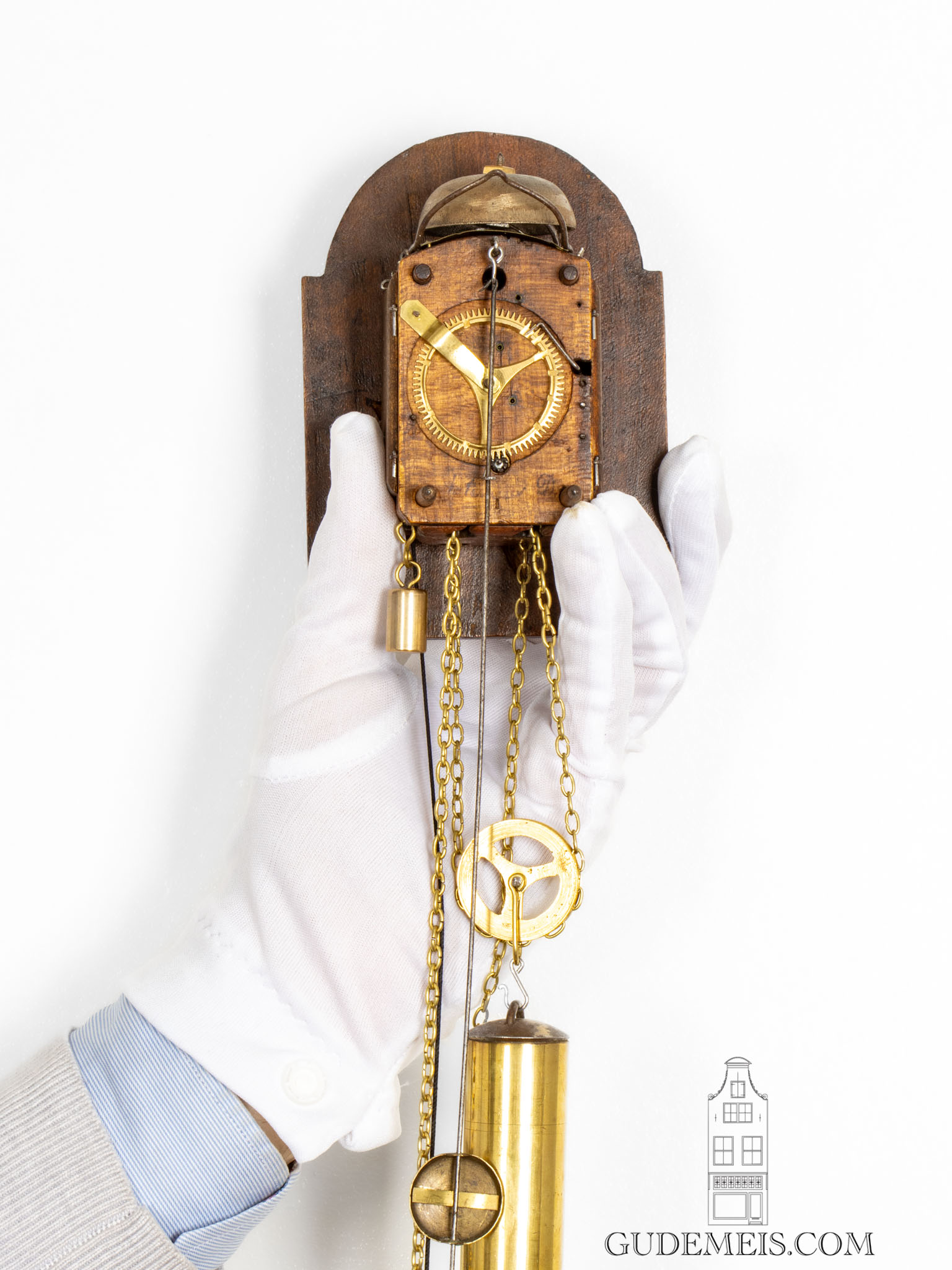
The movement consists of wooden plates with brass bushings in which the axles rotate. It is driven by a weight and has a duration of one day. It is regulated by anchor escapement in combination with a pendulum. The clock has hour striking on a bell by means of a countwheel. The alarm mechanism also strikes on the bell.
Wooden case
The movement is fitted in a wooden case with a brass top plate and doors on the sides. The clock is hung on the wall by a hoop and spurs.