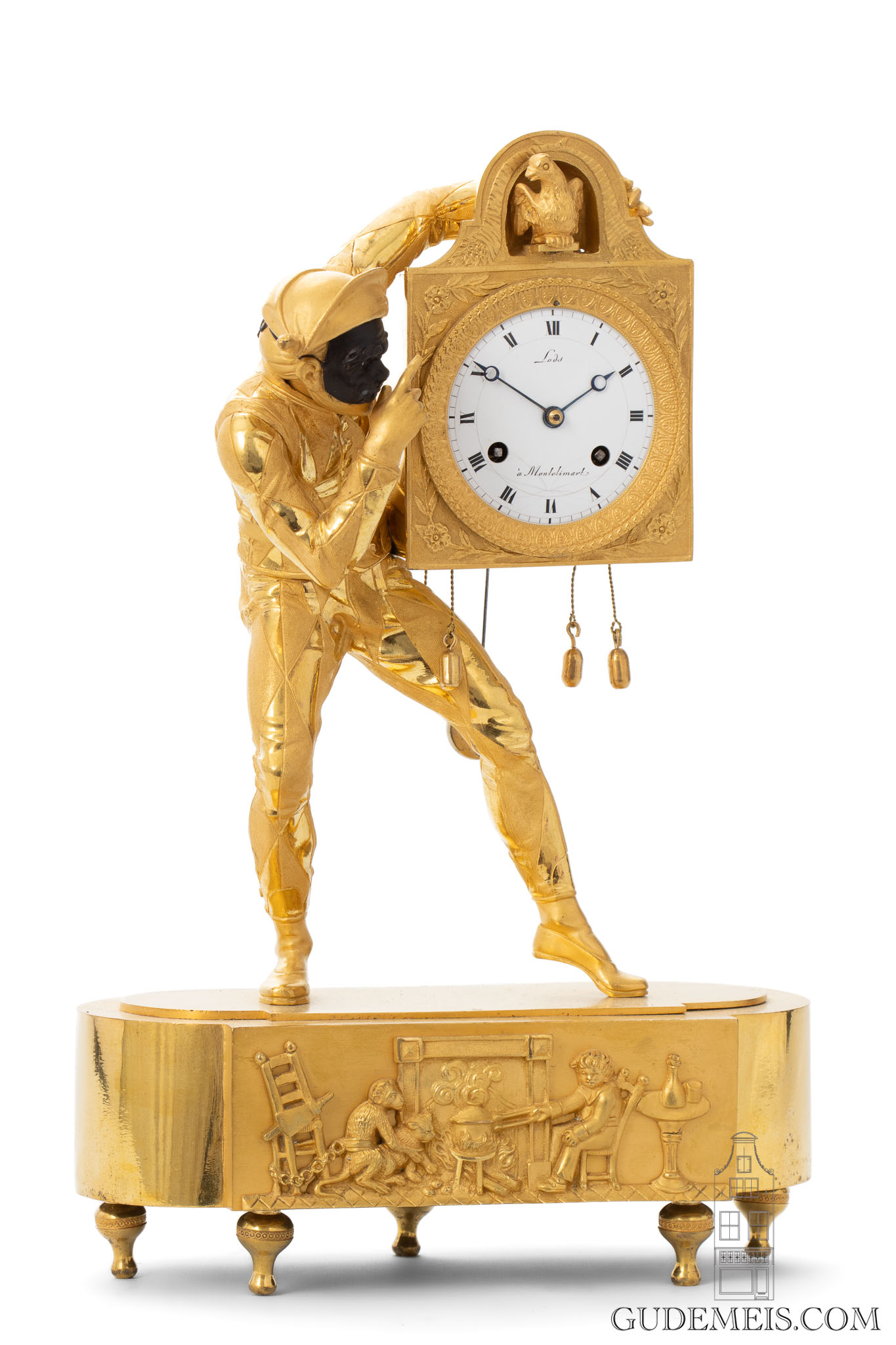
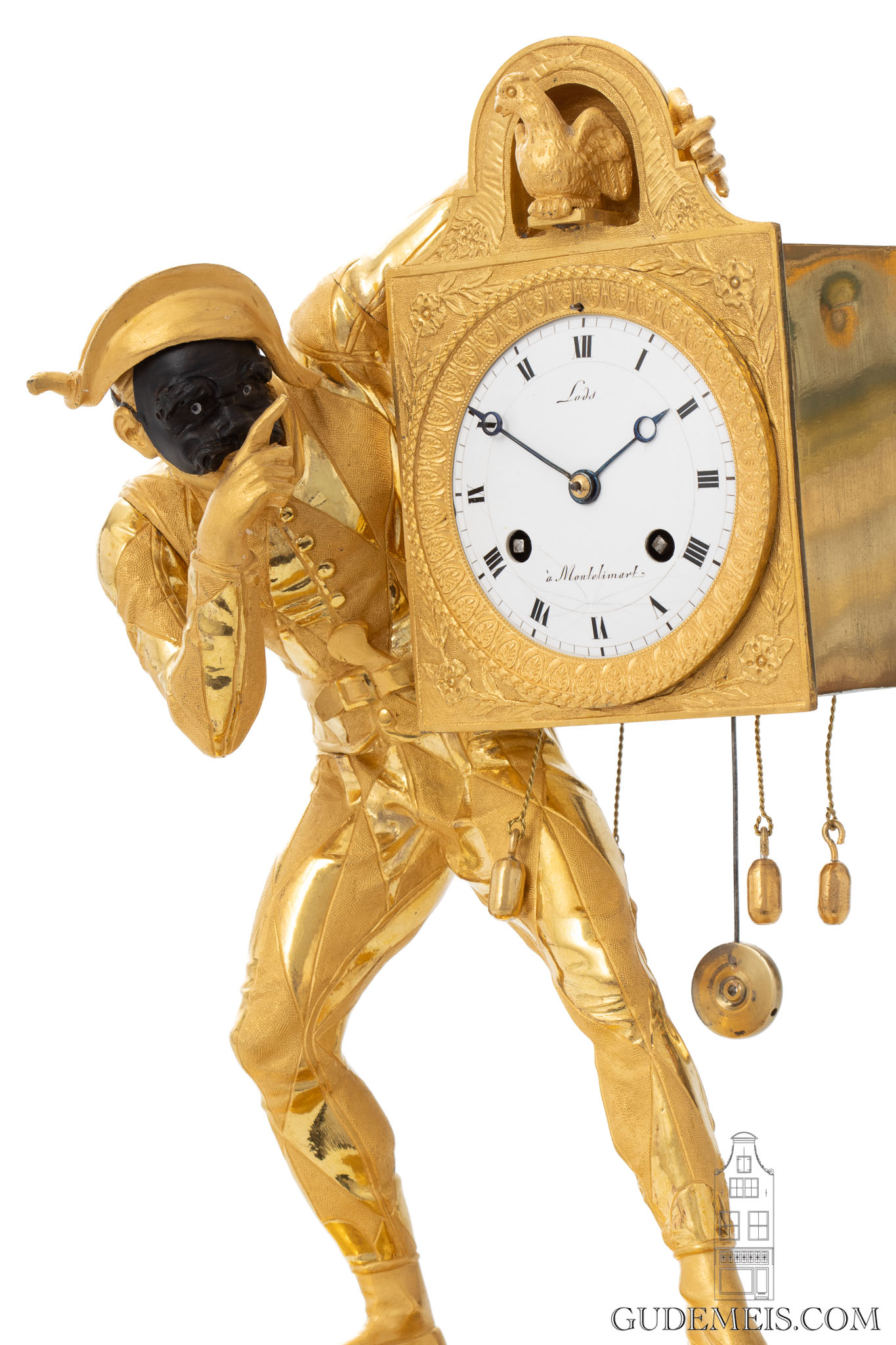
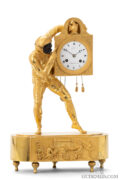

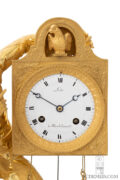


An attractive French Empire ormolu mantel clock, Harlequin, circa 1810.
Description
Commedia dell’arte
The harlequin was one of the popular characters from the Commedia dell’arte, an early form of professional theatre from Italy that was popular throughout Europe in the 16th to 18th centuries. It consisted of a number of regular characters who were recognisable by the masks worn by the actors. Generally, these followed a script on which there was improvisation. The harlequin as a character was acrobatic and mischievous. He was poor and therefore wore clothes made of different pieces of fabric. To some characters, the harlequin was invisible, but not to the audience. This allowed him to comment satirically on the other actors.
This rare model clock can be attributed to the famous bronzier Pierre-Philippe Thomire (1751 – 1843). This attribution is based on the fact that several versions are known that are signed by him. The beautiful finish of the gilding is apparent in the difference between the chased and matted parts. But also the realistic and dynamic pose of the harlequin shows the great artistry of Thomire. There are clocks of this fine model in the Palazzo Riccardi in Florence and the Quirinal Palace in Rome.
Breguet hands
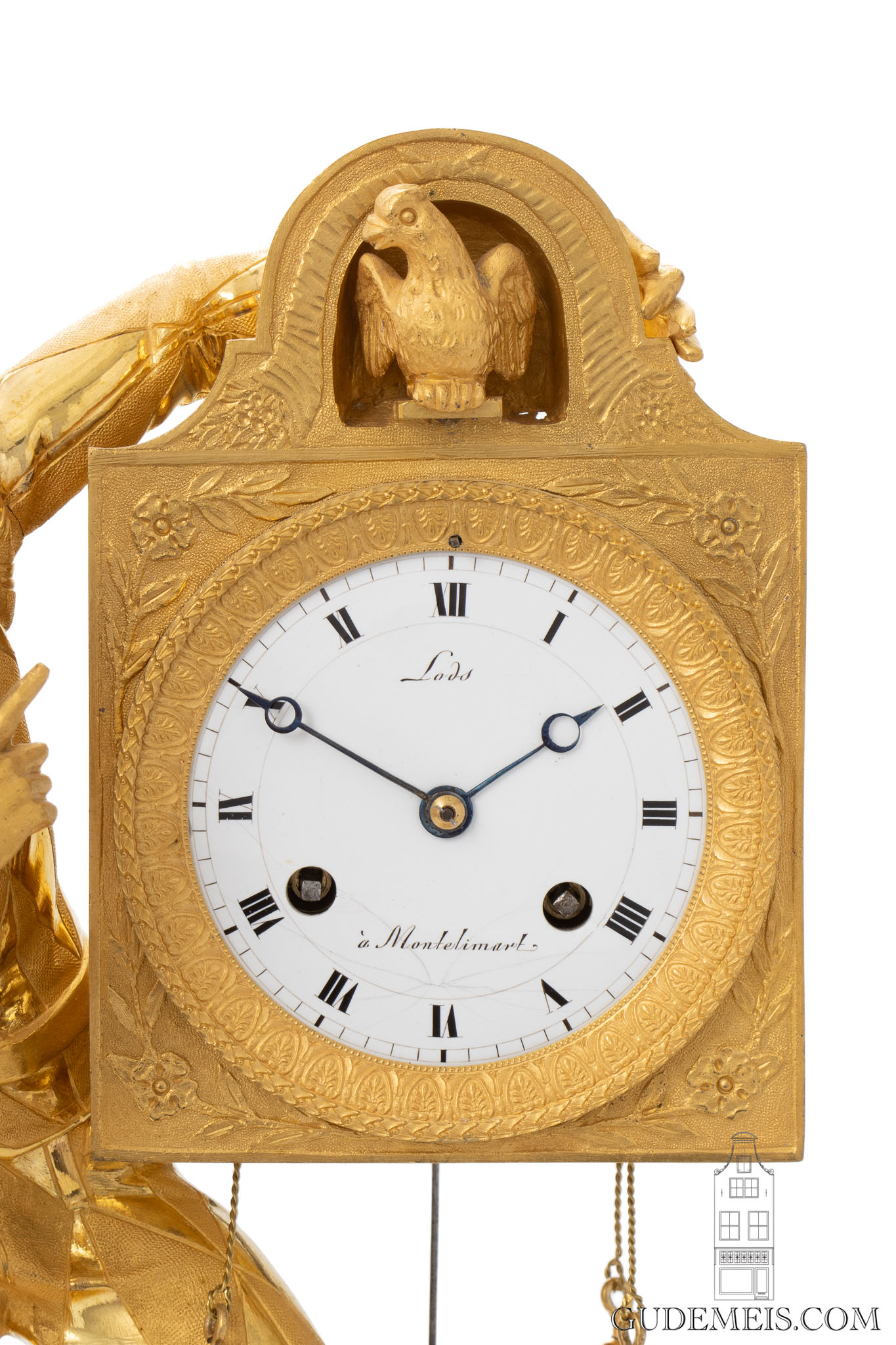
The 6.8-cm enamel dial has Roman numerals and is signed Lods à Montelimart. The Breguet hands are made of blued steel.
striking
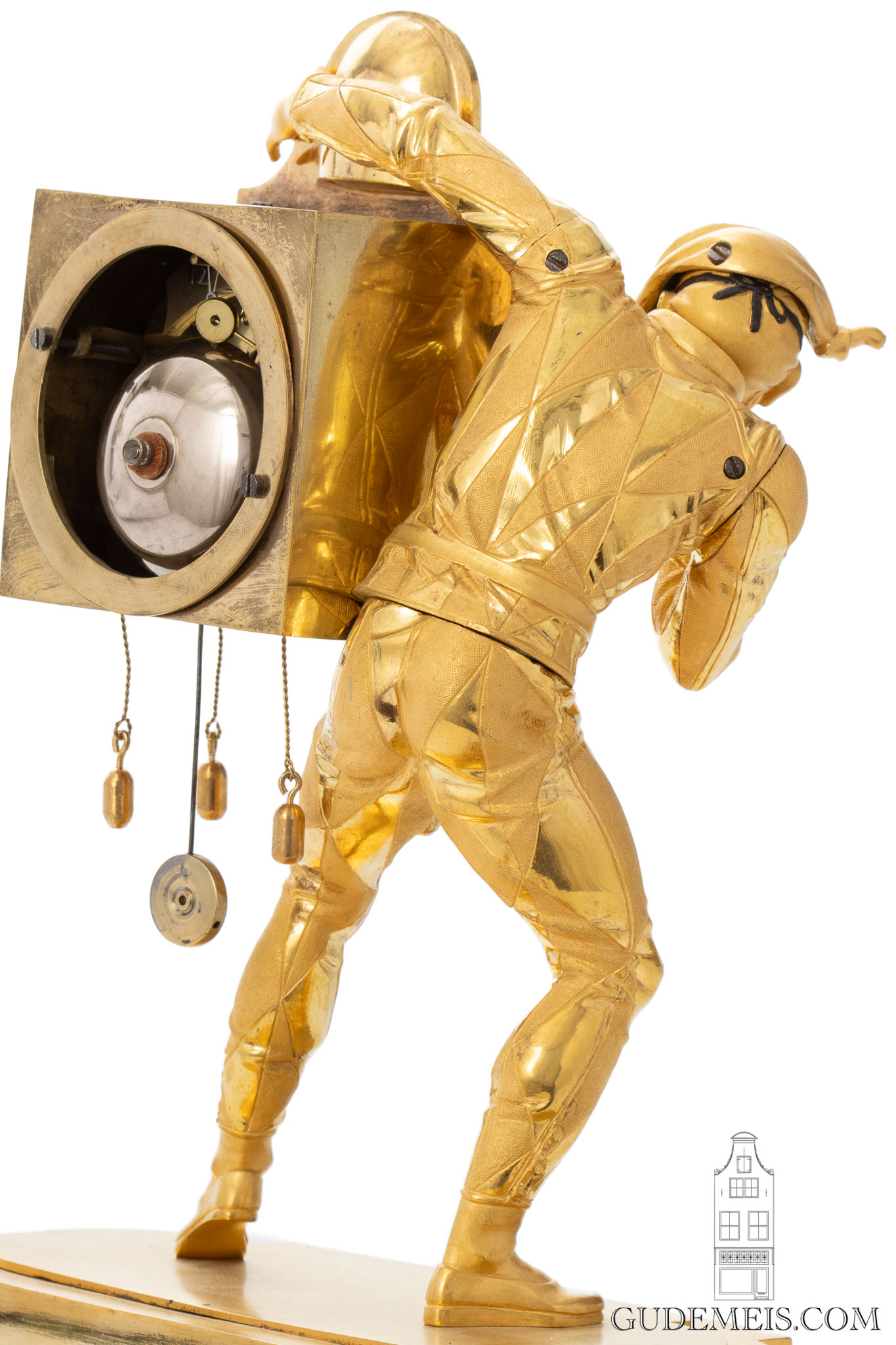
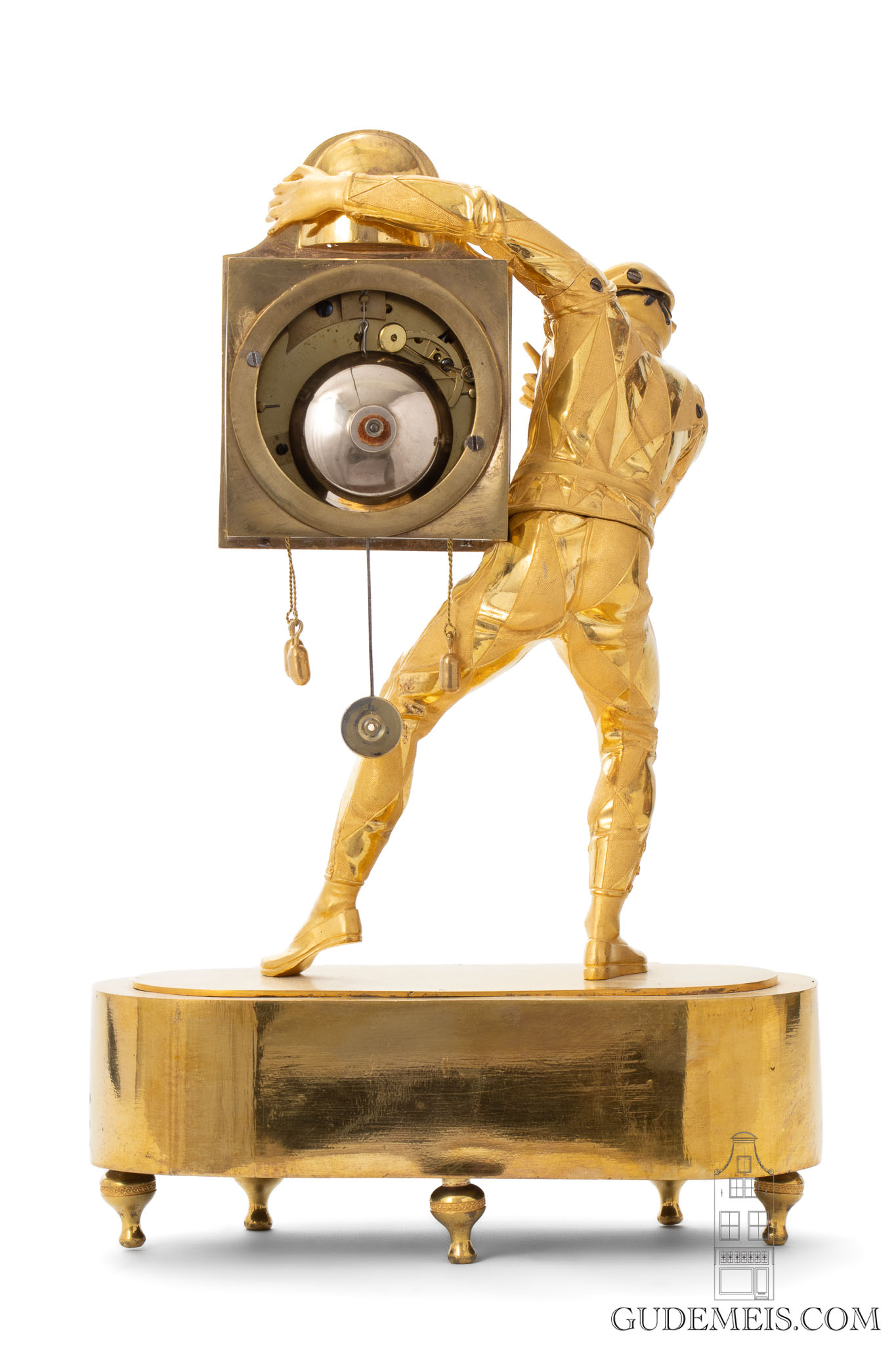
The movement has a duration of eight days and is regulated by anchor escapement in combination with a silk suspended pendulum. The clock has half hour striking on a bell by means of a coutwheel.
Harlequin
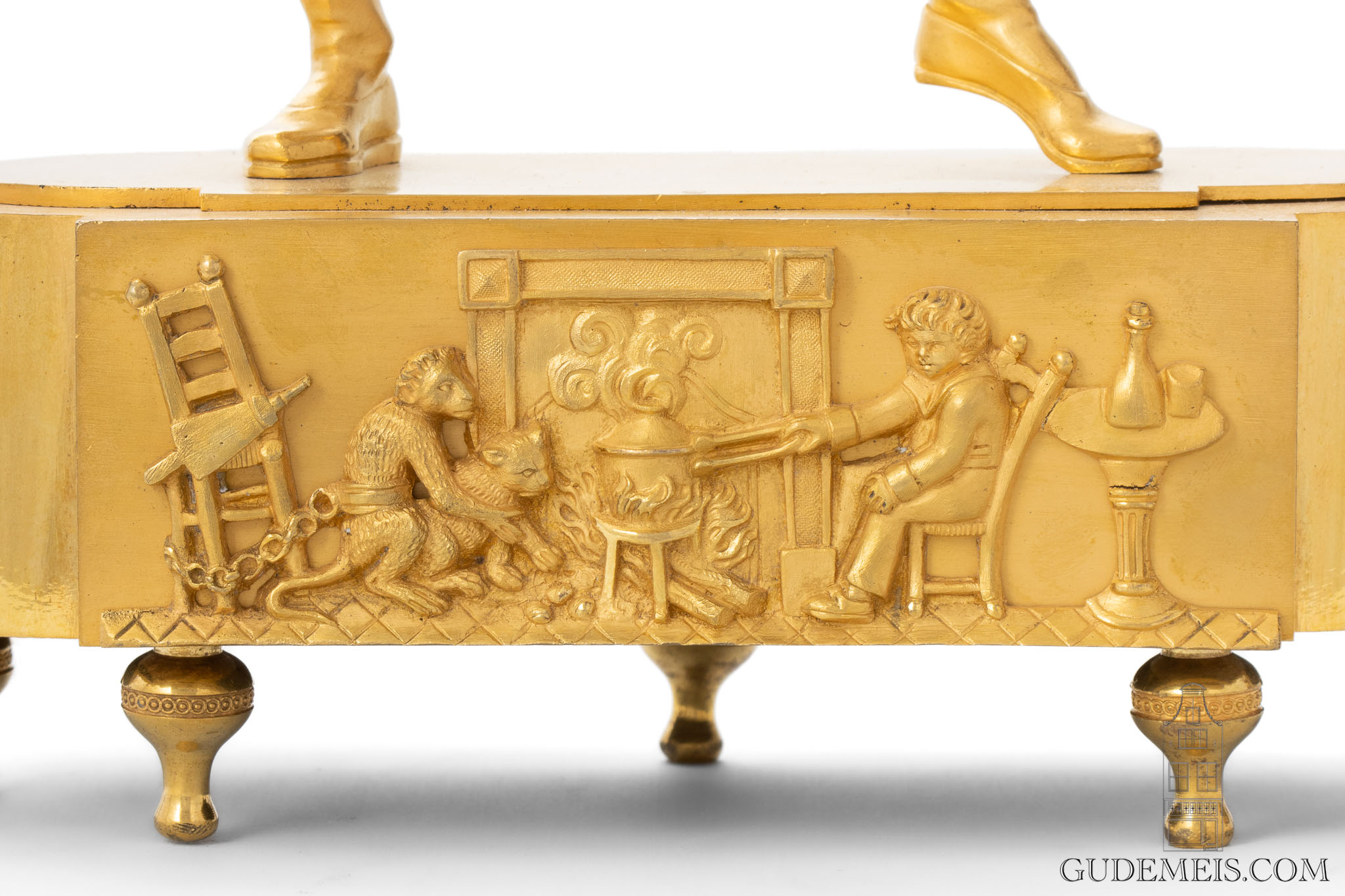
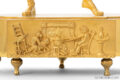
The clockwork is fitted in a beautifully cast and chiseled ormolu case in the shape of a wall clock. Instead of the usual cuckoo, there is a rooster at the top. This clock is held by a harlequin who points his finger at the bird while standing in a dynamic pose on an oval base. At the front there is a high relief on the front depicting a scene of a man and a monkey sitting in front of a fireplace. The whole is raised on turned feet.