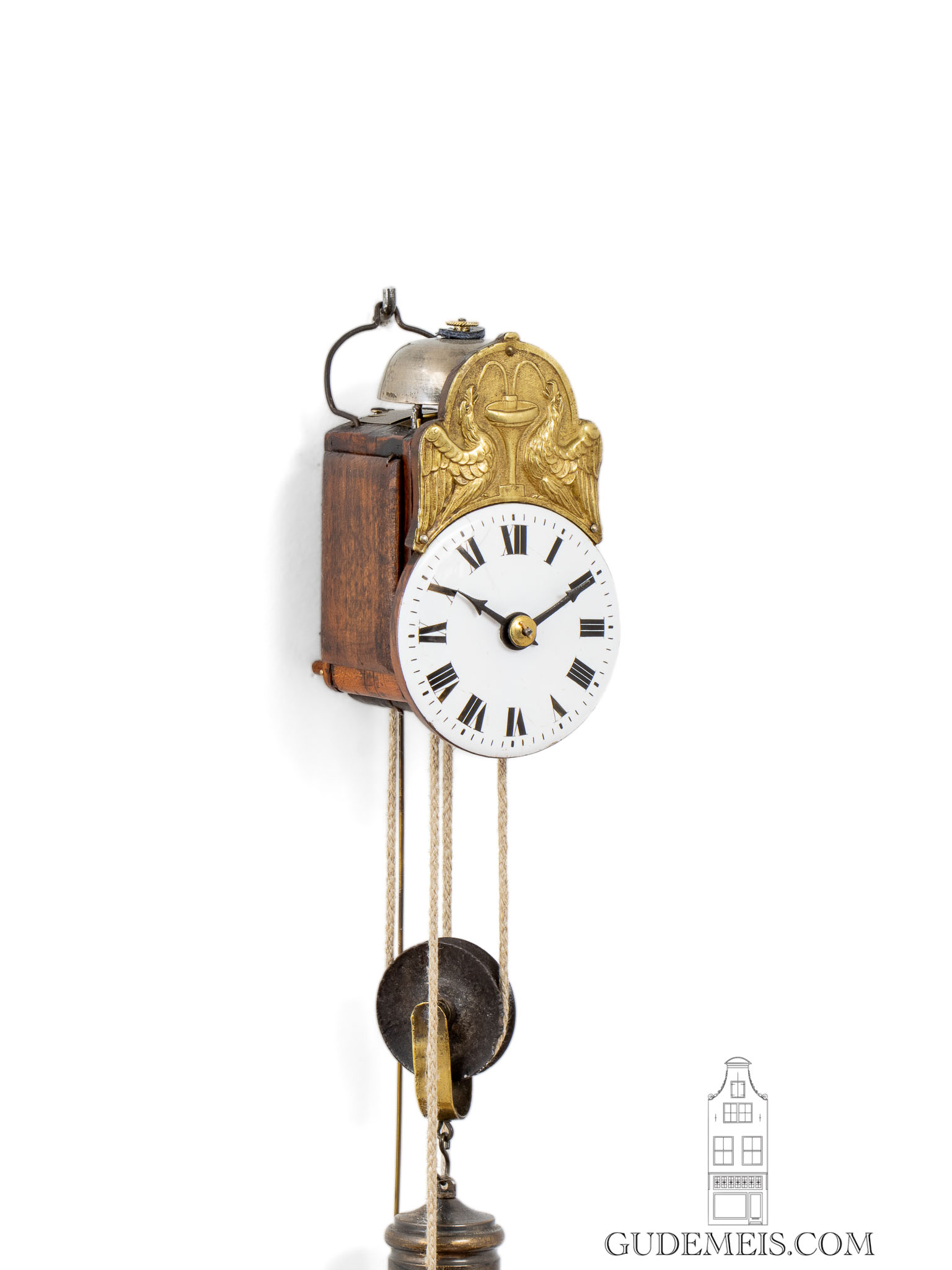
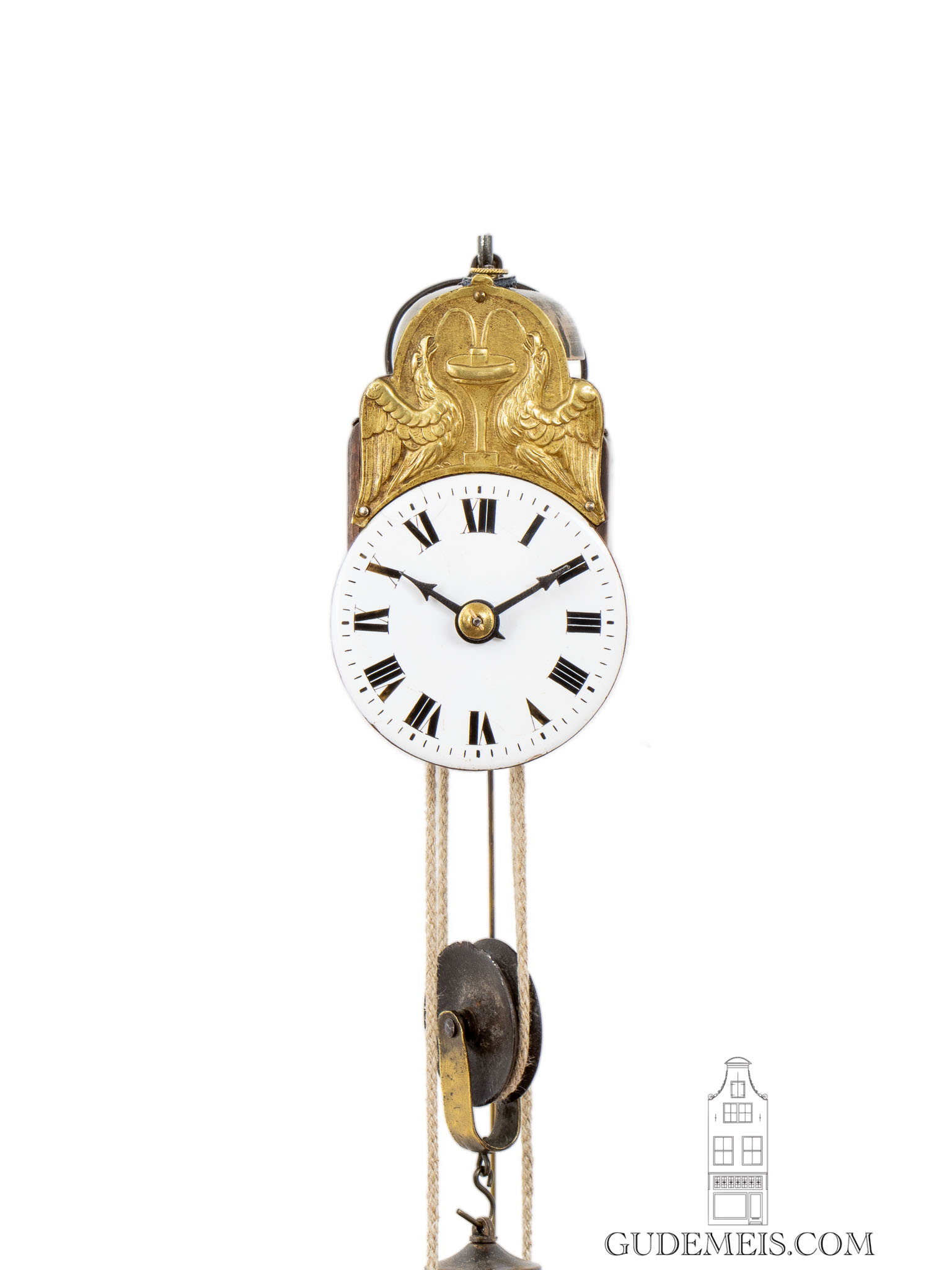
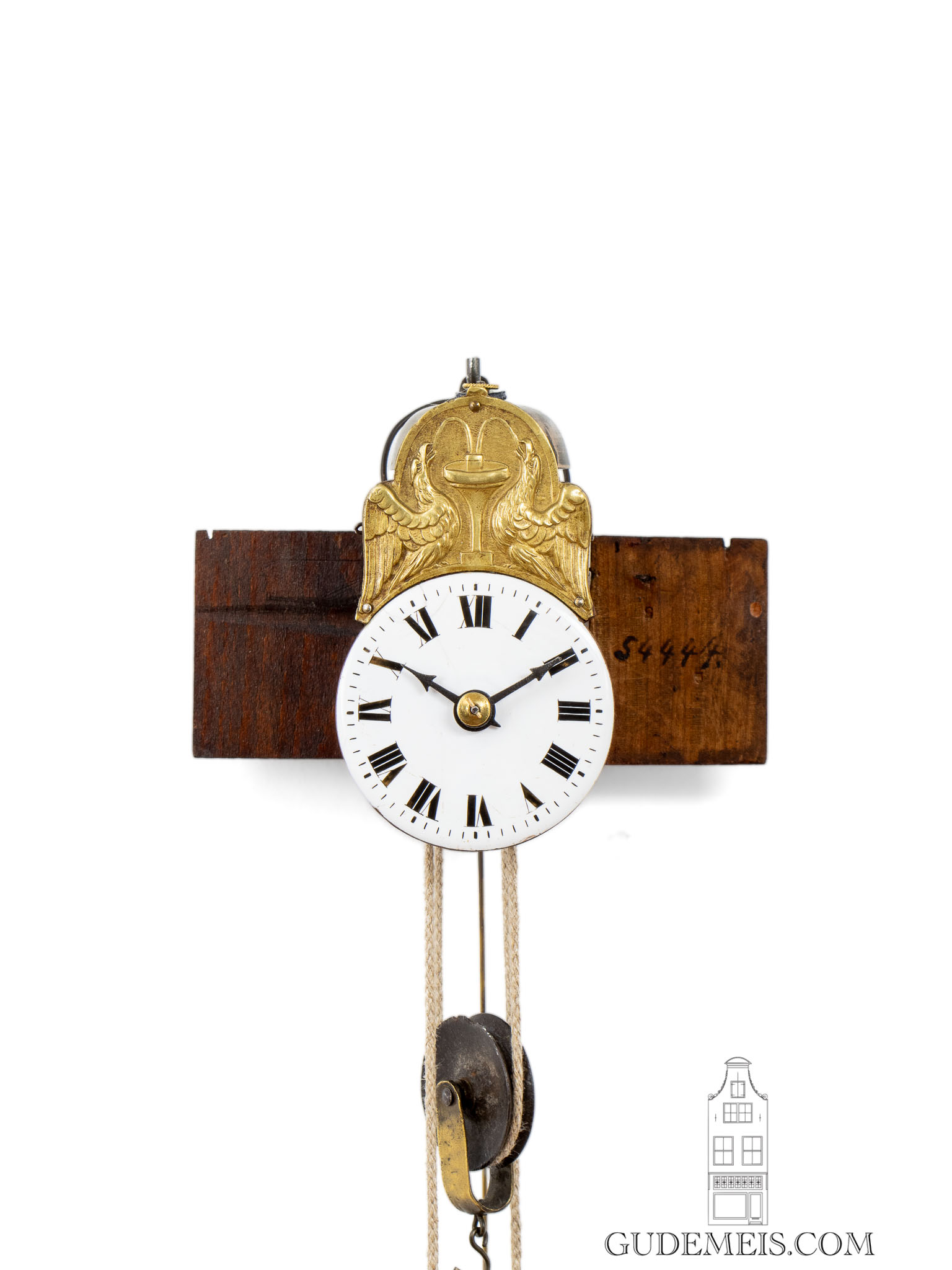
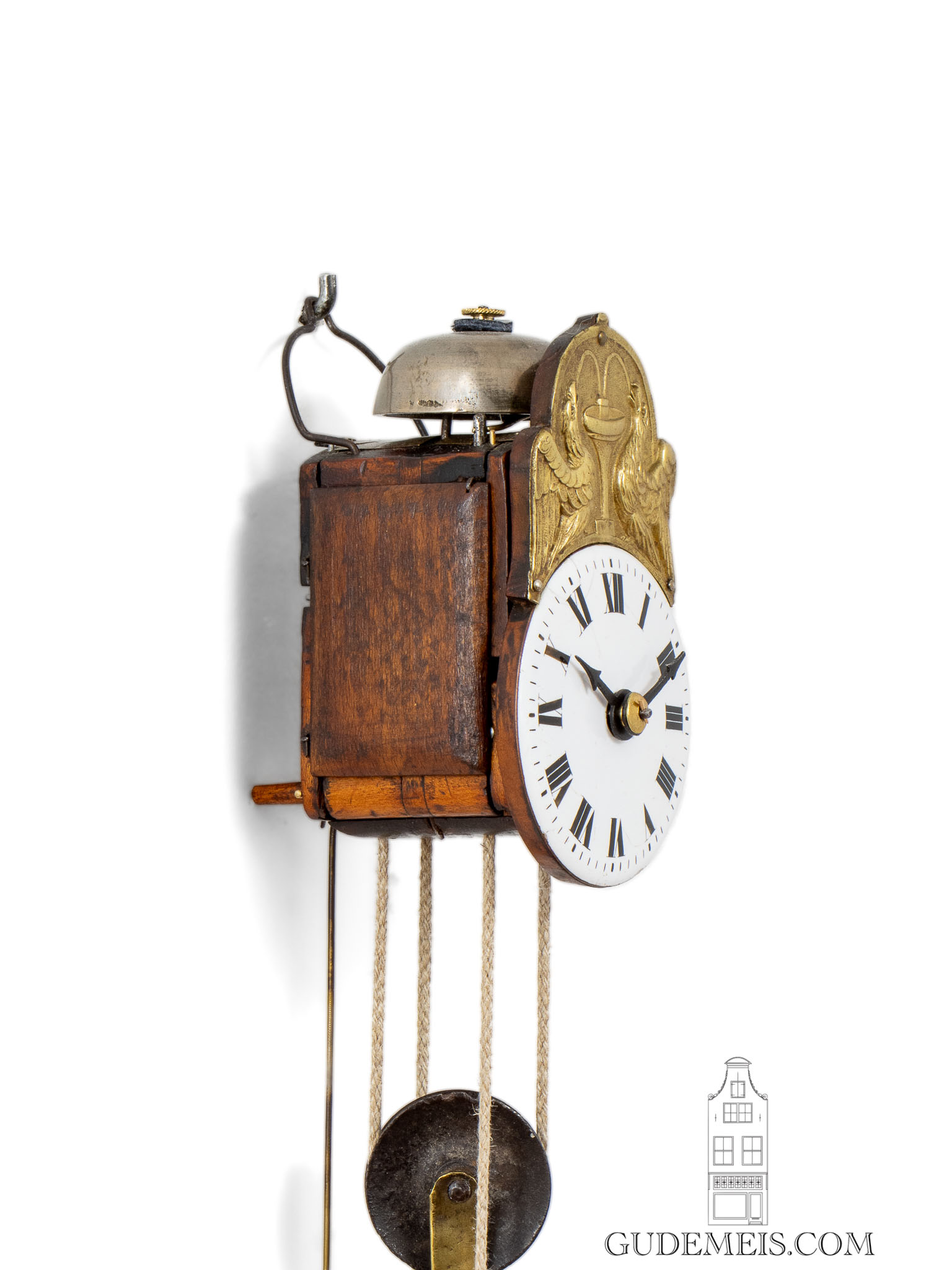
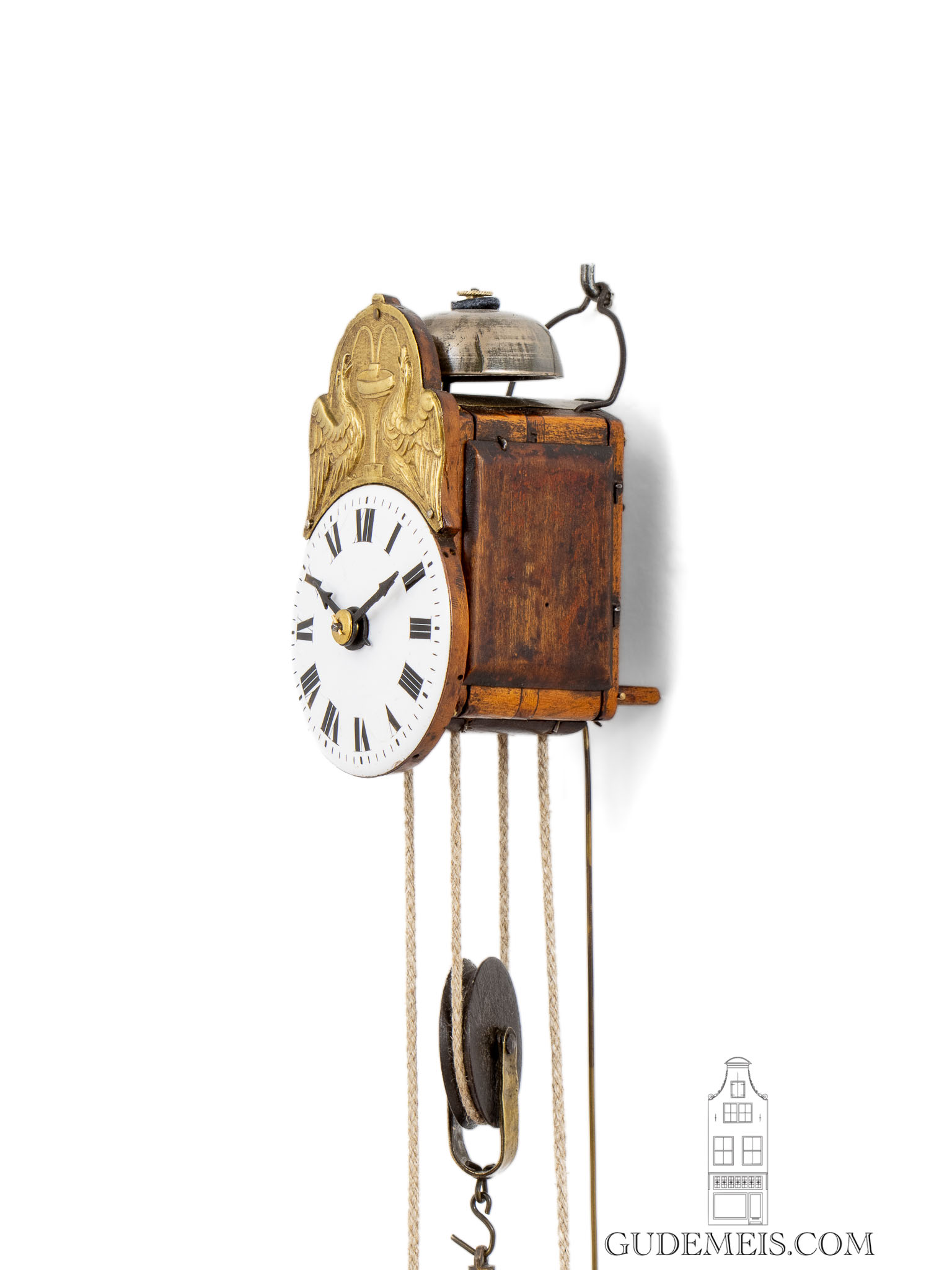
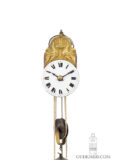
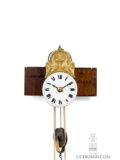
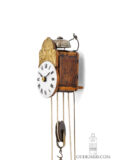
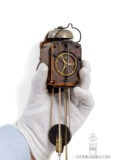
A miniature German Black Forest striking ‘Sorg’ wall clock, circa 1825
Description
Joseph Sorg
It is not hard to imagine that the unique selling point that Joseph Sorg looked for was probably ‘small’ and ‘endearing’ when he started producing these little clocks around 1830. Some other Black Forest makers started producing them as well, but Sorg’s name stuck to the type. Although these little clocks were only produced for about twenty years, there is some development in their appearance. This lovely clock with striking work is one of the first generation. The type is called ‘Tropfenuhr’ in German, which freely translates as ‘waterdrop-clock’, referring to its shape. All Sorg-clocks are small and attractive, but in my opinion the curved lines of this type make them even more pretty. It is therefore no surprise that these clocks are liked by almost everybody that see them, both collectors and first-time buyers.
The dial
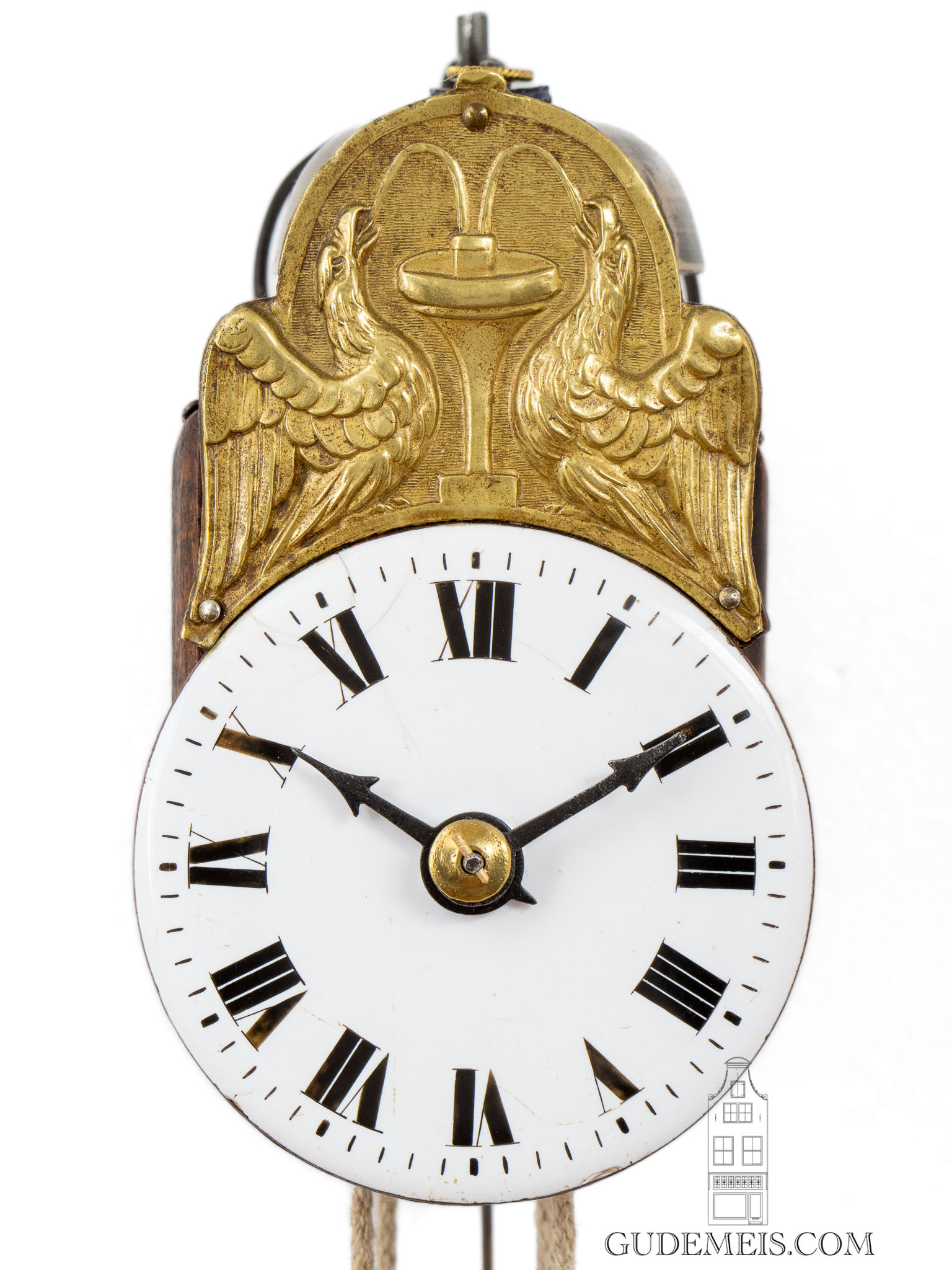
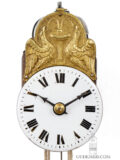
The 6-cm enamel dial has Roman numerals and pointed steel hands. Above the dial is a moulded brass fret with a relief ornament depicting two birds drinking from a fountain.
The movement
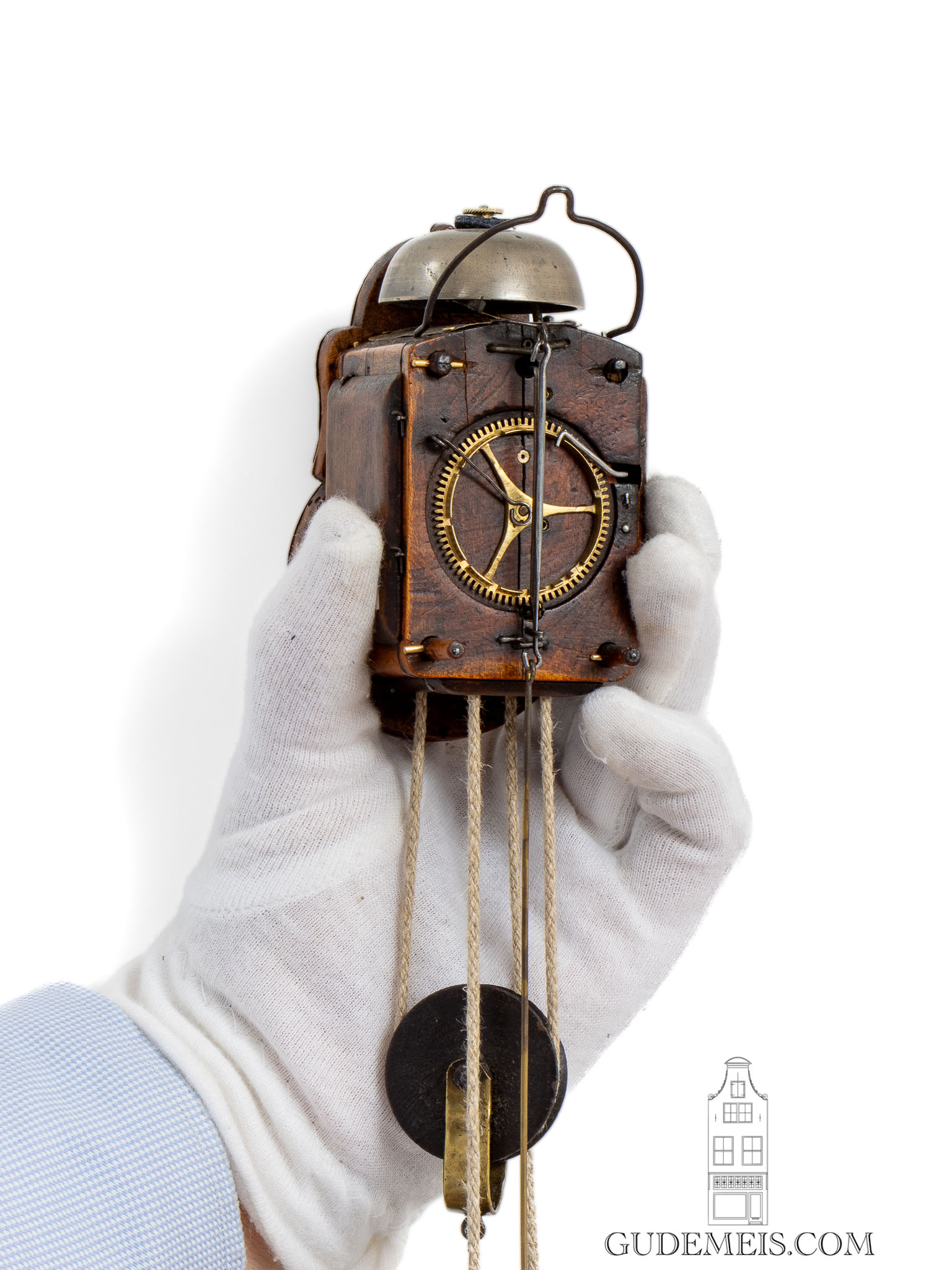
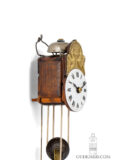
The movement has wooden plates with brass bushings in which the pivots rotate. It is driven by a weight with a pulley on ropes (Schnurenhemmung) and has a duration of one day. It is regulated by anchor escapement in combination with a pendulum. The clock strikes the hours by means of a countwheel on a bell.
The case
The wooden case has a brass roof and wooden doors. It is suspended from a suspension hoop in combination with spurs.