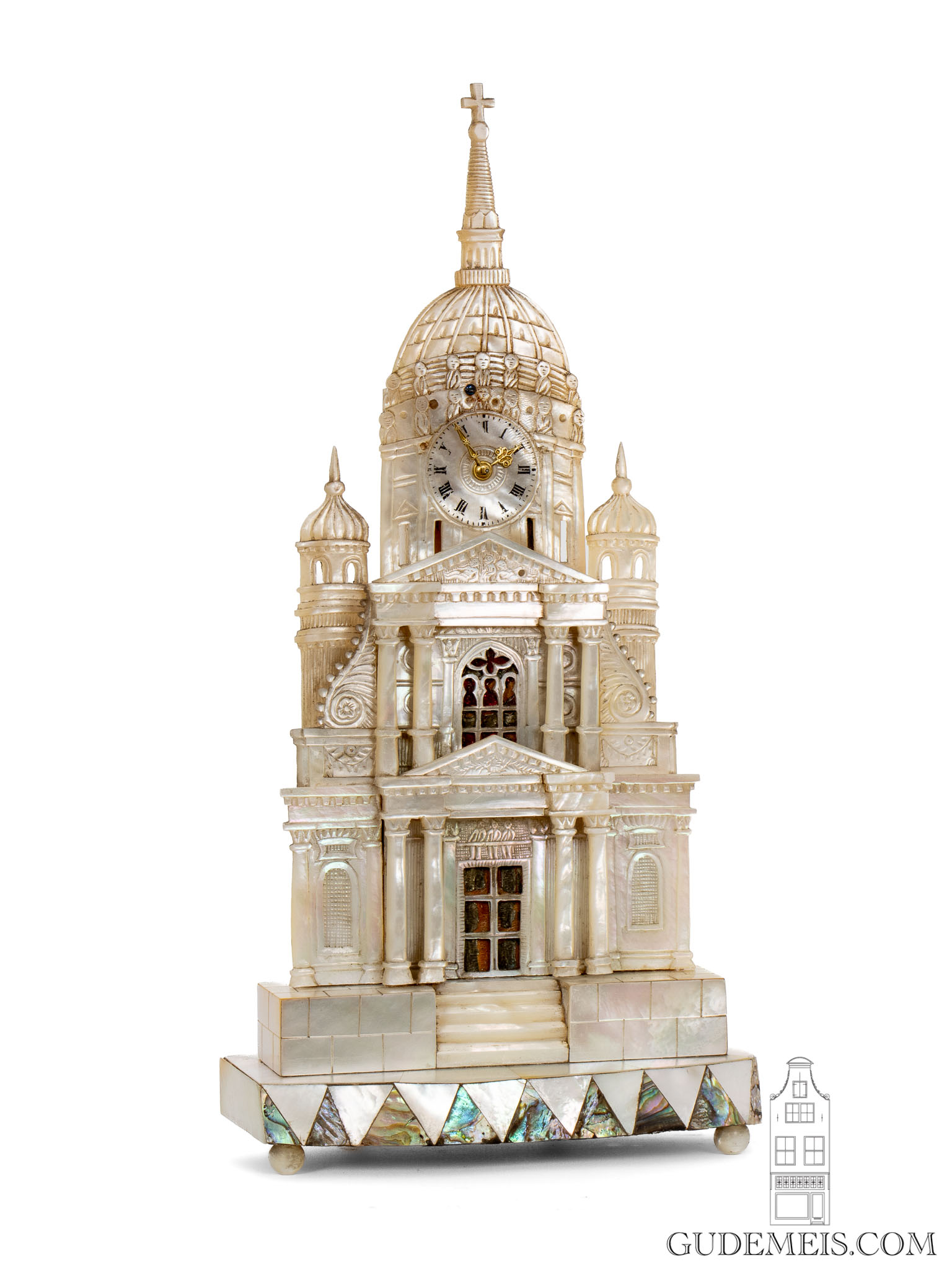
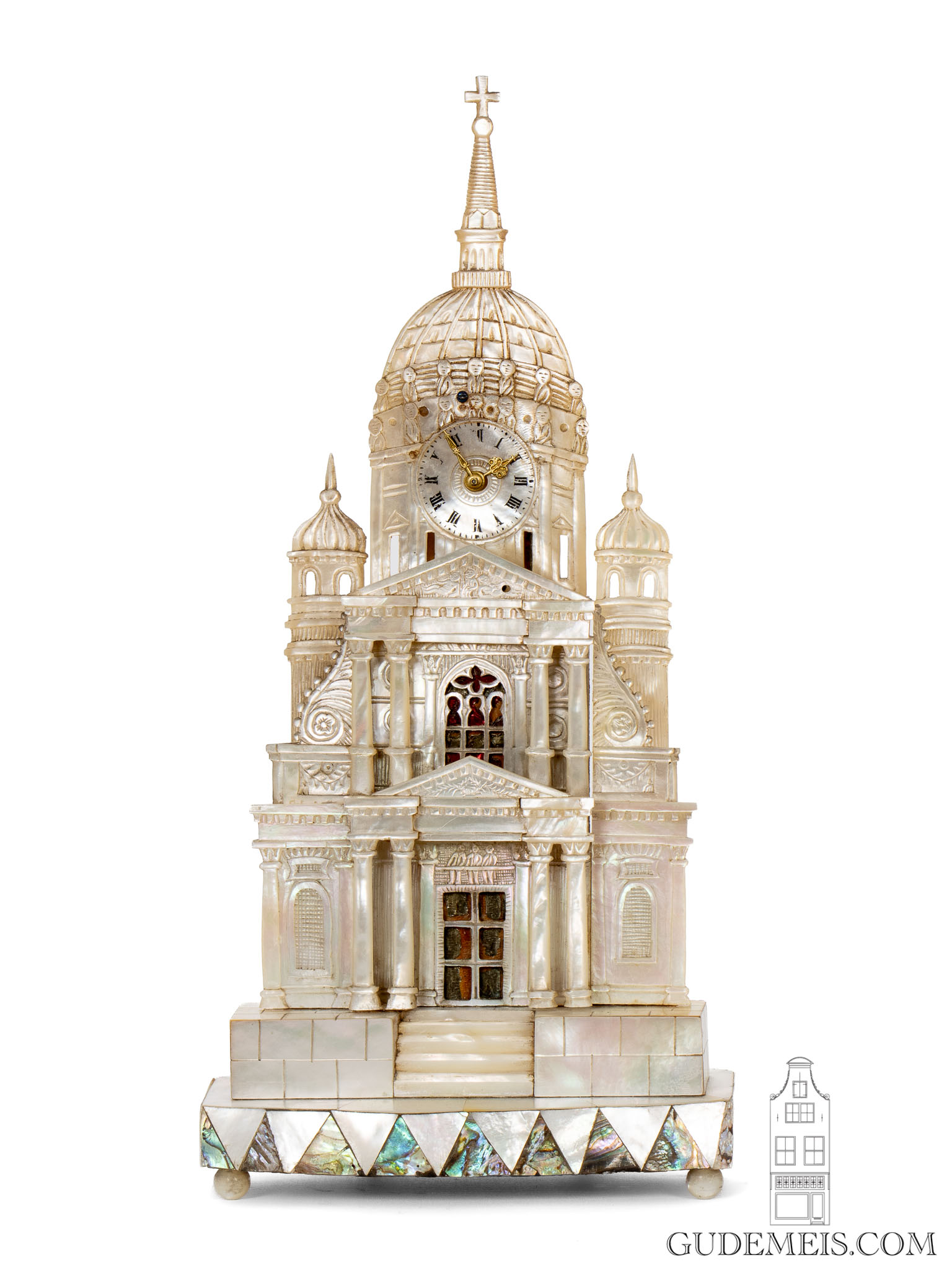
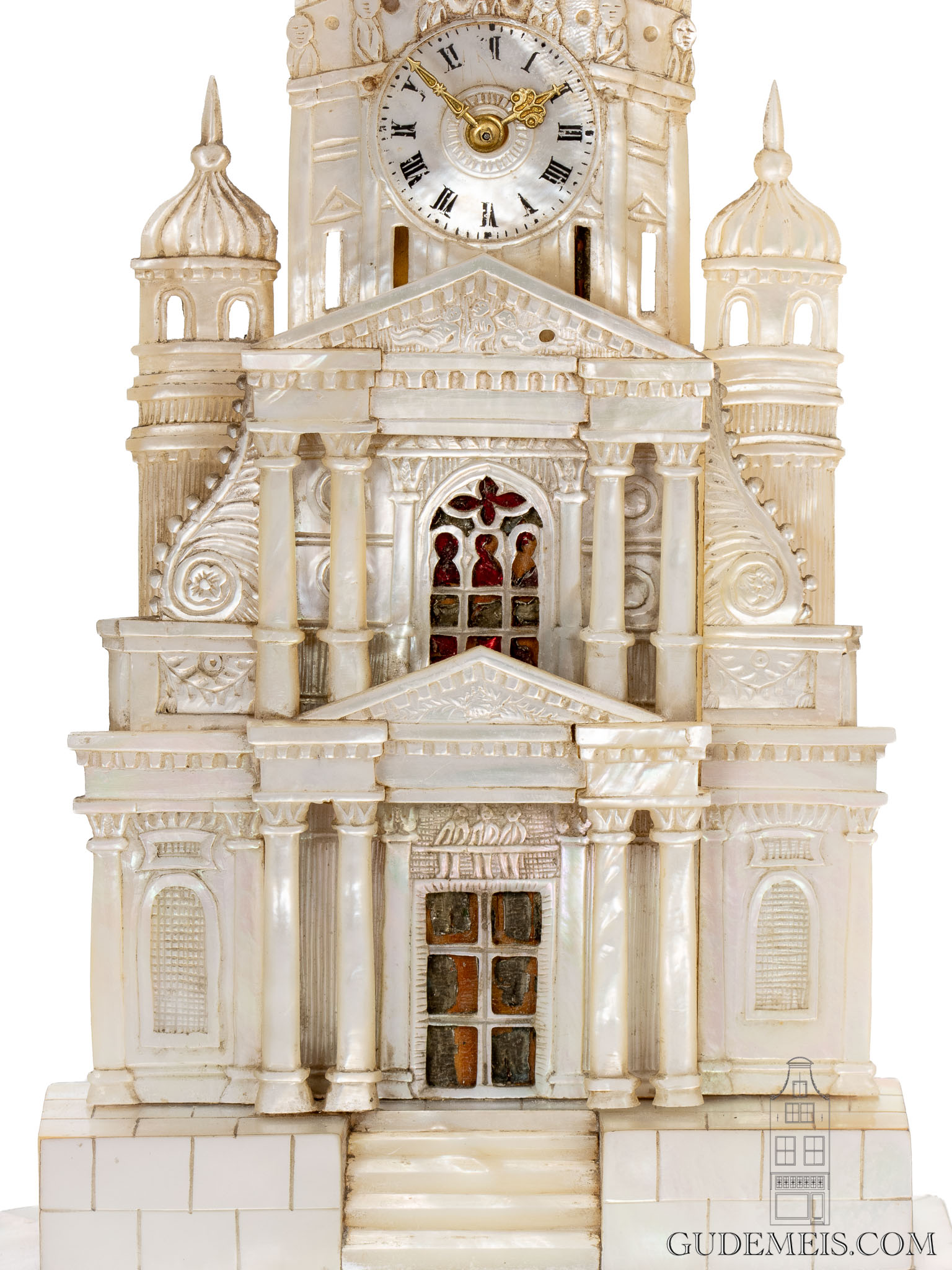
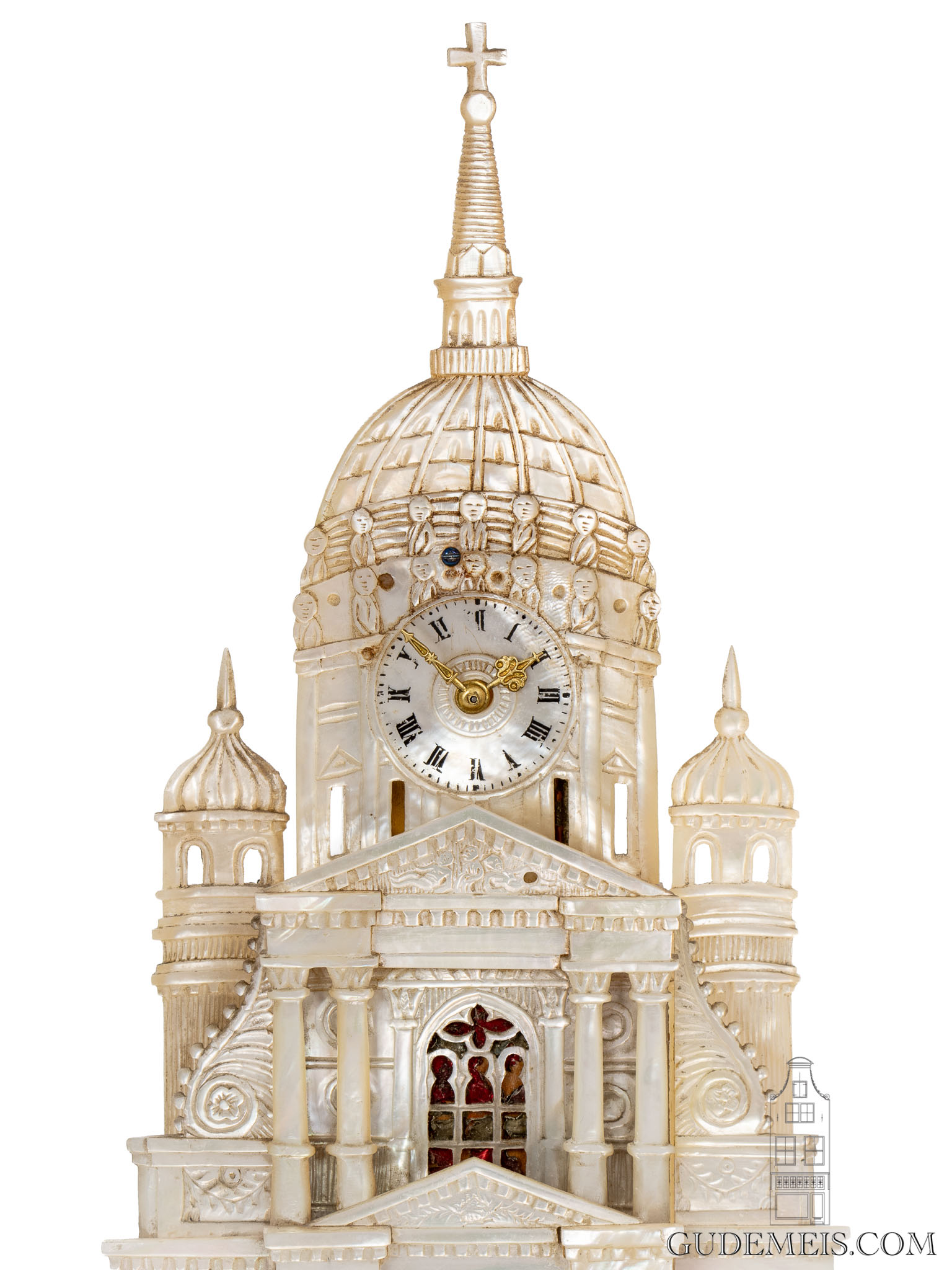
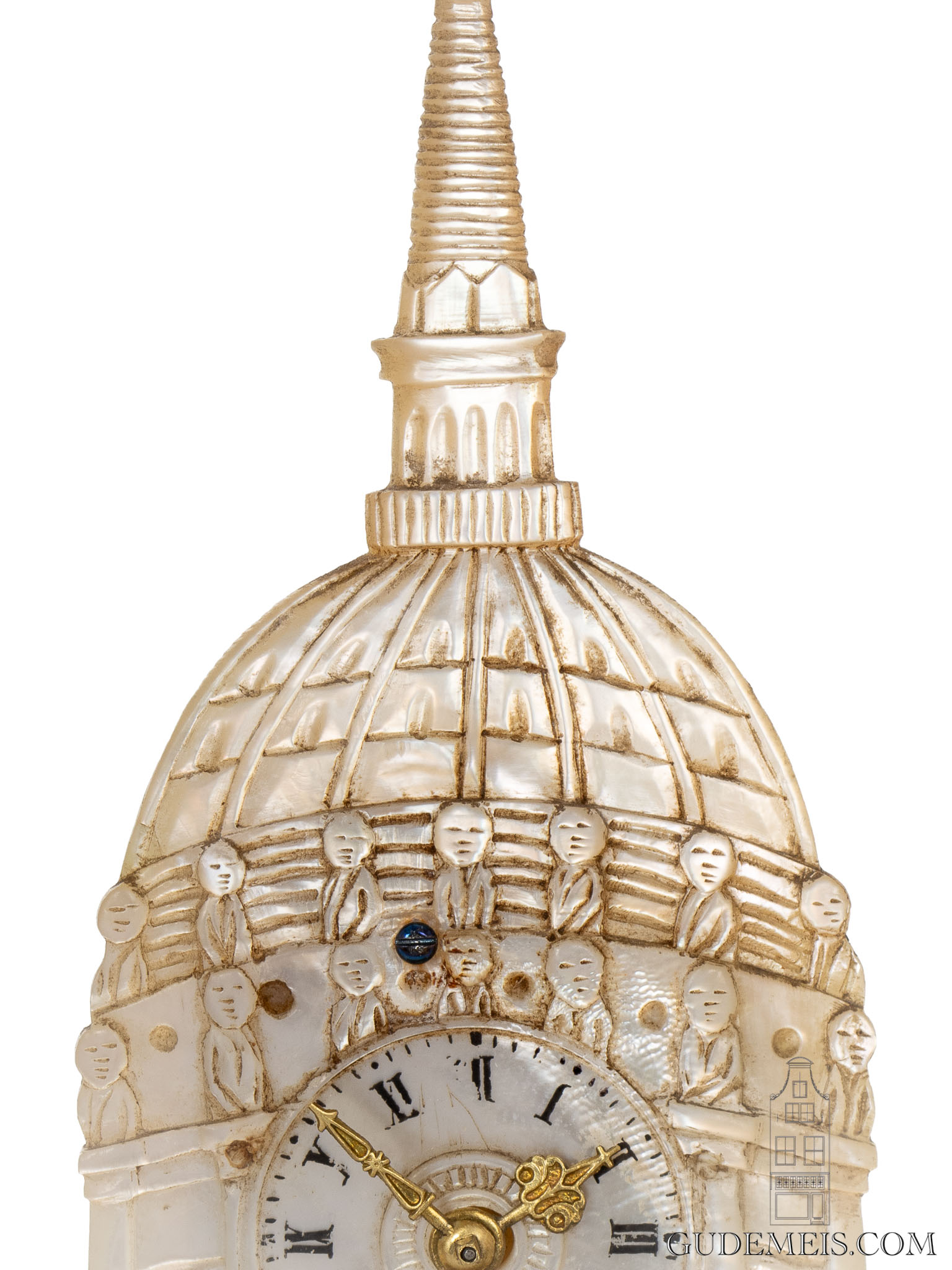
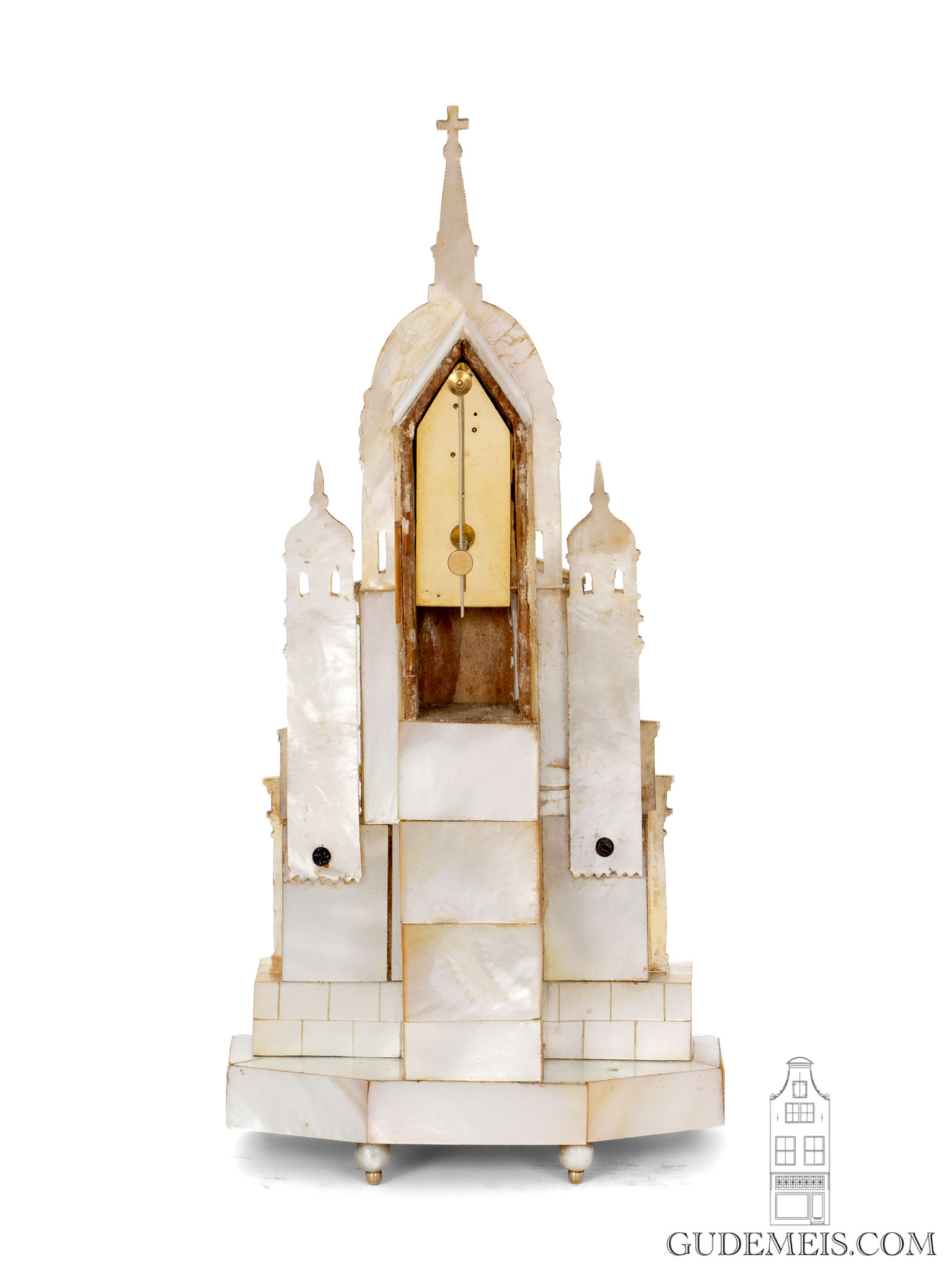
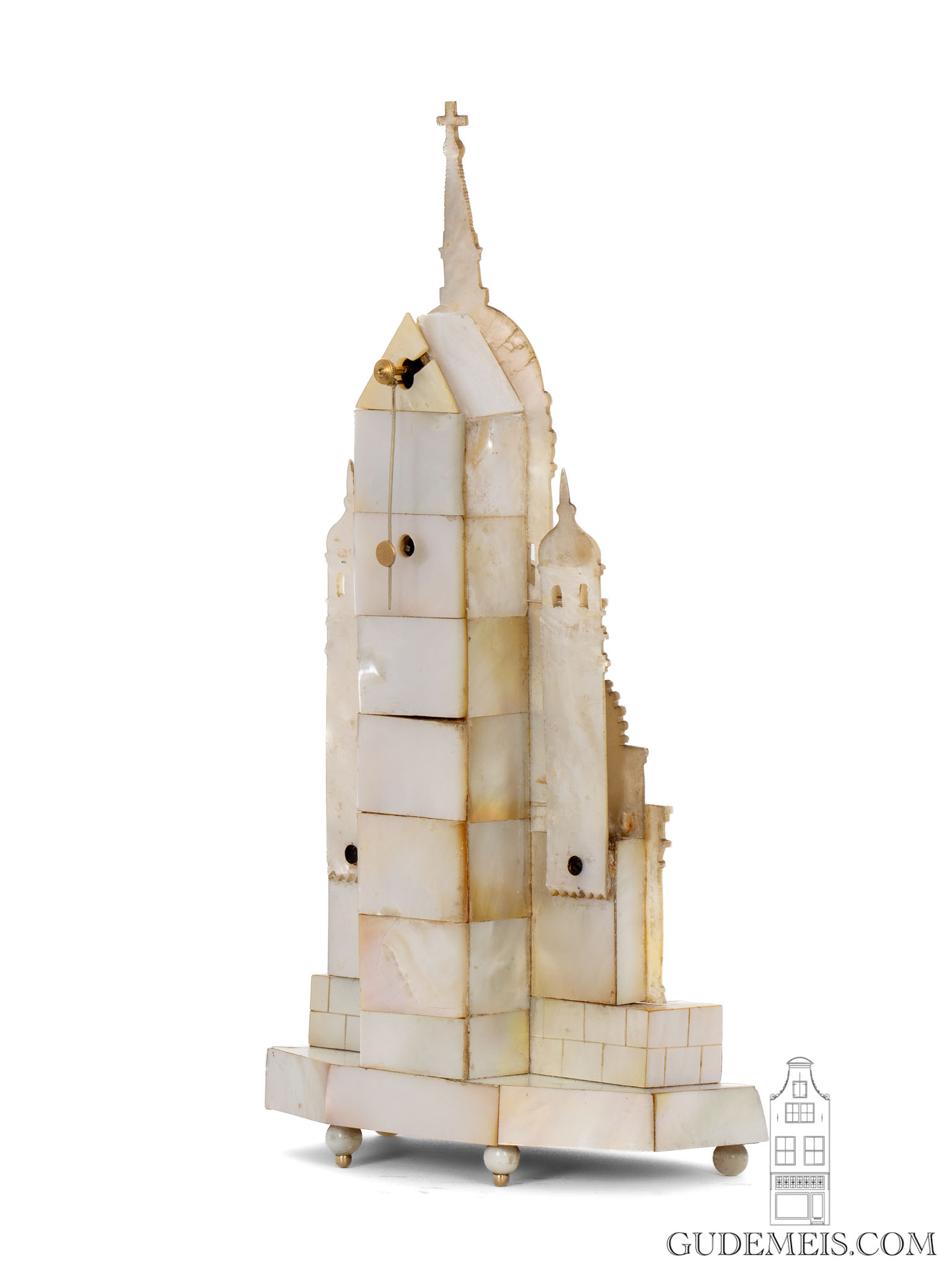
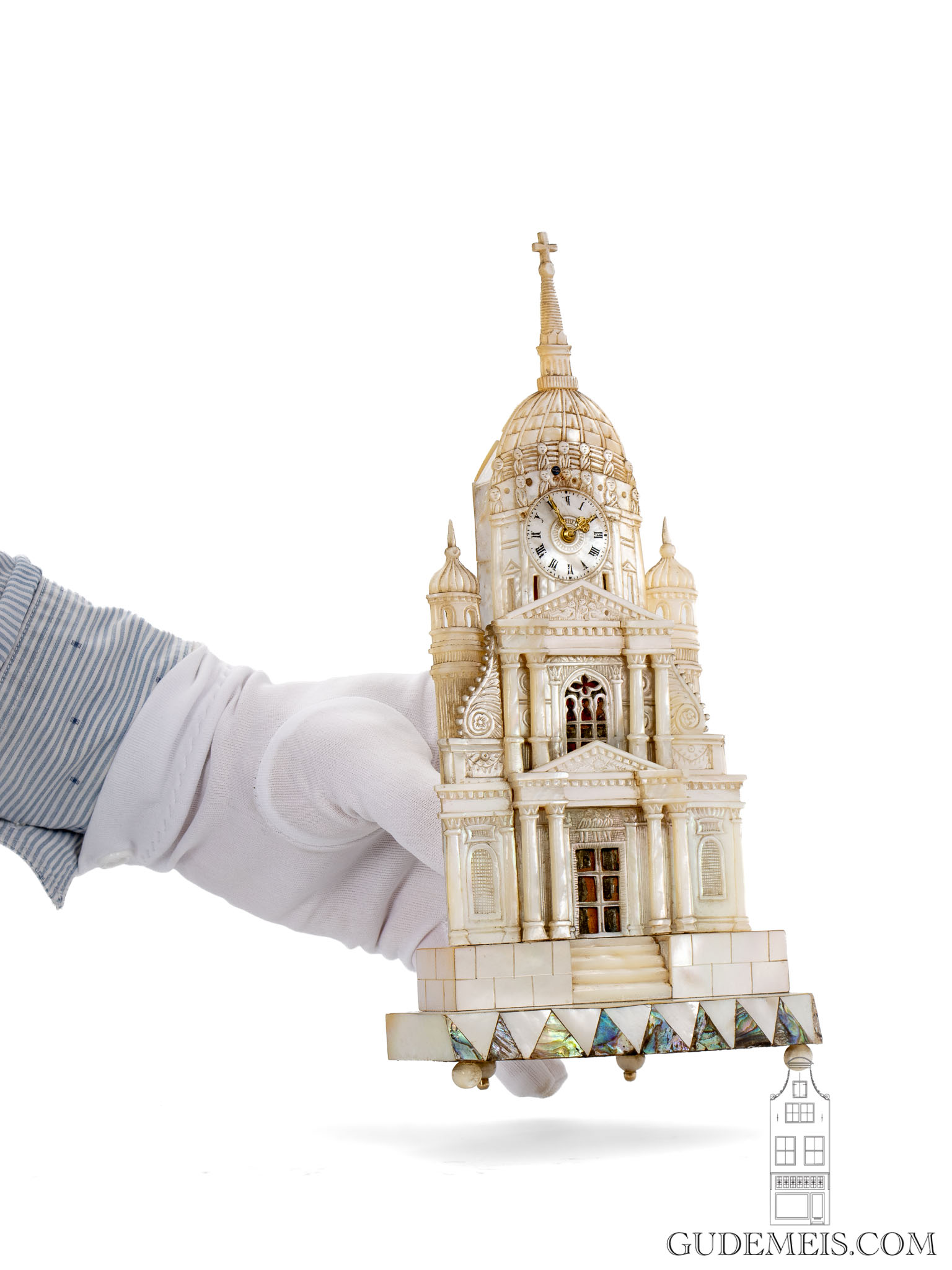
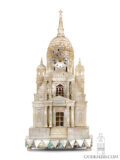
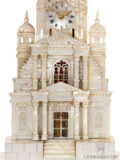
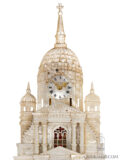
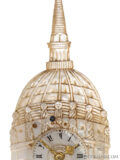
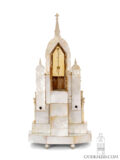
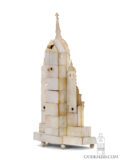

An attractive Austrian architectural mother-of-pearl zappler mantel clock, circa 1840.
Description
Zappler
In this type of clock, the short pendulum is often mounted on the front and swings in front of the dial. When we watch these frantically moving short pendulums, the name “Zappler” makes perfect sense. Because “Zapplen” means in German to fidget, flutter, or wobble, and a “Zappler” is someone who can’t sit still—a nervous person. There isn’t much to be found in the literature about these usually very small clocks, which were likely used primarily for decorative purposes. Judging by the construction of the movement and the appearance of these clocks, they seem to have been made mainly in the second and third quarters of the 19th century. Compared to most Zapplers, this church-shaped version is rather large. In a clever way a perpective was cleverly incorporated in the design, which is made even more appealing by all the intricate details. Additionally, the use of elegant mother-of-pearl lends it a beautiful luster. As a result, it is not just a clock but, above all, a lovely object that fascinates and draws the eye.
Tic-tac escapement
The spring driven movement has a duration of thirty hours. It is regulated by a tic-tac escapement in combination with the above mentioned short pendulum.
Roman numerals
The mother-of-pearl dial has Roman numerals. The foliate pierced hands are made of brass.
Mother-of-pearl
The dial is set within the dome of a mother-of-pearl church surmounted by a spire. It is flanked by two lower towers. The facade consists of two pediments with columns, one above the other with steps in the center below. The whole stands on a curved base lined with triangles.