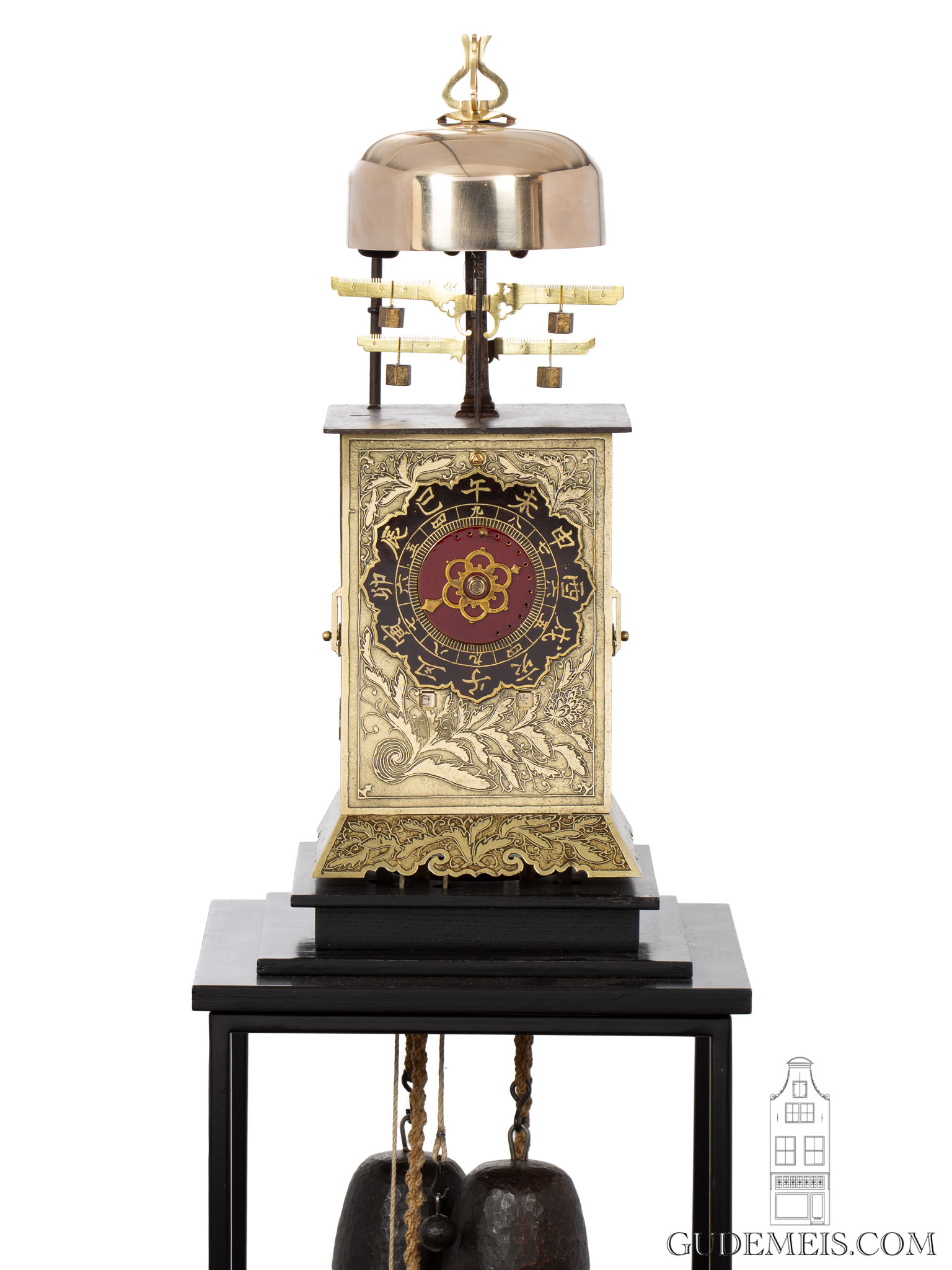
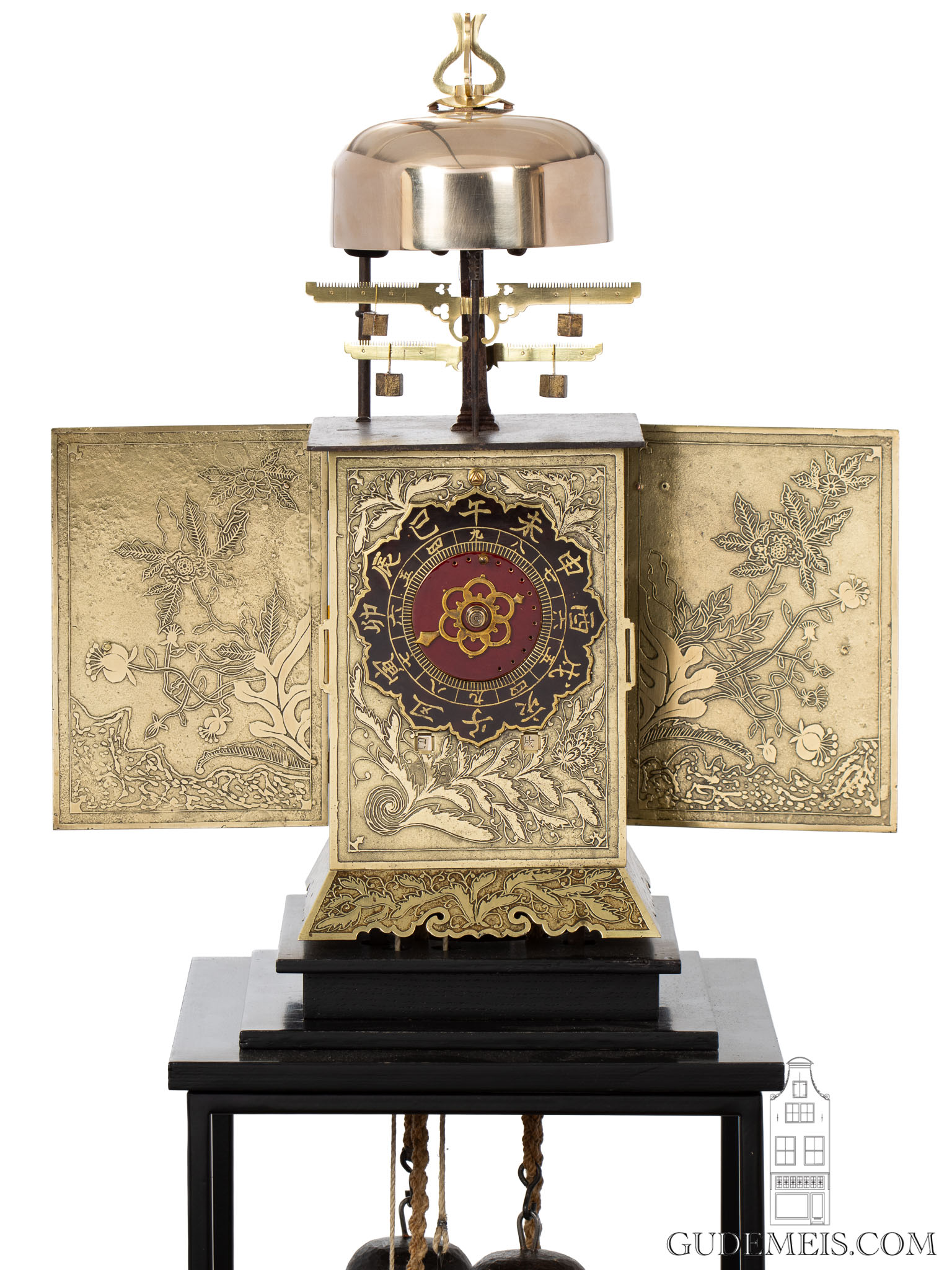
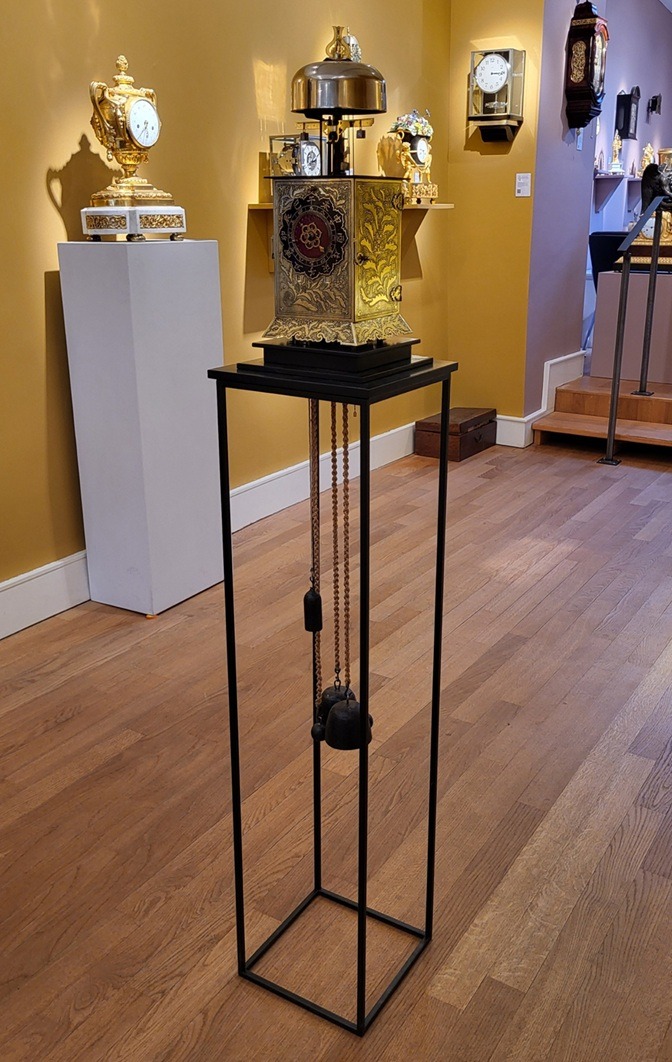
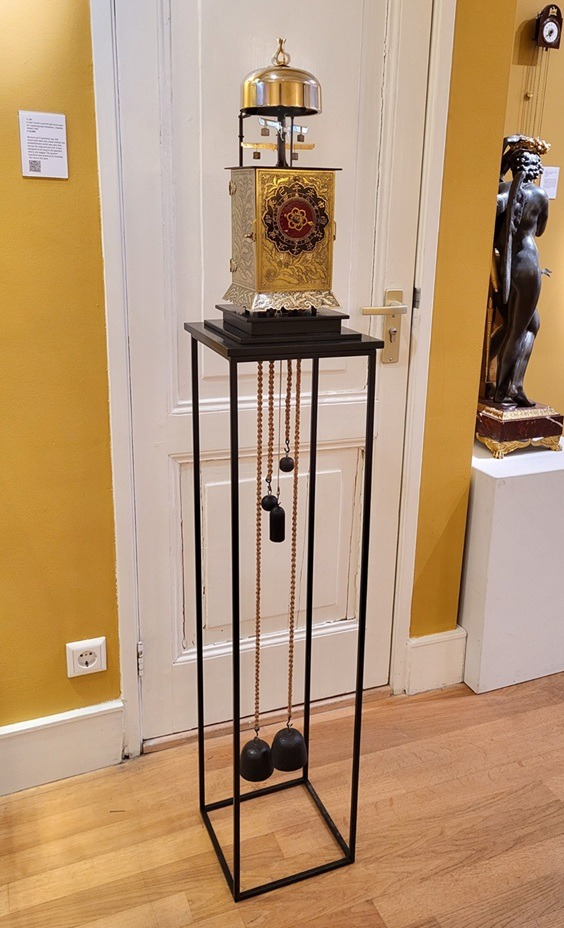
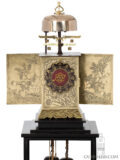
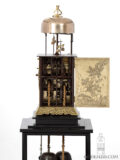
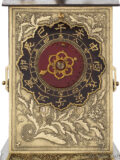
An attractive Japanese ‘Dai Dokei’ lantern clock with calendar and double foliot, circa 1700.
Description
Japanese Time Keeping
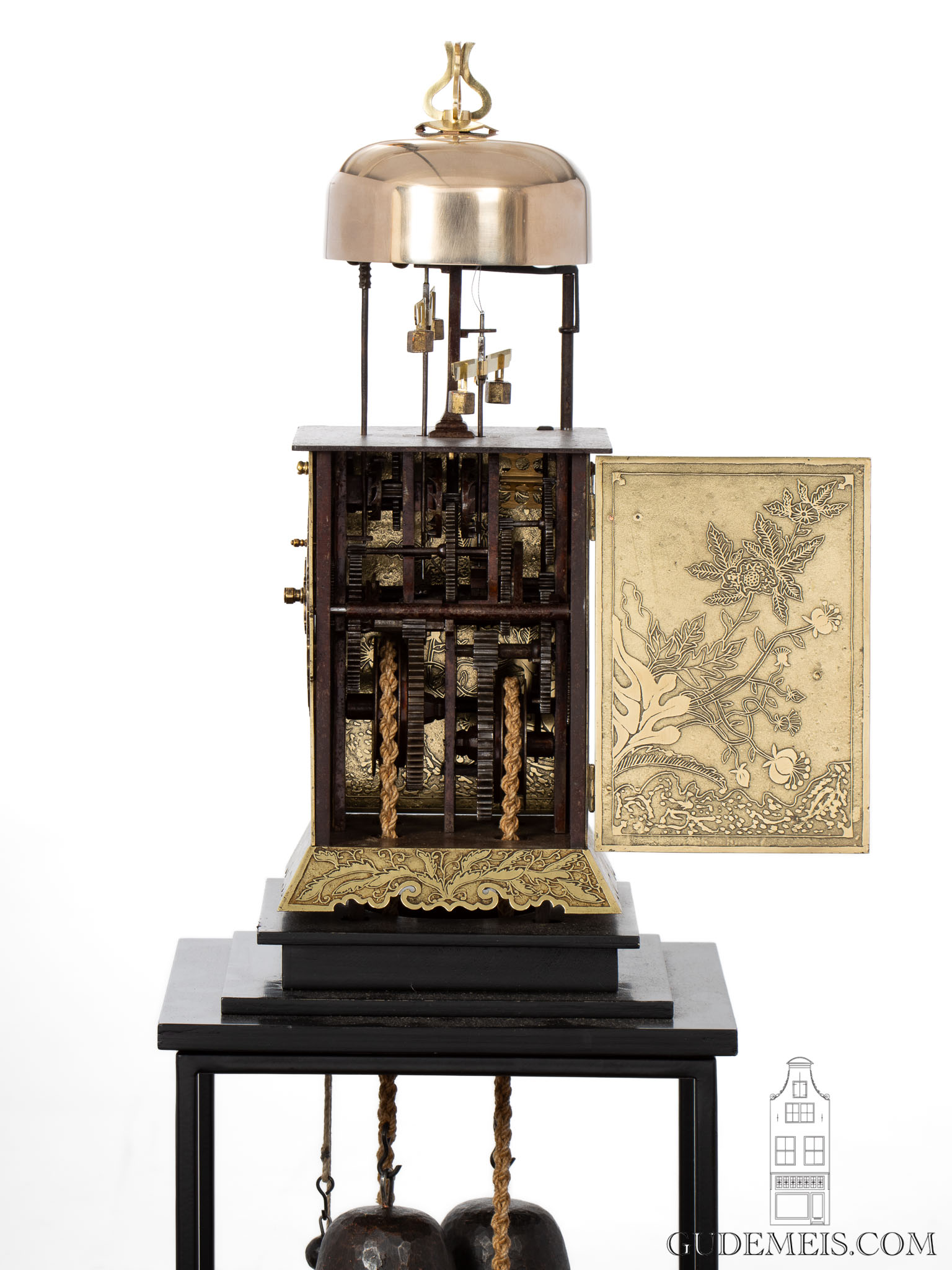
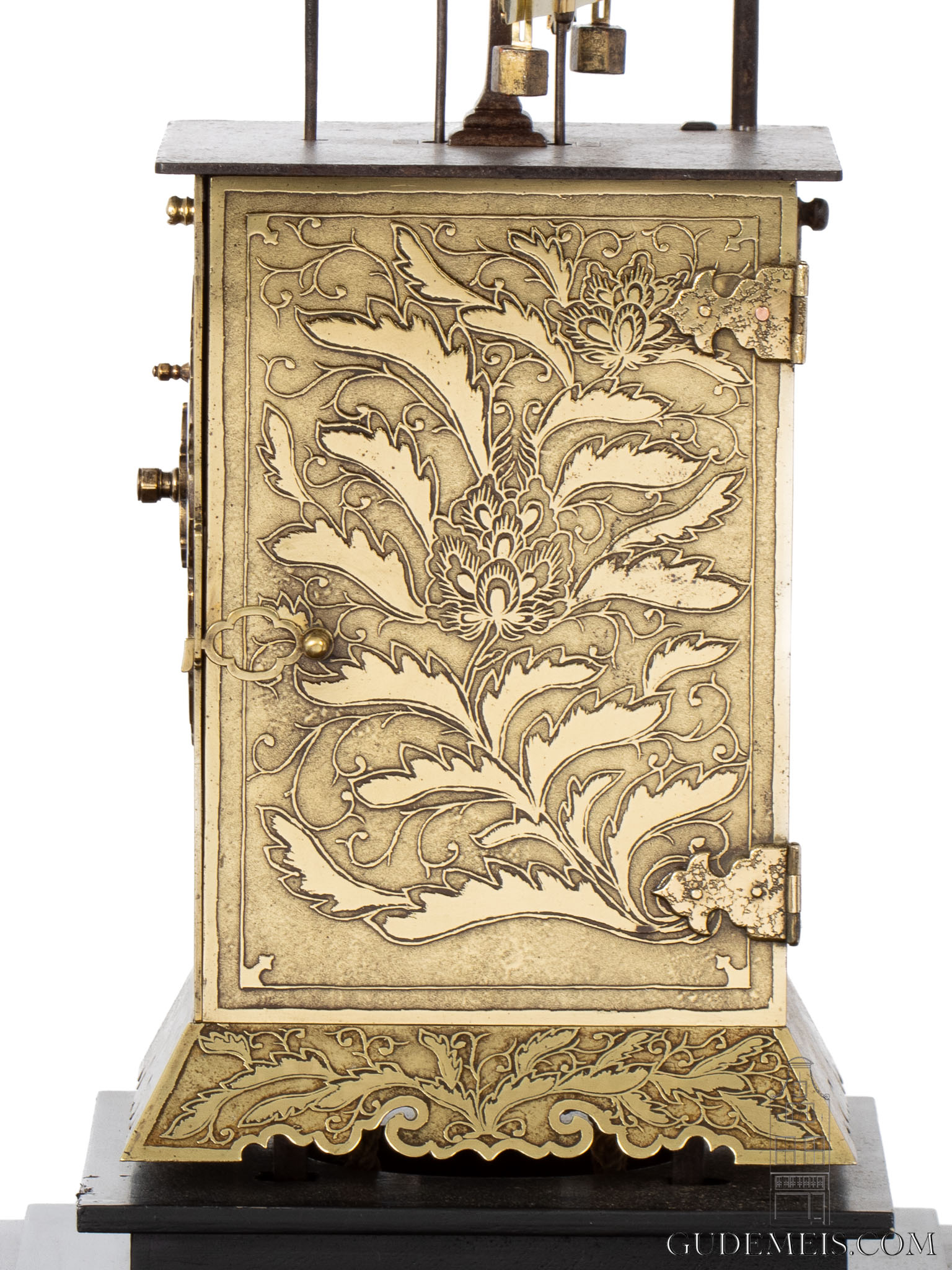
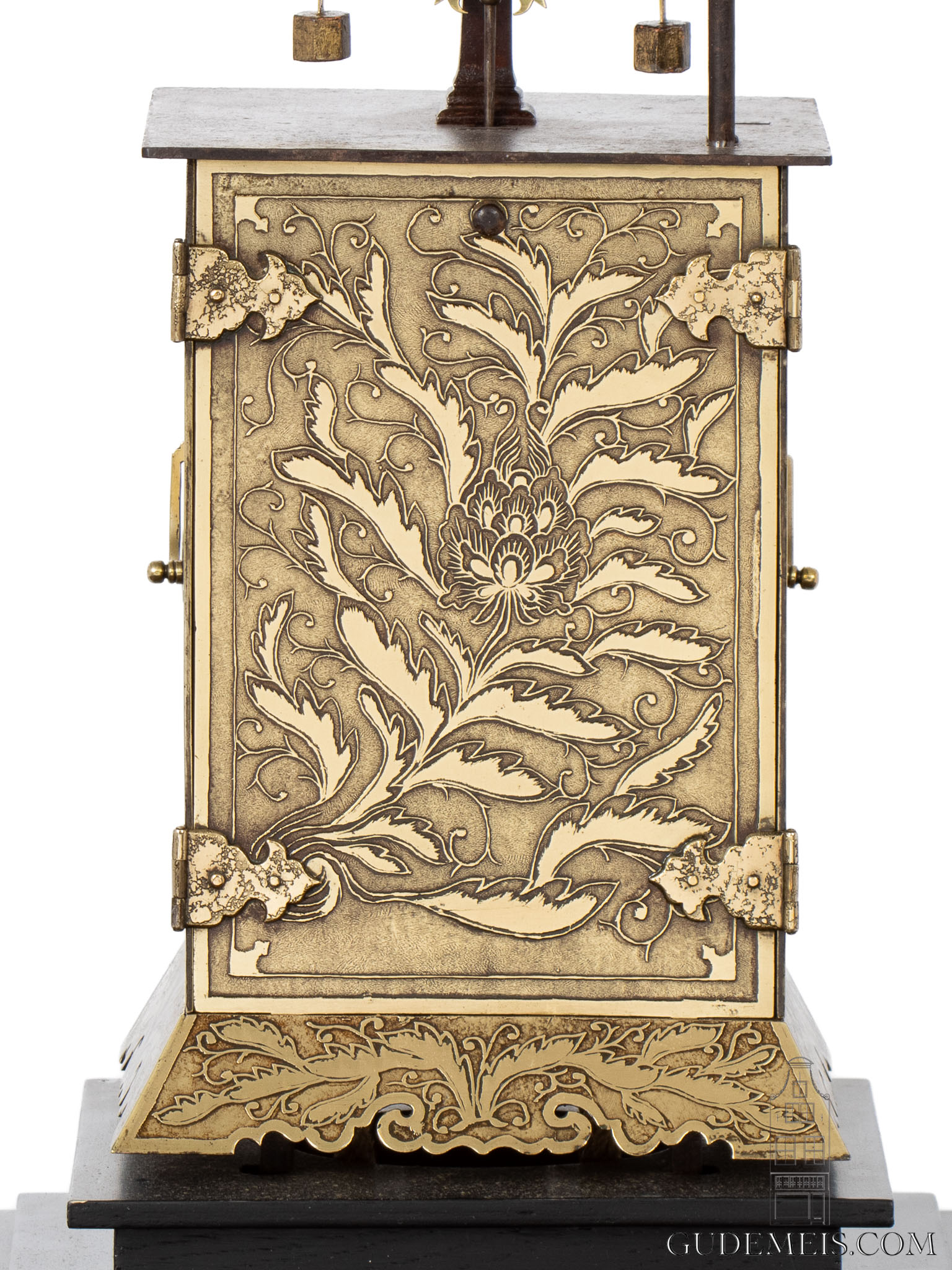
Until 1873, Japanese timekeeping differed from that of the West. Day and night were divided into six parts called “Toki,” with the day beginning at sunrise and ending at sunset. This means that the length of the toki changed with the seasons and was therefore longer in summer than in winter. Logically, the opposite applies to the night. This clock has two foliots—one for the day and one for the night—which switch via the striking mechanism. The small weights that determine the speed of the foliots had to be adjusted every two weeks, which is why the clock has a calendar. But this clock is much more than a feat of technical ingenuity. Thanks to its beautiful decorations and finish, it is also a work of art. The exquisitely crafted thistles in the ornamentation also provide a clue as to the period in which this beautiful clock was made. Similar thistles can be seen on porcelain from the “Genroku period,” which lasted from 1688 to 1704. The fact that the movement is made entirely of iron and the type of dial also suggest an early date of origin. Not only is it a beautiful object, but it is also a fine antique piece.
The Dial
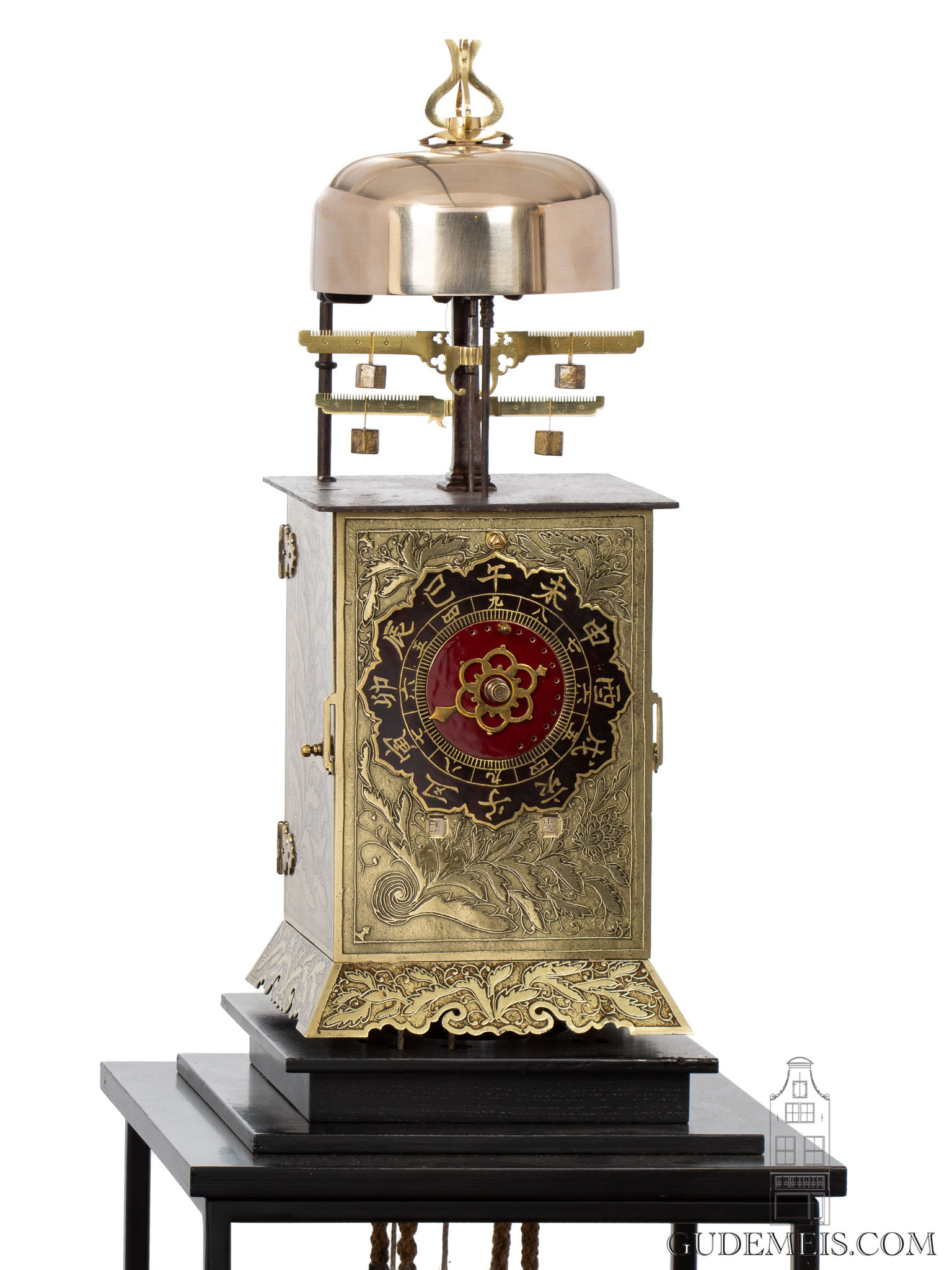
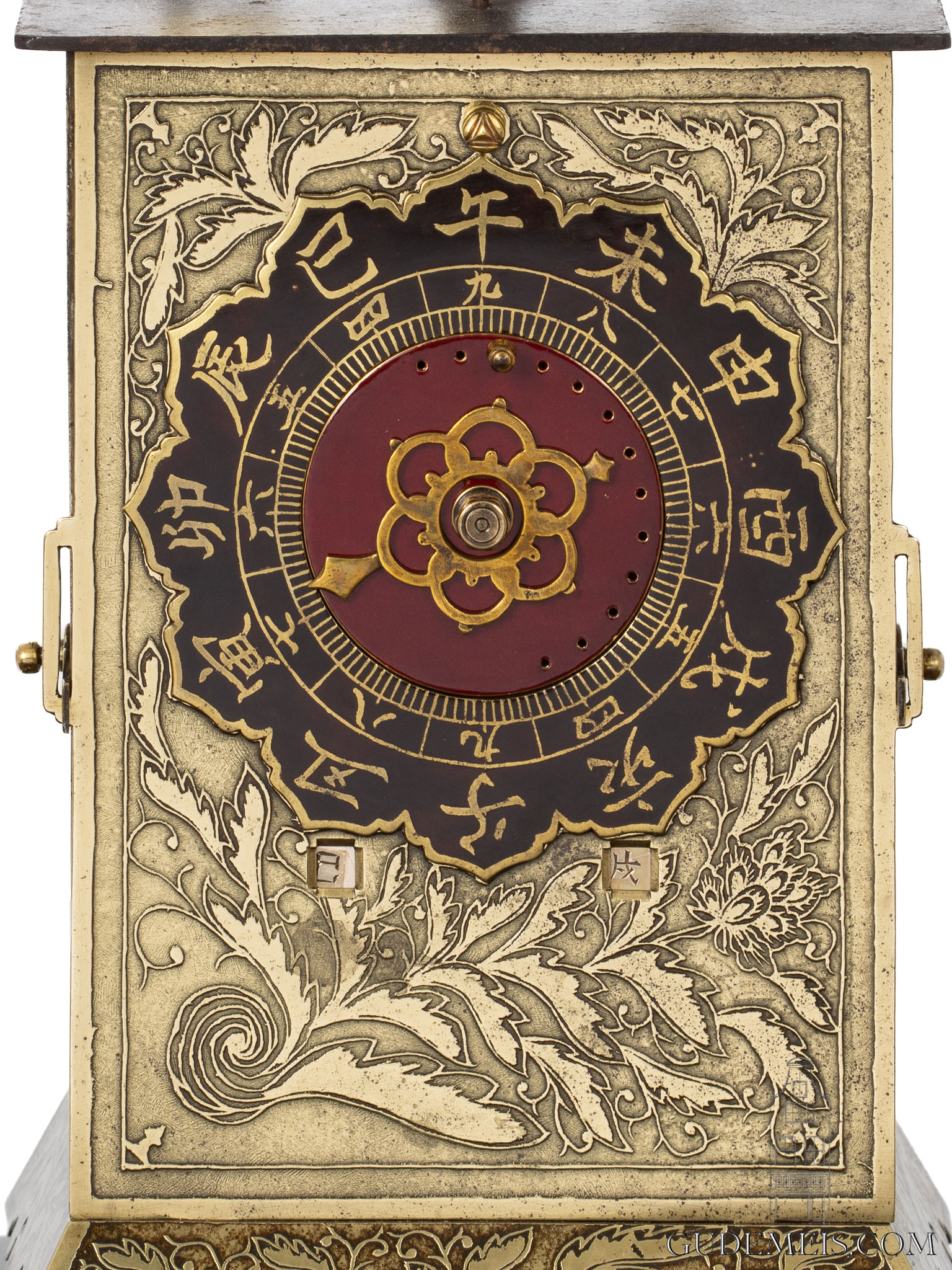
The large charcters on the lobed, black-lacquered dial represent the “hours,” or toki. Inside each of these, the number in Japanese indicates the number of strikes corresponding to that toki. Finally, the inside callibration makes it easier to read the single brass hand, which completes one revolution every 24 hours.
Double Foliot
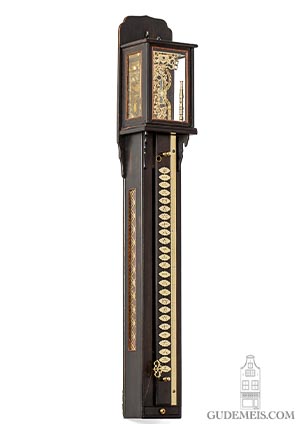
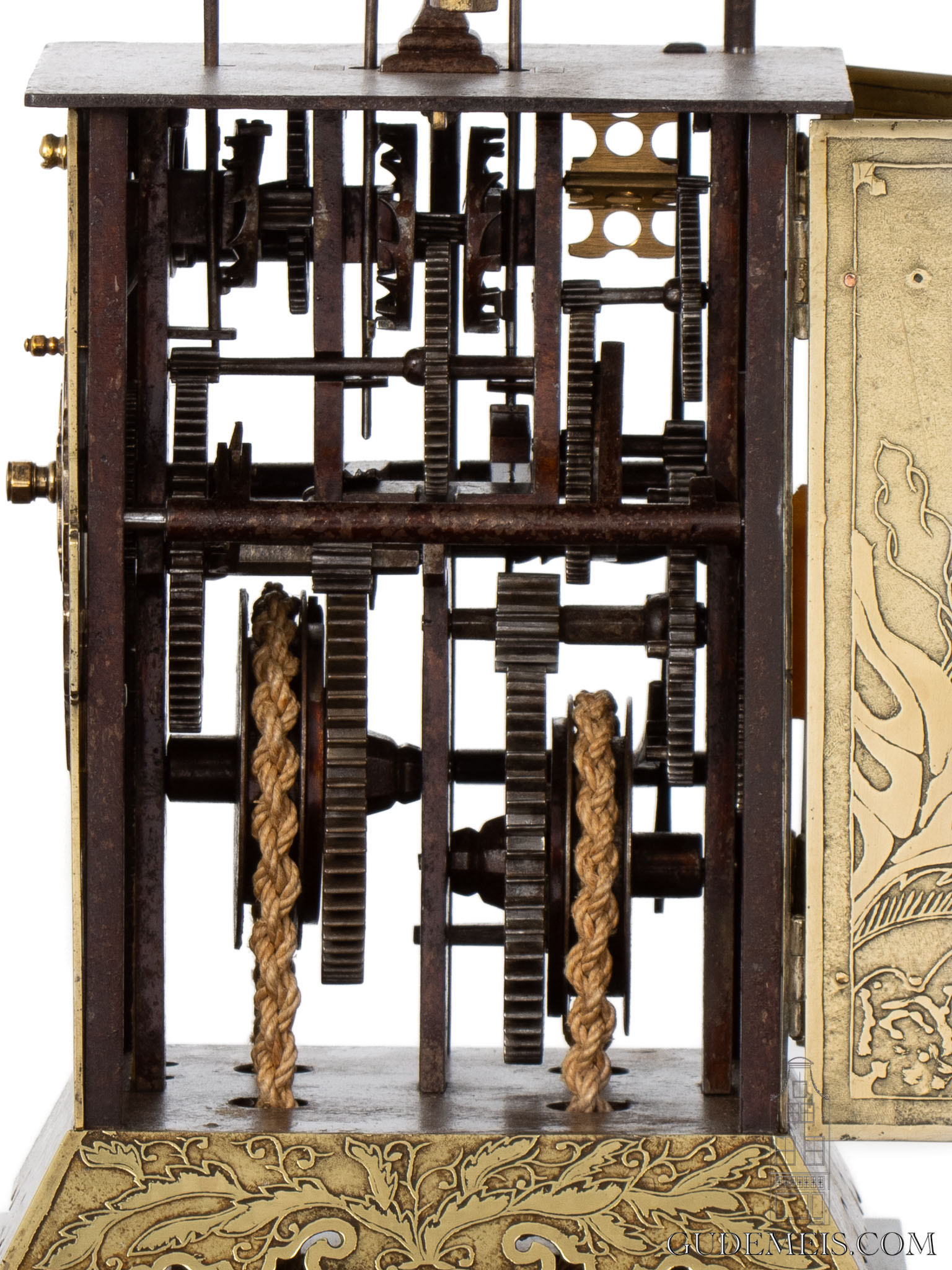
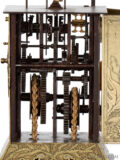
The beautifully made movement is made entirely of iron. It is driven by two weights and has a duration of two days. It has a double Foliot mechanism combined with a verge escapement for the day and night hours. The clock strikes on a bell by means of a countwheel. The alarm mechanism also strikes on the bell.
Thistles
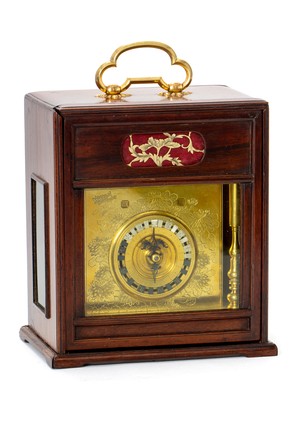
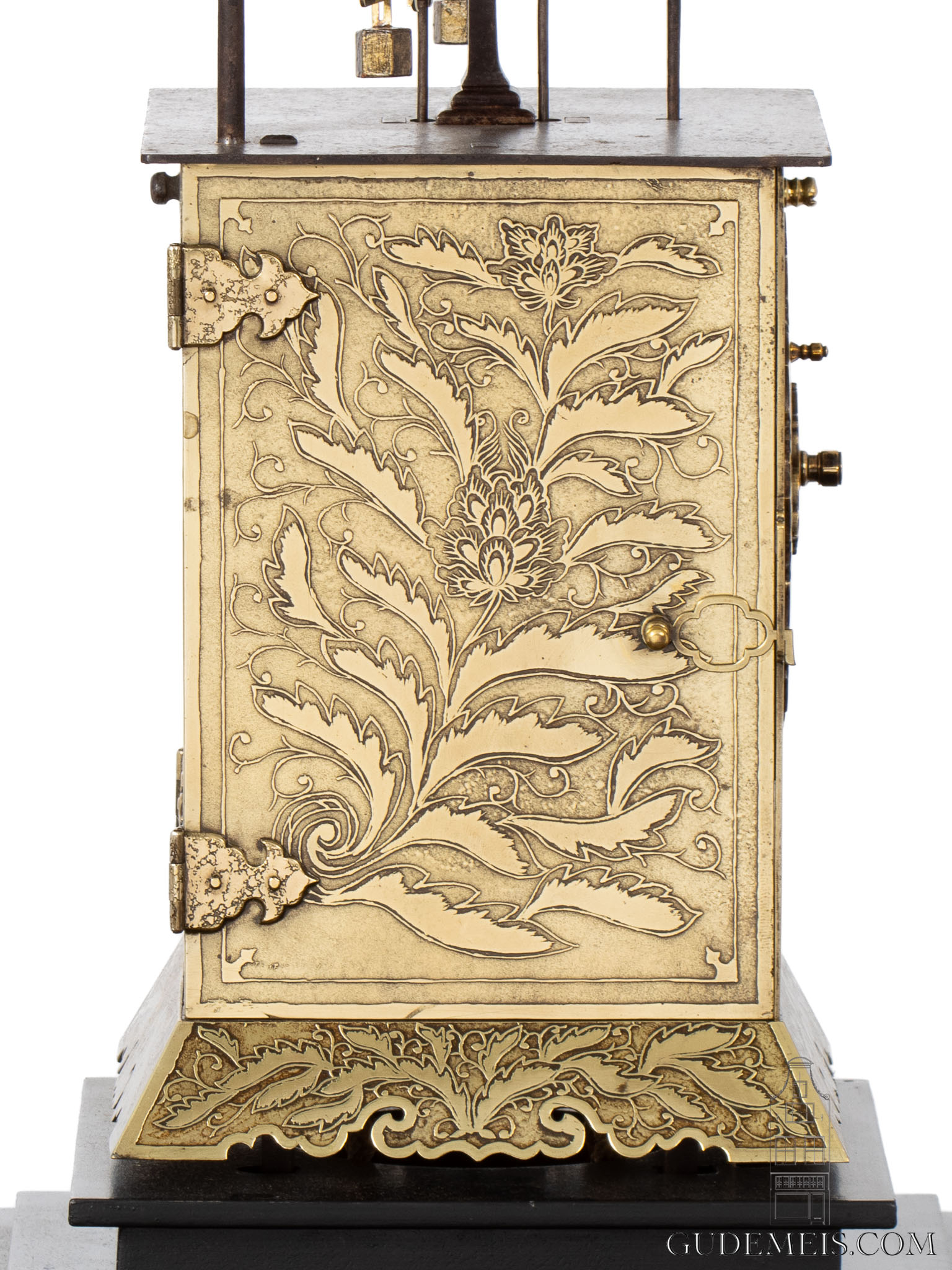
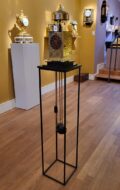
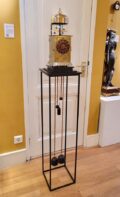
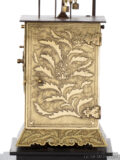
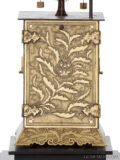
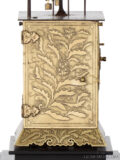
The case features beautifully cast and chiseled brass panels decorated with stylized thistles. The insides of the doors are also decorated. The clock is placed on a later base.