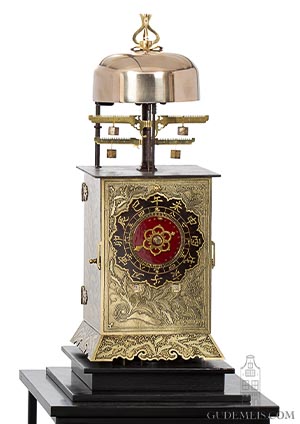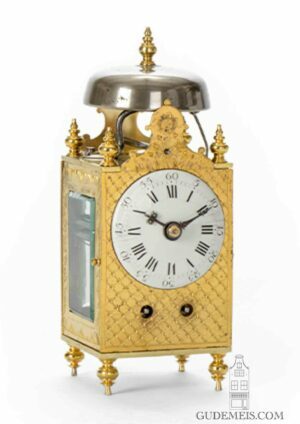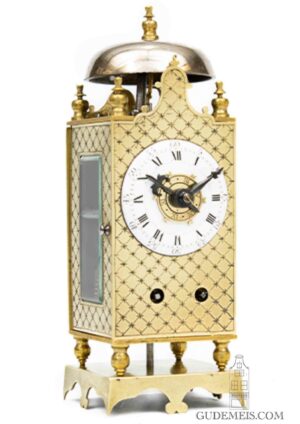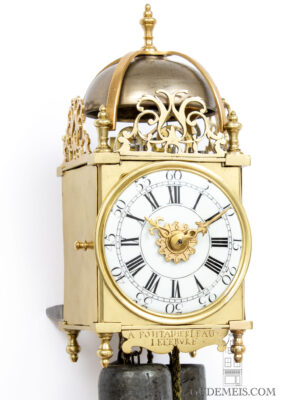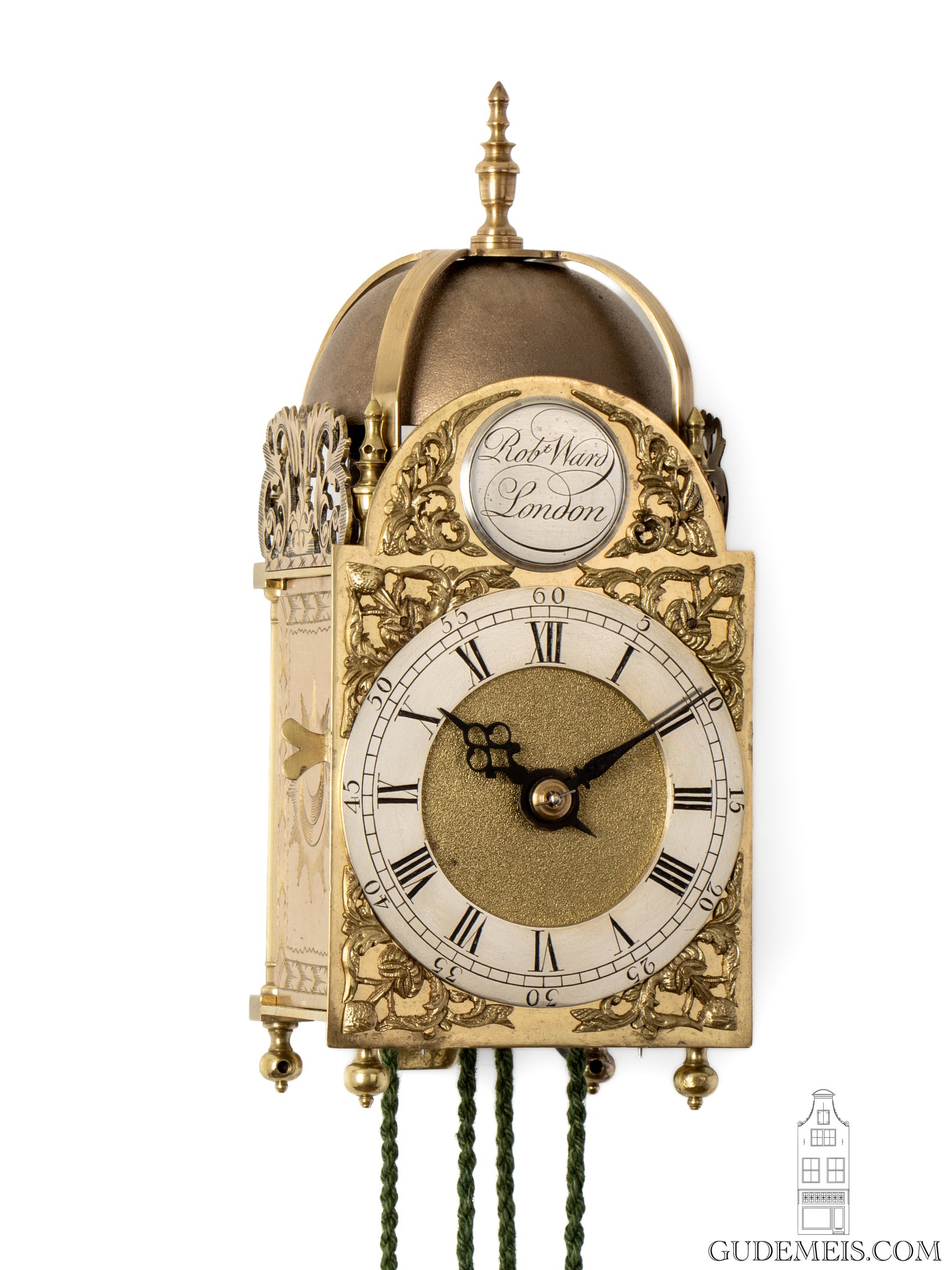
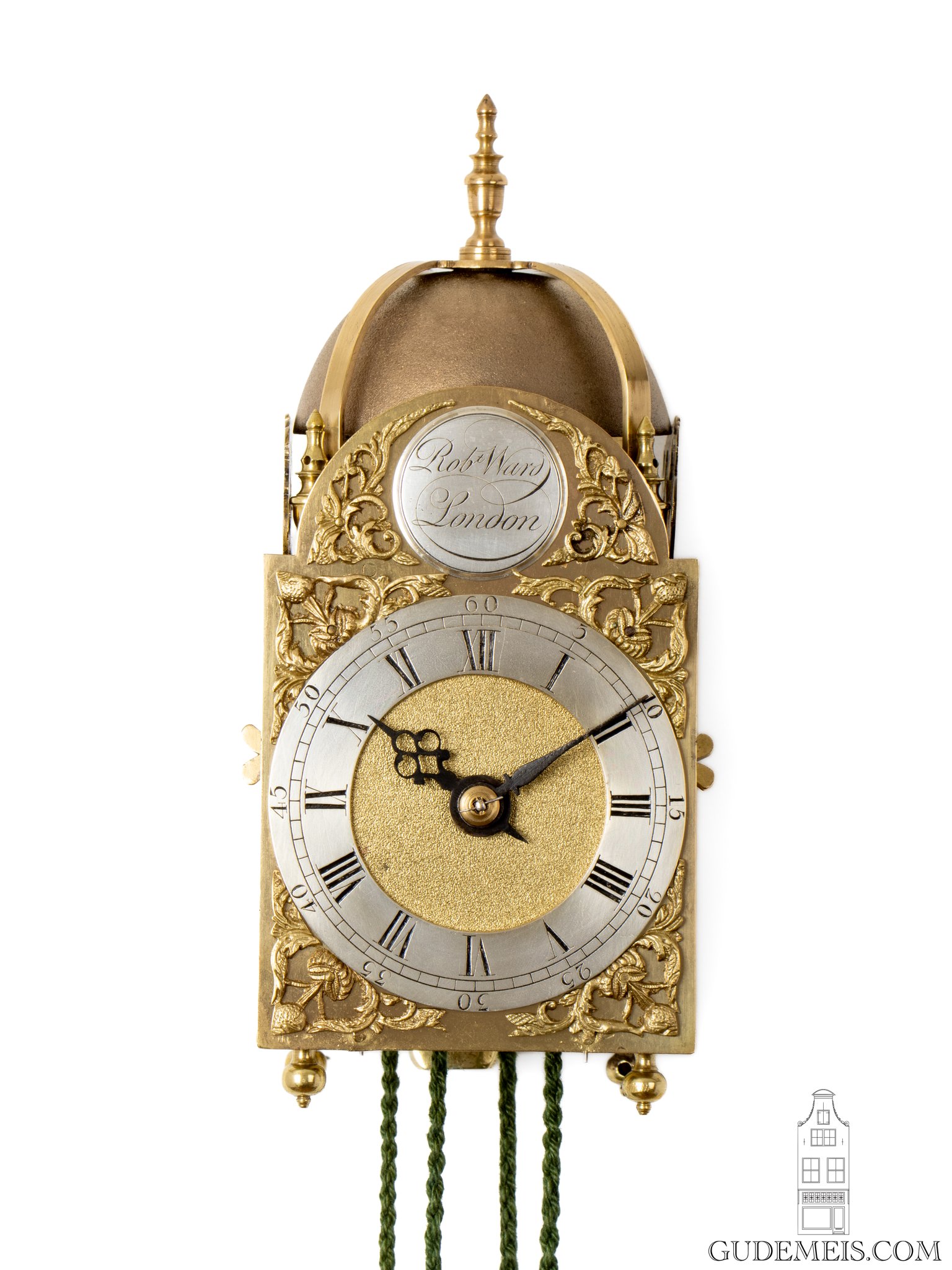
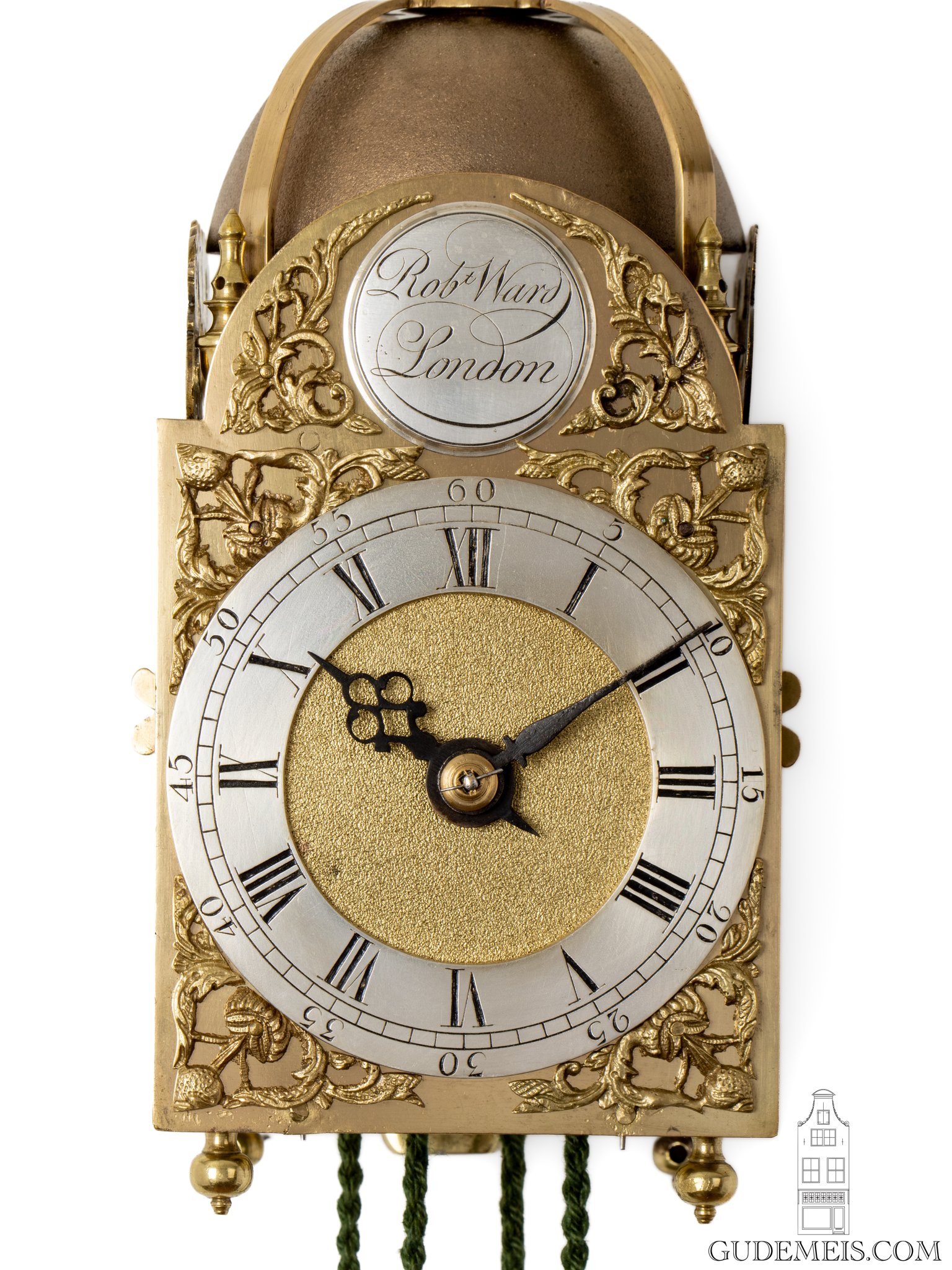
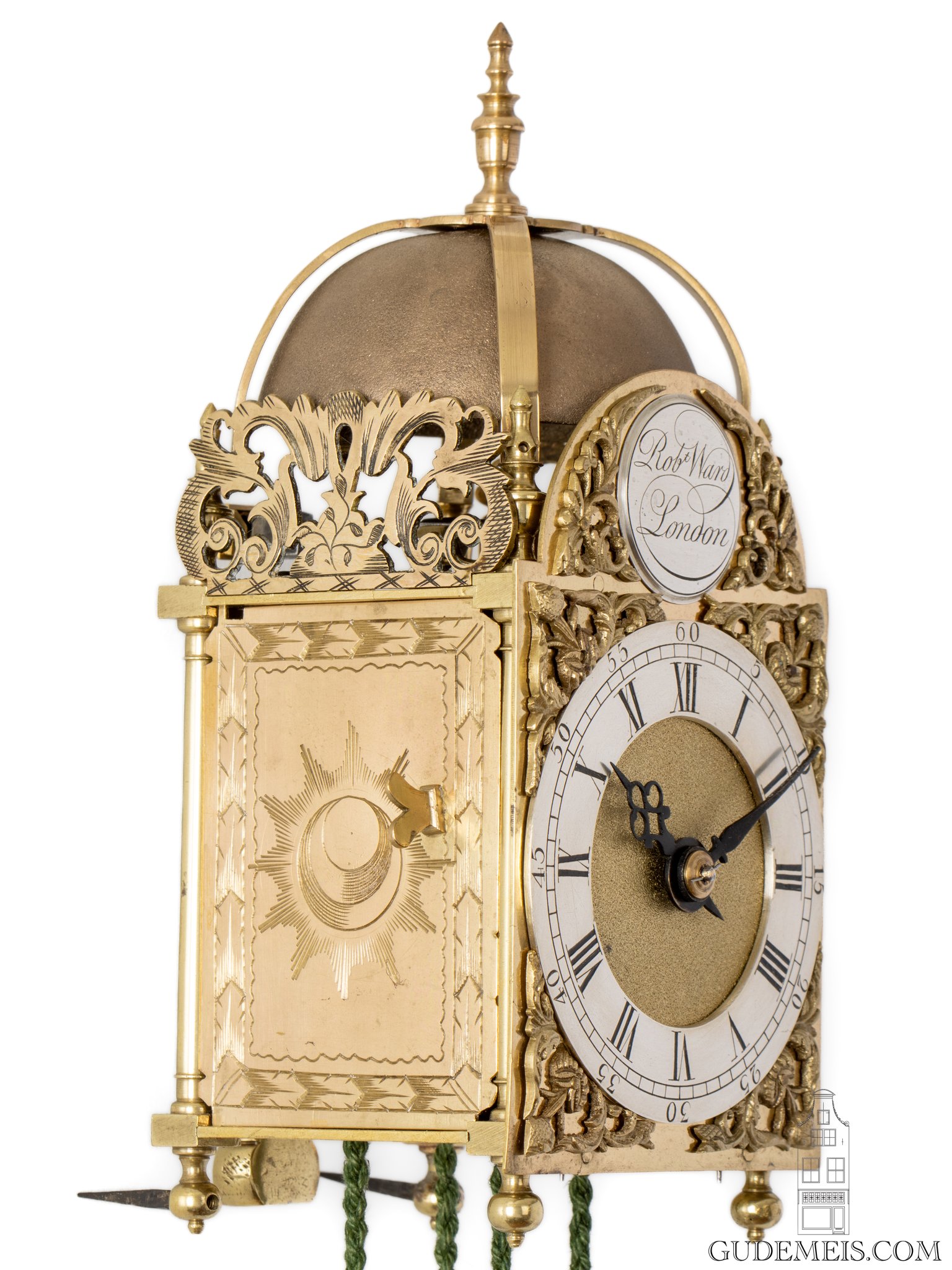
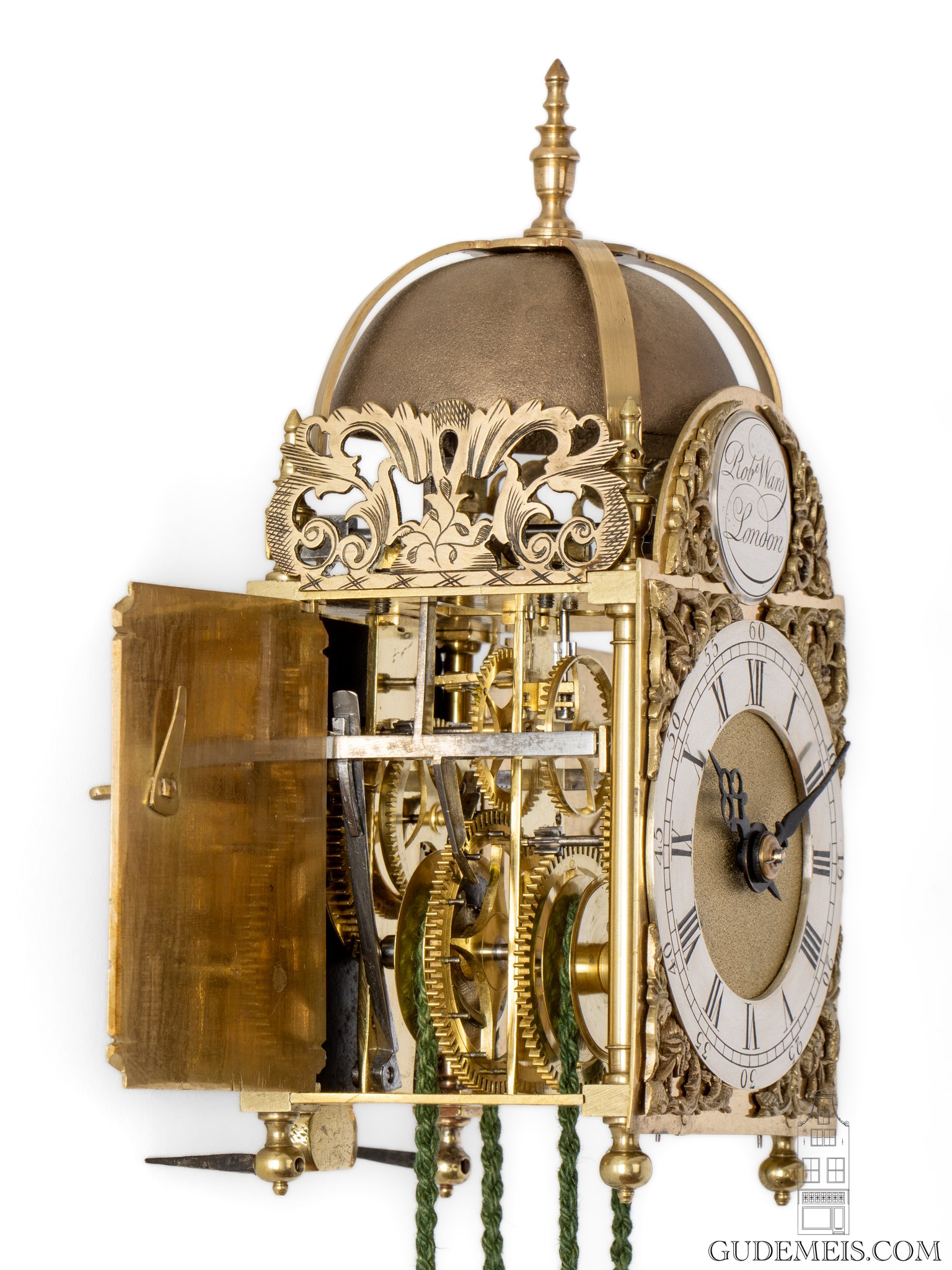
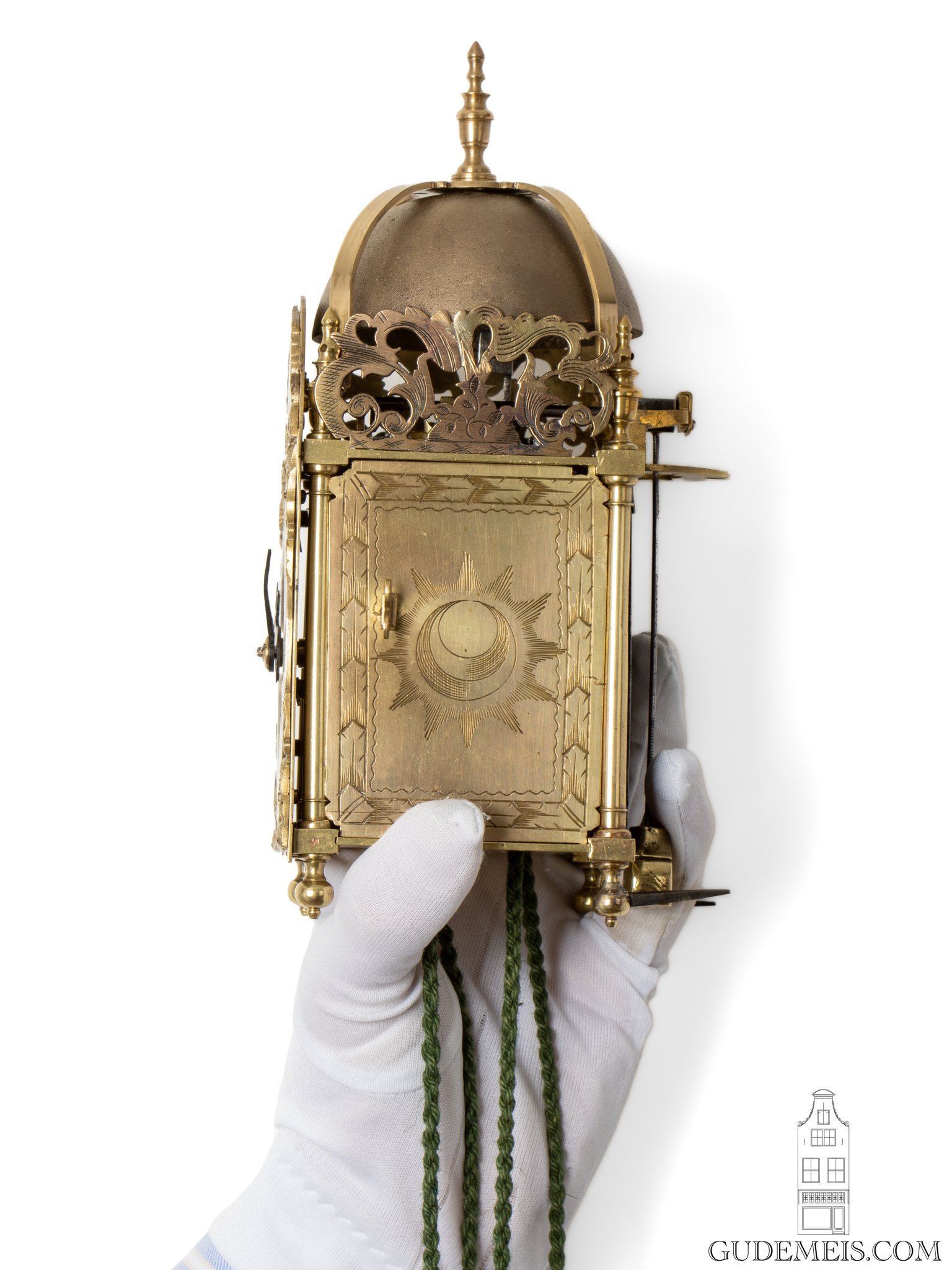
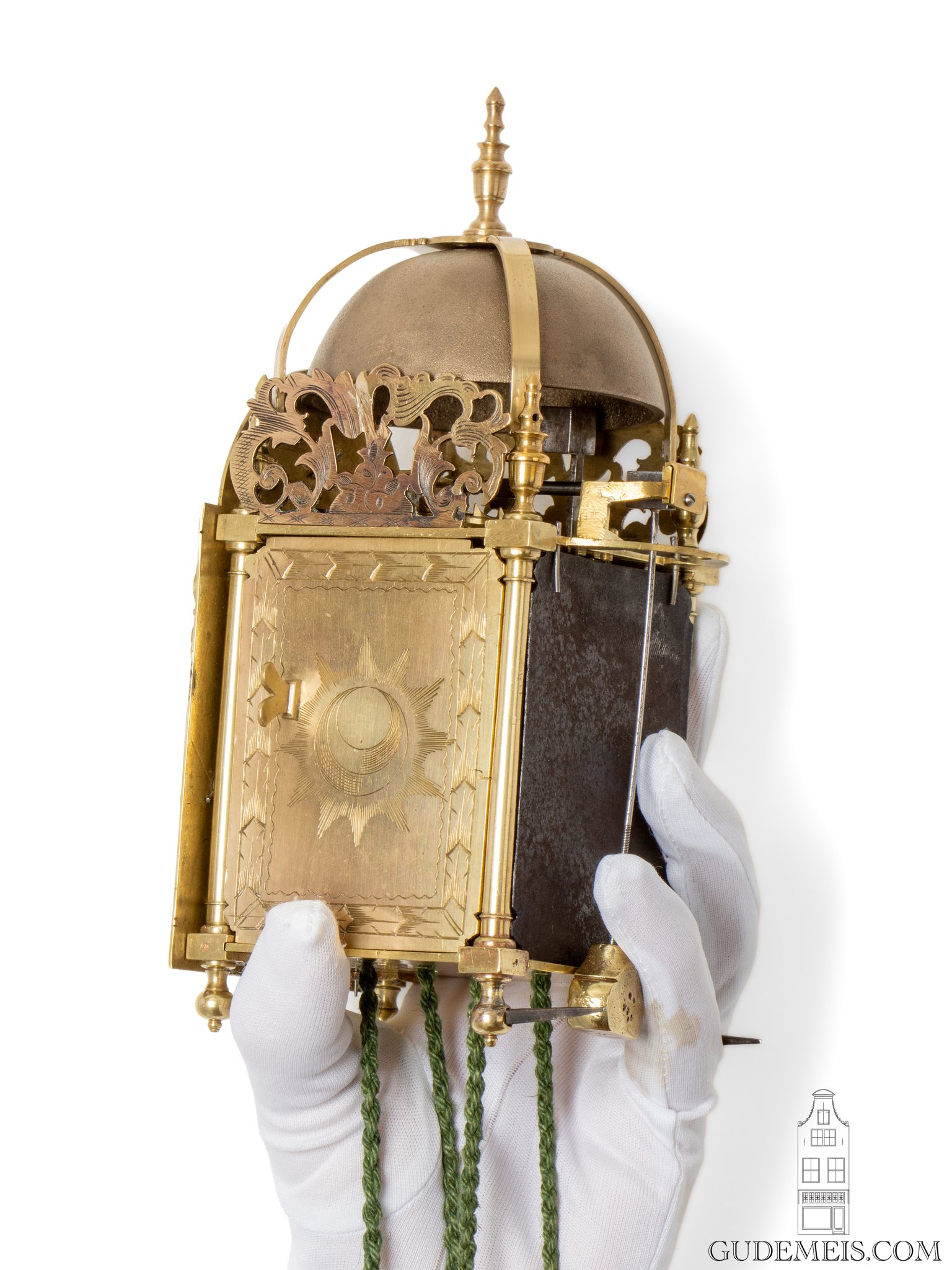
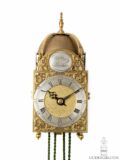
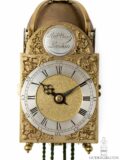
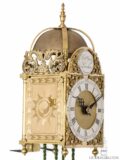
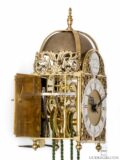
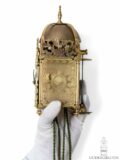
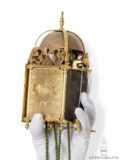
A miniature English brass striking lantern clock, Robert Ward, circa 1750.
Omschrijving
Lantern clocks
At the end of the third quarter of the 17th century, the production of lantern clocks increased tremendously. This greater production enabled some
craftsmen to specialise in making certain parts, such as dials, hands, and bells. This division of labour increased production and quality at a lower cost. On the other hand, it led to uniformity in appearance and size. English clocks with deviating proportions are therefore rare and sought
after. Besides this, one can state that small clocks are rare because they would usually be a second or third clock purchased for a household.
The rarity of this clock is enhanced by the fact that it has striking work since most small lantern clocks have only an alarm, being destined for the sleeping quarters. But for me, the quality of the finishing is the best feature. The engraving of the dial and case, the sharply cast spandrels
and finials are just better than usual. Together with the lovely proportions, it makes this clock just a little more special than usual.
Robert Ward
The 8.3-cm engraved silvered chapter ring has Roman numerals for the hours and Arabic numerals for the five minute marking. The pierced hands are made of blued steel. There are finely cast and chased brass flower spanderls in the corners. In the arch there are further cast ornaments flanking the silvered engraved signature plaque which is inscribed Rob.t Ward London.
Verge escapement
The brass posted movement is driven by a weight and has a duration of a day. It is being regulated by verge escapement in combination with a fixed pendulum. The clock strikes the hours on a bell by means of a countwheel.
Finials
The case has beautifully turned corner finials which support the bell cross which is surmounted by a fifth finial. There are foliate pierced and engraved side frets above the ornate engraved doors. The case is suspended on the wall by means of a hoop and spurs.