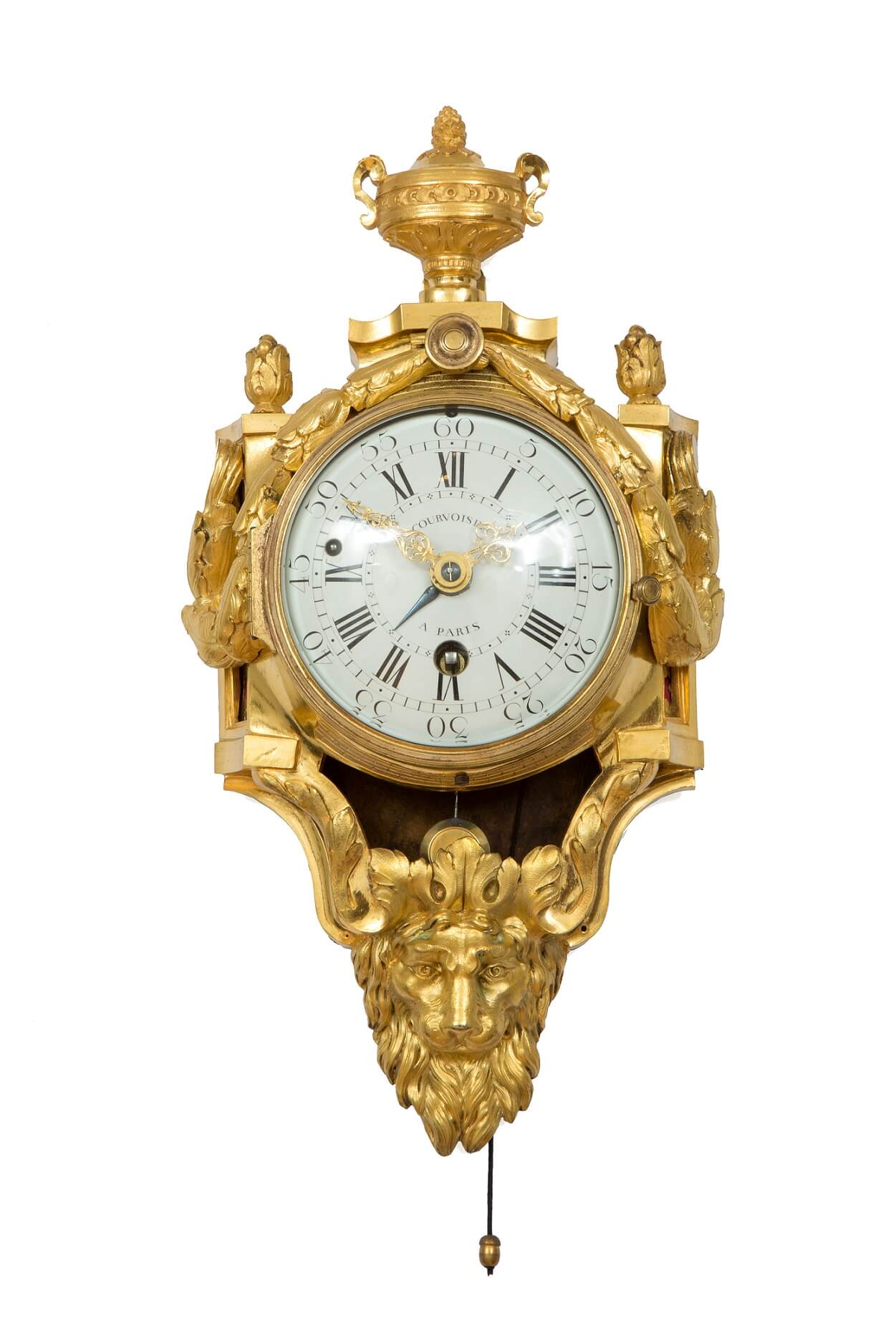
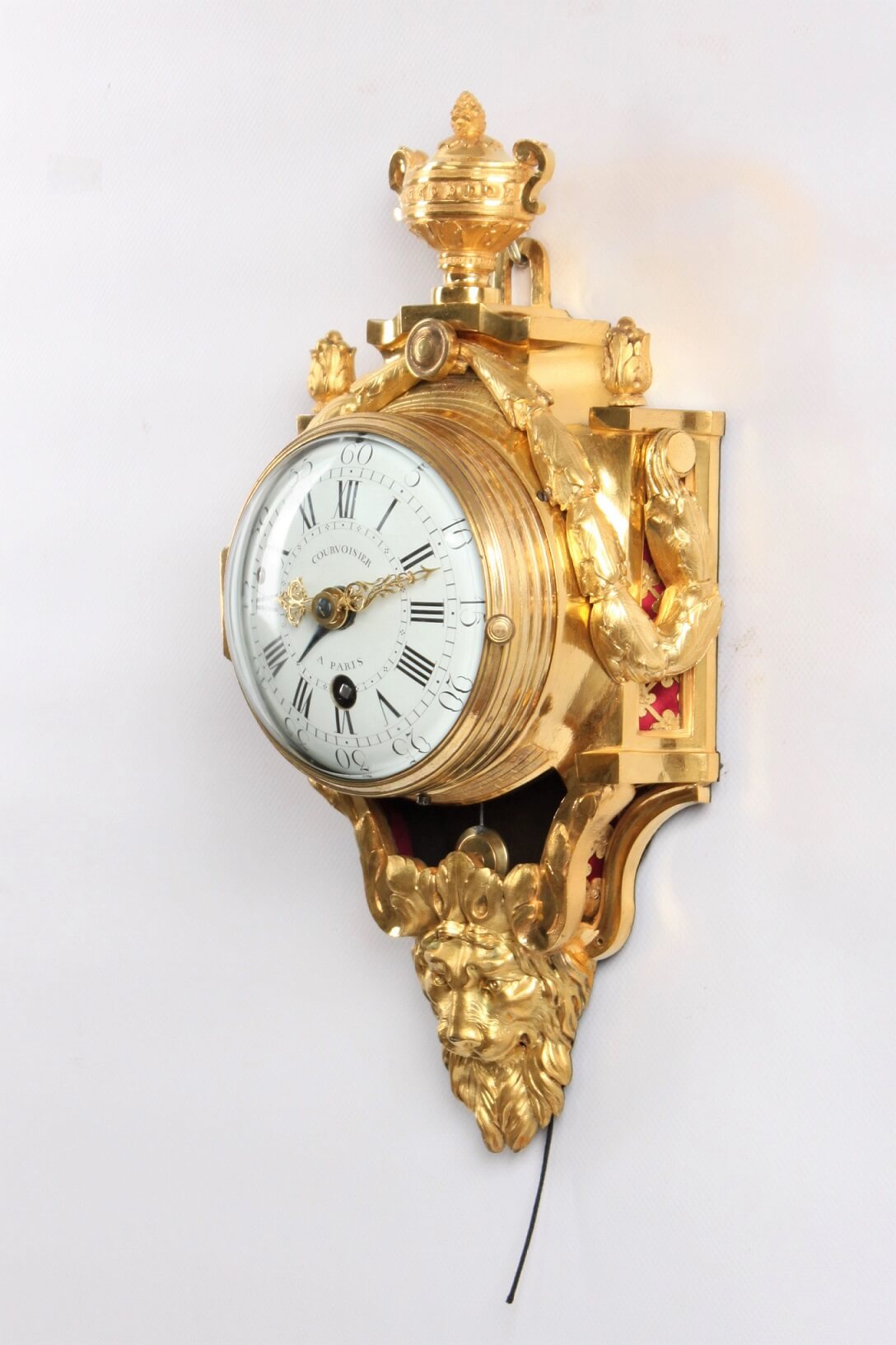
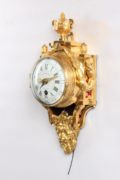
A rare small French Louis XVI ormolu cartel clock, by Courvoisier, circa 1770
Description
Cartel d’alcove
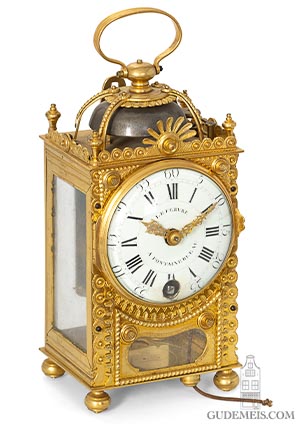
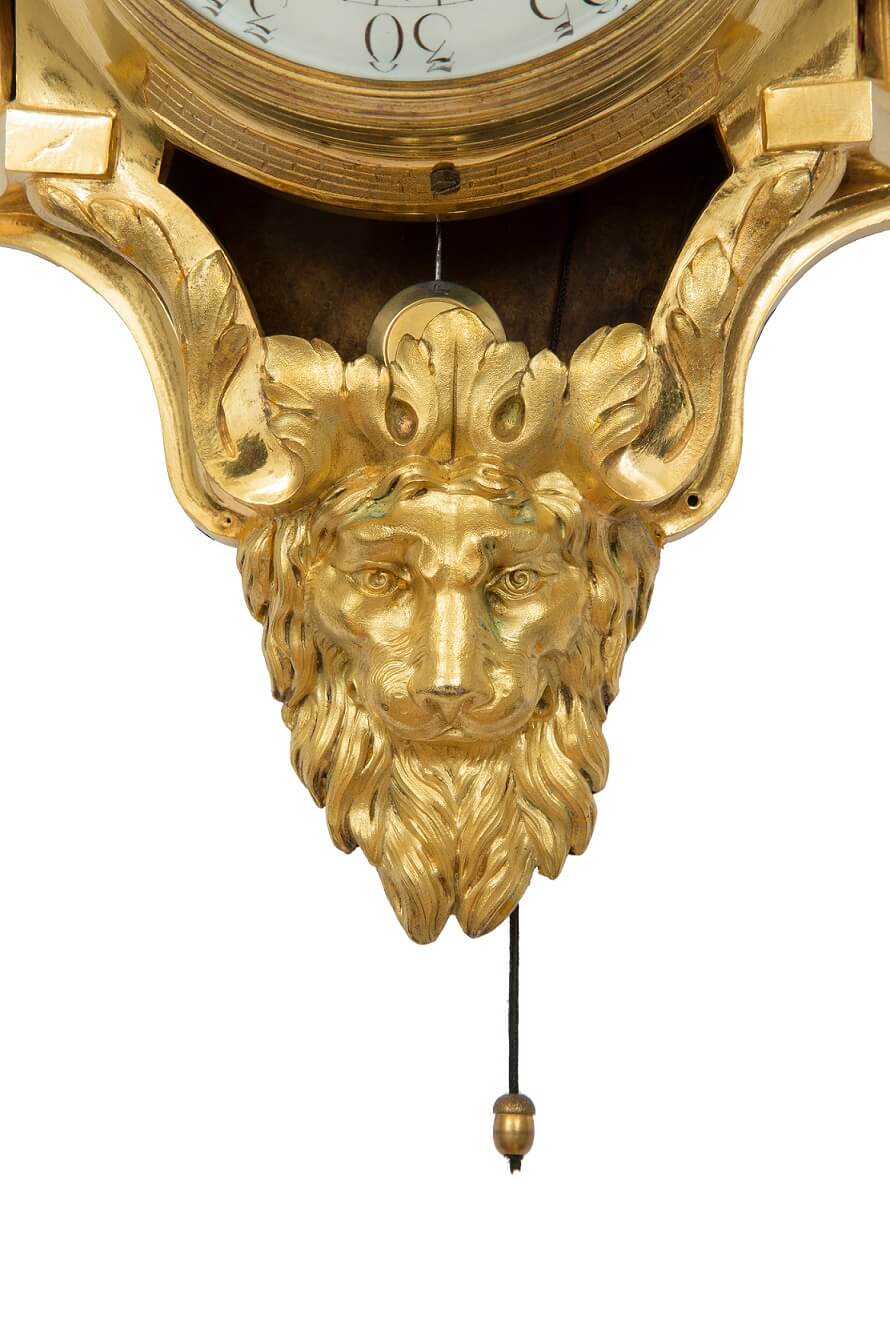
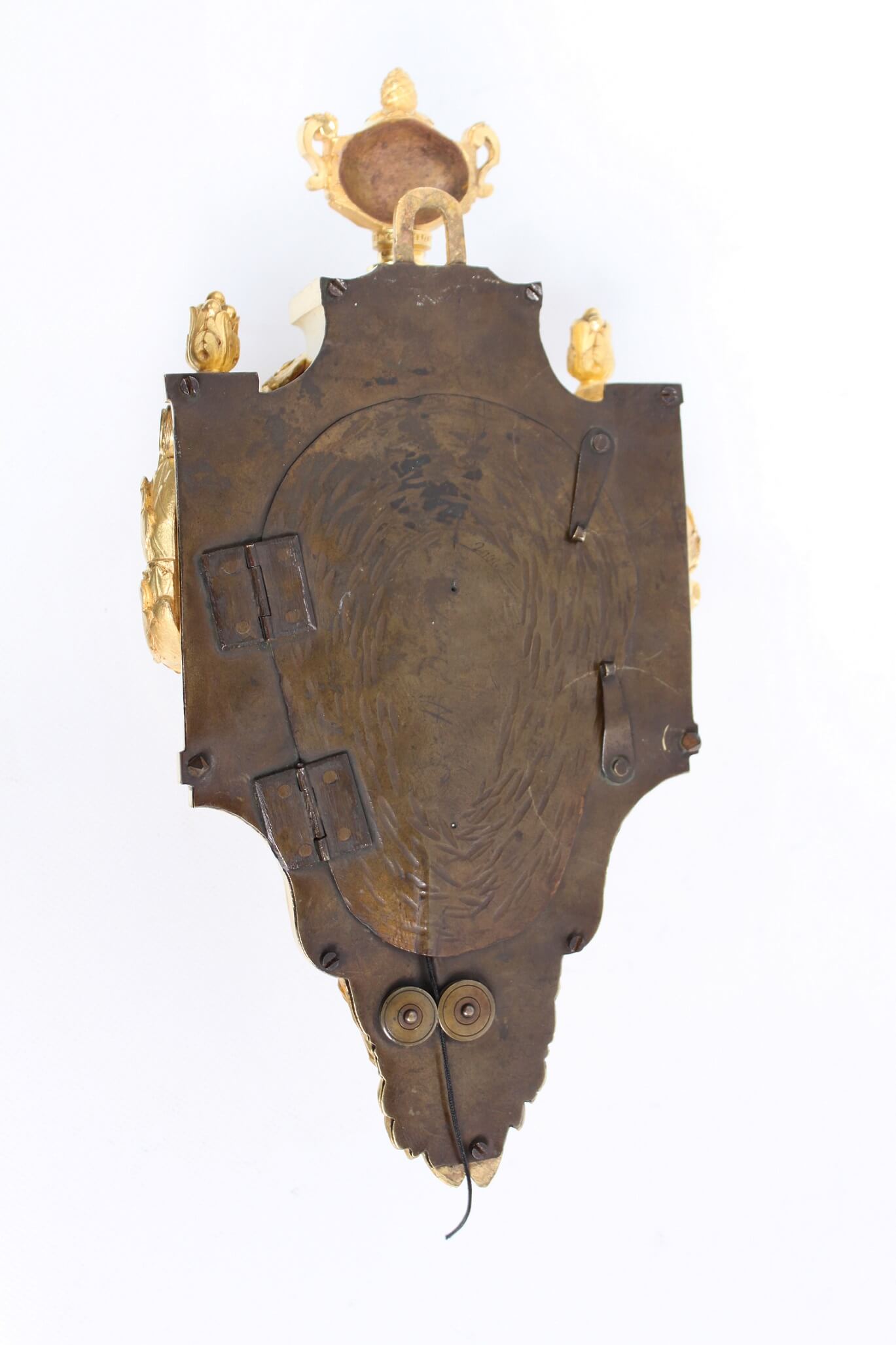
An art history teacher could well use this small cartel clock as an example of the decorative art that found its inspiration in the art of the ancient Greeks and Romans. The urn on top, the trailing garlands, the acanthus leaves on the sides, and the lion mask below are all decorative elements characteristic of this classicist period. The finely detailed execution of the bronze work, with its exquisite finish accentuating the lovely design. The functions of the movement give us some clues as to how this clock was used. Since it has an actual alarm and pull quarter repeating, it was probably used in the bedroom of a very wealthy person. The alarm was for waking up on time, and the pull quarter repeating allowed the user to know the time in the dark, which was very practical because ‘making light’ involved fire, so it wasn’t quite as easy as turning on a light switch. Finally, there is a clip, which can secure the pendulum for transport. This unusual feature makes it probable that this clock could be taken on a trip and used in the room where one stayed. A beautiful clock with an interesting history.
Courvoisier A Paris
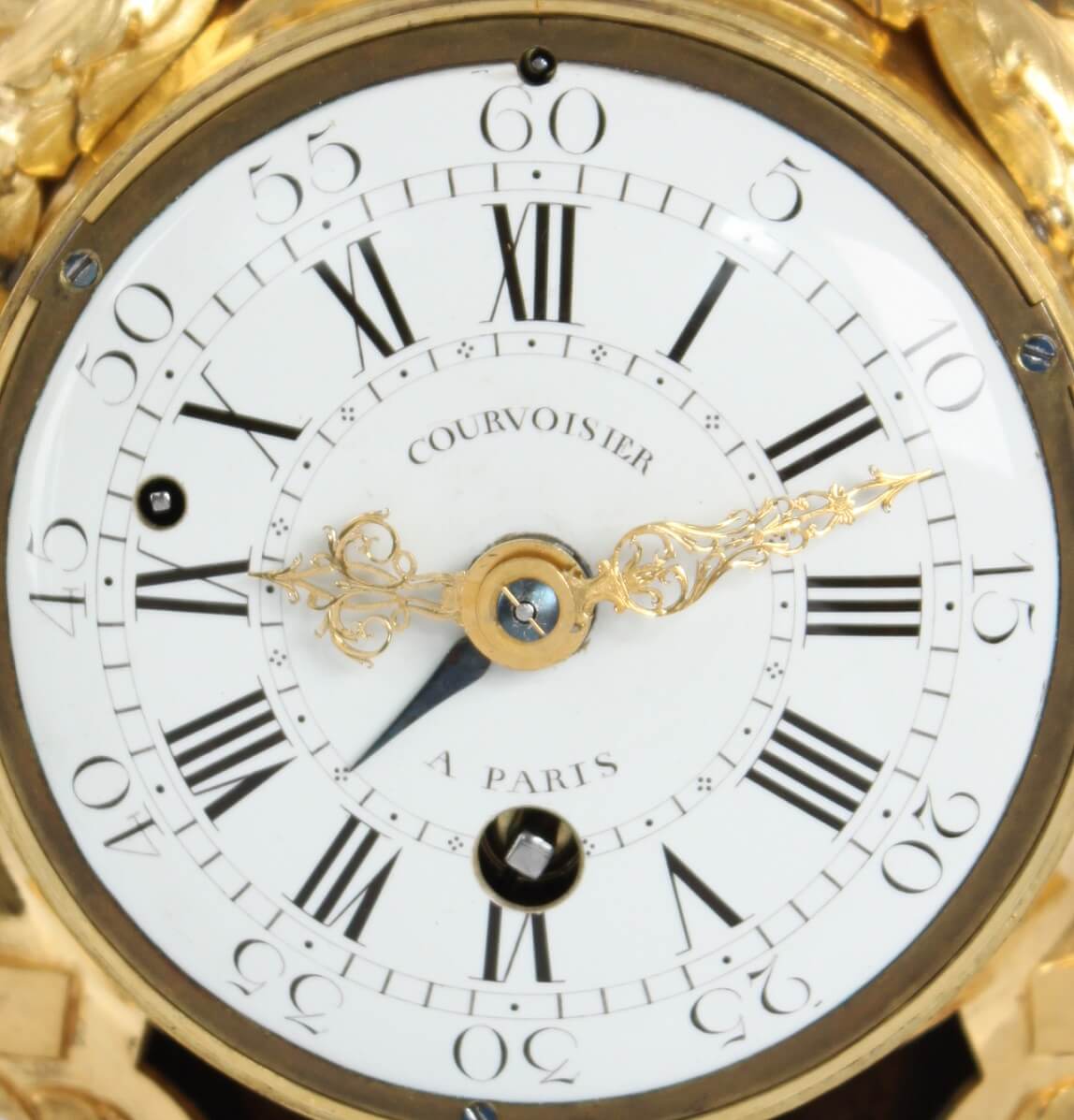
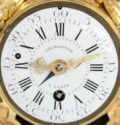
The 10-cm enamel dial has Roman numerals and is signed Courvoisier A Paris. The finely pierced and engraved gilt hands are made of brass while the alarm hand is made of blued steel. The signature probably refers to David Louis who became master clockmaker in 1765 and who had his workshop at the Quai Conti. (Tardy, Dictionnaire des Horlogers pp. 145.)
the movement
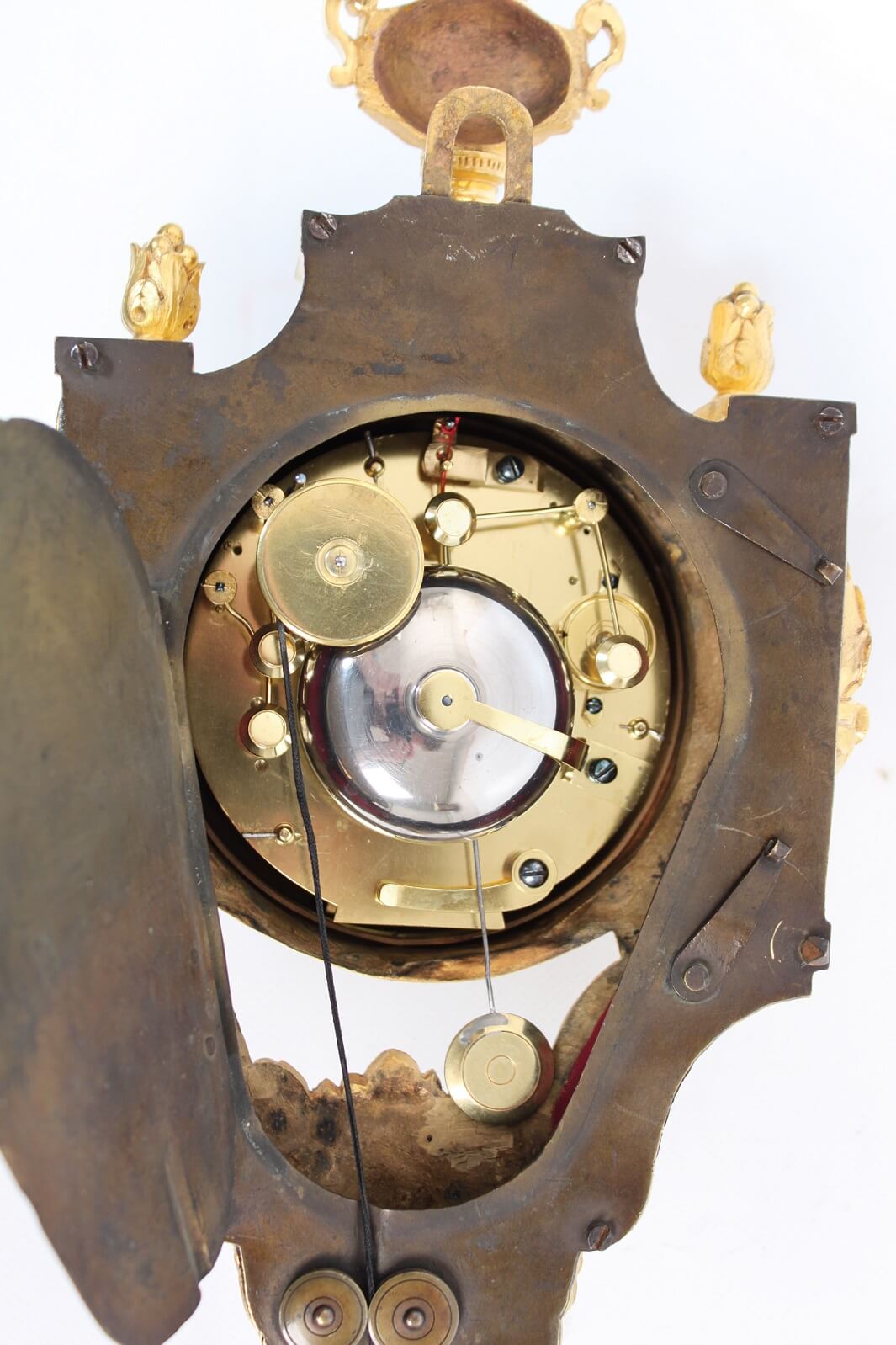
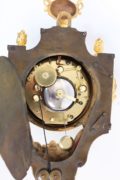
The movement is driven by a spring barrel and has a duration of eight days. It is regulated by anchor escapement in combination with a silk suspended pendulum. By pulling a thread, an auxiliary spring is wound which drives the pull quarter repeating on two bells. The alarm mechanism is activated when another auxiliary spring is wound by an arbor through the dial and which can be set by the blued steel hand.
ormolu
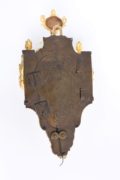
The case is made of gilt bronze which is called ‘ormolu’ when it is done by fire-gilding. The casting and chiseling is of very good quality. The whole is surmounted by a classical urn, typical for the Louis XVI period just as the berry finials and the garland surrounding the dial. The lower part consists of a beautifully made lion’s mask.