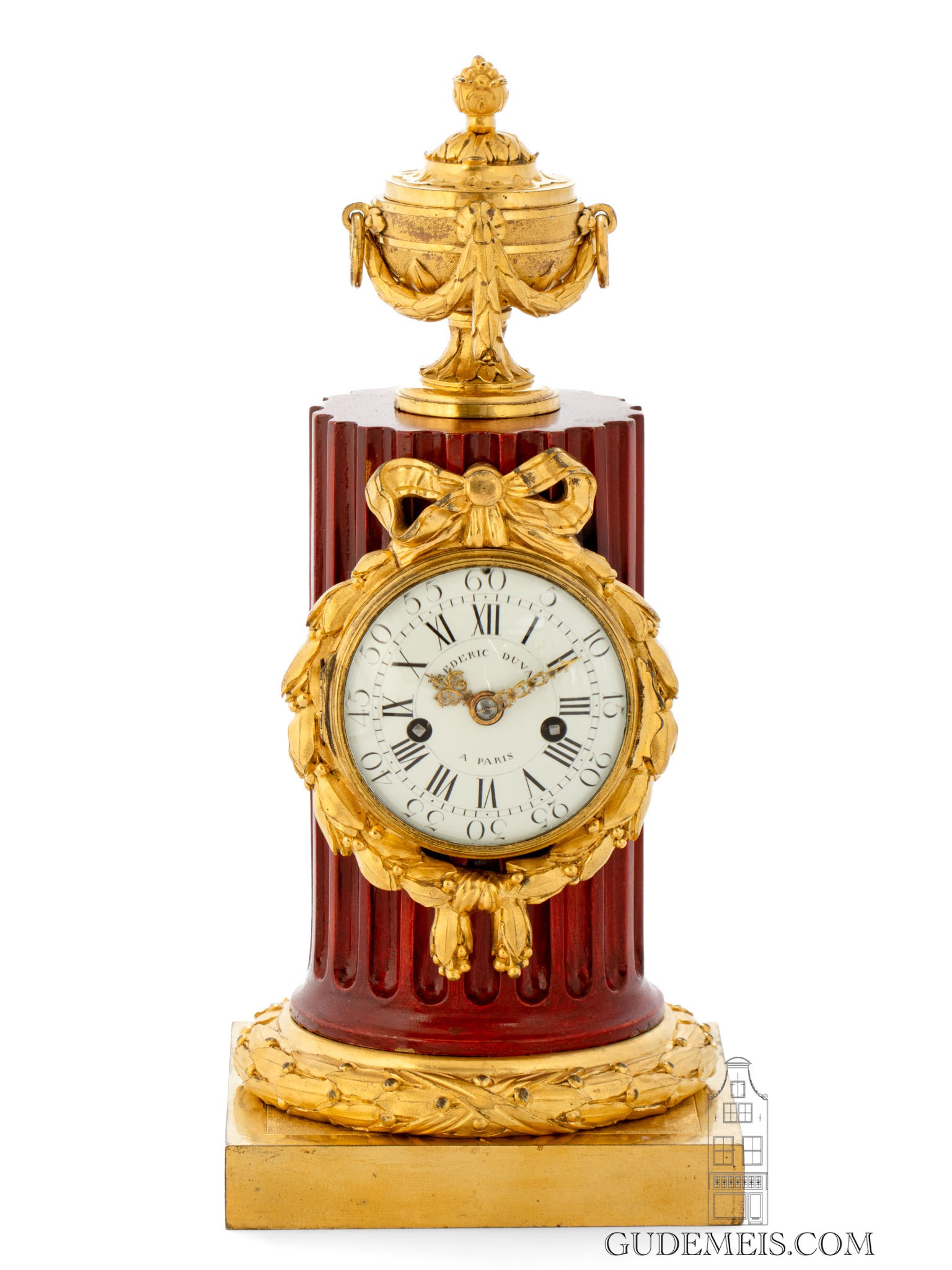
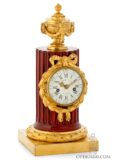
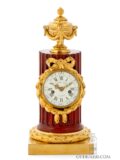

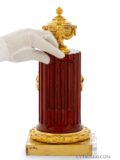
A French Louis XVI ormolu and bronze mantel clock by Osmond, circa 1770.
Description
Osmond
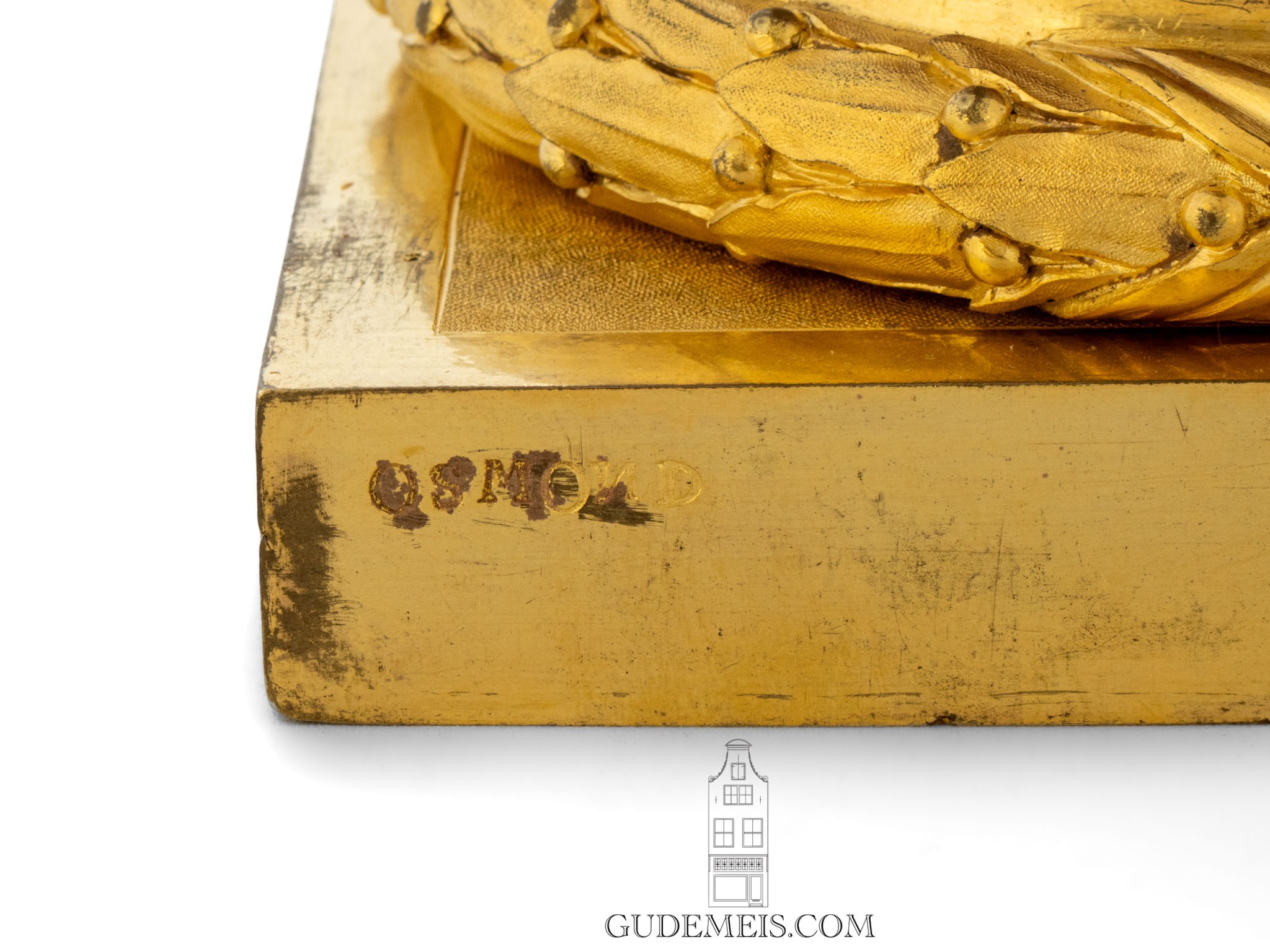
Robert Osmond (1711 – 1789) student of Louis Regnard became master bronze caster in 1746. He started a workshop that soon gained a good reputation. He was joined by his nephew Jean-Baptiste Osmond in 1753. After having worked in the rococo style they turned to the new Neo-classical style in the early 1760’s. It is their work from this period that they are most famous for, and already were in the day. Although they made all sorts of gilt bronze objects, they are best known for their clock cases of which many original designs still exist. With the column being an element that they are famous for, this clock is typical for their work. While the quality of the bronze work is a great example of their workmanship.
Frederic Duval
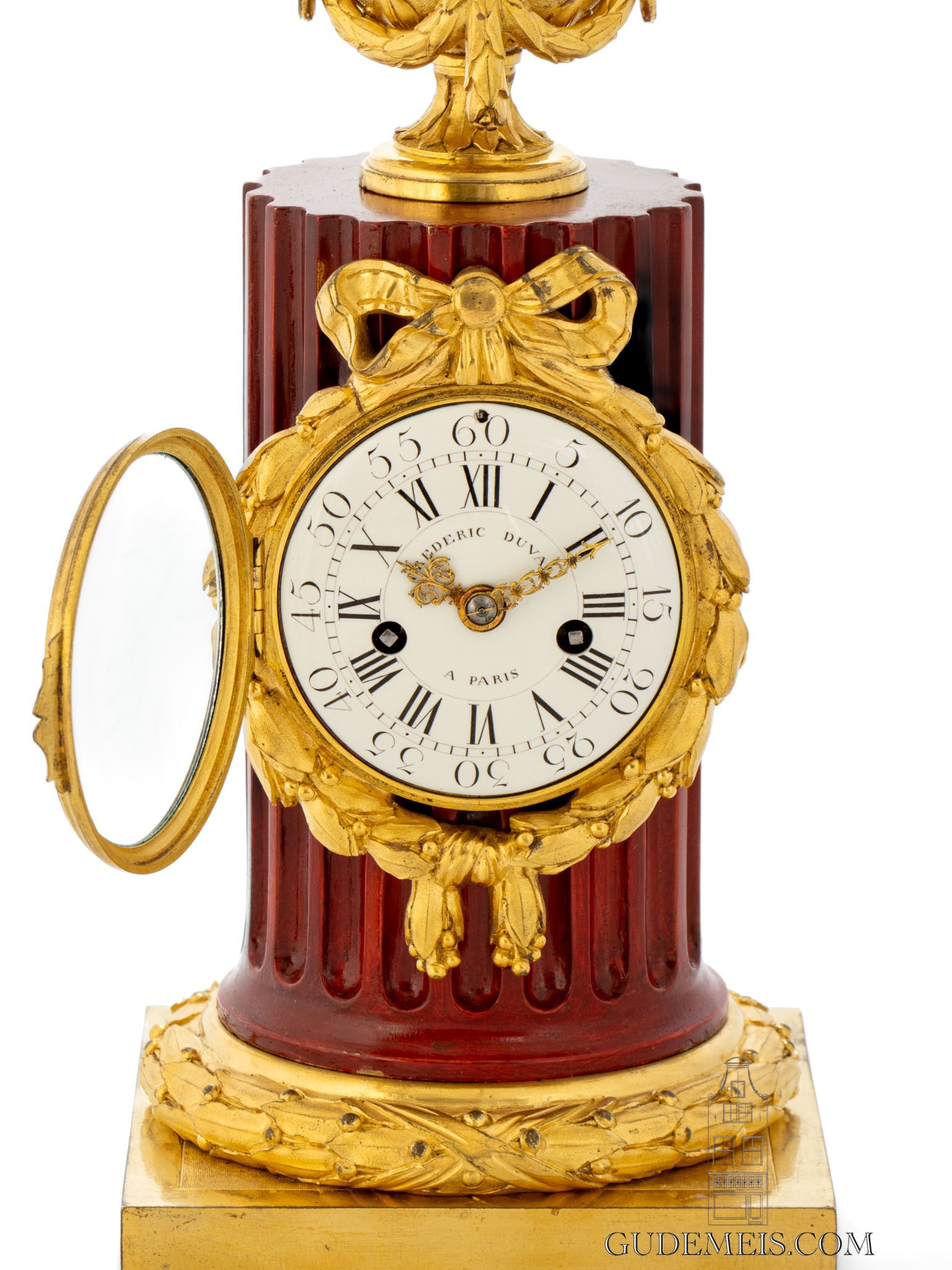
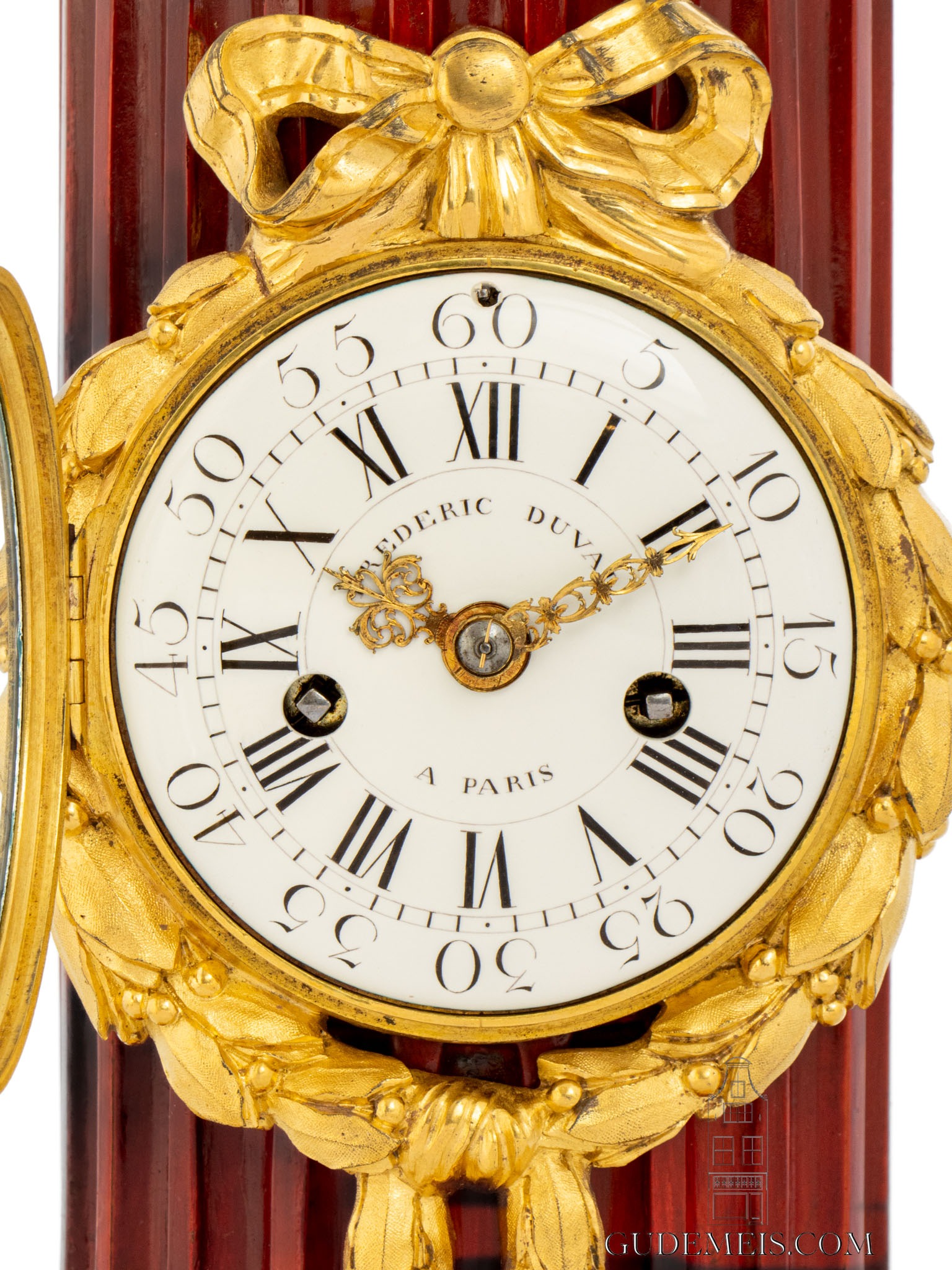
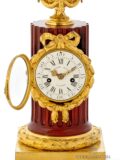
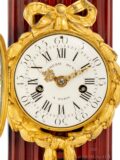
The enamel dial has Roman numerals for the hours and Arabic numerals for the five-minute indication. The centre is signed Frederic Duval A Paris. The finely pierced and engraved hands are made of gilt brass.
Anchor escapement
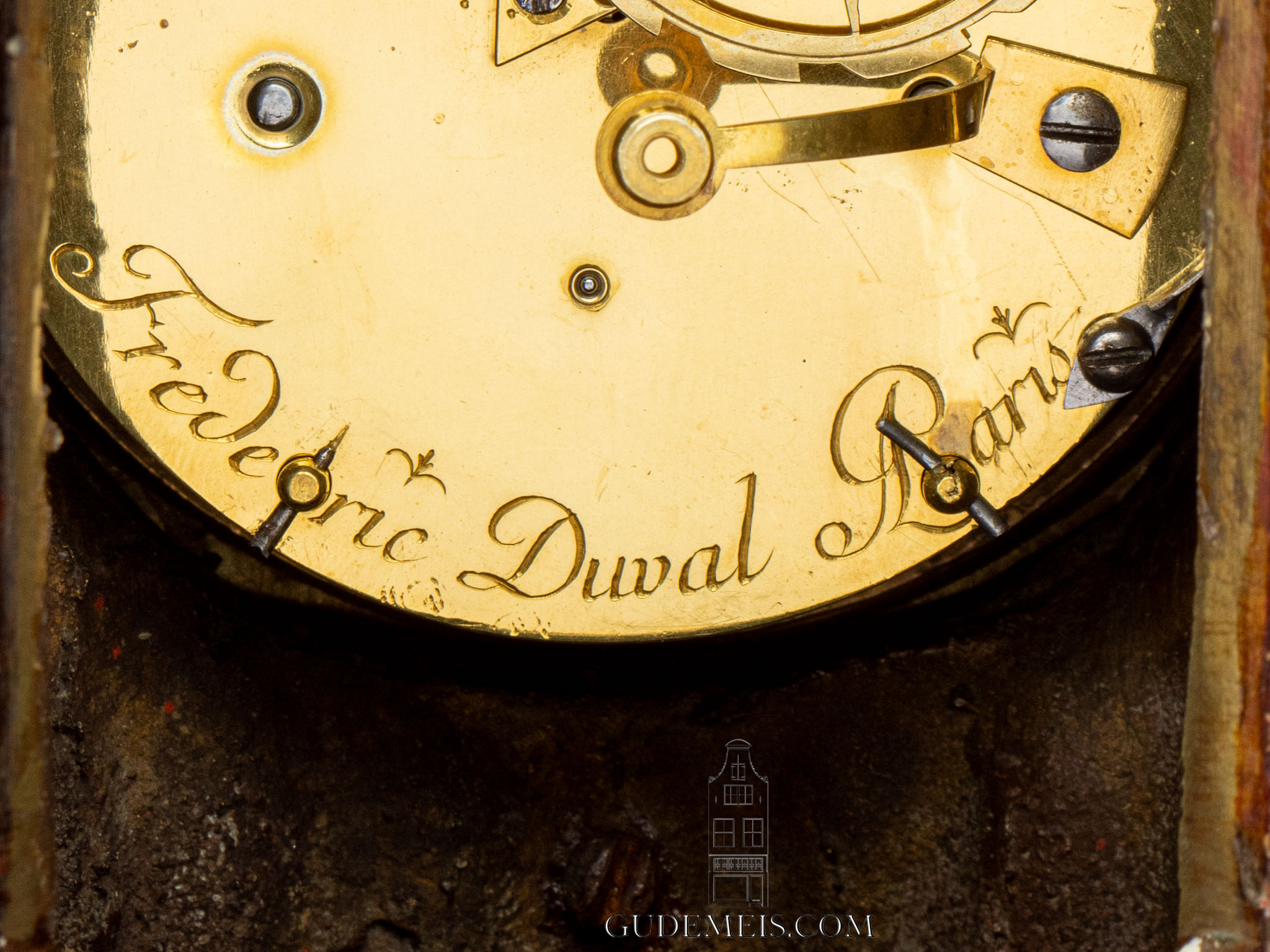
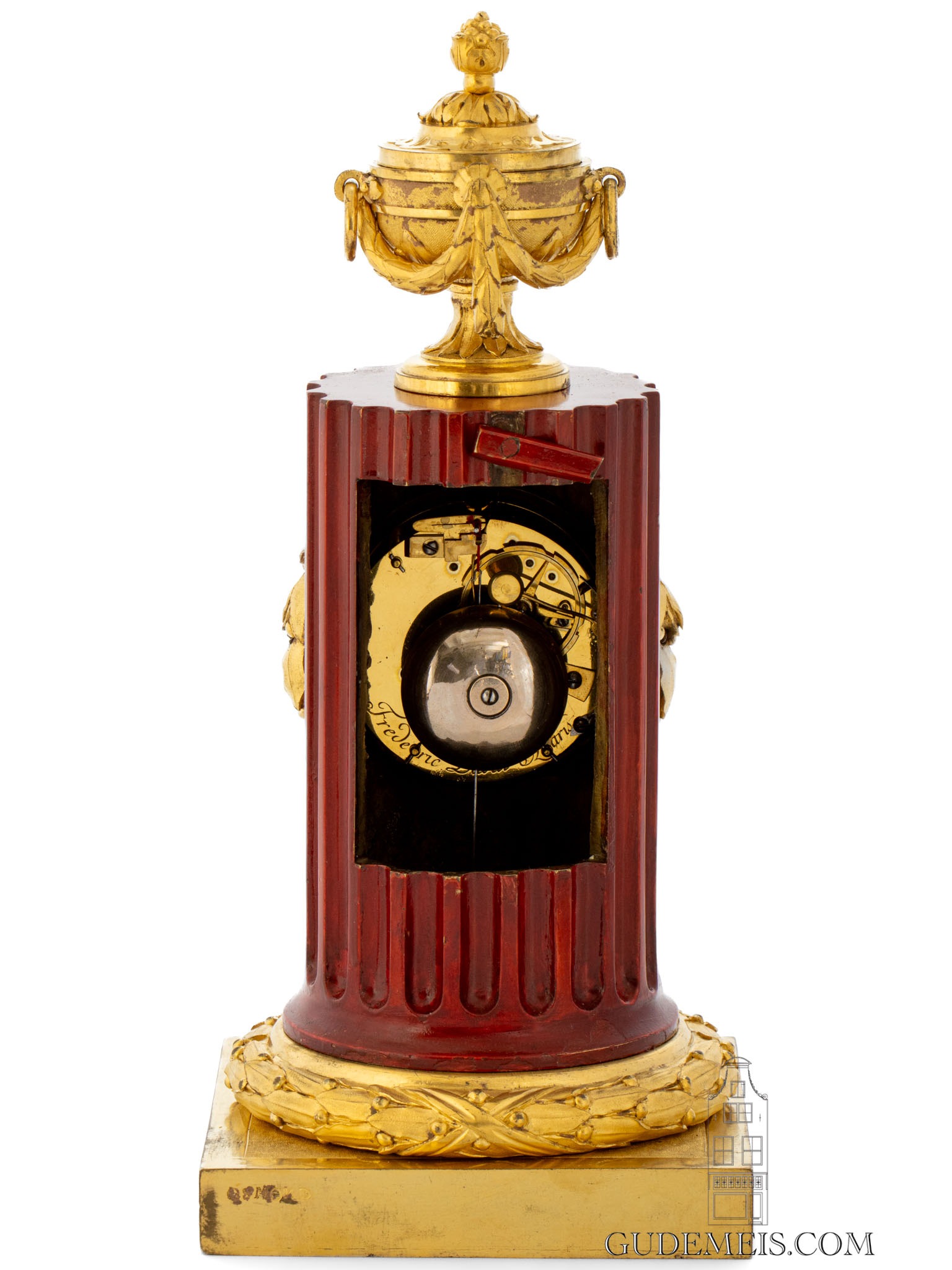
The movement is driven by two spring barrels and has a duration of at least eight days. It is being regulated by anchor escapement in combination with a silk suspended pendulum. The clock has half hour striking on a bell by means of a countwheel. The backplate is also signed Frederic Duval A Paris.
Louis XVI
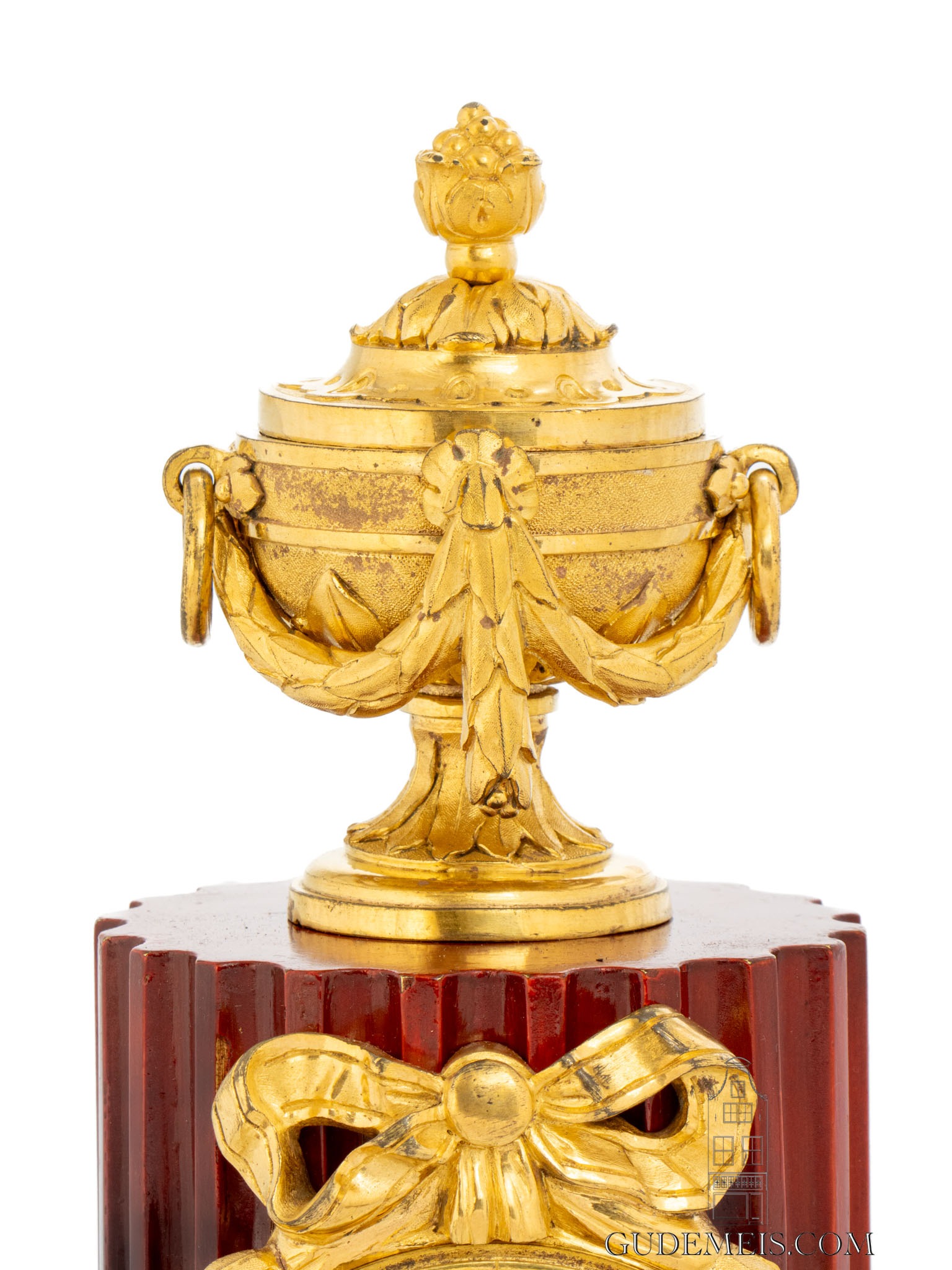
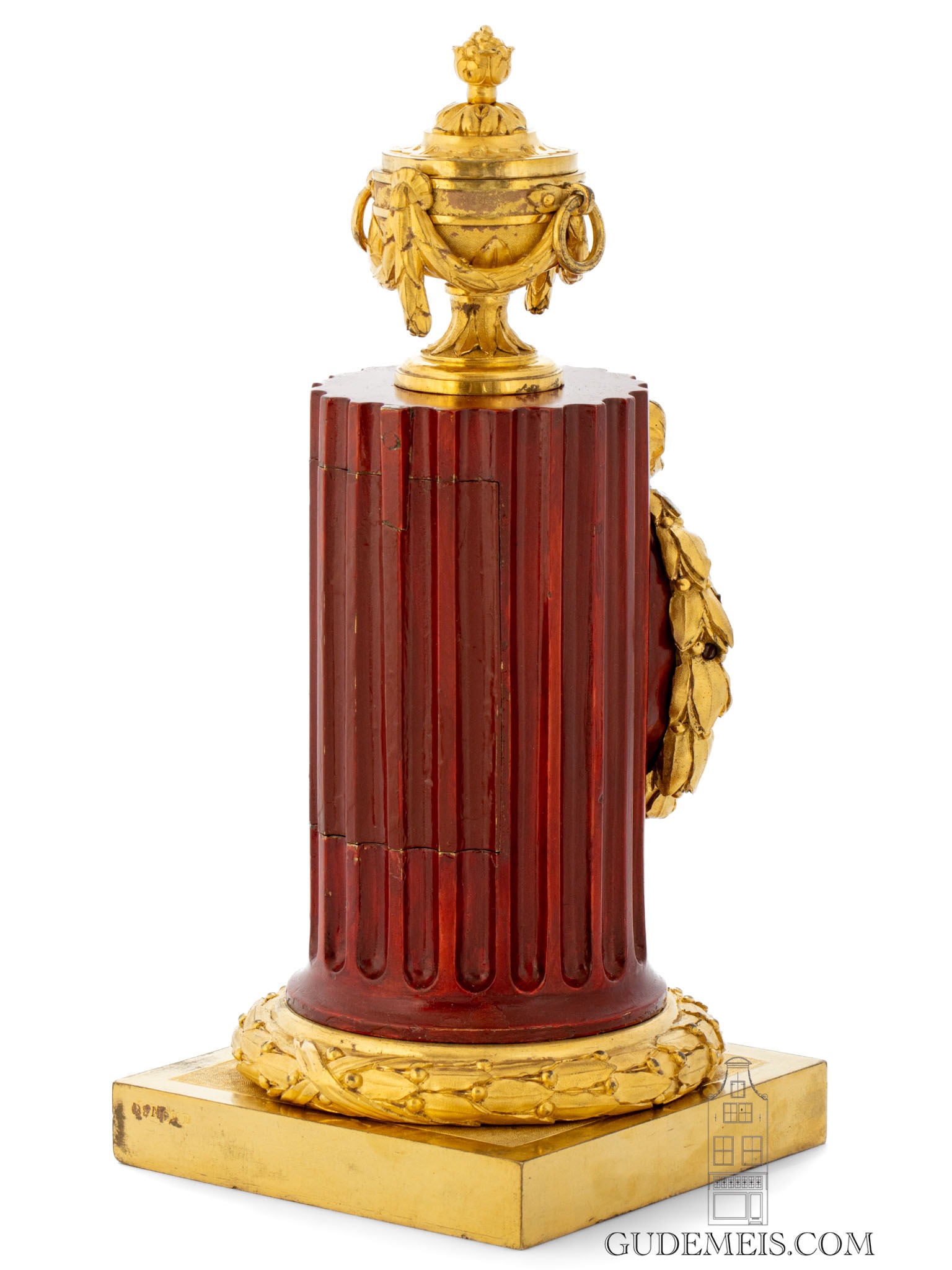
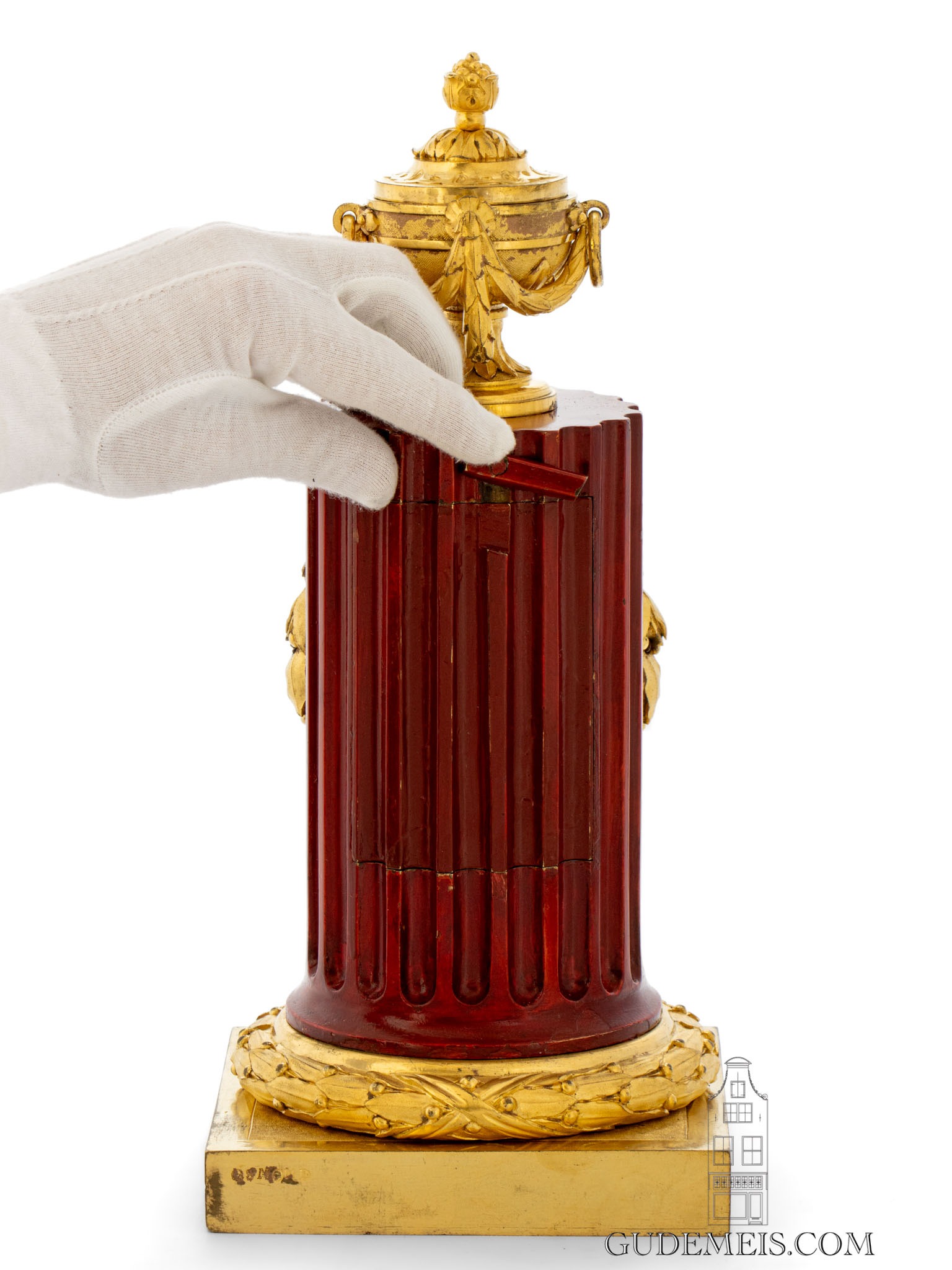
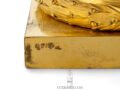
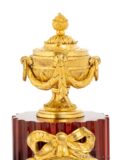
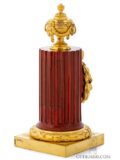
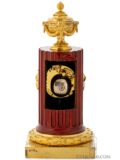
The movement is fitted in a red patinated bronze case shaped as a classical fluted column. It is surmounted by an urn with trailing garlands. A further garland is surrounding the dial. The column is raised on an acanthus moulding mounted on a square ormolu base signed Osmond at the back .