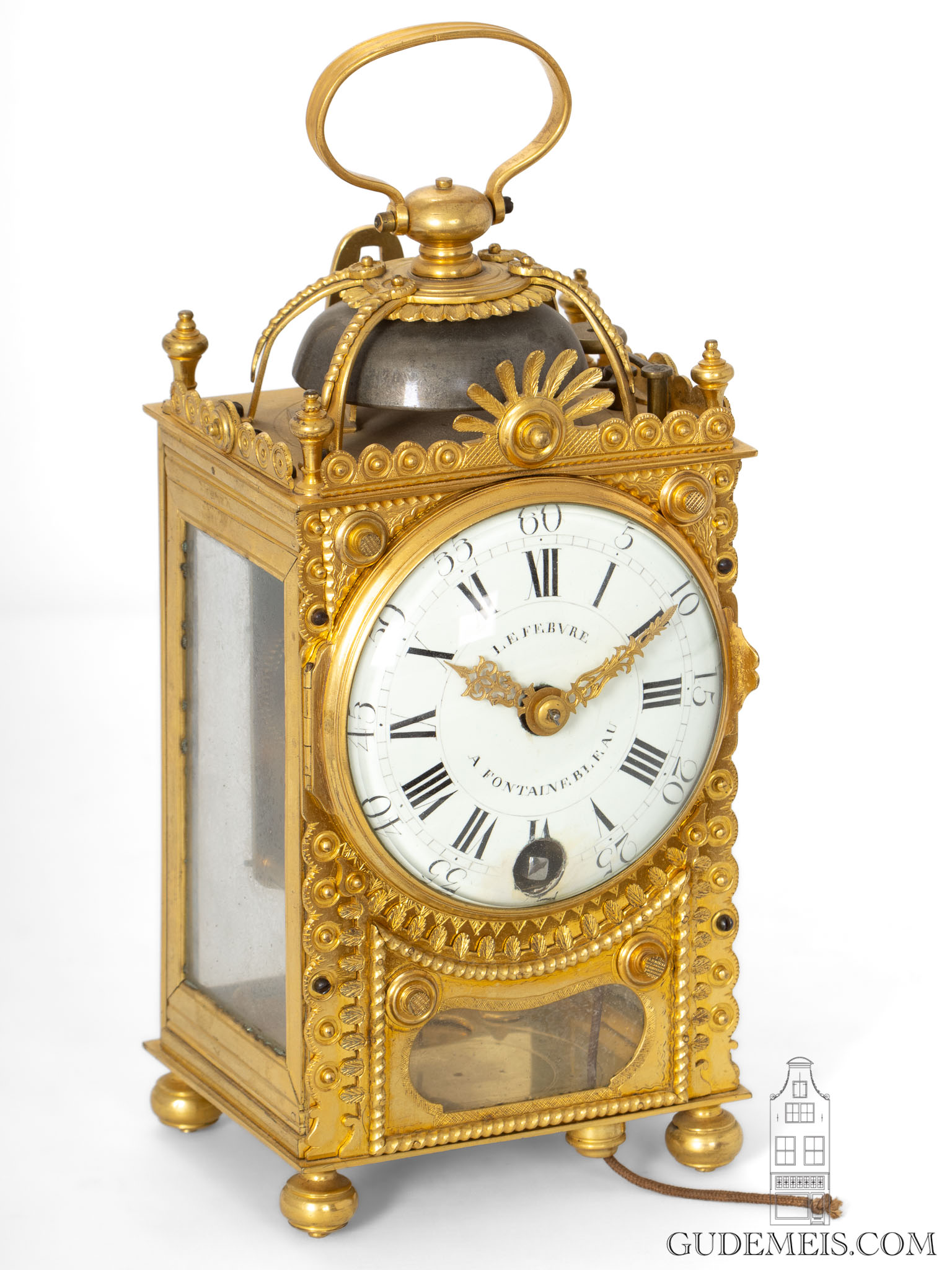
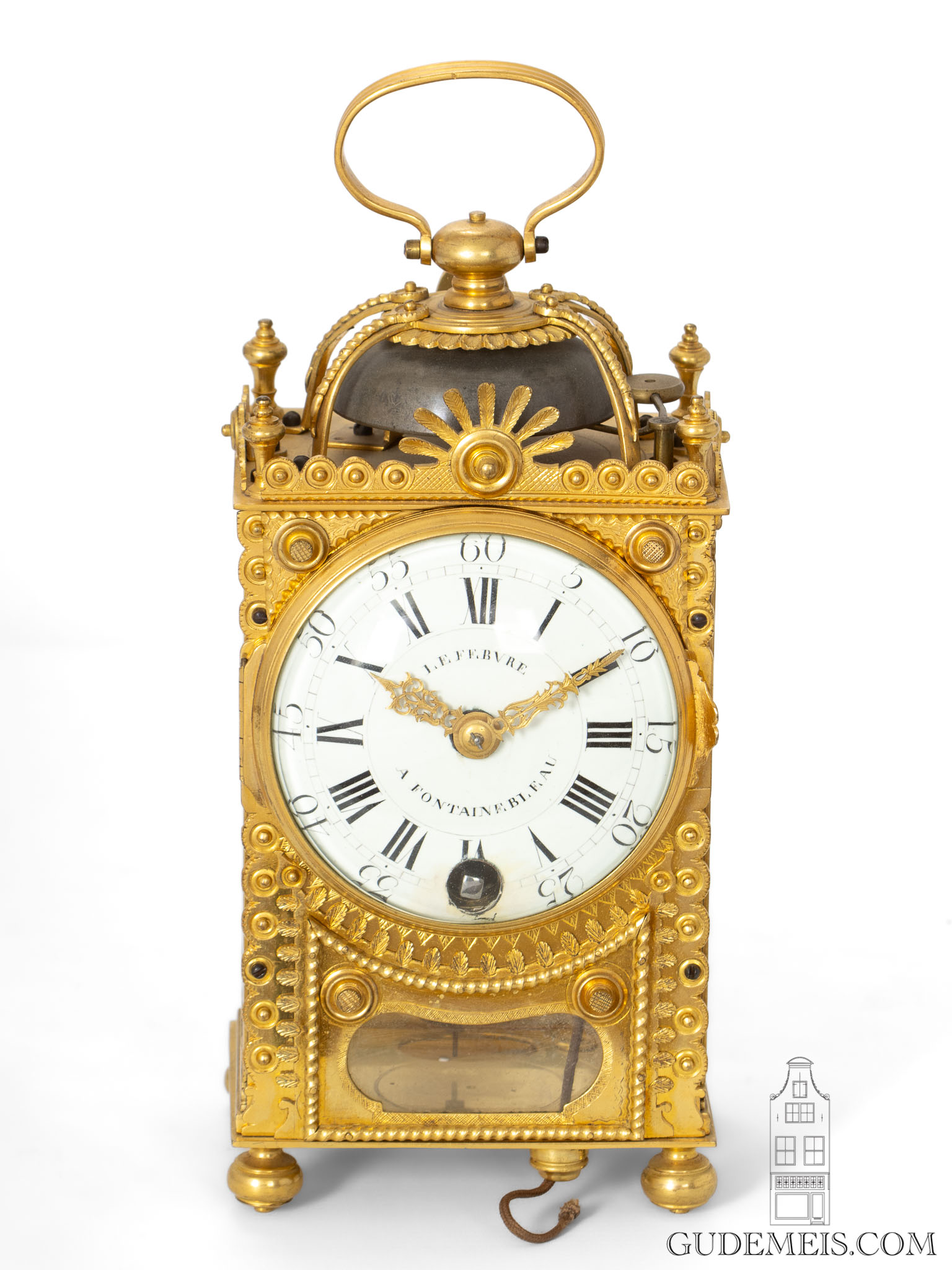
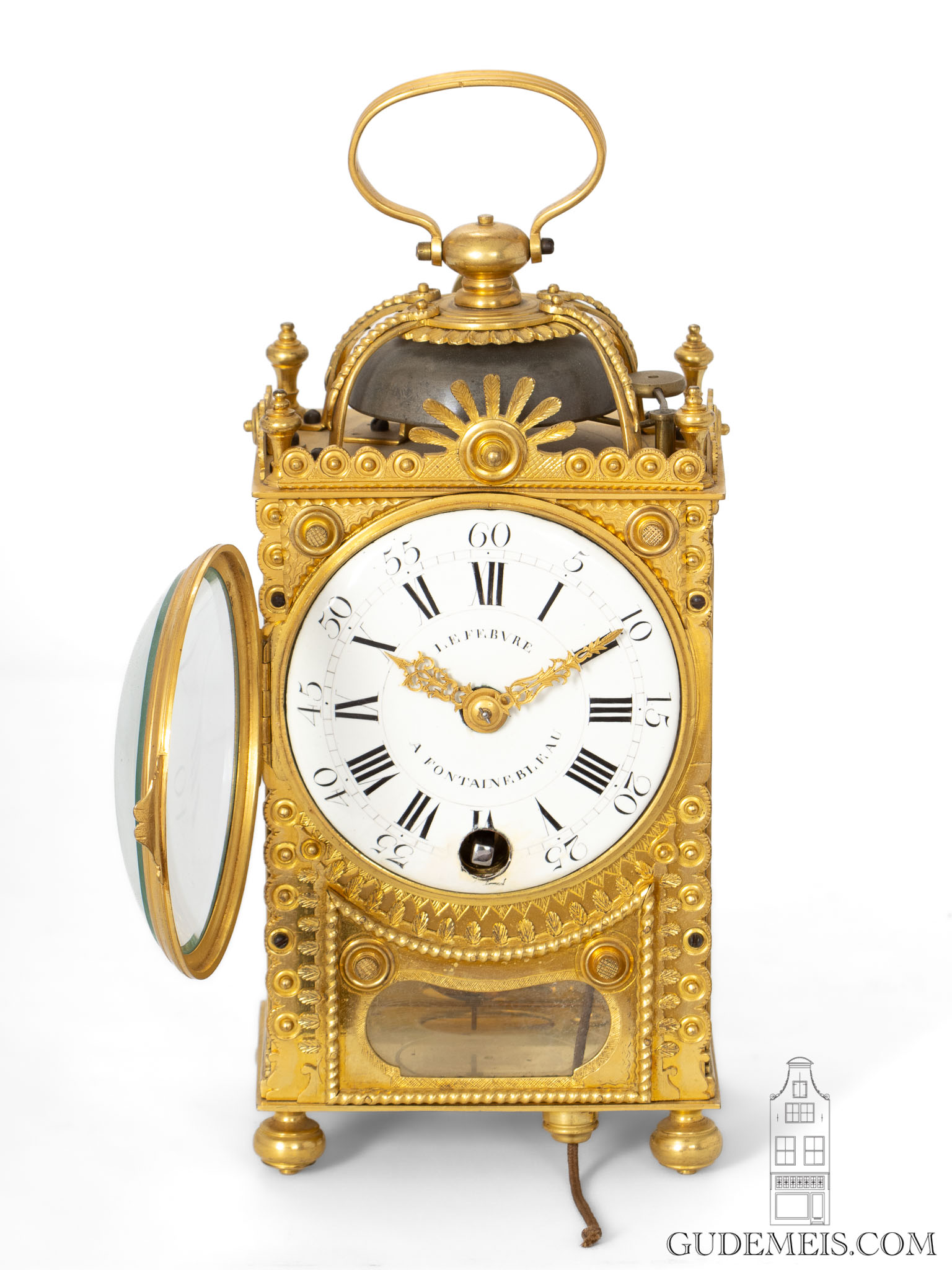
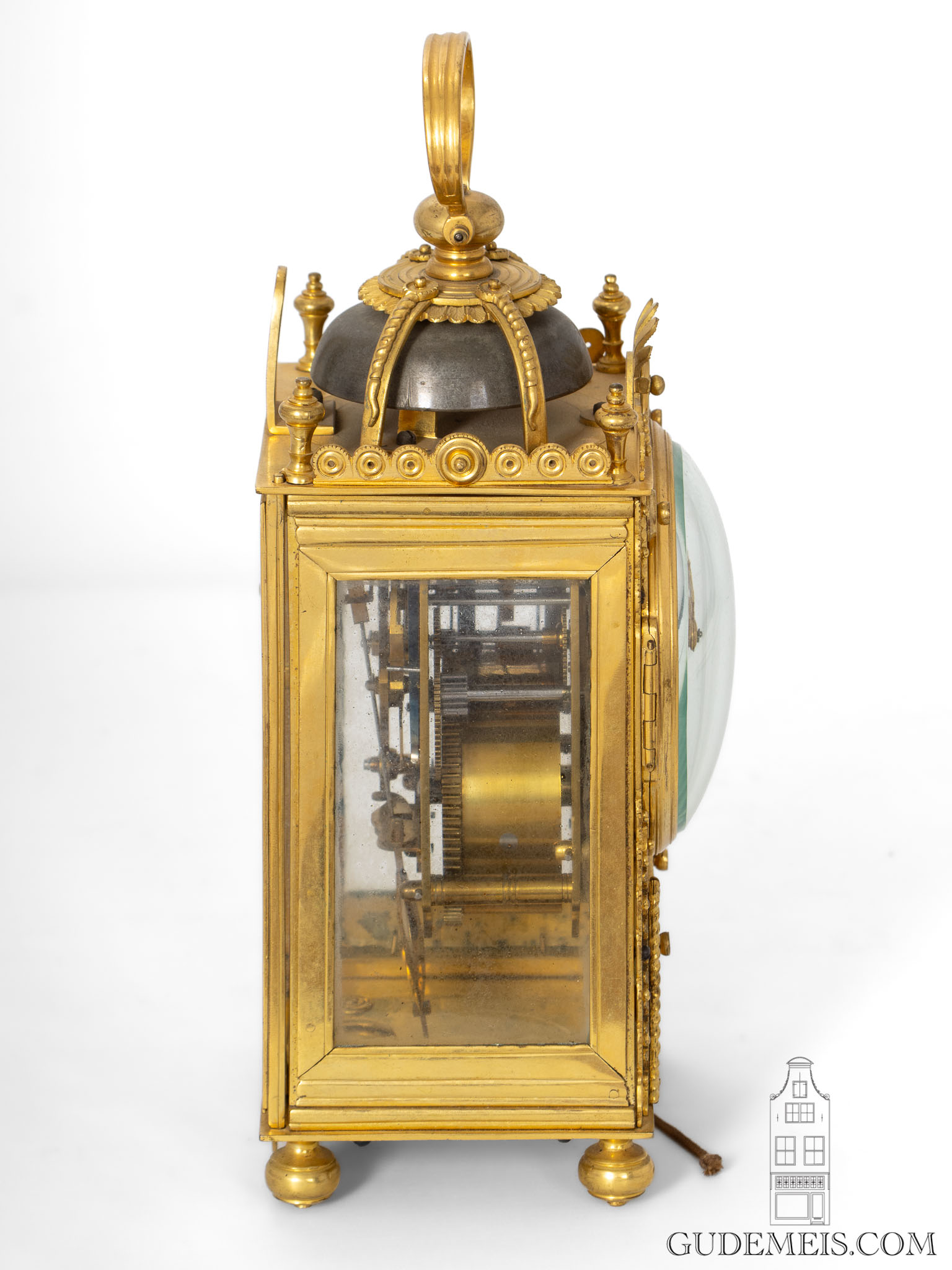
A rare French Louis XVI gilt brass pendule d’officer Lefebvre AFontainebleau, circa 1770.
Description
The case
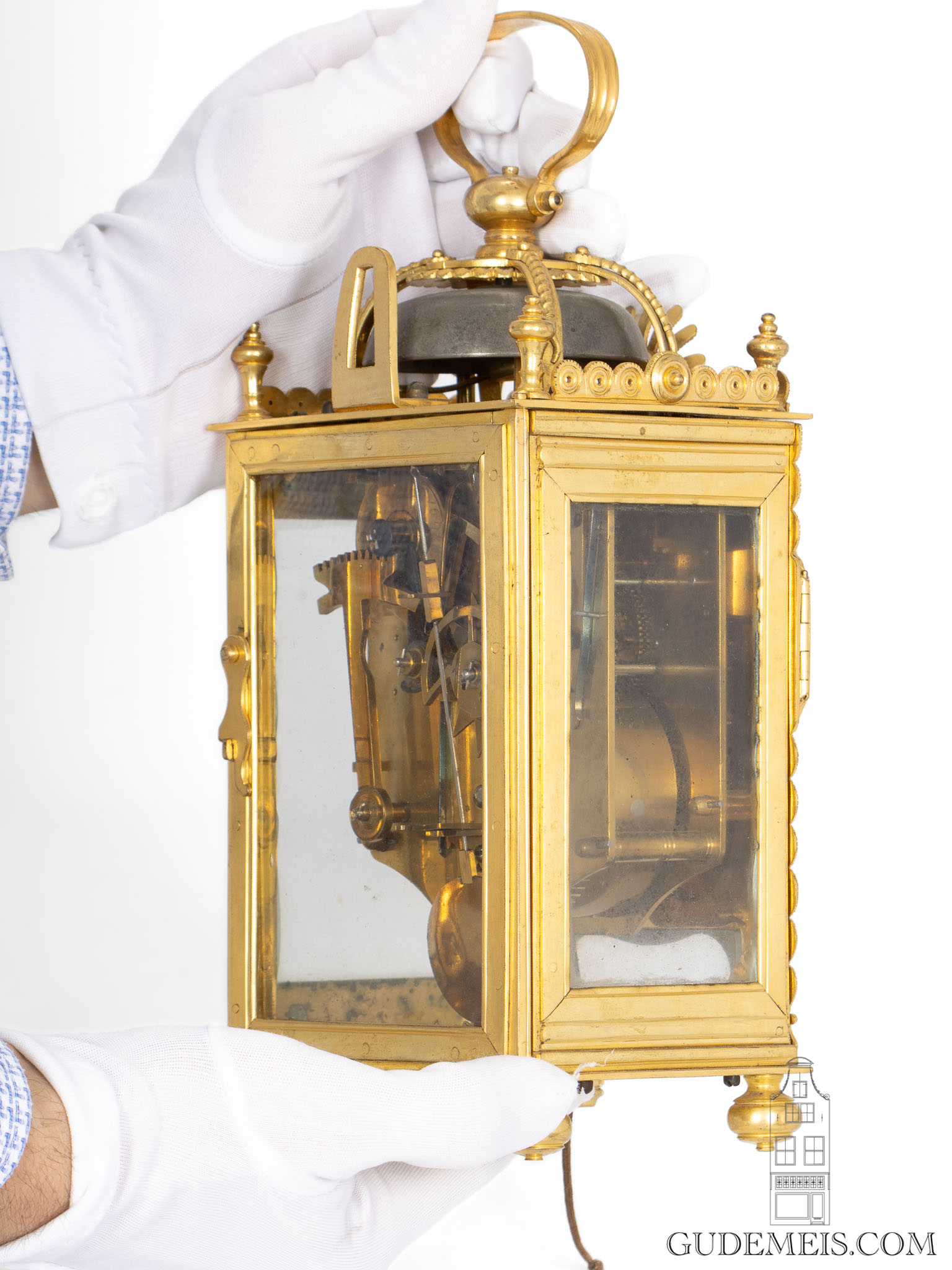
This clock is interesting in several ways, but one of them is that the case was made in a very remarkable way. It was not, as is customary, cast in bronze and chiseled. Instead, it was entirely sawed, turned, hammered, and engraved from brass. The case was then fire-gilt. This method was likely chosen to circumvent the restrictions imposed by the guilds. By working with brass instead of bronze and using only specific tools, the maker did not need bronze casters or chasers. Since these craftsmen all belonged to different guilds, they were not allowed to collaborate. This method allowed all parts of the case to be finished before they were sent to a gilder. Only at court did these restrictive rules not apply. Because of this method, the decoration differs from that of most clocks from this period. It results in a more distinctive and individualized design. It would not be at all surprising if other makers had also adopted this process. However, so far I have only seen this type of clock case by Lefebvre of Fontainebleau. This exceptional production method makes this early “pendule d’officier” not only attractive and extremely rare but also very interesting.
Lefebvre A Fontainebleau
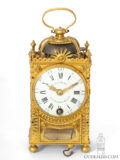
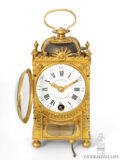
The 9.5-cm-enamel dial has Roman numerals for the hours and Arabic numerals for the five-minute indication. The center is signed “Lefebvre A Fontainebleau.” The beautiful foliate pierced hands are made of gilt brass.
Quarter repetition
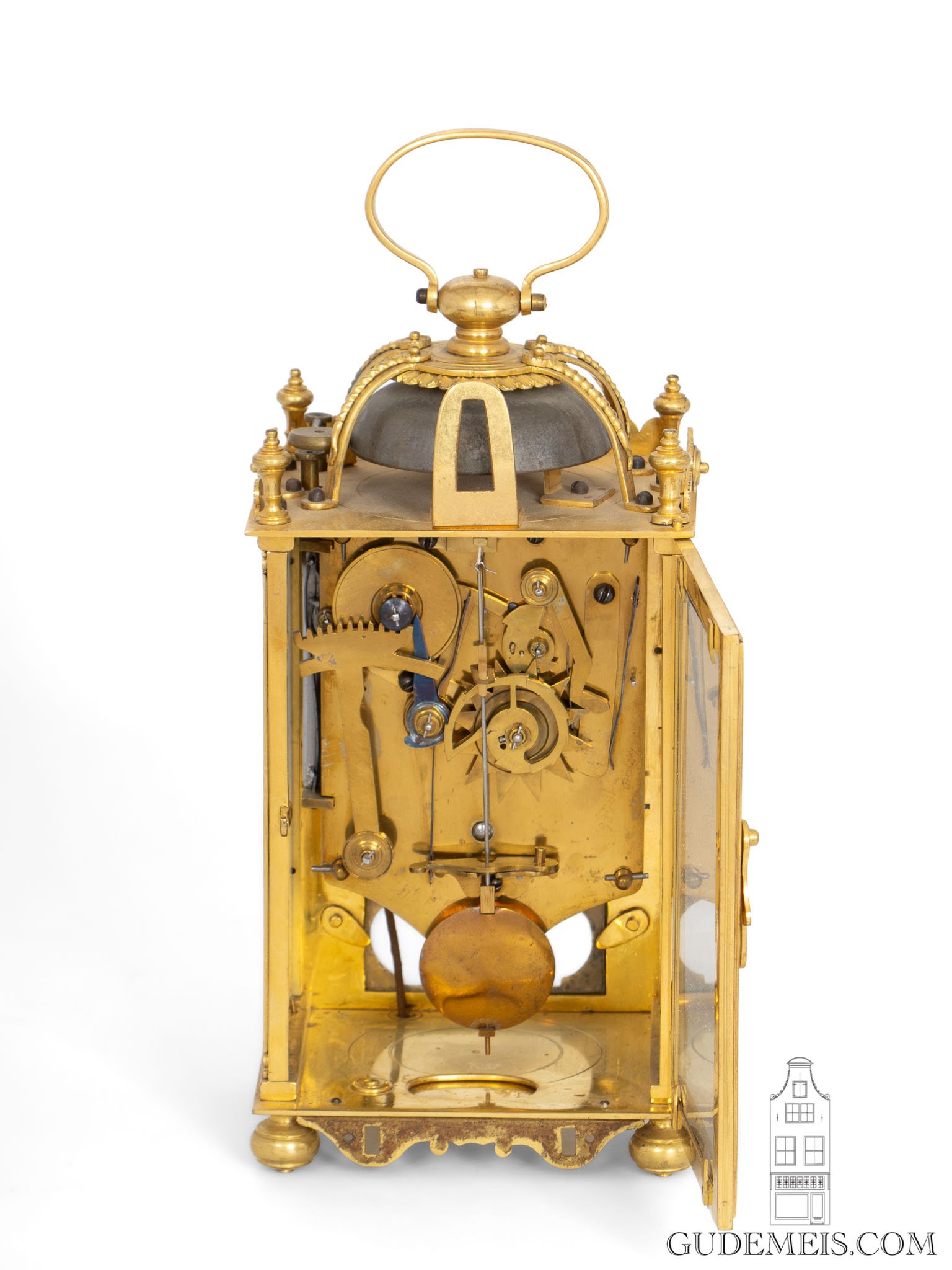
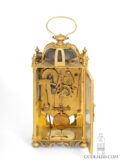
The movement is driven by a spring barrel and is of eight day duration. It is regulated by verge escapement in combination with a silk suspended pendulum. On the back plate is a clip that secures the pendulum for transport. The clock has a quarter repetiting on demand only. The clock doesn’t strike the hours.
Gilt brass
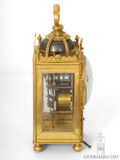
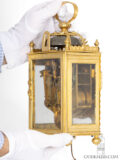
As mentioned above, the clock is made of gilt brass. The case has a bell cross surmounted by a handle. Ornamental urns adorn the corners. On the front, there is a sunburst ornament above the dial and a pendulum aperture below. The sides feature glass panels, just like the back door. The clock stands on small feet. The case is fitted with a later suspension hoop on the back, allowing the clock to be used as a wall clock. This must have been added some time ago, as there is also a small slide in the base that opens a hole through which the pendulum can be started.