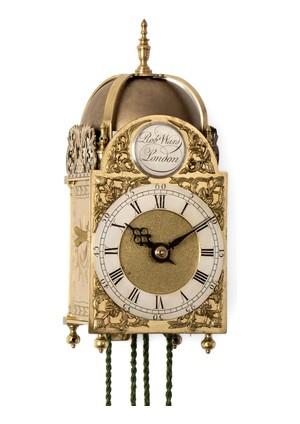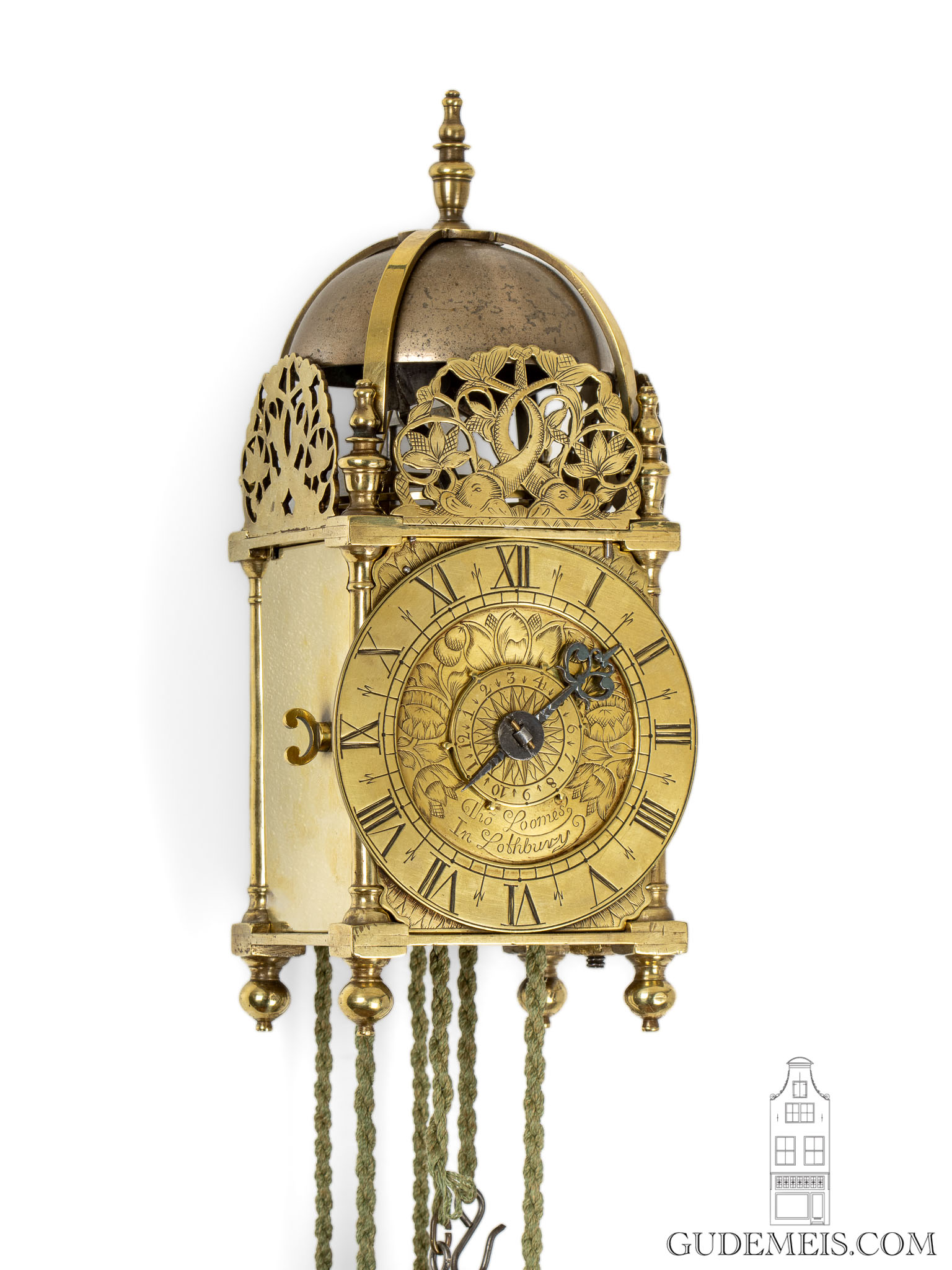
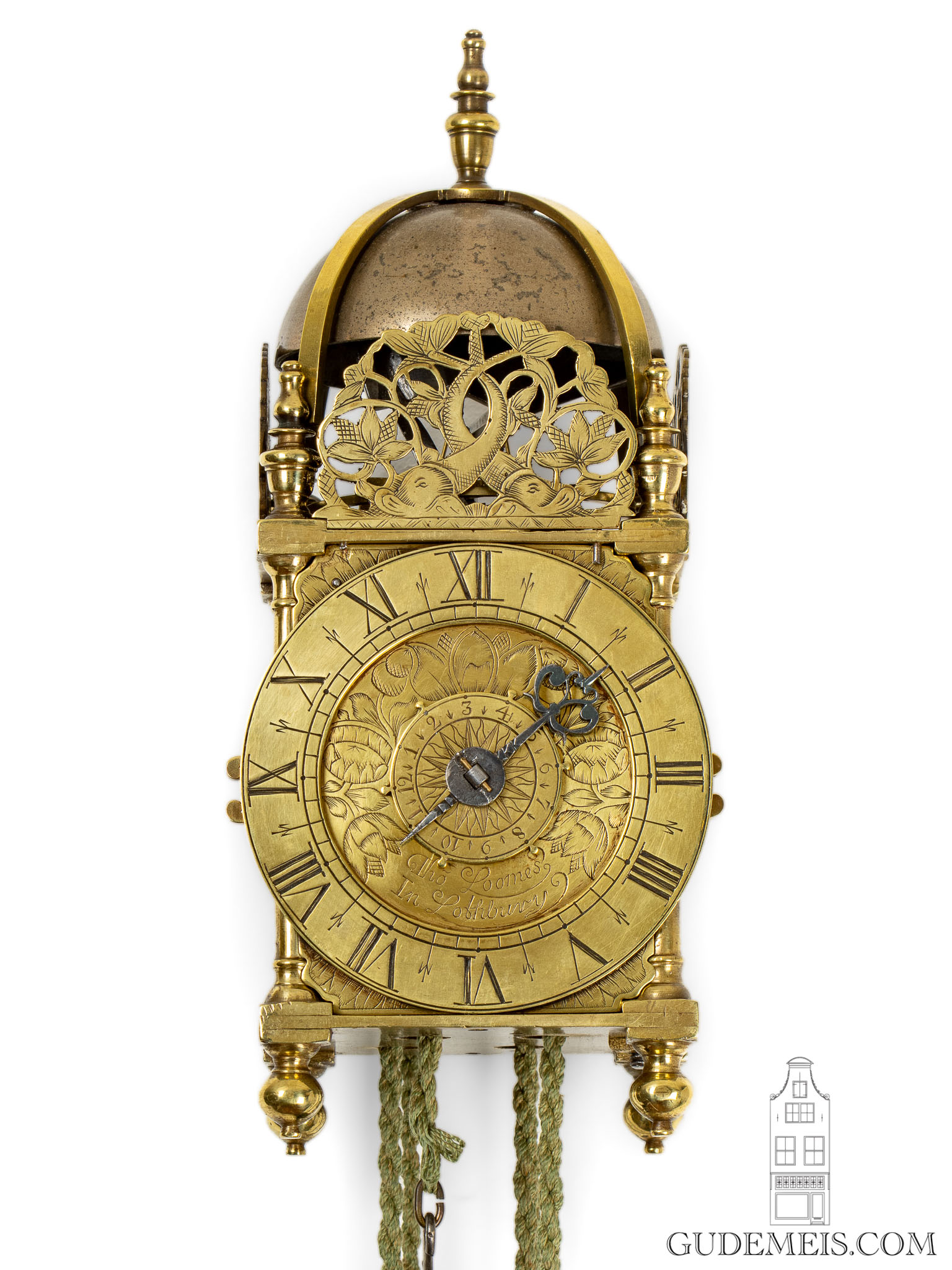
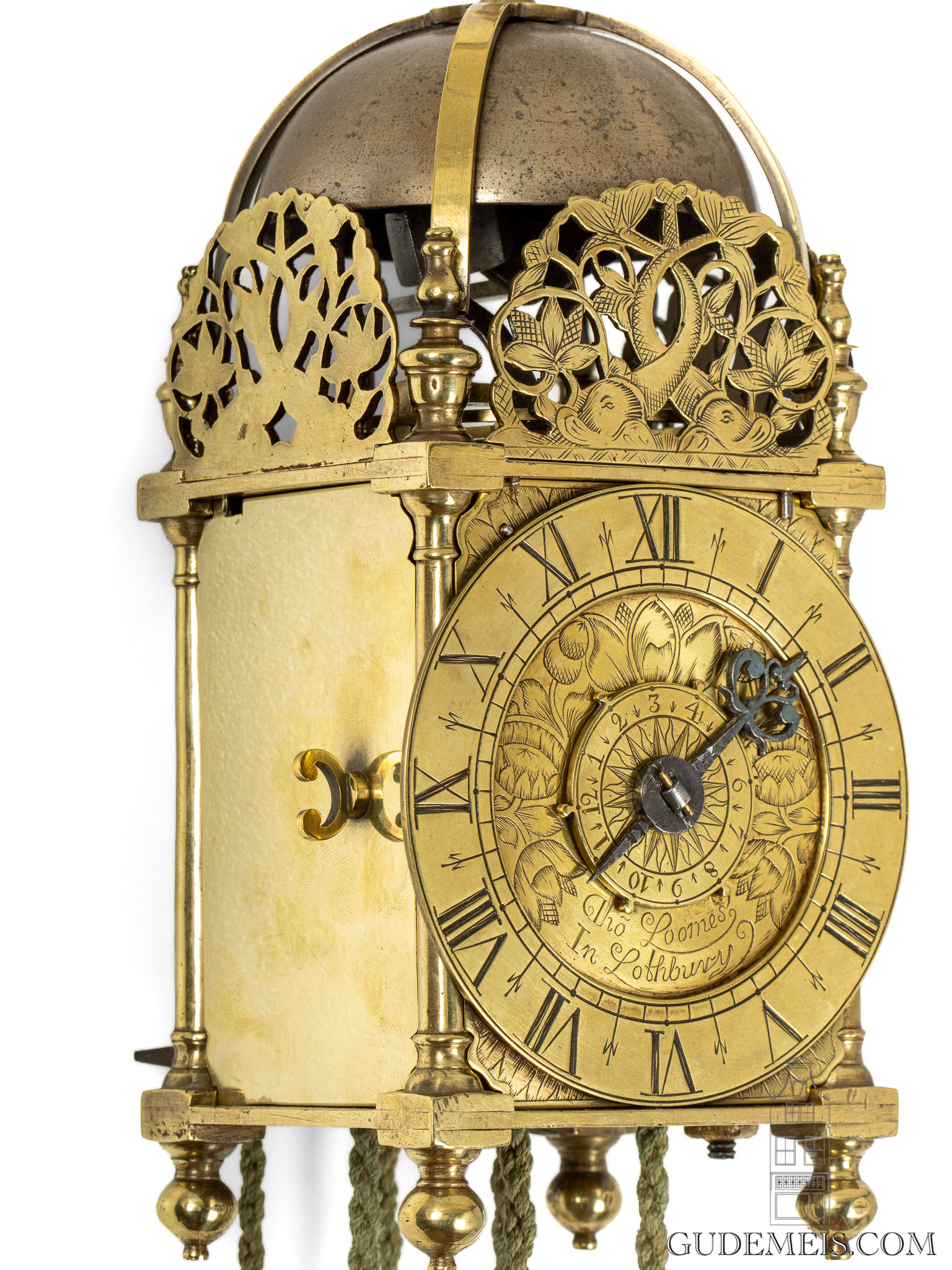
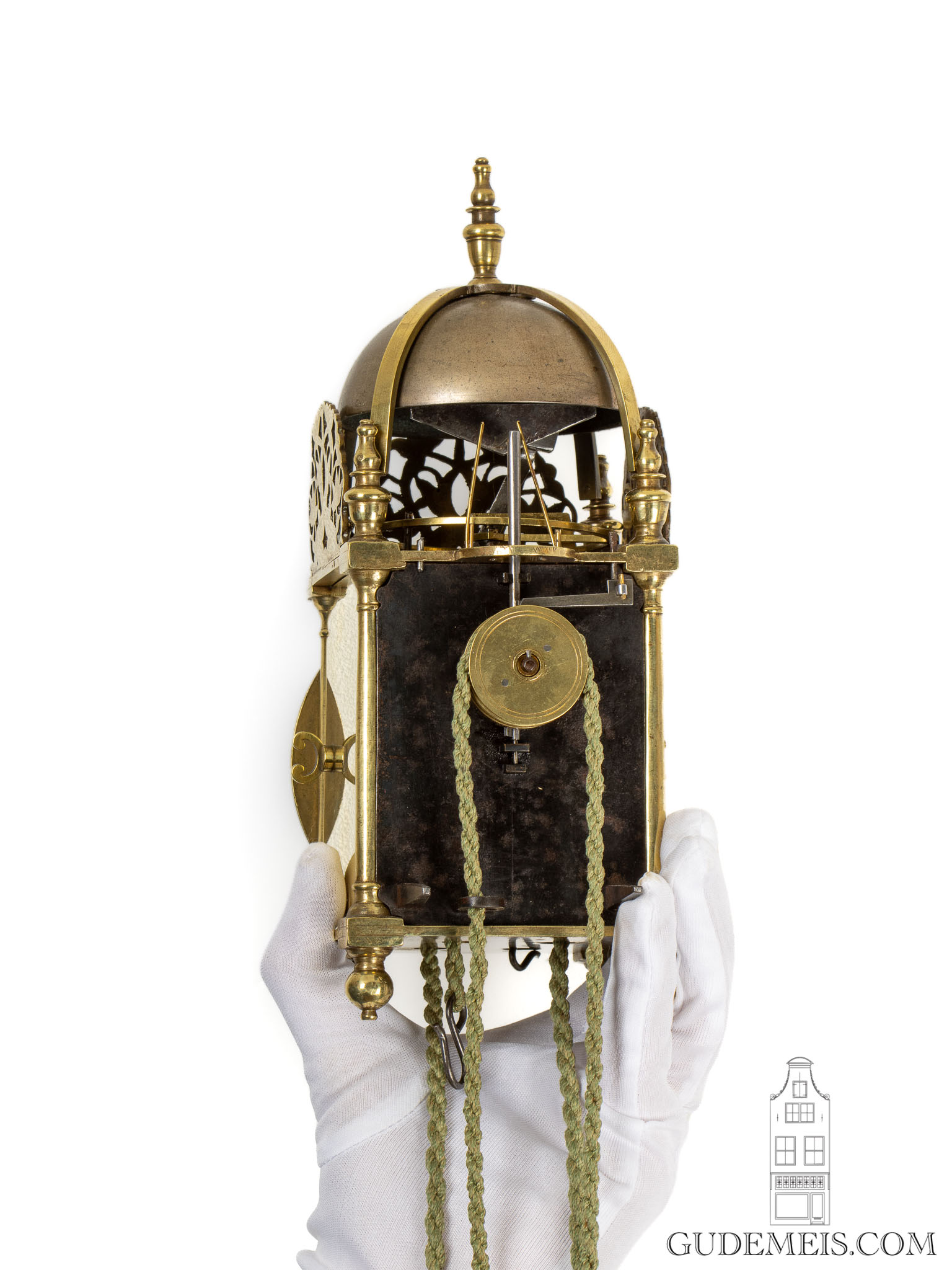
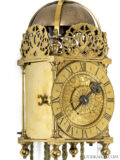
An English miniature balance wheel lantern clock with striking and alarm, Thomas Loomes, circa 1650.
Description
English lantern clock
From experience I know that many people find this type of miniature clock appealing. The combination of its austere, rustic appearance and small dimensions are appreciated by many. That alone might be reason enough to want to have this clock. But on top of that, this clock is also very rare. The English lantern clock as a type, originated in the early 17th century, and production grew only gradually during the first half of the century. It wasn’t until after the Great Fire of London in 1666 that demand and production increased, as so much had been lost. But demand also grew because the clocks were much more accurate than they had been shortly before. Prior to the invention of the pendulum clock in 1657 by Christiaan Huygens, lantern clocks were, in fact, much less accurate timekeepers. This was because their rate was determined by a plain balance wheel, which simply moves much less precisely than a pendulum. The fact that lantern clocks became more accurate timekeepers probably also increased demand. Furthermore, we can state that small English lantern clocks are very rare. As mentioned earlier, this is likely because the first clock in a household was used in a common area and therefore had to be visible to everyone. And since not many people could afford a second clock, the production of small clocks remained limited. Finally, the majority of these small clocks do not have a striking mechanism but only an alarm, as they were used in bedrooms. But this clock does have a striking mechanism and an alarm, which makes it even more rare. Having said all this, it stands to reason that a miniature balance lantern clock from England with a striking mechanism and an alarm is extremely rare.
The chapter ring
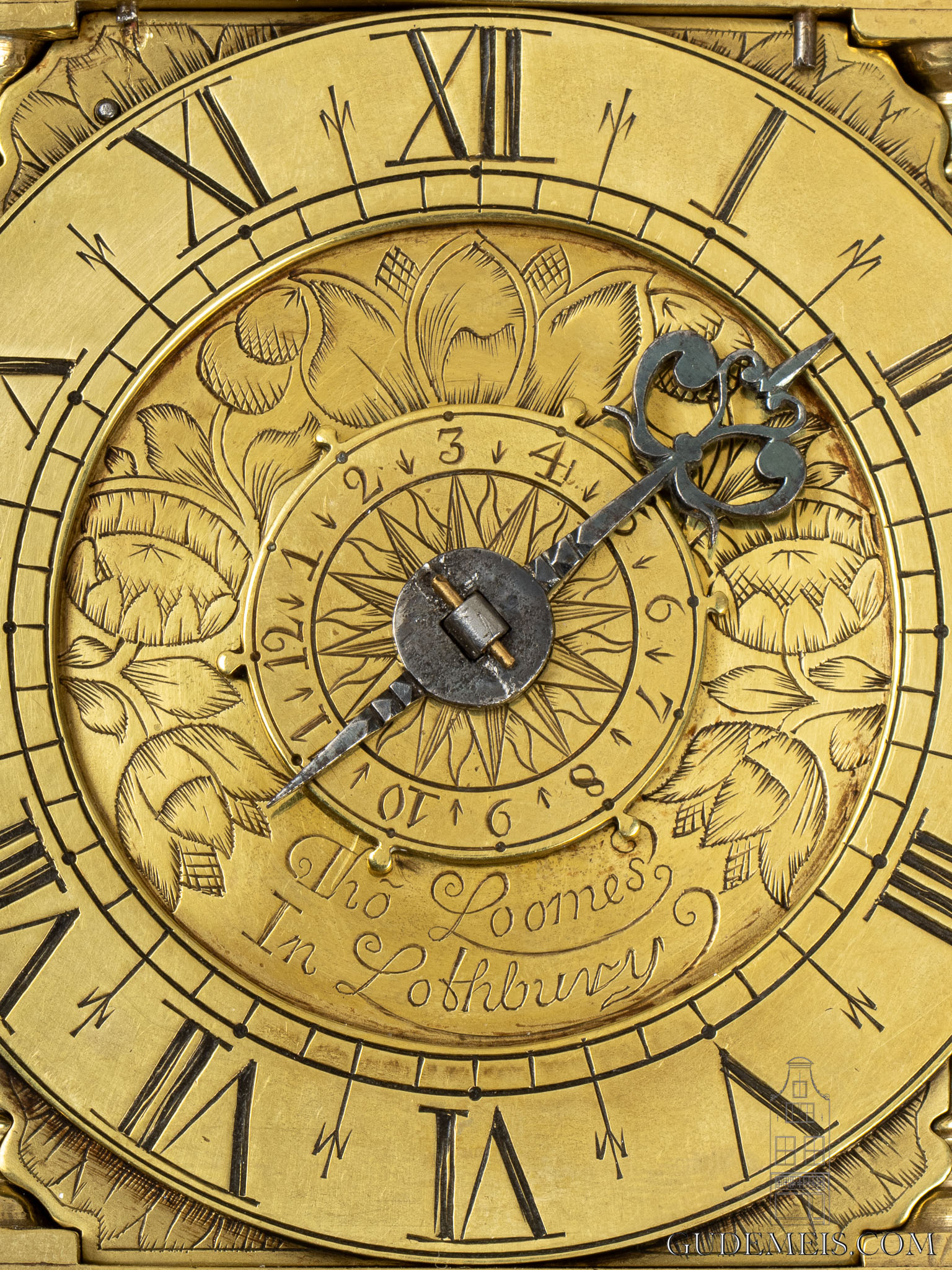
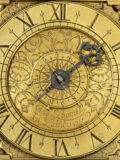
The 9.5-cm chapter ring has Roman numerals for the hours and quarter-hour divisions on the inner edge. The center is beautifully engraved with leaves and flowers, with the signature Tho. Loomes in Lothbury below. The engraved alarm disc is made of brass, and the single hour hand is made of iron.
Balance wheel
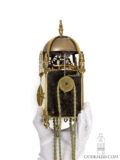
The movement is driven by two weights and regulated by a balance wheel in combination with a verge escapement. The clock strikes the hours on a bell by means of a countwheel. The alarm also strikes the bell.
Dolphins
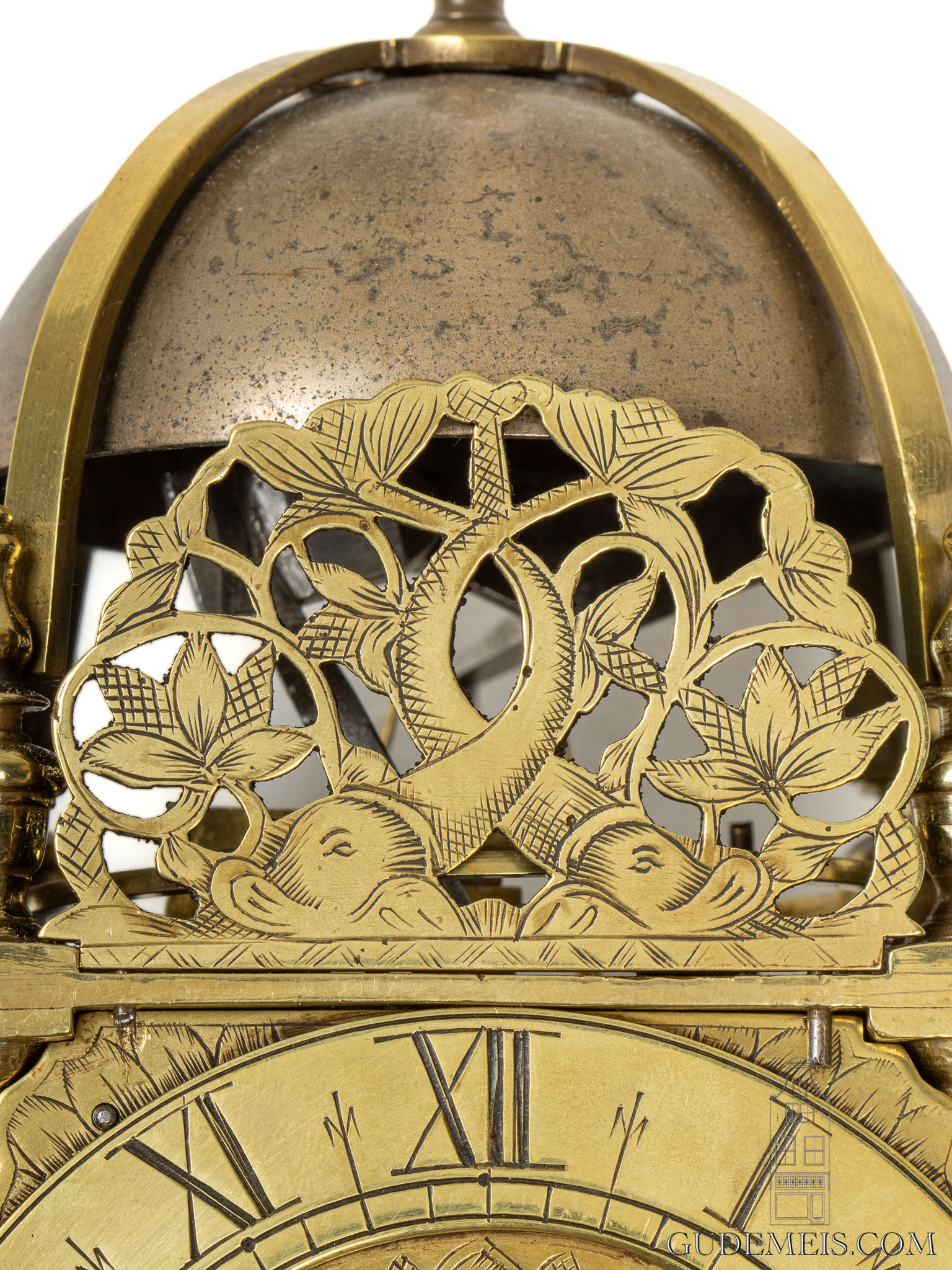
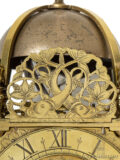
At the corners of the brass case are four ornamental urns atop which the bell cross is placed, surmounted by a similar decorative urn. On the front is an pierced brass fret decorated with engraved dolphins and leaves. On the sides, there are plain brass frets above the doors that provide access to the movement. Below the corner pillars terminate in ball feet. The clock mounted on the wall by means of a hoop and spurs.
Thomas Loomes
Thomas Loomes was an apprentice to John Selwood and became a master clockmaker in 1649. He took over William Selwood’s business in Lothbury in 1653 following Selwood’s death. The following year, he married Mary, the daughter of the famous clockmaker Ahasuerus Fromanteel. Thomas probably died of the plague in 1665. (Brian Loomes, *Lantern Clocks and Their Makers*, 2008, pp. 477.)