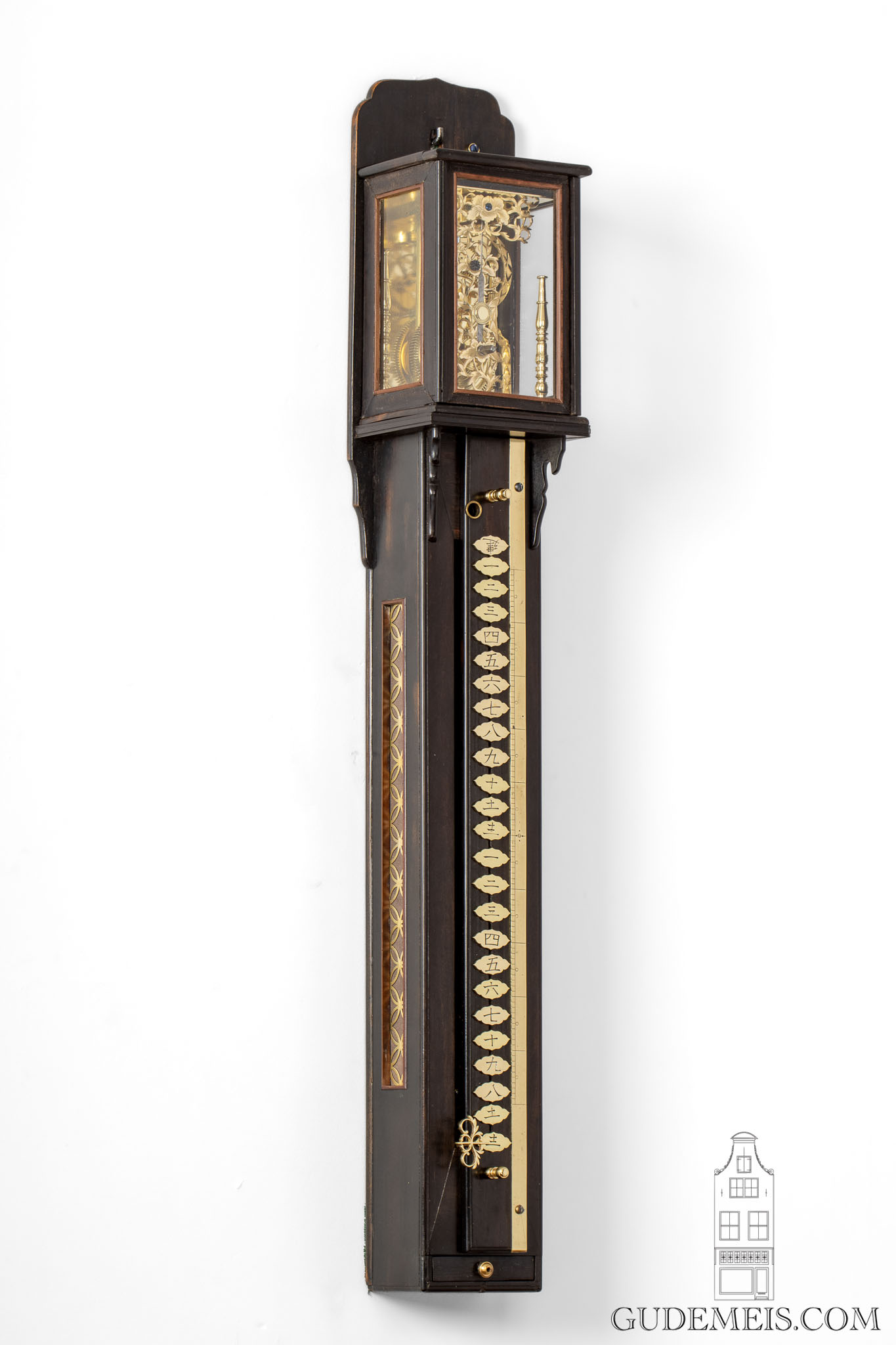
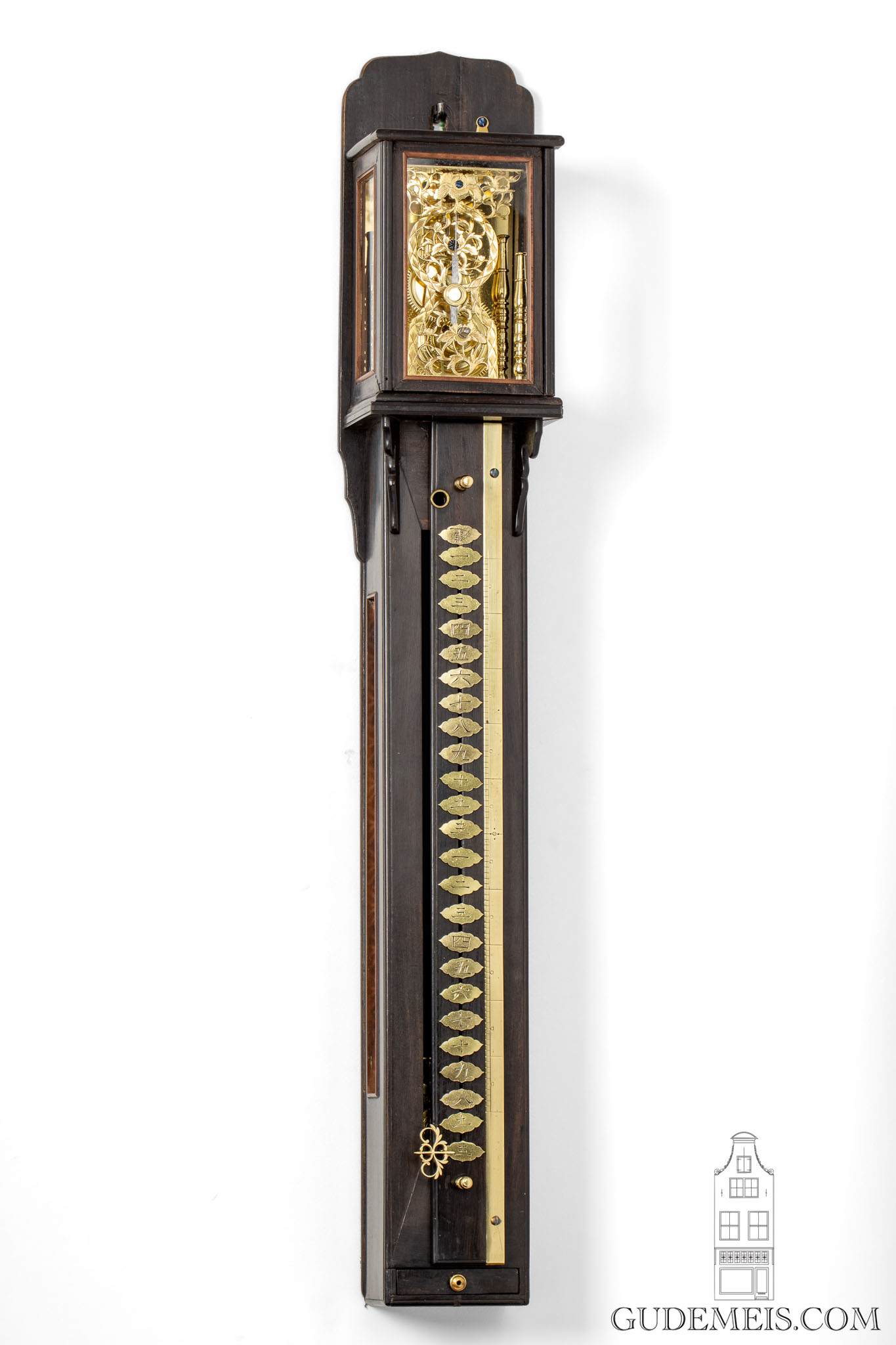
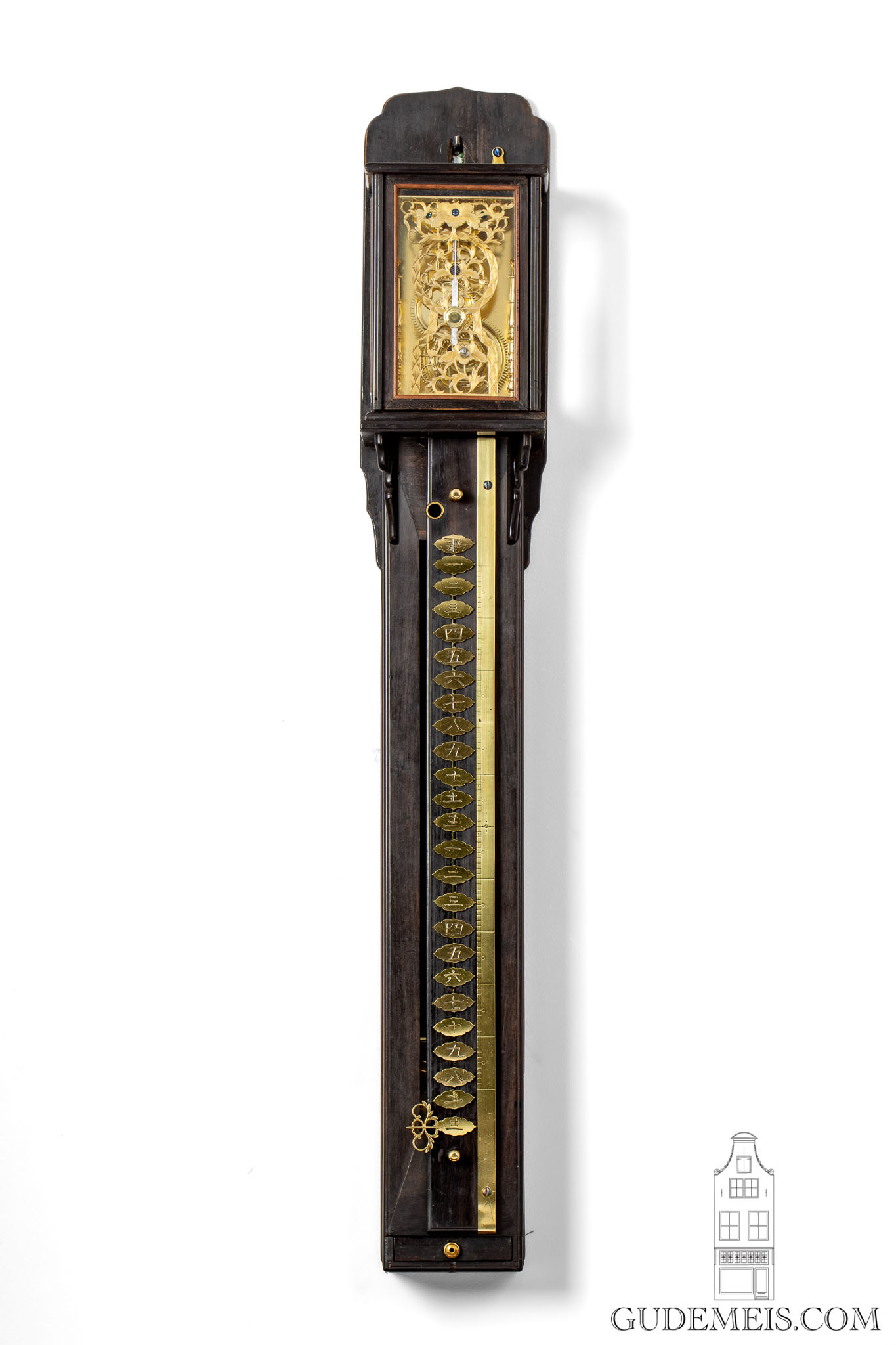
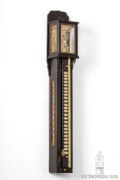
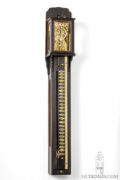
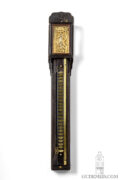
A Japanese striking ‘Shaku Dokei’ wall clock, circa 1850
Description
Shaku dokei
This type of Japanese wall clock is referred to as ‘shaku-dokei’. A ‘shaku’ is a unit of measure with a length of about a foot. ‘Dokei’ is the Japanese term for clock. Since most of these clocks are of this size the name ‘shaku-dokei’ must have stuck. The hand or pointer that indicates
the time is fixed to the weight driving the movement. With the movement running, the weight with pointer descends along the numerals on the lower part of the case. Because the construction is relatively simple these clocks could be made cheaper and were affordable for more people. Until
1873, the Japanese used ‘temporal hours’. This means that the day and its first hour start at sunrise, while the day and its last hour end at sunset. Both day-time and night-time were divided into six toki (unit of time). It also means that the length of the toki changes with the changing of seasons. Therefore the Japanese clocks needed to be adjusted to the ever-changing length of the toki. With early ‘shaku-dokei’ like this one the numerals can be adjusted. Contrary to this clock, most Shaku dokei lack striking work. In fact, the above-mentioned weight consists of the striking mechanism complete with spring barrel, locking plate and bell. Because the striking mechanism is activated by small pins at the back of the toki, the clock strikes at the right moments. These ingenious solutions make this clock an interesting object, but that is not all. The beautifully made movement and case also show the great workmanship of the Japanese makers. A beautiful, ingenious and interesting clock.
Chrysanthemums
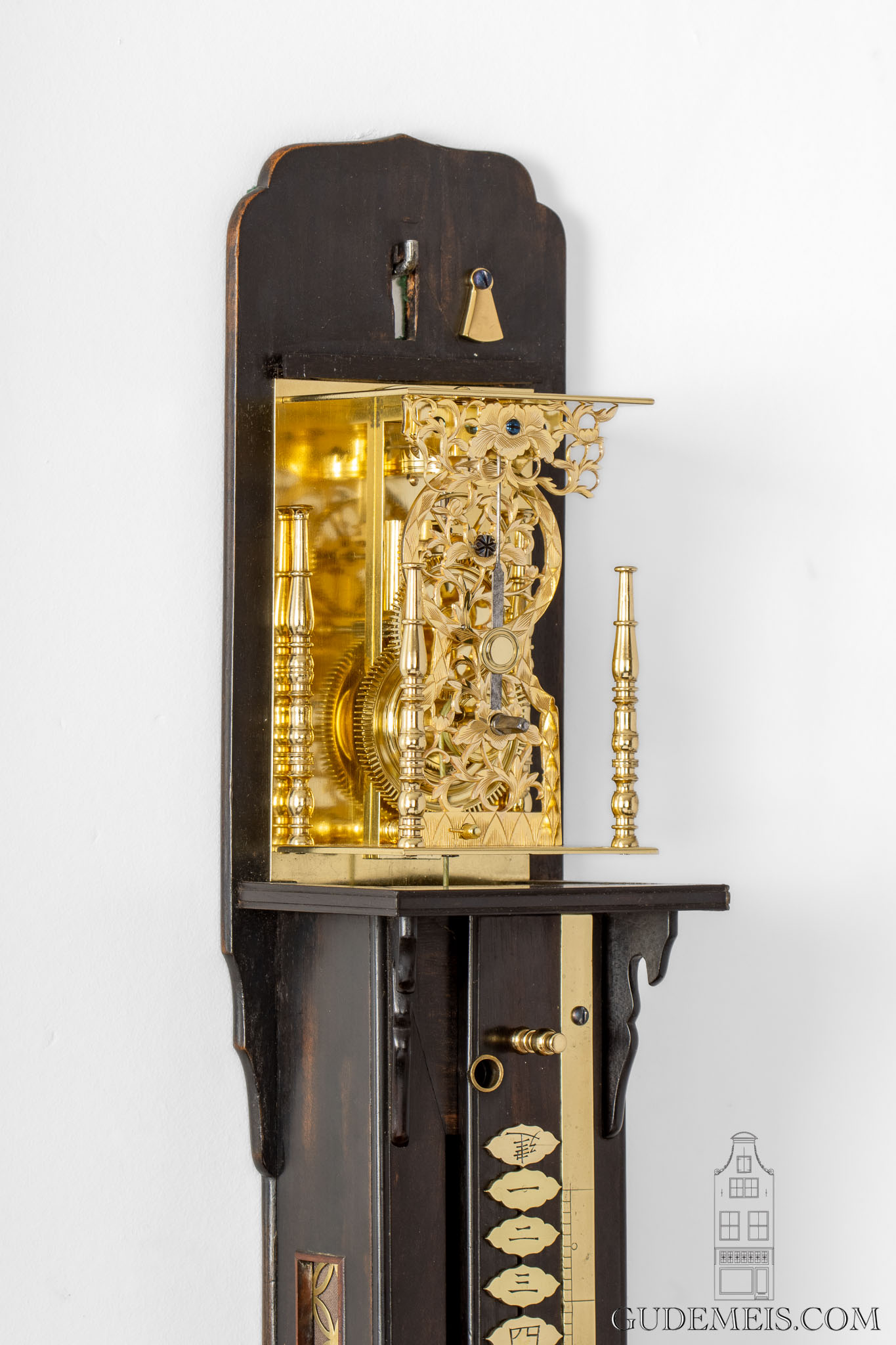
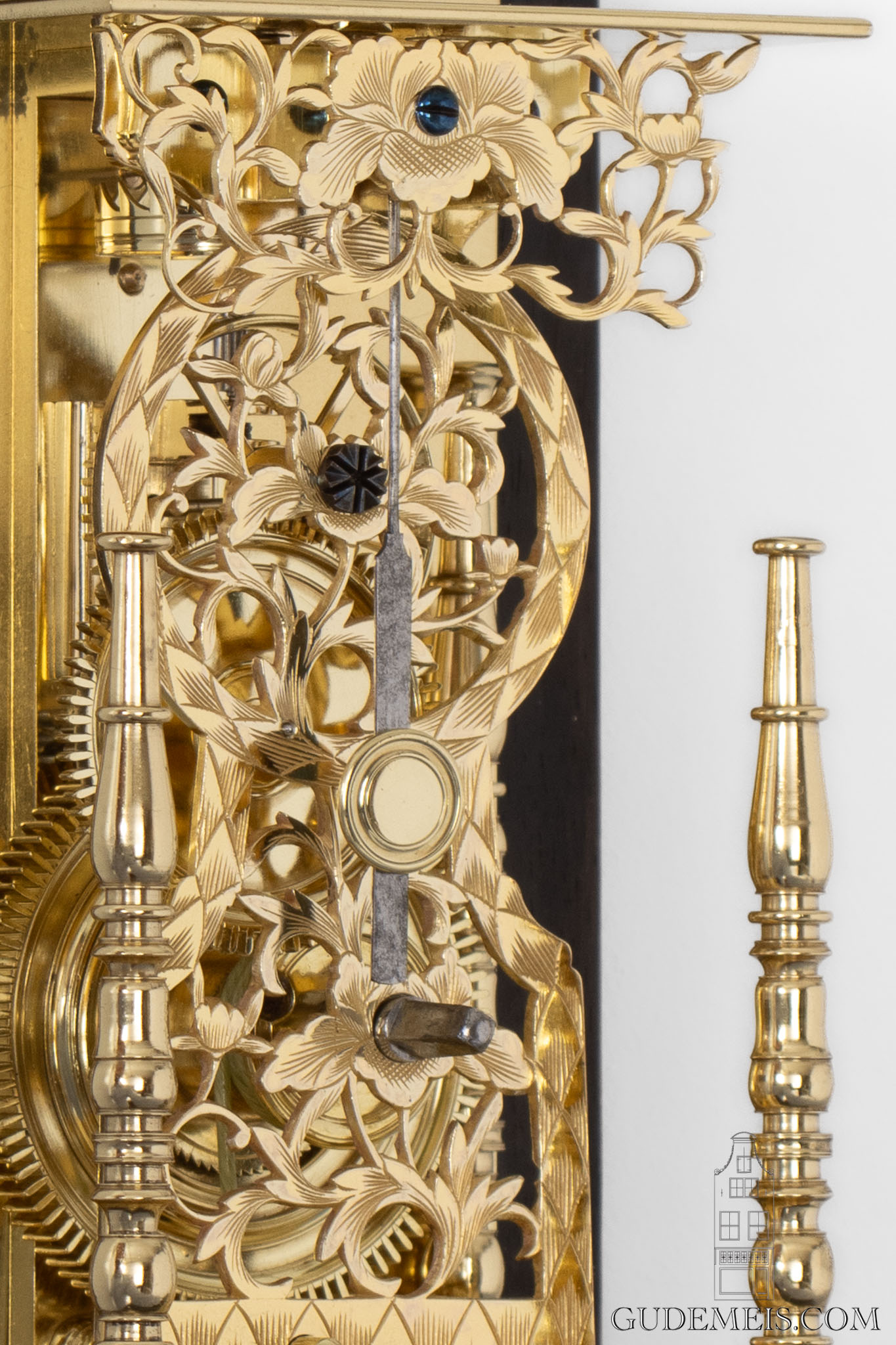
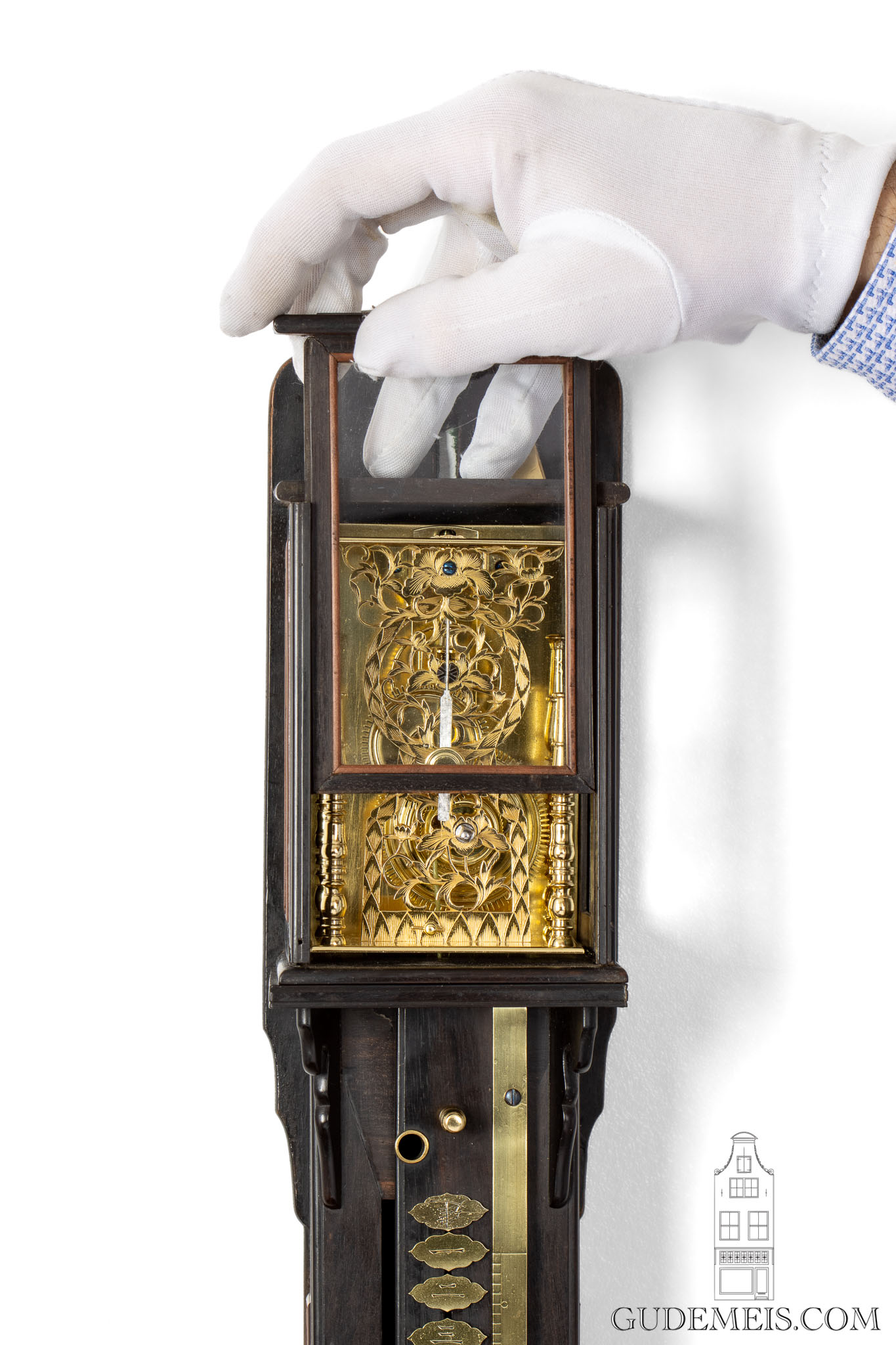
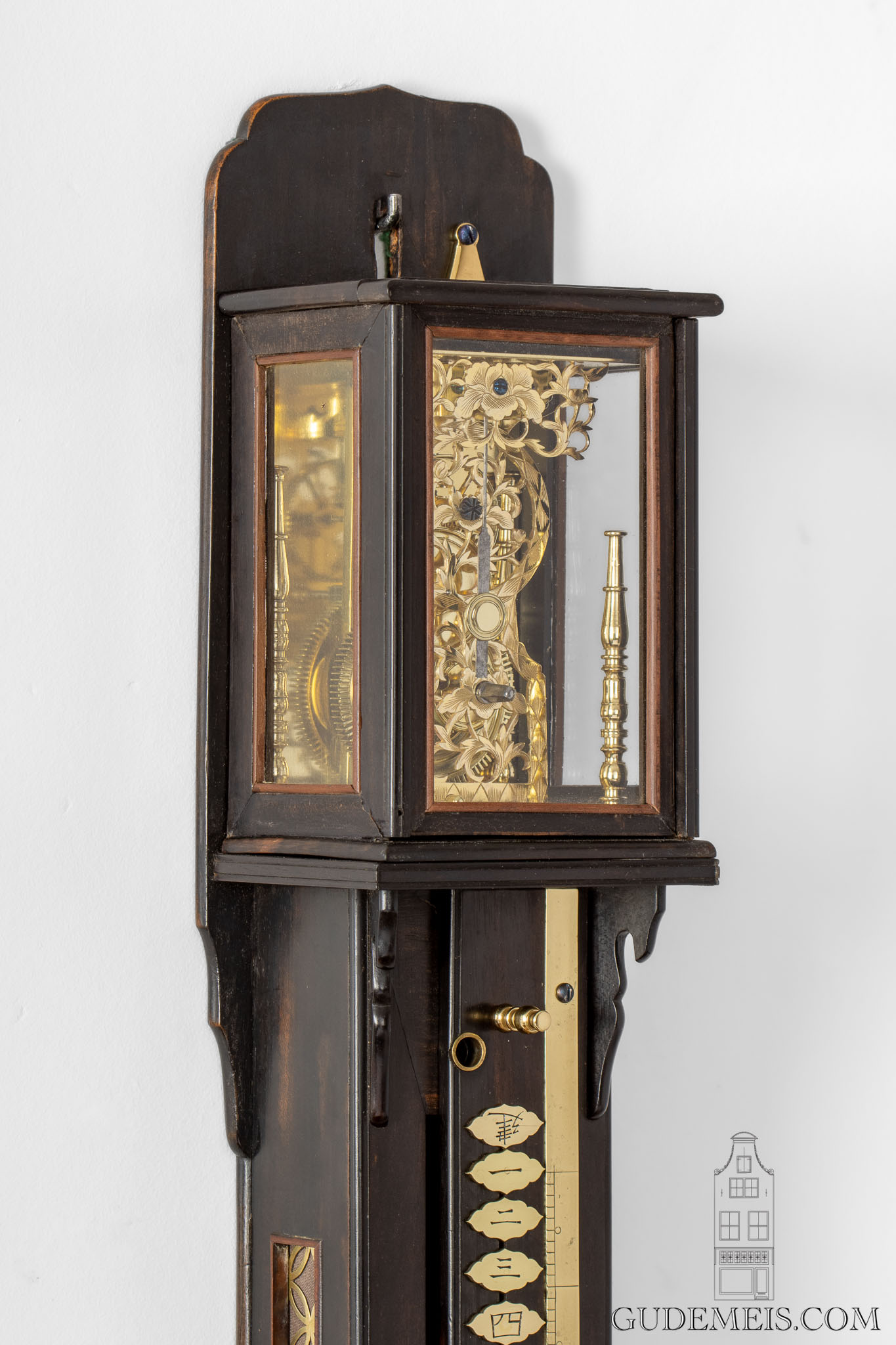
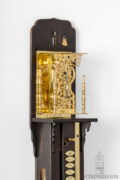
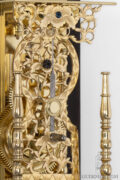
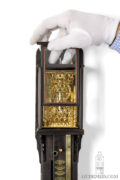
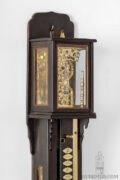
The movement is made of brass plates. The front plate is beautifully pierced and engraved with chrysanthemums. At the corners there are Half-height decorative pillars. The clock is regulated by verge escapement in combination with a short pendulum. It is driven by a weight which is the striking mechanism, complete with a spring barrel, locking disc, and bell. The movement and the striking mechanism must be wound once a day.
Tokis
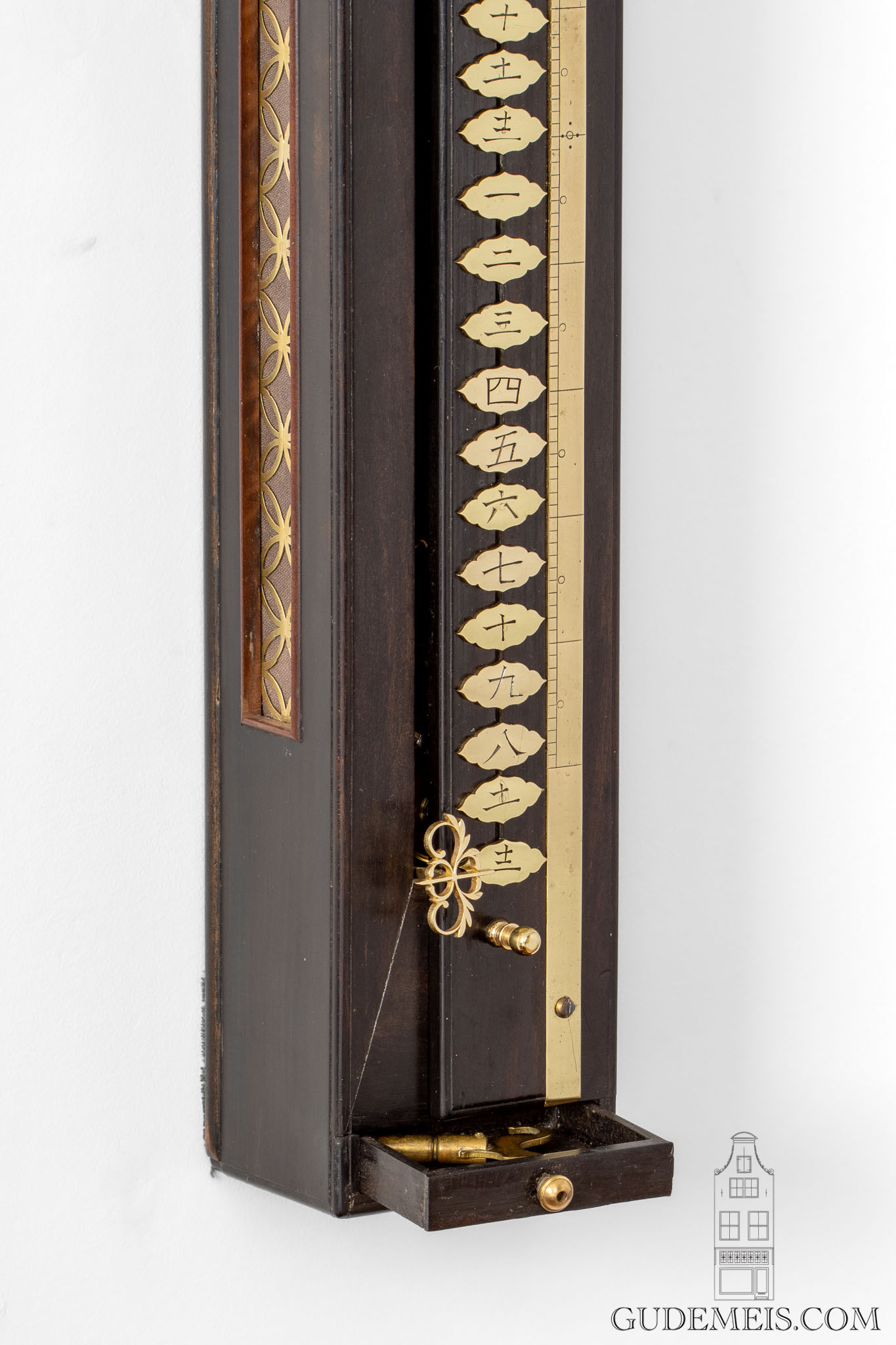
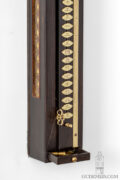
The movement is mounted in an elongated wooden case. The hood has glass panels, the front one of which can be slid upward to wind the movement. On the trunk of the case are the sliding brass plates of the toki’s, along which the pierced hand moves. To the sides are pierced brass frets to let the sound of the bell through. At the bottom of the front is a small drawer to store the winding key.