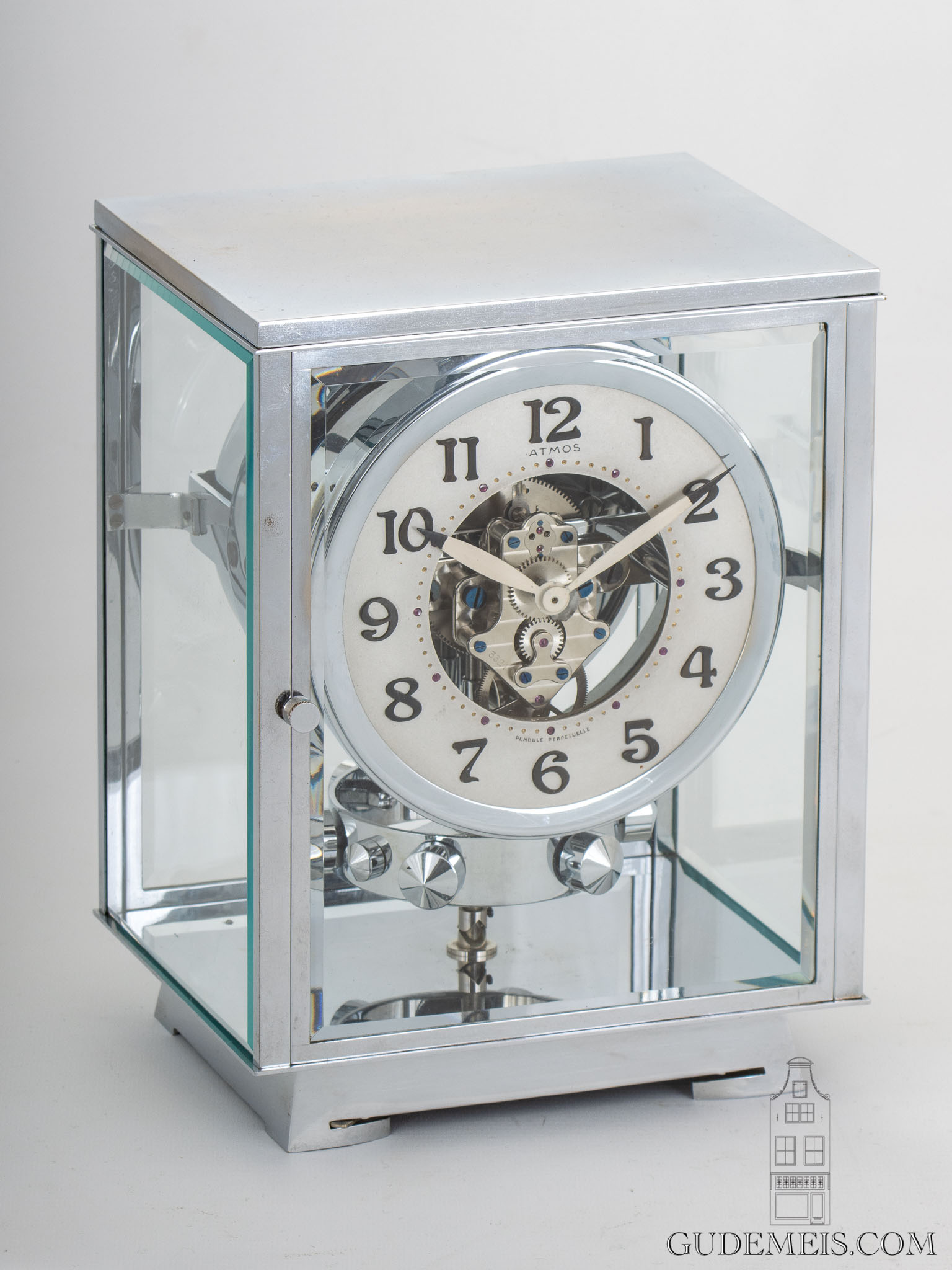
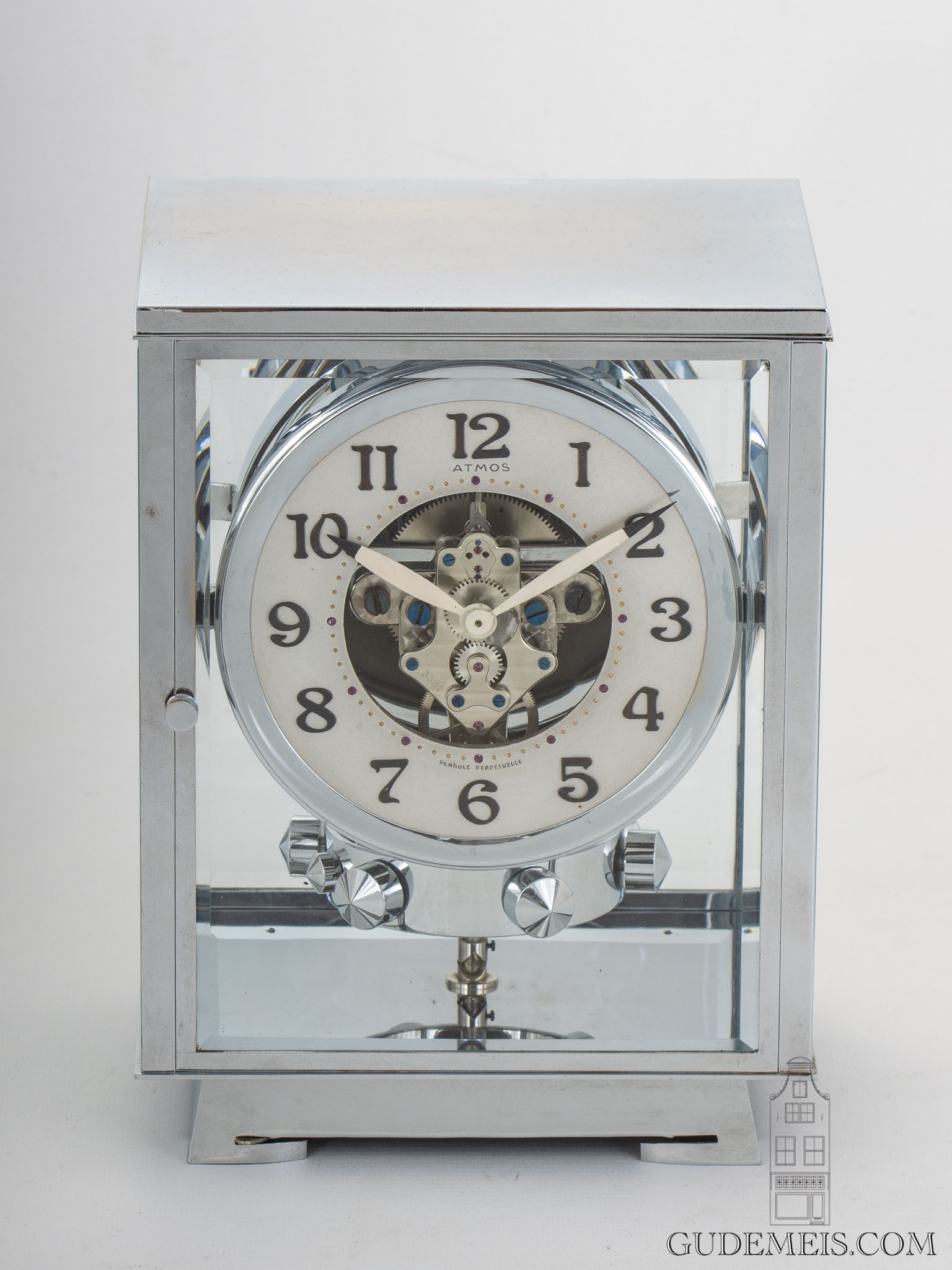
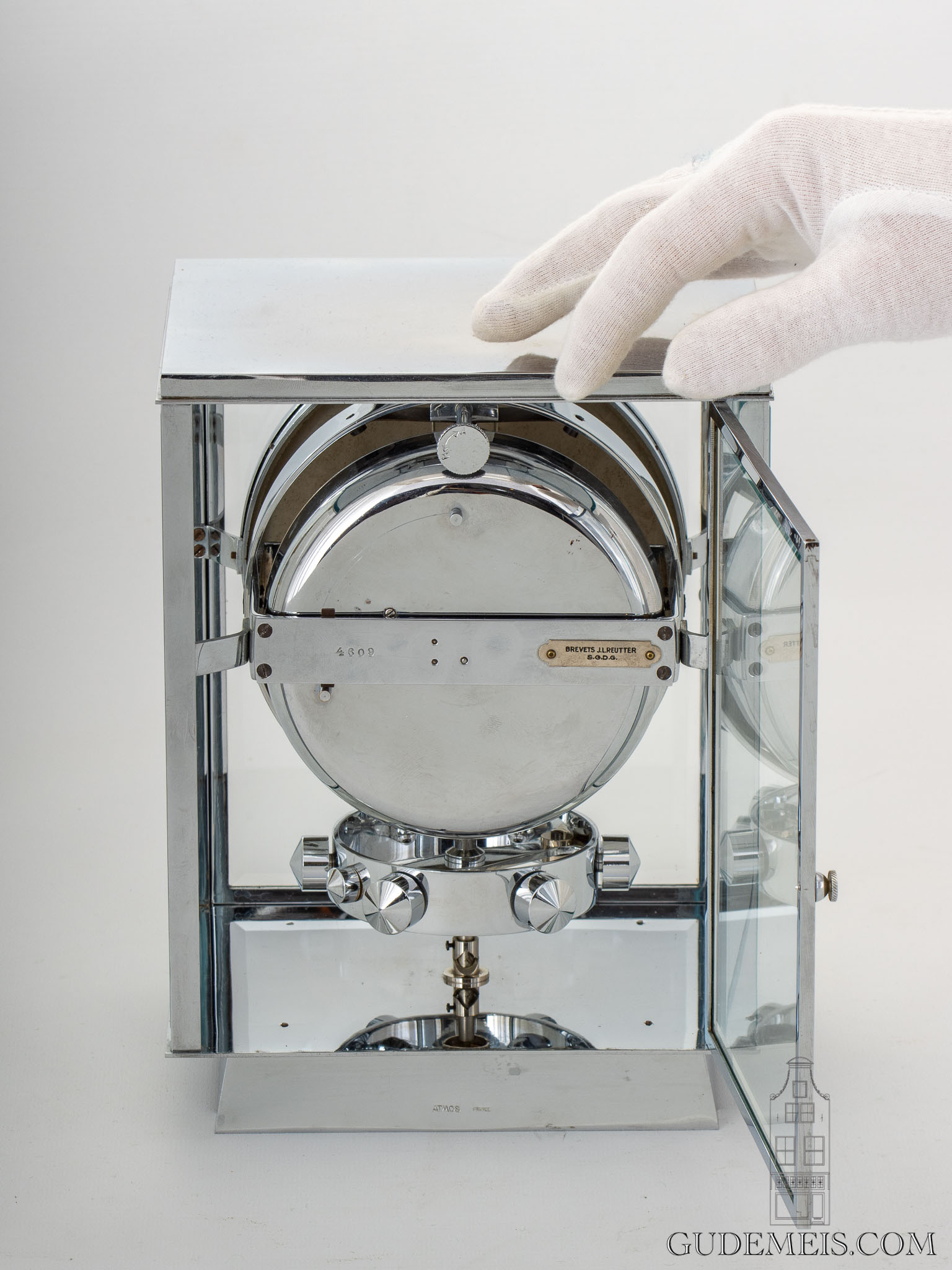
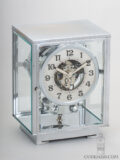
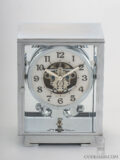
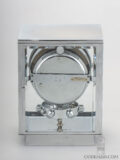
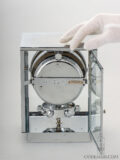
An attractive French Art Deco Reutter patent atmos clock, model RA2, circa 1933.
Description
Reutter patent Atmos
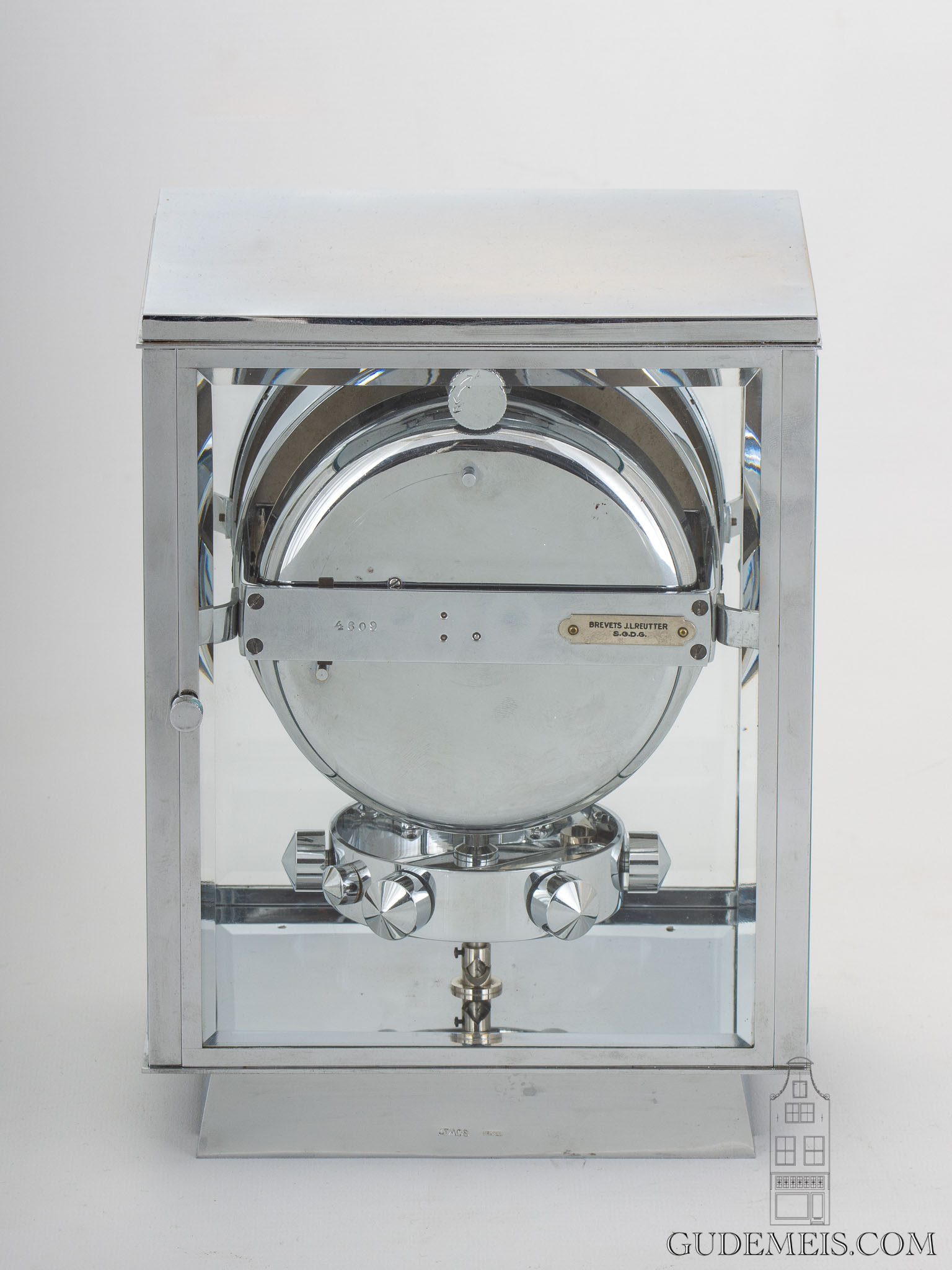
In 1927 Jean-Léon Reutter created his first prototype clock which driving spring is wound by temperature changes. After a number of adaptions and improvements a commercial production line of the Reutter patent Atmos was started up in the middle of 1929. The clock has an ingenious winding mechanism. This consists of a drum which can turn between two blocking pins. In the drum there is a U-shaped glass tube filled with mercury and ammonia gas of which one part is insulated. By changes in temperature and barometric pressure the ammonia gas expands or retracts in comparison to the gas in the insulated half. This causes the mercury to shift which motion turns the drum. This turning winds a spring which drives the mechanism.
Between 1930 and 1938 these clocks were produced under the direction of Reutter. After this period Jaeger leCoultre took over the patent and modified the winding mechanism. Because of the relative short production period, the number of Reutter patent clocks remained limited. The Reutter-patent clocks were executed with different cases. The case of the RA2 model is a nice example of the Art Deco style with its geometric outlines. Not all RA2 models look the same. however. There are among others, differences in dials and numerals. This clock with its skeletonized dial adorned with rubis is a particular luxurious edition. Nowadays these clocks are wanted because they fit in any interior and have a timeless quality.
Pendule perpetuelle
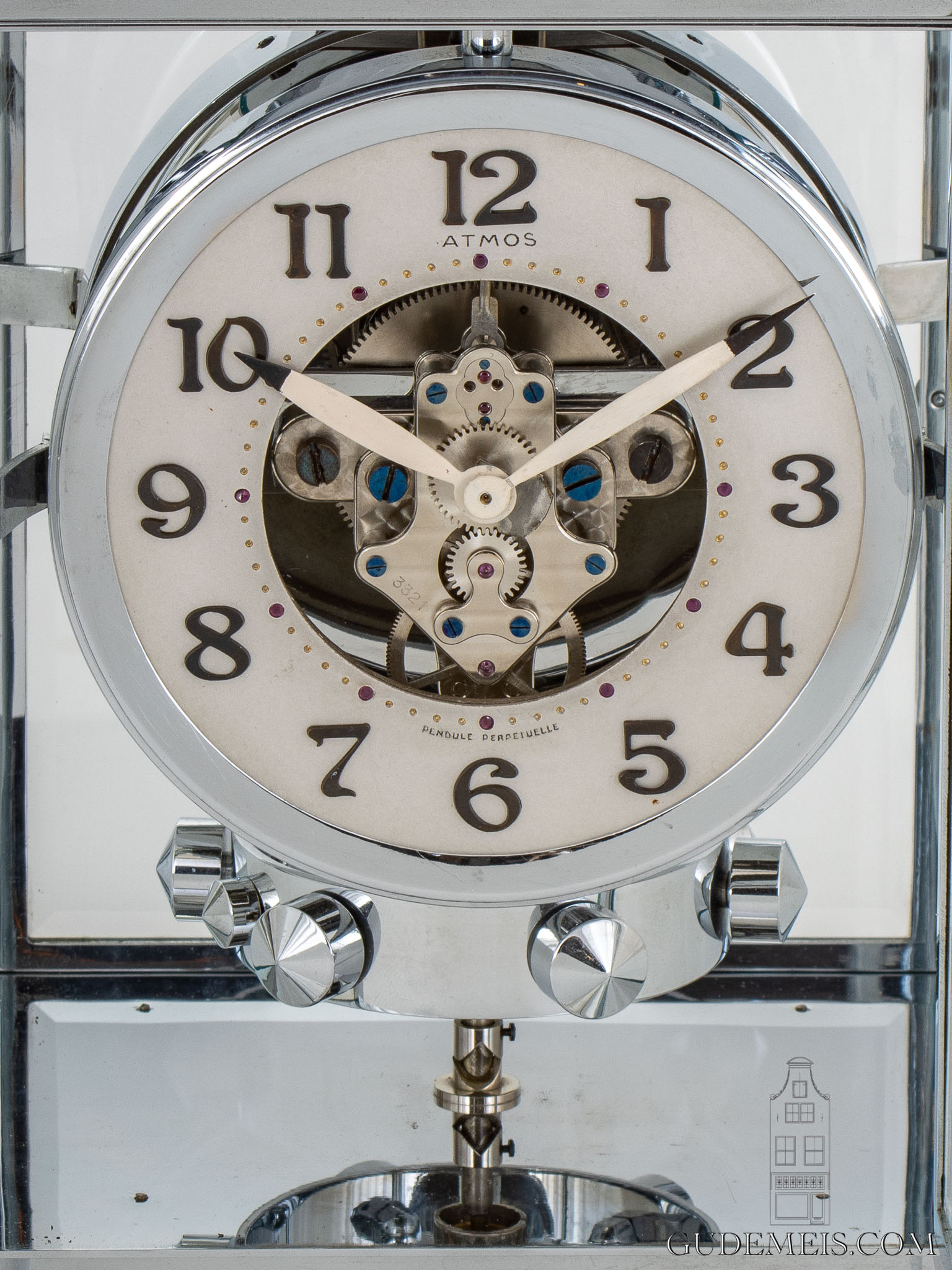
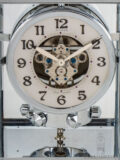
The dial has applied Arabic numerals, with the minute markers along the inner edge adorned with small rubies. Below number 12 is inscibed “ATMOS”, and “pendule perpetuelle” is inscribed above the number 6. The sleek hands are lacquered white with black tips. The open center of the dial allows the movement to be clearly visible.
Brevets J.L. Reutter
The nickel-plated movement is suspended from brackets inside the case. On the back of the bracket is the number 4609 and a metal plate inscribed with: BREVETS J.L. REUTTER S.G.D.G. The large balance wheel, or torsion pendulum, has a rotation period of thirty seconds and is equipped with large adjusting screws. This balance wheel can be locked using a slide in the base.
Nickel-plated case
The rectangular nickel-plated case has beveled glass panels on all sides. Doors are fitted on the front and back. The whole is raised on a canted plinth.