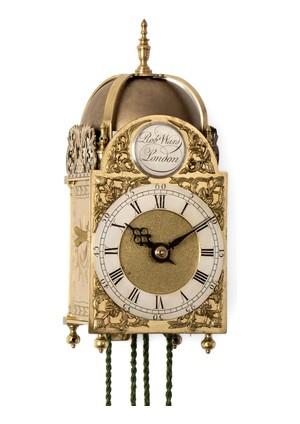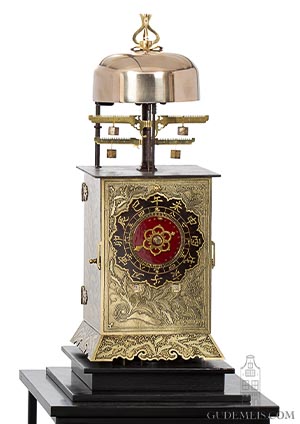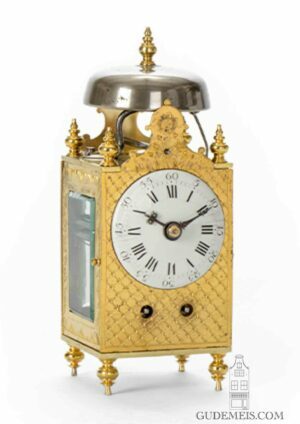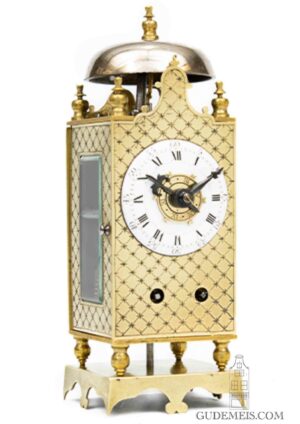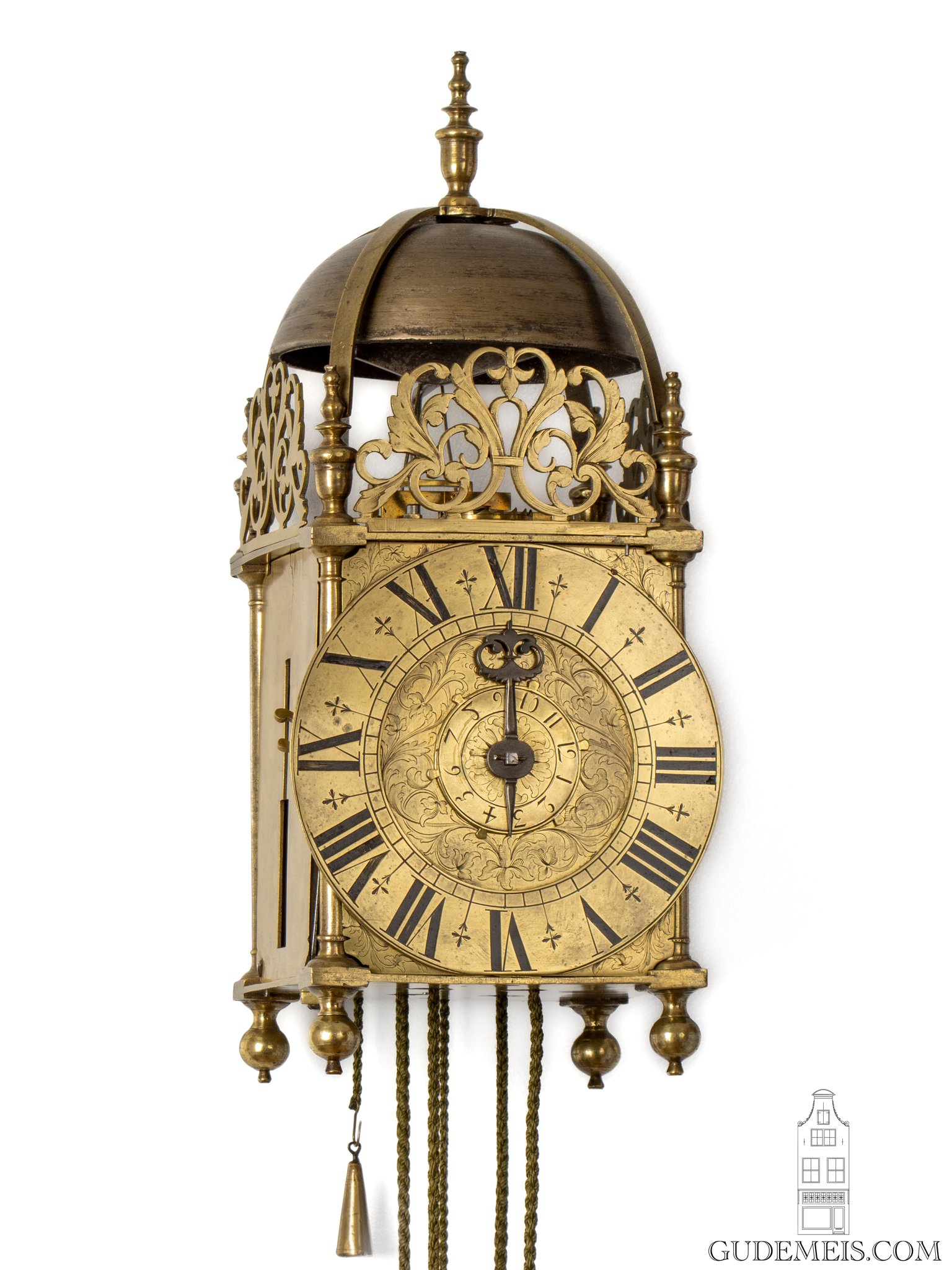
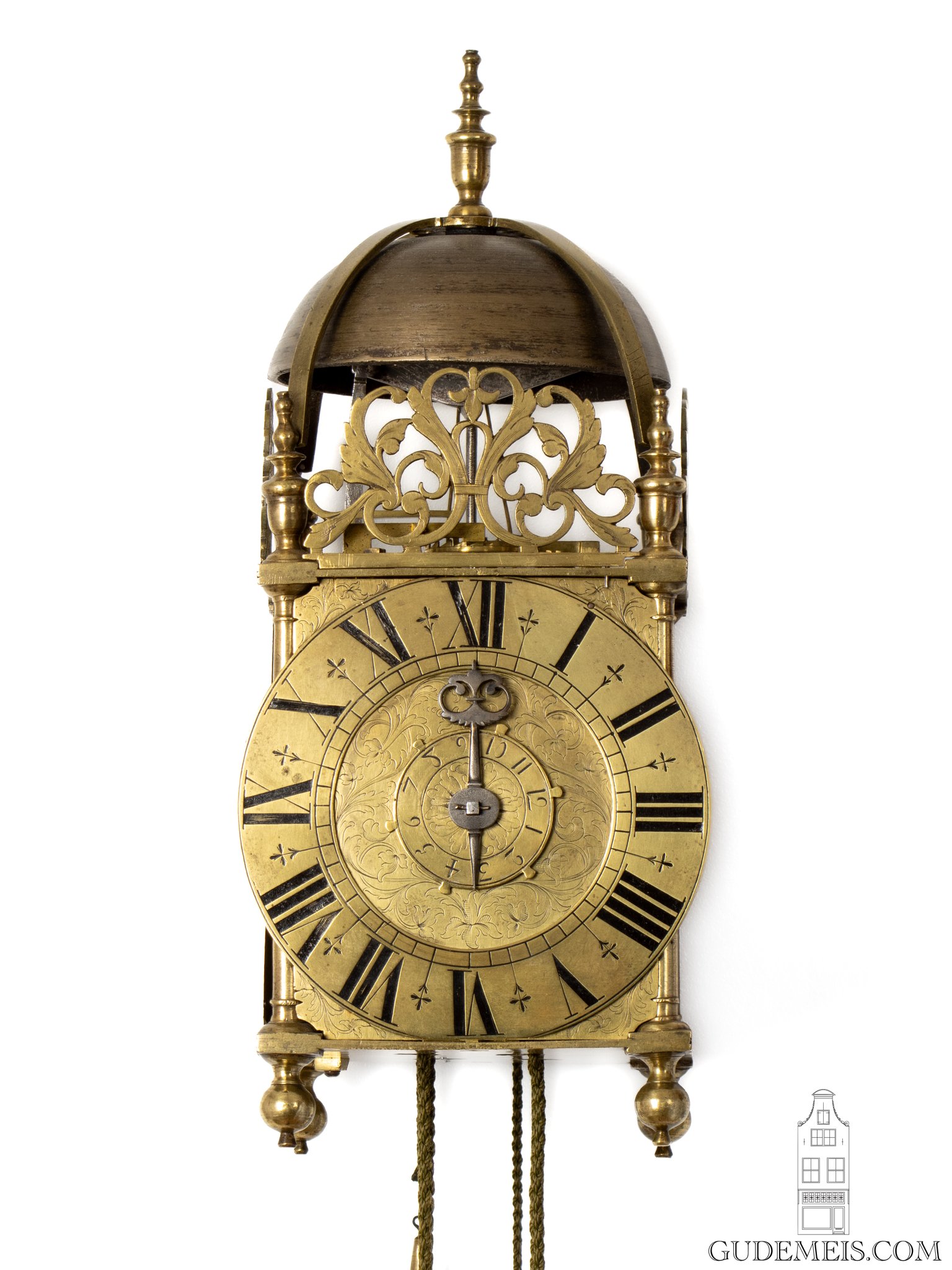
An English engraved brass lantern clock with striking mechanism and alarm, circa 1690
Omschrijving
Lantern clock
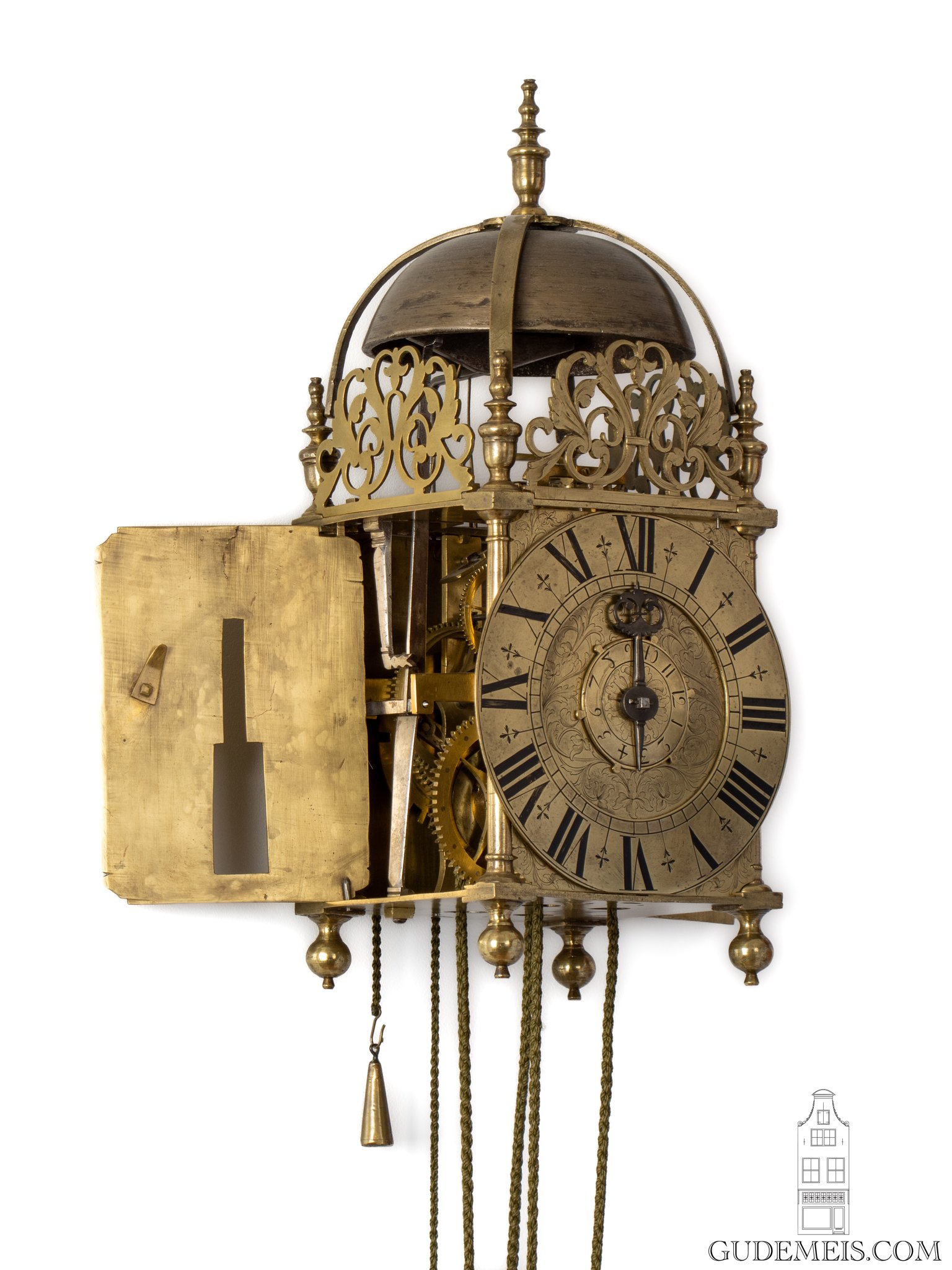
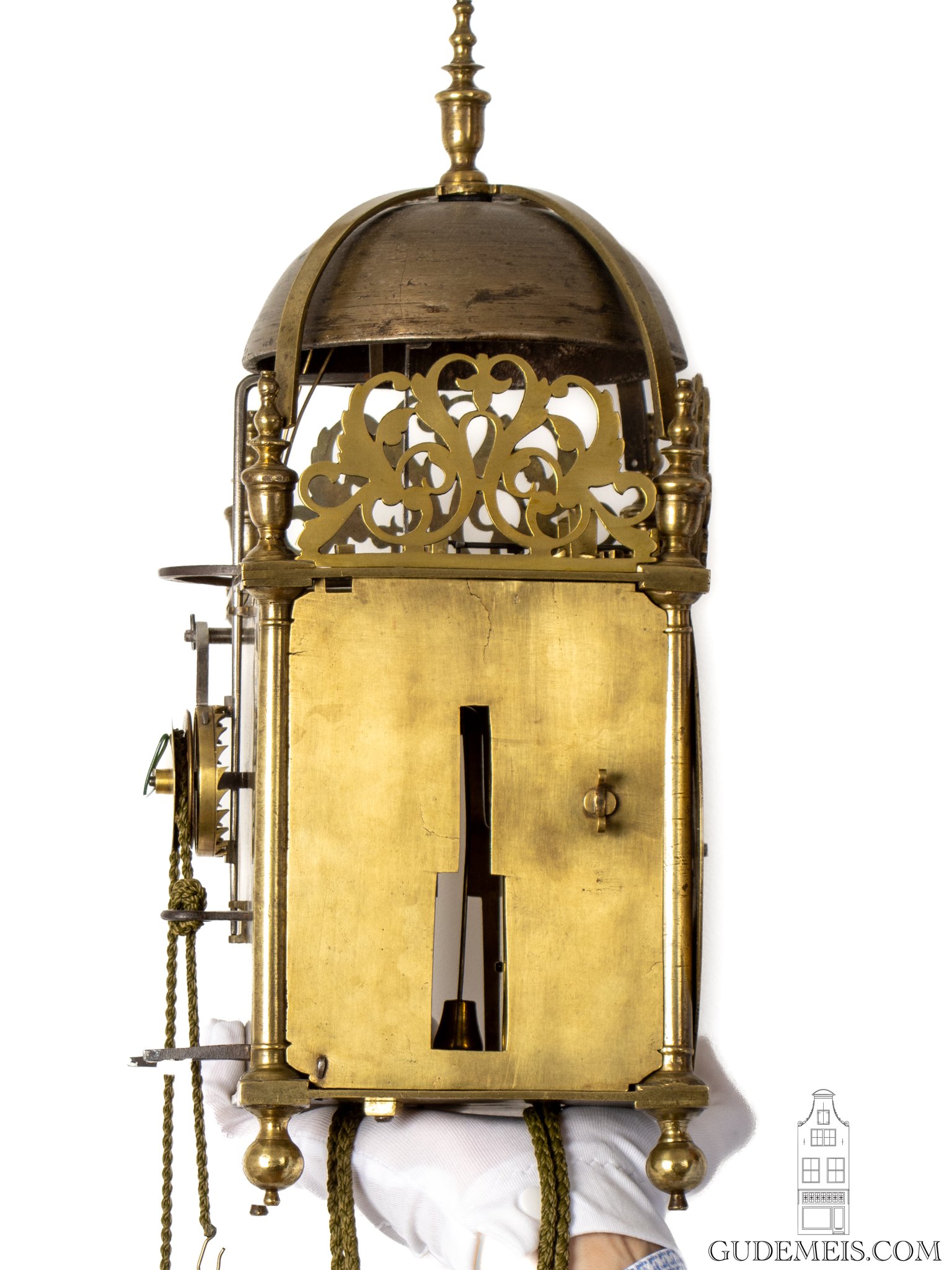
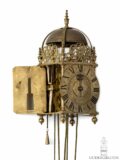
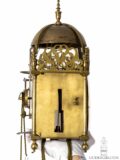
The term ‘lantern clock’ was probably introduced in the 19th century, referring to the shape of these clocks. Others argue that ‘lantern’ comes from laiton, which means brass in French. This might well be true, as in wills and documents from the 17th century, these clocks are often referred to simply as ‘brass clocks’ or ‘house clocks.’ Most European countries have their versions, but the English and French are famous for this type of clock. In the third quarter of the 17th century, a type of lantern clock evolved with the pendulum running between the going and the striking trains. This is logical when we realize that with the earlier ‘balance wheel’ clocks, before the invention of the pendulum movement, the alarm mechanism was positioned at the back. The pendulum needed slots in the door to allow it to swing, and there are clocks that have the slots fitted with triangular extensions to block dust from entering. These extensions are called ‘wings.’ But not all clocks with a centrally swinging pendulum have these, as is the case with this clock. Now, the pendulum bob appears with every swing which is an amusing feature. But this clock is more than just technically interesting. The fine engraving, the rustic appearance and nice proportions make it a beautiful clock that would be a highlight in many interiors.
Chapter ring
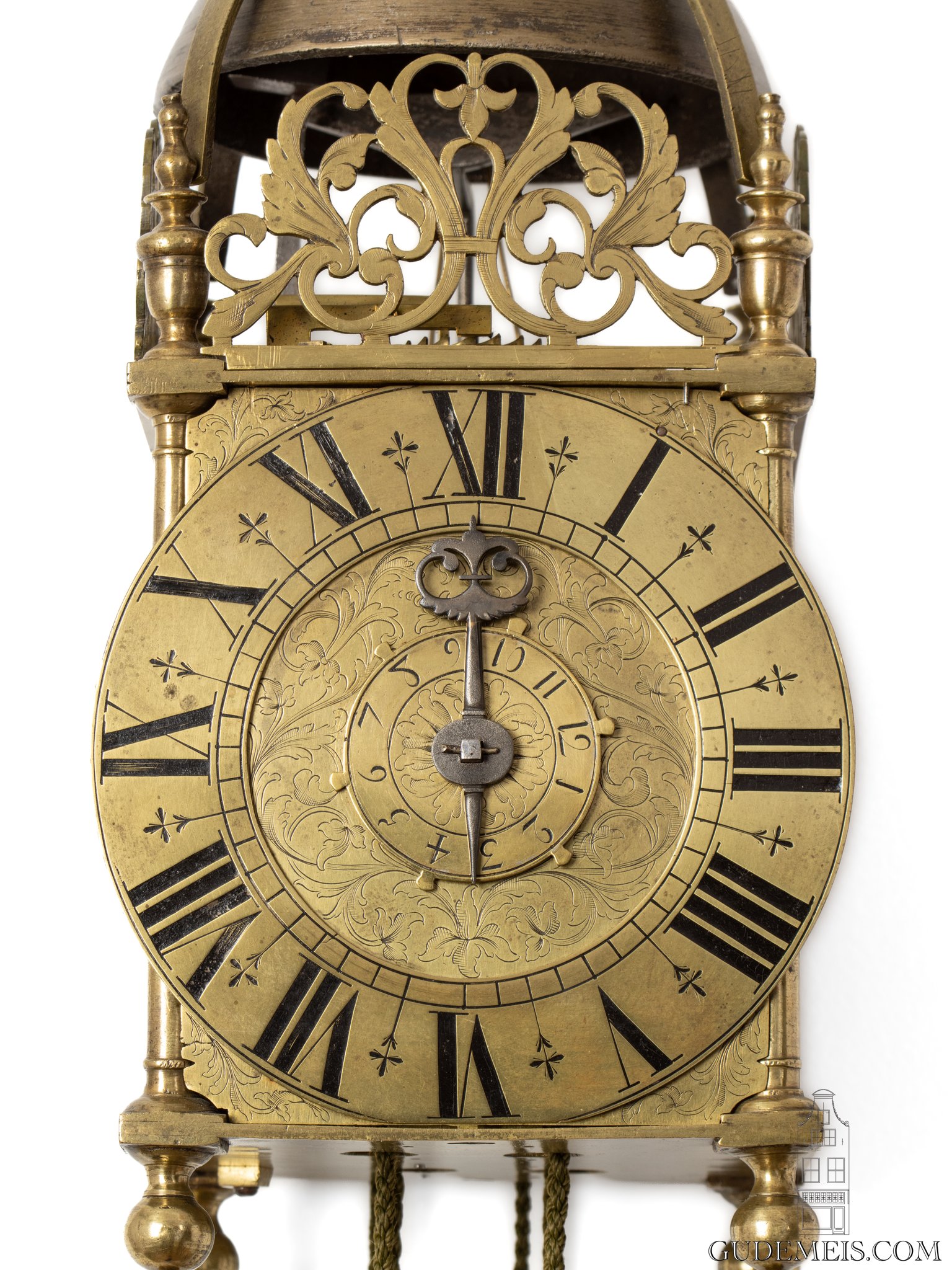
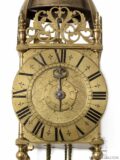
The 16-cm engraved chapter ring has Roman numerals with half hour and quarter marks on the inner rim. The single pierced hour hand is made of iron. The dial itself is adorned with beautifully engraved foliate scrolls and leaves. The brass alarm disc has similar engraving.
Verge escapement
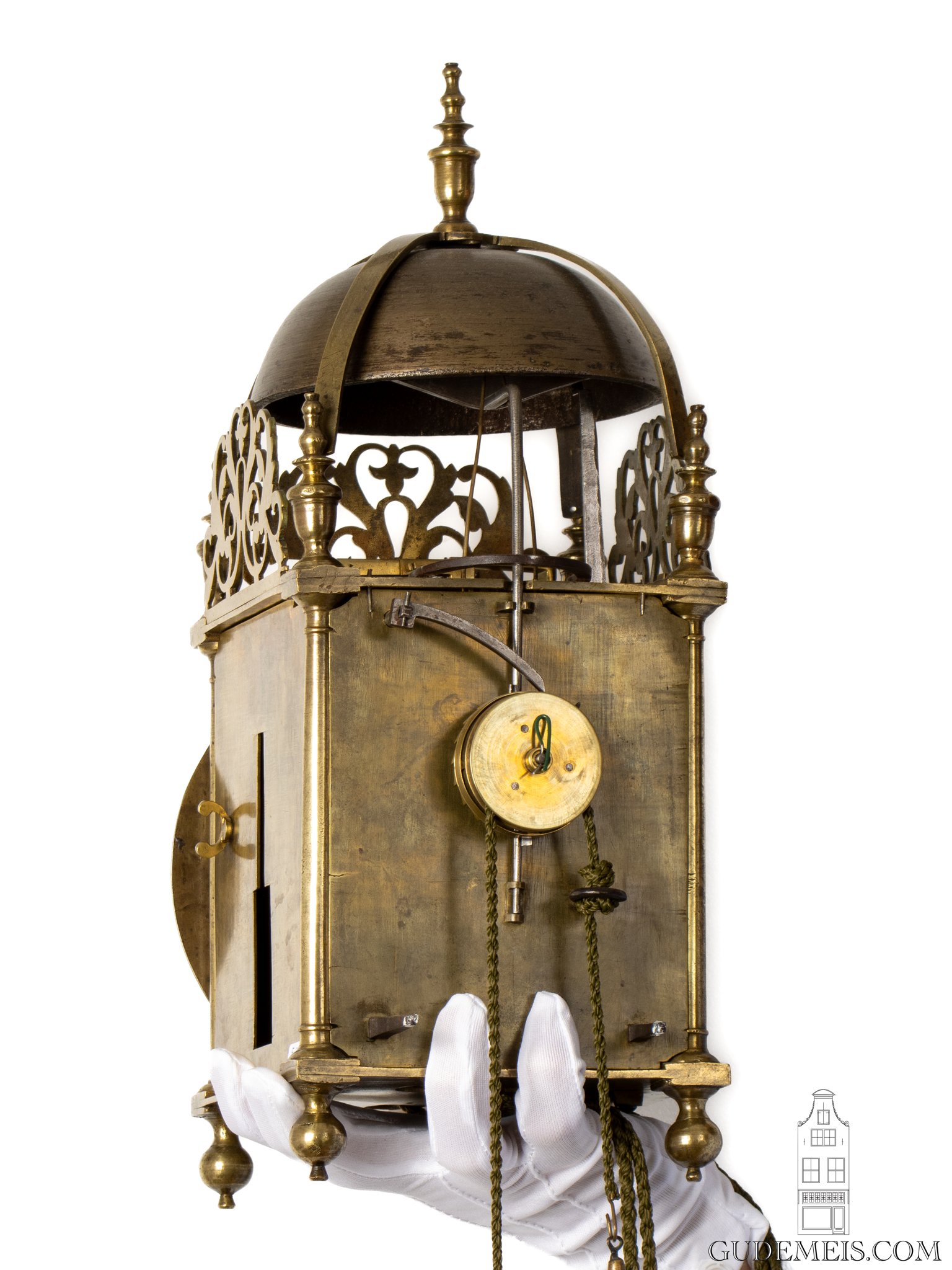
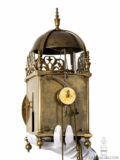
The two train posted movement is driven by a weight and is of day duration. It is regulated by verge escapement in combination with a short fixed pendulum. The pendulum swings in between the going- and striking trains. The clock strikes the hours by means of a countwheel on a surmounted bell. The alarm mechanism is mounted at the back.
engraved fret
The brass case has four urn finals on the corners which carry the bell cross which has a fifth finial. The front has an engraved fret while the frets at the sides are left plain. The sides have doors with a slot for the swinging of the pendulum. The whole terminates in bun feet. The clock is suspended on the wall by means of a hoop and spurs.