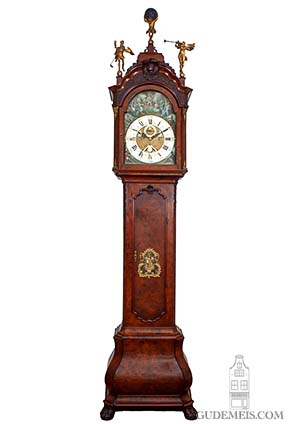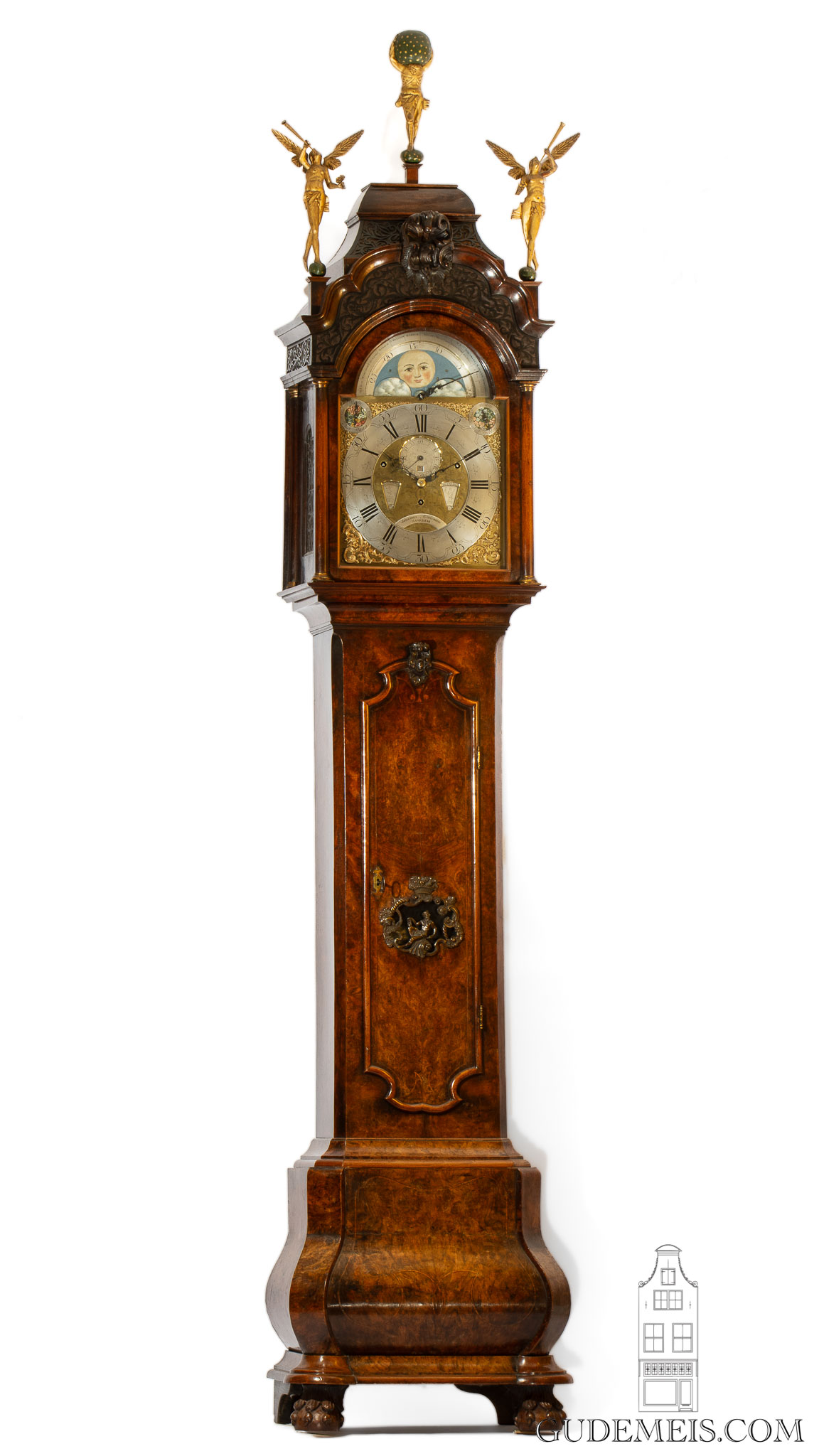
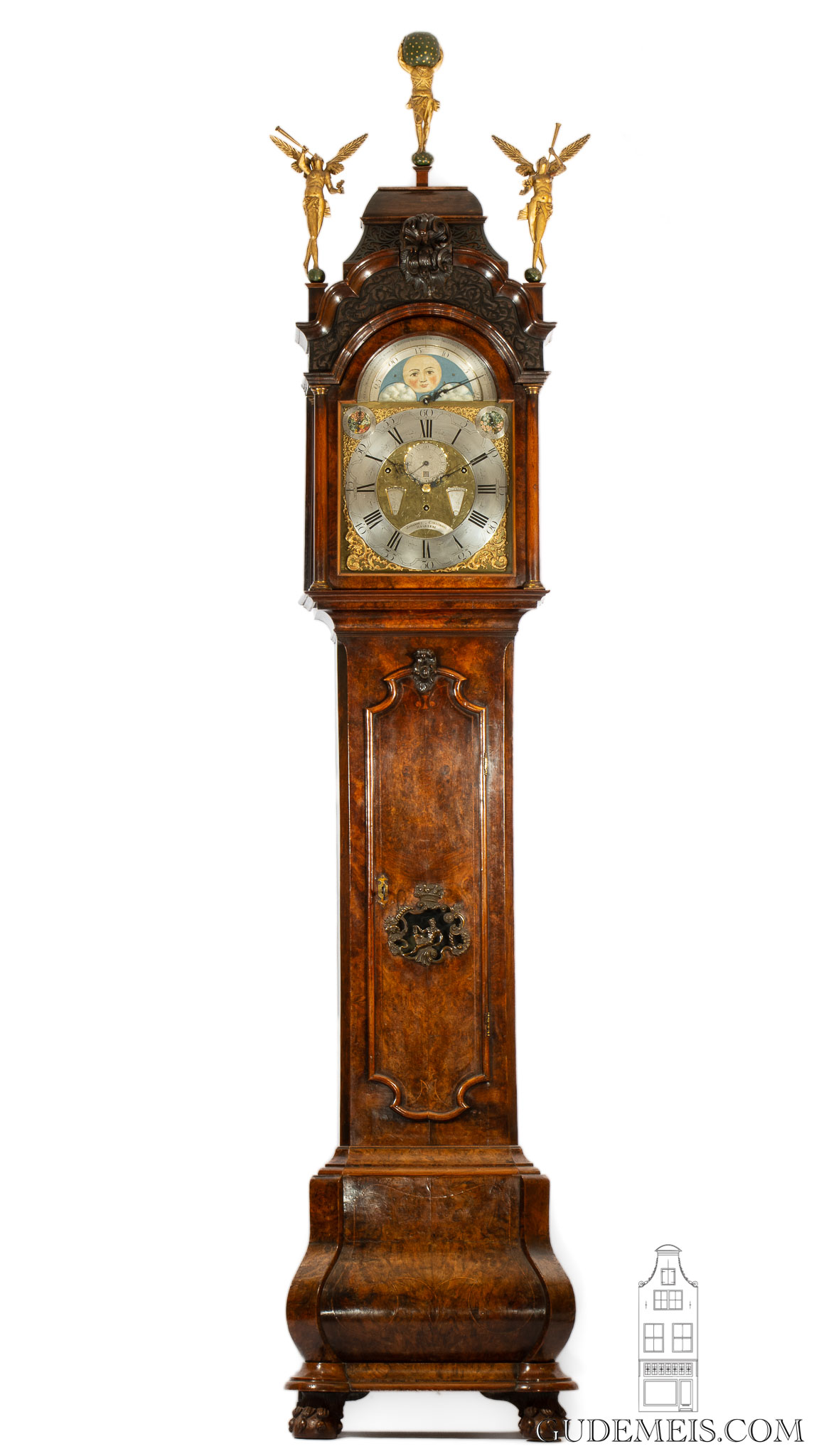
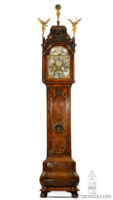
A fine Dutch burr walnut musical ‘Amsterdam’ longcase clock, Coelombie, circa 1750.
Description
Amsterdammer
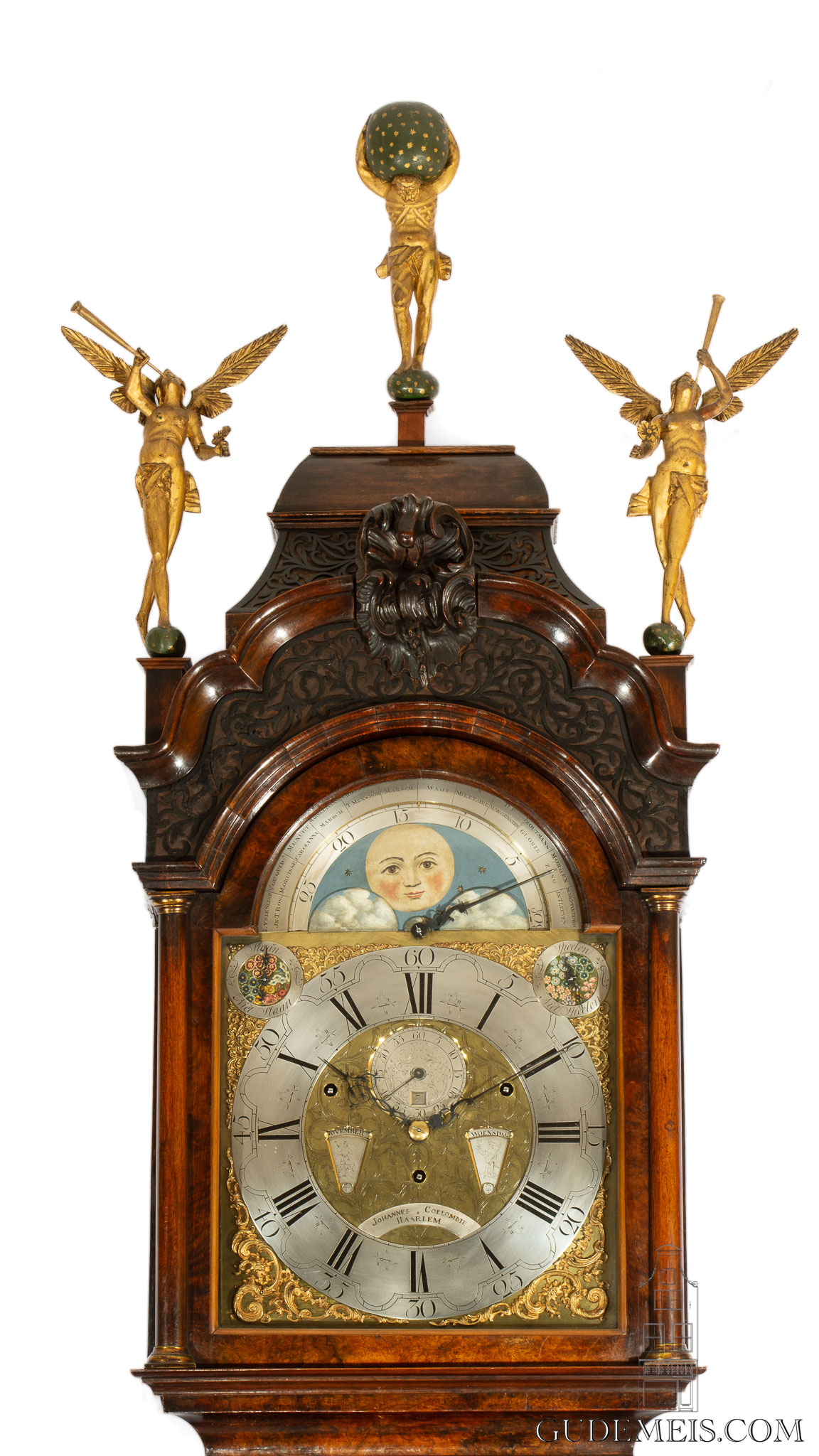
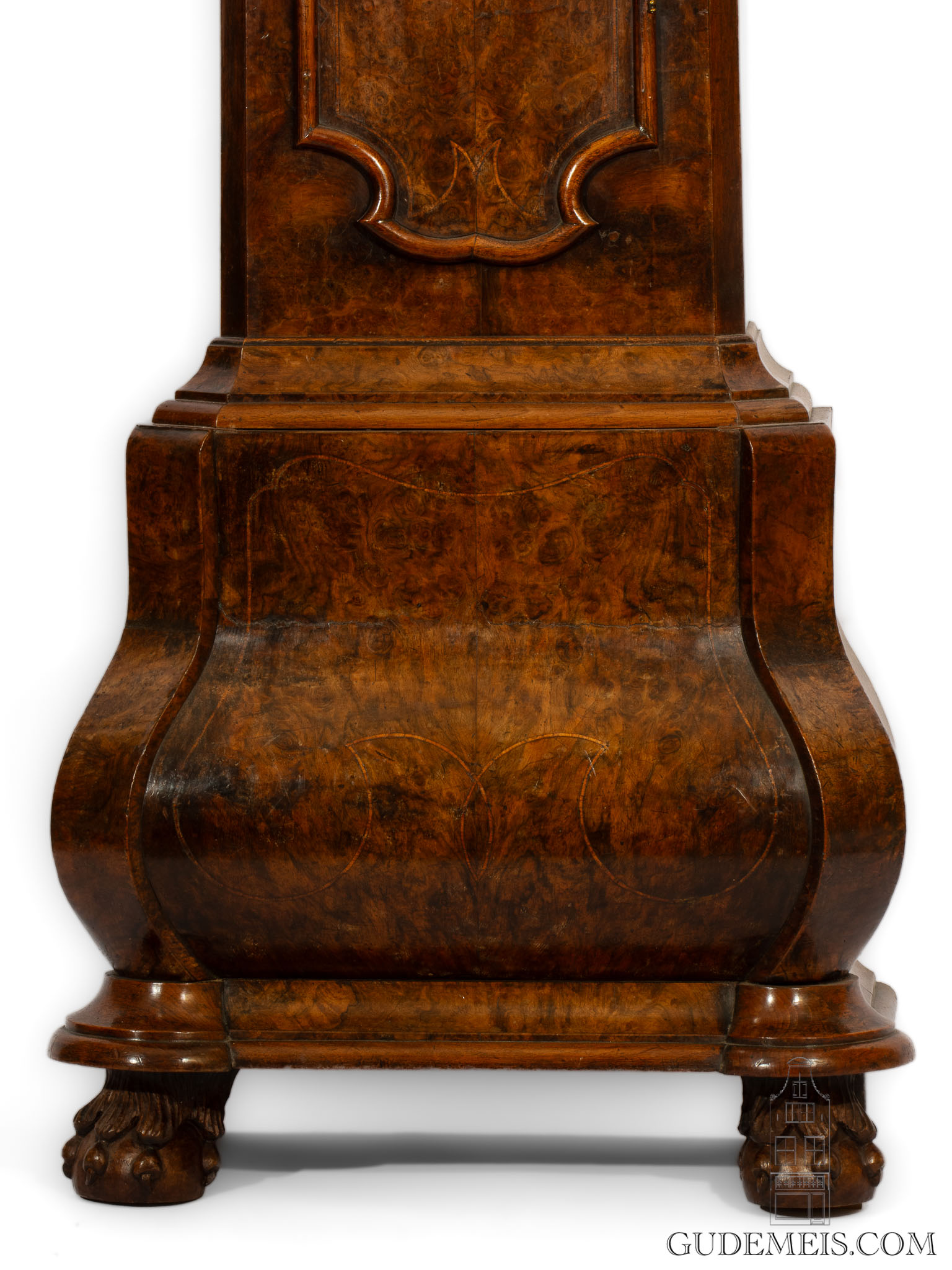
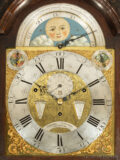
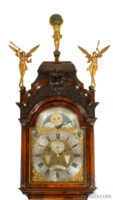
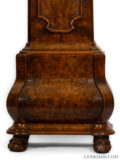
Dealers and experts often refer to this type of clock as an “Amsterdammer” or Amsterdam longcase clock. This is likely because, although this type of clock was made throughout the Dutch Republic, the vast majority were produced in Amsterdam. And due to this production, Amsterdam also played the leading role in the clock’s stylistic development. After the introduction of longcase clocks by English clockmakers around 1670, the development of English and Dutch clocks ran fairly parallel, aside from a few regional differences. Dutch clocks often differed by featuring a calendar mechanism, moon phase, alarm, and Dutch striking mechanism. From 1725 onward, the two traditions began to diverge, with Dutch clocks becoming taller and more ornate. This development led to the typical “Amsterdam standing clock,” of which this clock is a fine example. The clock has a bombé base and a curved corniche surmounted by an Atlas figure and two Victories. Another characteristic feature is the use of burr walnut veneer. The dial has indications for the date, the day of the week, the month, the moon phase, and the days of the lunar cycle! In addition, it is an excellent timekeeper and has half hour Dutch striking. But this magnificent large clock, which is already a joy to behold, becomes enchanting when it plays one of its twelve melodies. The clear sound of the bells creates a beautiful sound and evokes the era in which the clock was crafted. Impressive and beautiful to behold, with an ingenious calendar and enchanting sound. A great clock!
Calendar
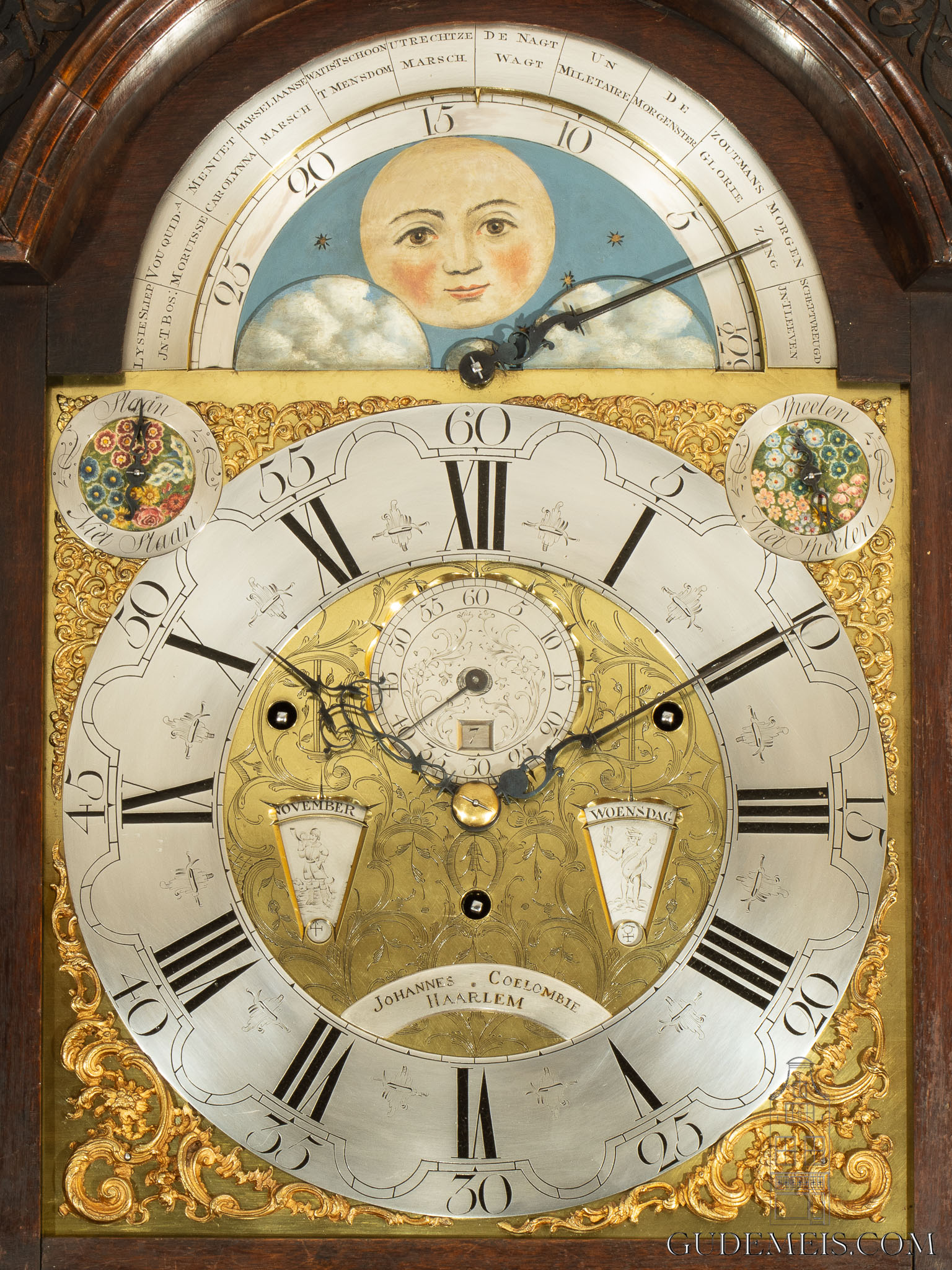
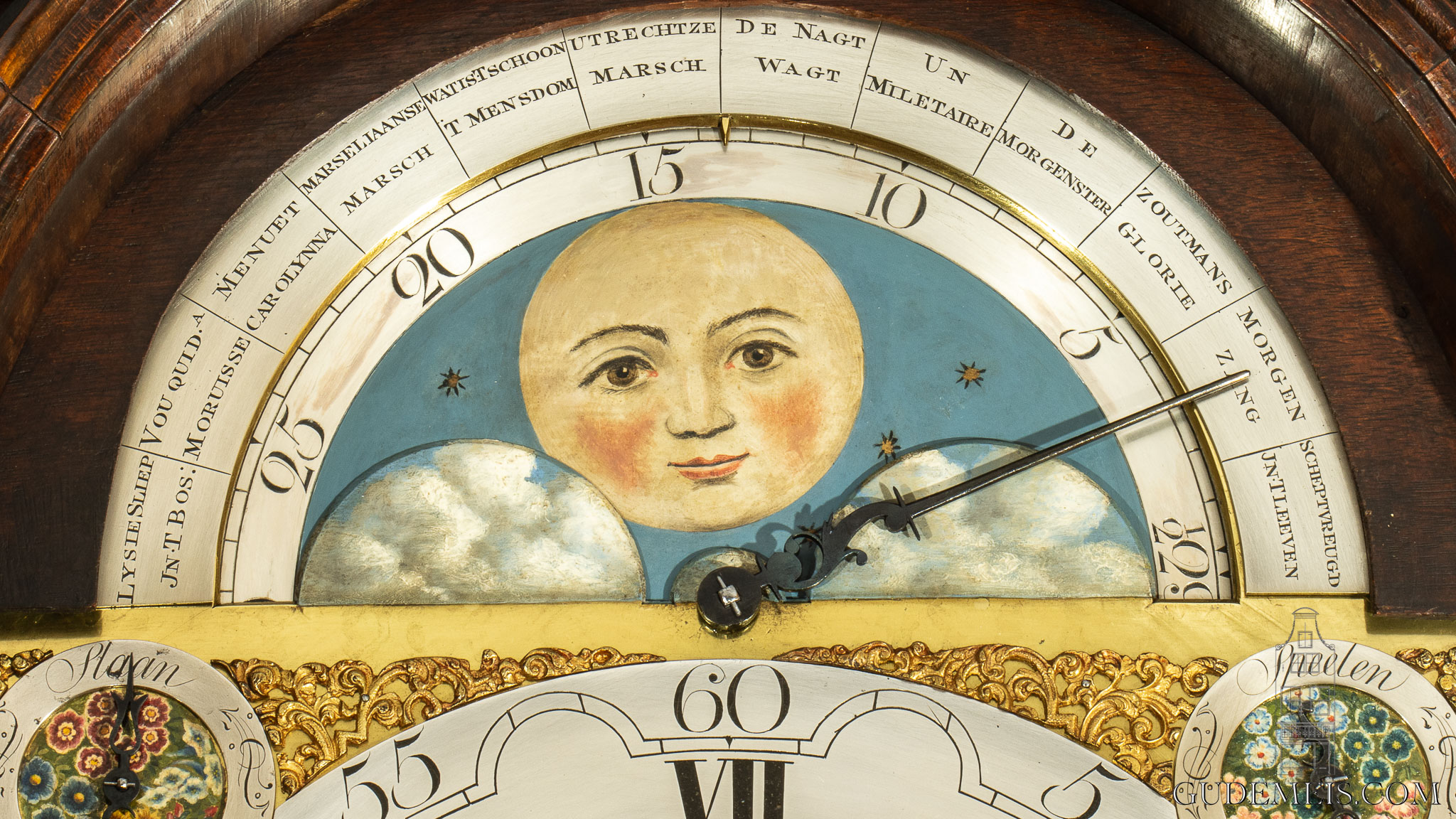
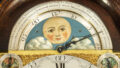
The arched brass dial has an applied silvered chapter ring with Roman numerals, bordered by five-minute arches with five-minute Arabic numbers. In the center, which is engraved with a floral pattern, there is a signature plate above the VI that reads “Johannes Coelombie Haerlem.” There are also apertures for the calendar displaying the months, days of the week, and the date. There is also a recessed seconds subsidiary. Surrounding the chapter ring are cast brass Rococo spandrels below and further subsidiaries above for striking/not striking and playing/not playing. In the arch is the moon phase with the days of the lunar cycle. Above the moonphase is a sector for the melody selection.
Movement
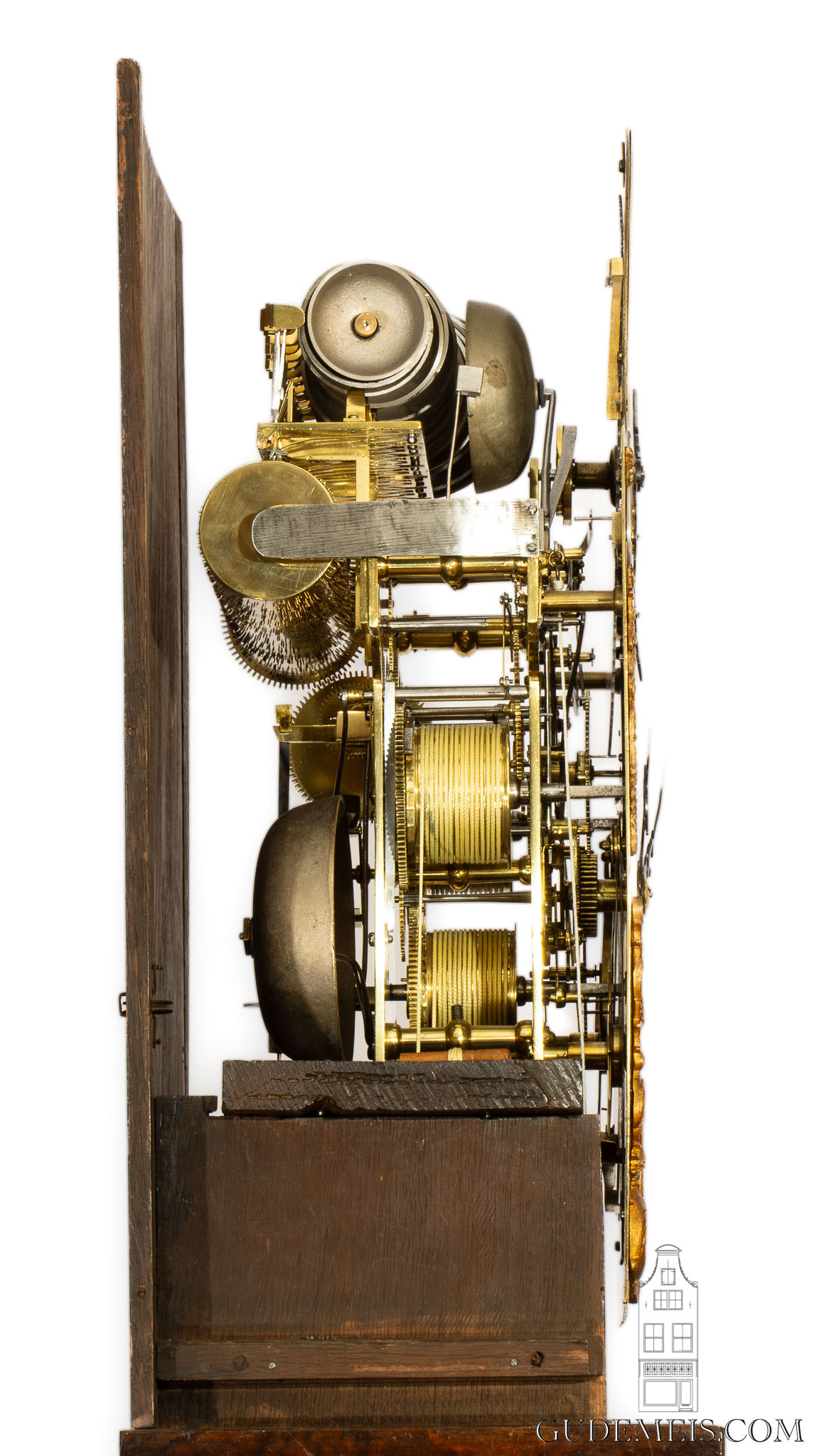
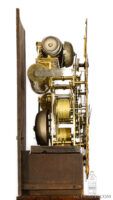
The movement is driven by three weights and has a duration of eight days. It is regulated by anchor escapement in combination with a pendulum. The clock has Dutch half-hour striking on two alternating bells. Every half hour, it plays one of the twelve melodies by means of a pinned cylinder on a set of bells.
Bombé base
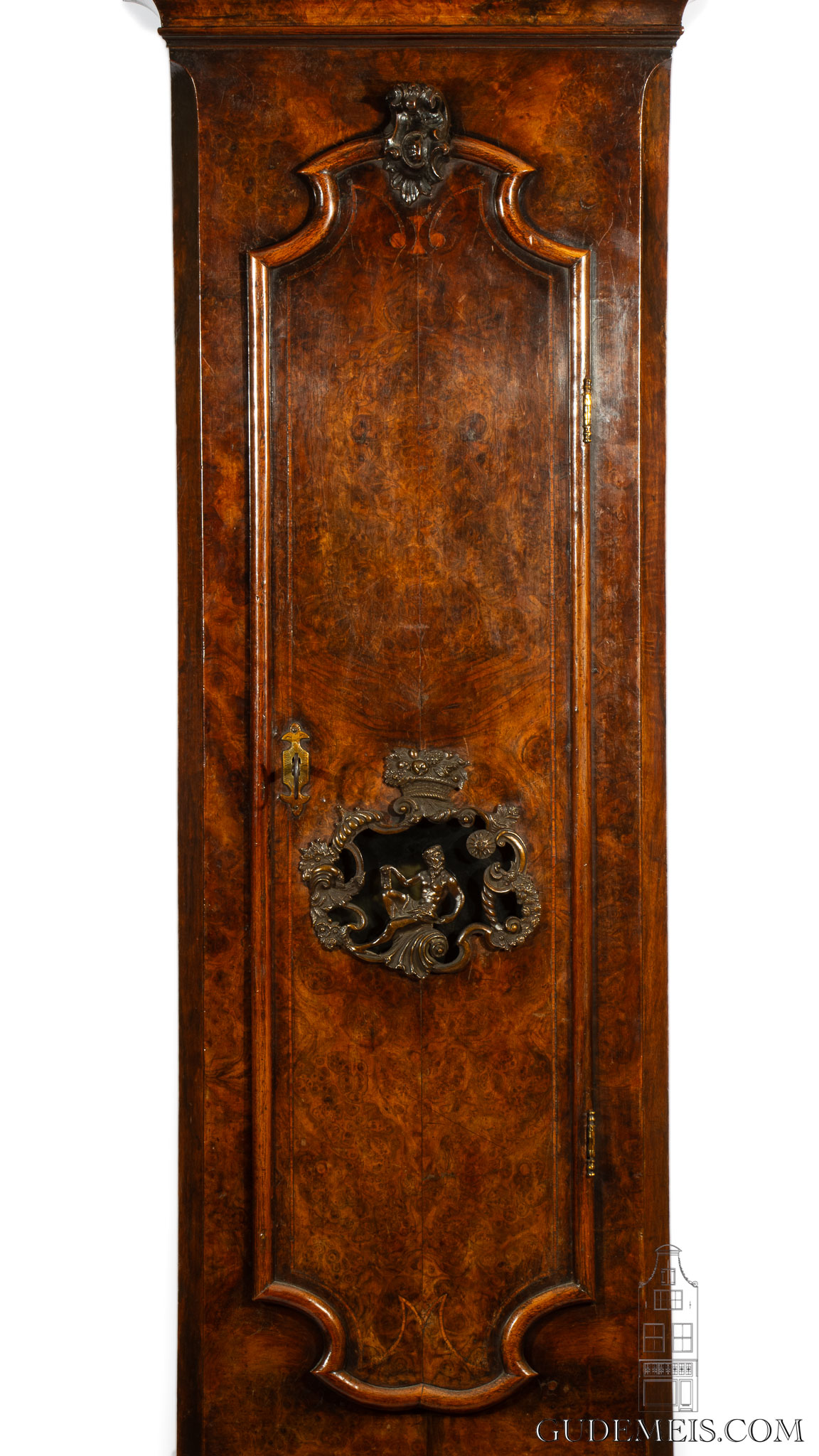
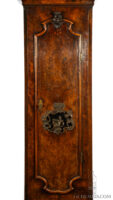
The burr walnut-veneered oak case has a domed top surmounted by an atlas figure and victories. There is foliate pierced fretwork on the front and sides. The long door has a cast brass Chronos lenticle. The bombé base is raised on ball-and-claw feet.