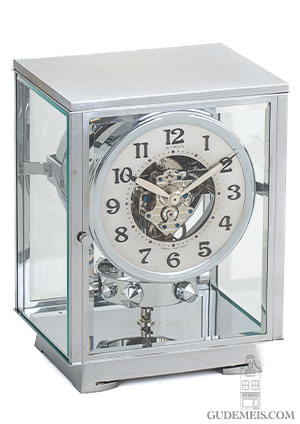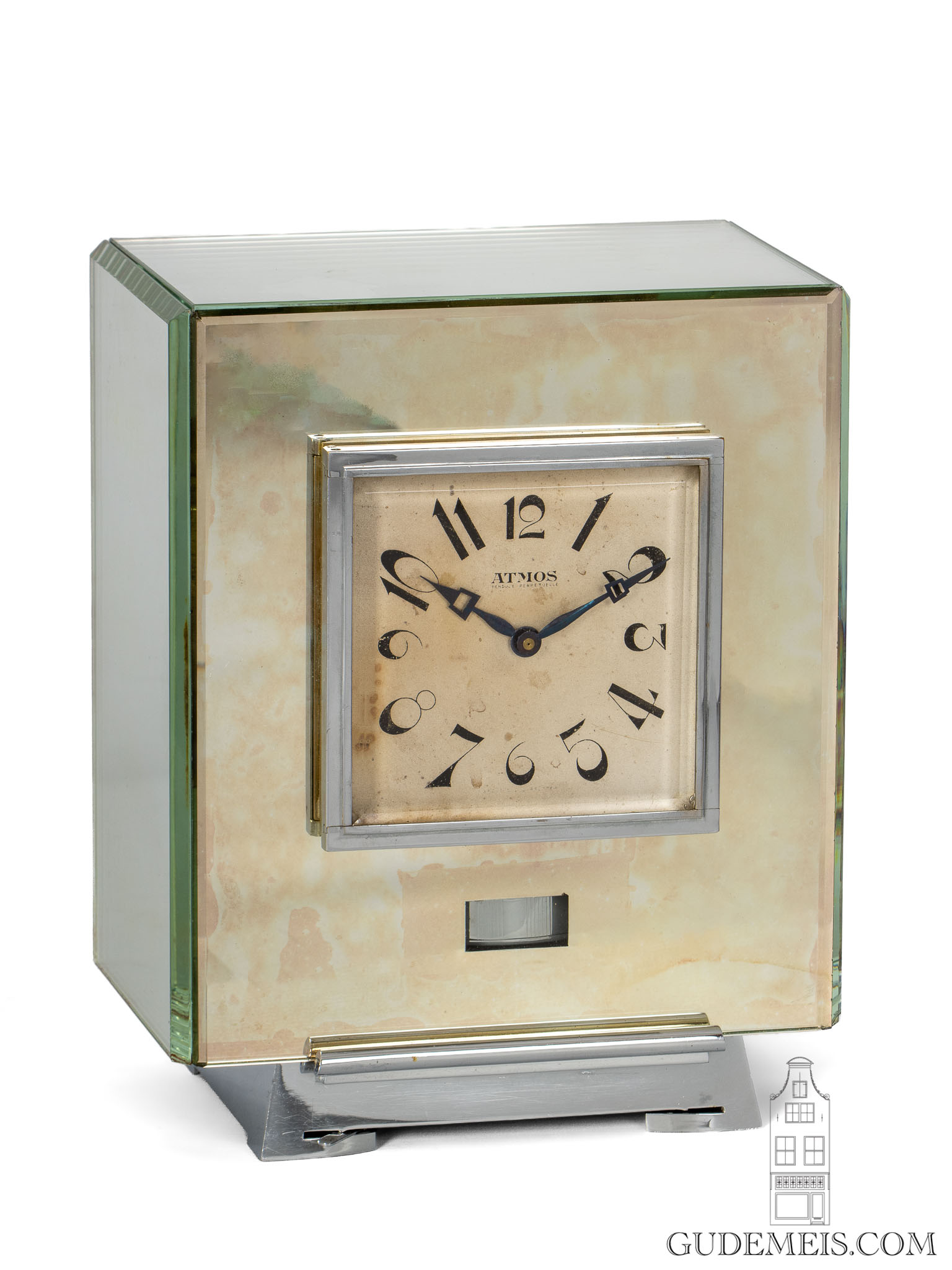
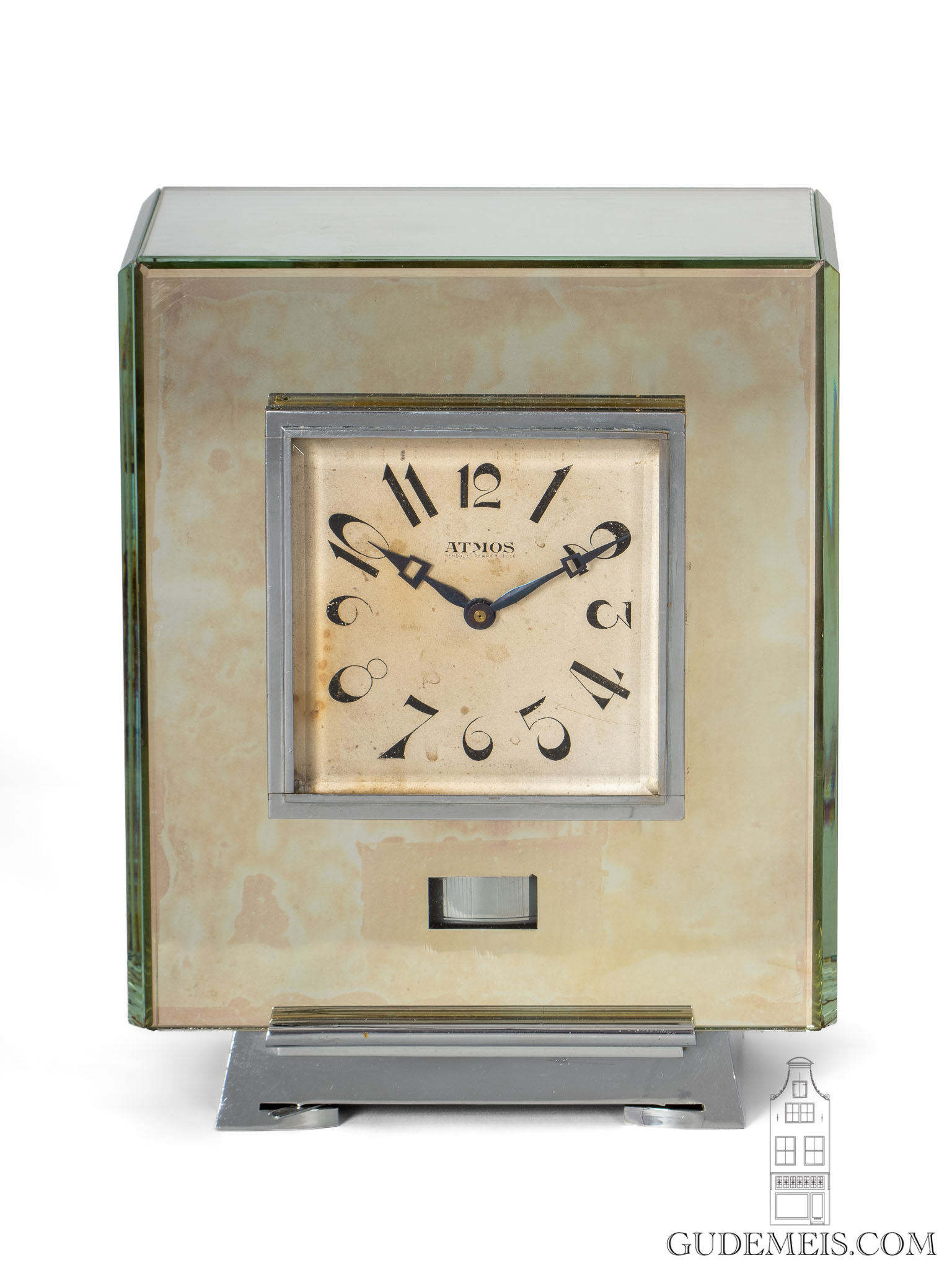
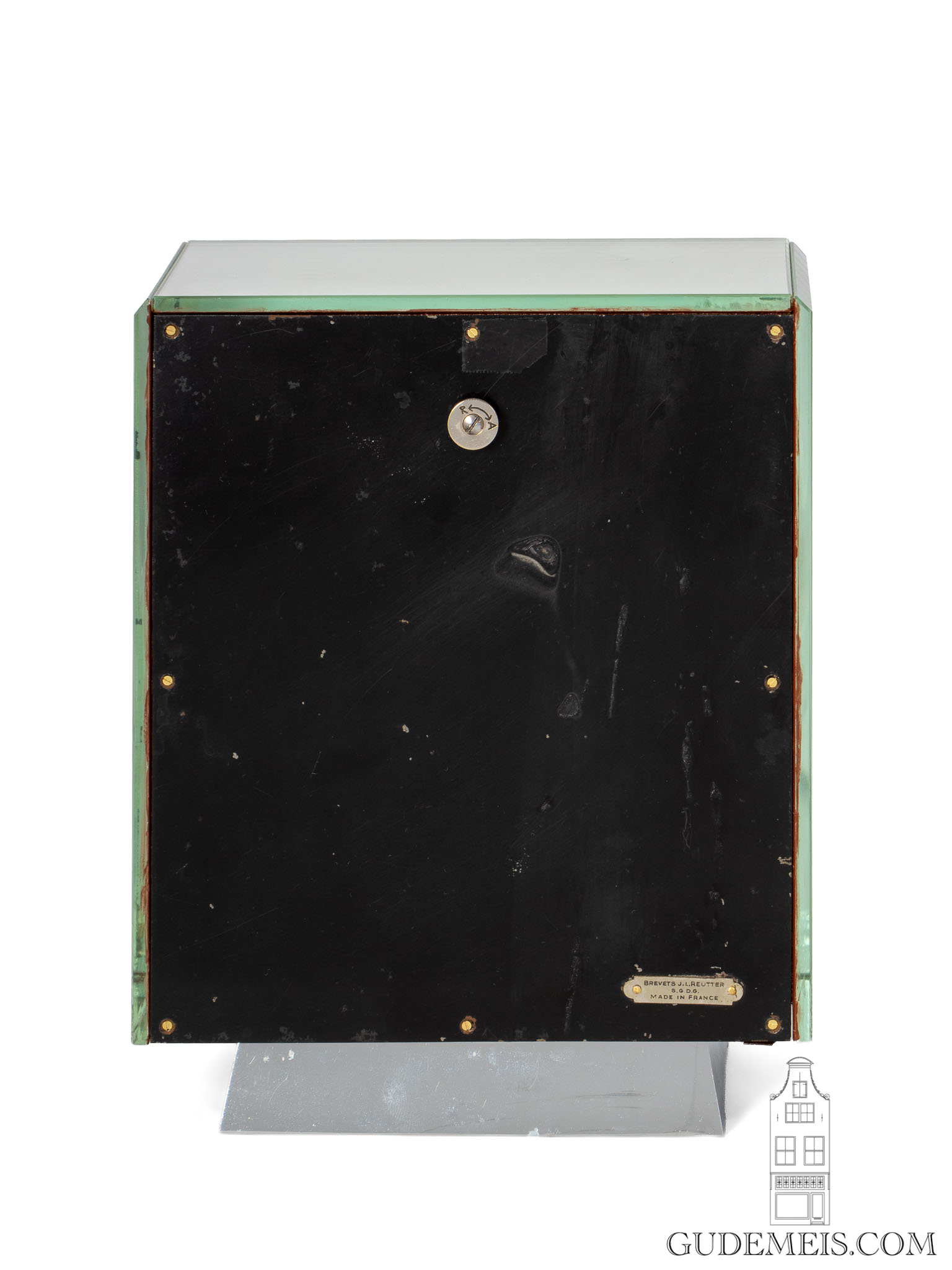
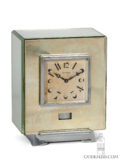
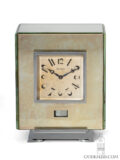
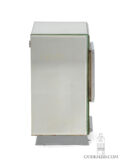
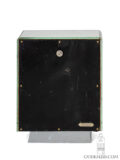
A French Art Deco mirror glass Reutter Patent atmos clock, model A3, circa 1933.
Description
Reutter patent Atmos
In 1927 Jean-Léon Reutter created his first prototype clock which driving spring is wound by temperature changes. After a number of adaptions and improvements a commercial production line of the Reutter patent Atmos was started up in the middle of 1929. There were a number of inventions that made this technical marvel possible. He used a torsion pendulum, known from 400-day clocks, and by enlarging it ensuring a very low ticking count. He made the suspension wire from elivar, an alloy insusceptible to temperature changes, which improved the precision very much. The movement was finely made and executed with ruby end stones causing it to need very little energy. In fact, the clock only needs 1/1000 of the energy that a conventional movement needs. These improvements were combined with his winding mechanism. This consists of a drum which can turn between two blocking pins. In the drum there is a U-shaped glass tube filled with mercury and ammonia gas of which one part is insulated. By changes in temperature and barometric pressure the ammonia gas expands or retracts in comparison to the gas in the insulated half. This causes the mercury to shift which motion turns the drum. This turning winds a spring which drives the mechanism.
Between 1930 and 1938 these clocks were produced under the direction of Reutter. After this period Jaeger leCoultre took over the patent and modified the winding mechanism. The production of the modified Jaeger LeCoultre version commenced after the Second World War. Because of these developments, the number of Reutter patent clocks remained limited. The square A3 model wass available in various materials. This version, clad in mirrored glass panels, has a very modern look, while the numerals on the dial have a distinct the Art Deco look. A technically interesting clock and a fine example of the Art Deco style.
Atmos Pendule Perpétuelle
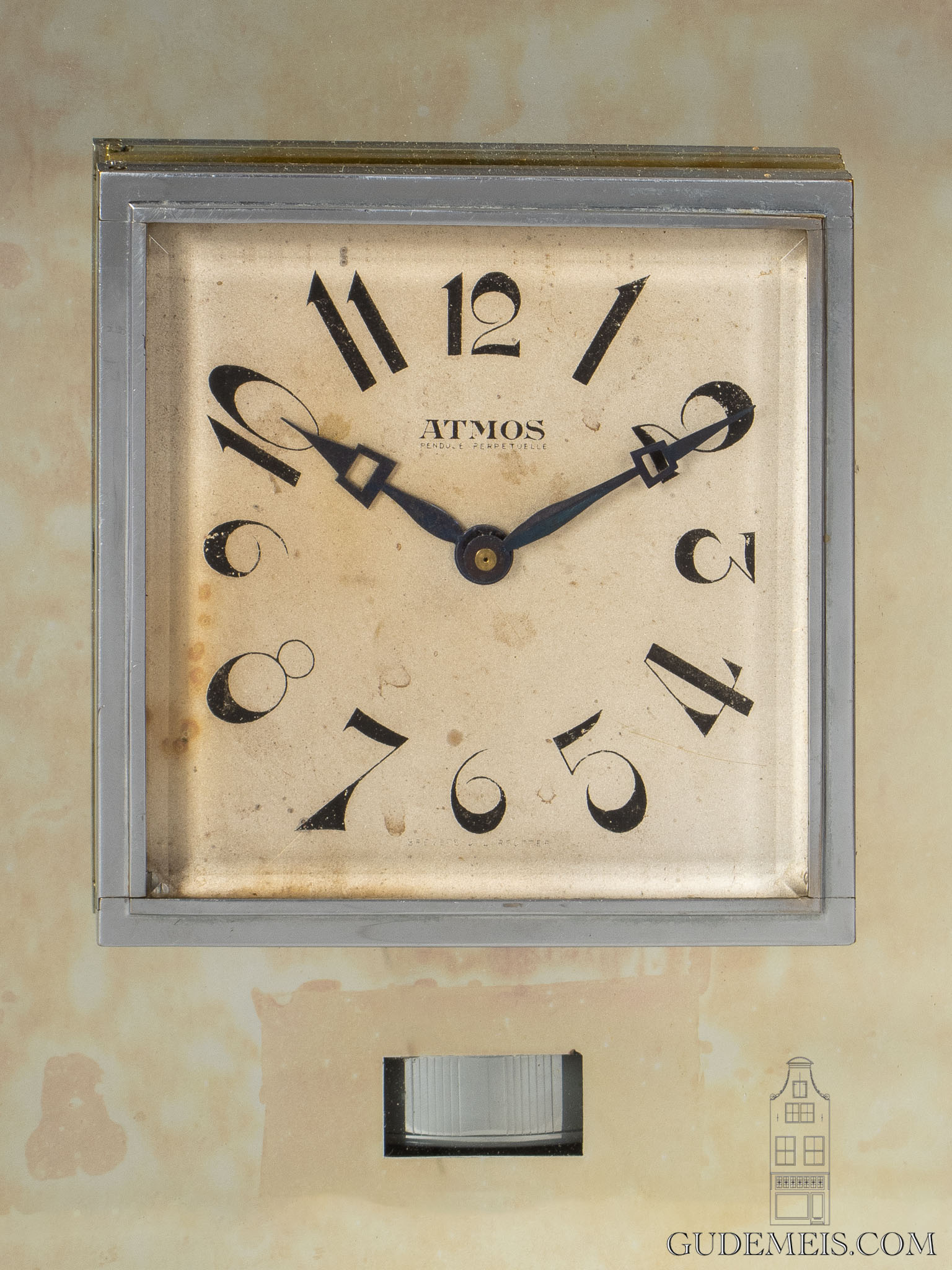
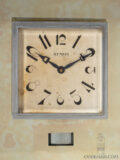
The square, lacquered dial has Arabic numerals and is marked “ATMOS Pendule Perpetuelle.” The blued steel hands are a beautiful Art Deco variation on the famous Breguet hands.
Changes in temperature
The timepiece is powered by a mainspring. This mainspring is wound by the rotational movements of the drum, which are caused by changes in temperature. The clock requires so little energy that it continues to run for 48 hours with a temperature difference of just one degree Centigrade. The large balance wheel, visible through the lower aperture, has a rotation period of 30 seconds. Because temperature differences are always present, the clock is constantly being wound. That is why Reutter also referred to the clock as the “Pendule perpetuelle.”
Art Deco
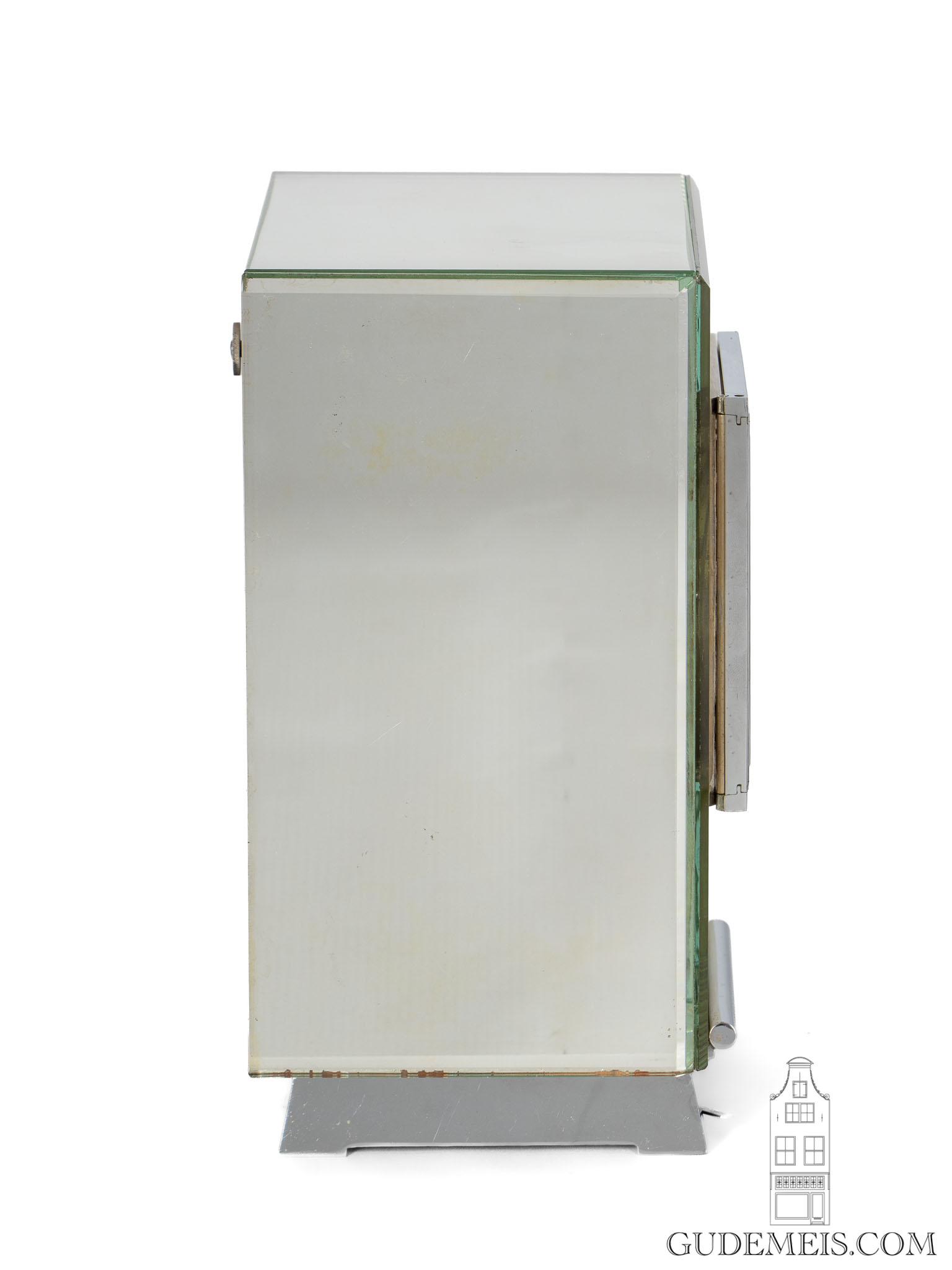
The rectangular case is clad with faceted mirror panels, featuring an opening on the front below the dial through which the balance wheel is visible. The dial door and the beveled base are made of nickel-plated brass. The clean lines and canted base are characteristic of Art Deco, the prevailing modernist style of the 1920s and 1930s. On the back of the case, where the adjustment knob is located, a plaque is mounted bearing the inscription “BREVETSJ.L. REUTTER S.G.D.G. MADE IN FRANCE.”