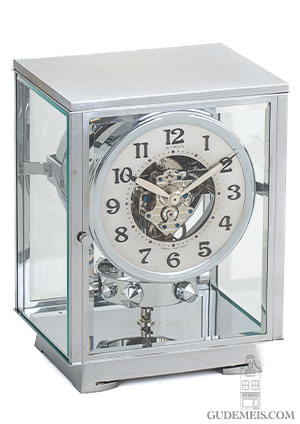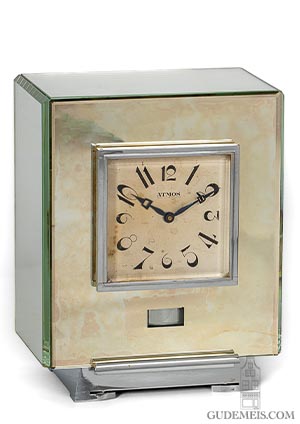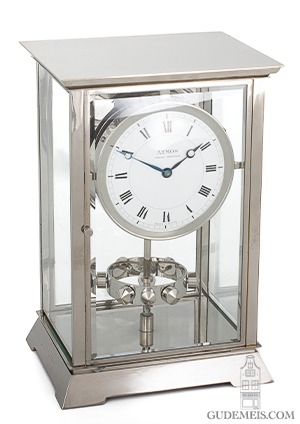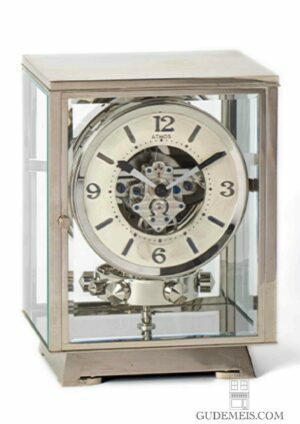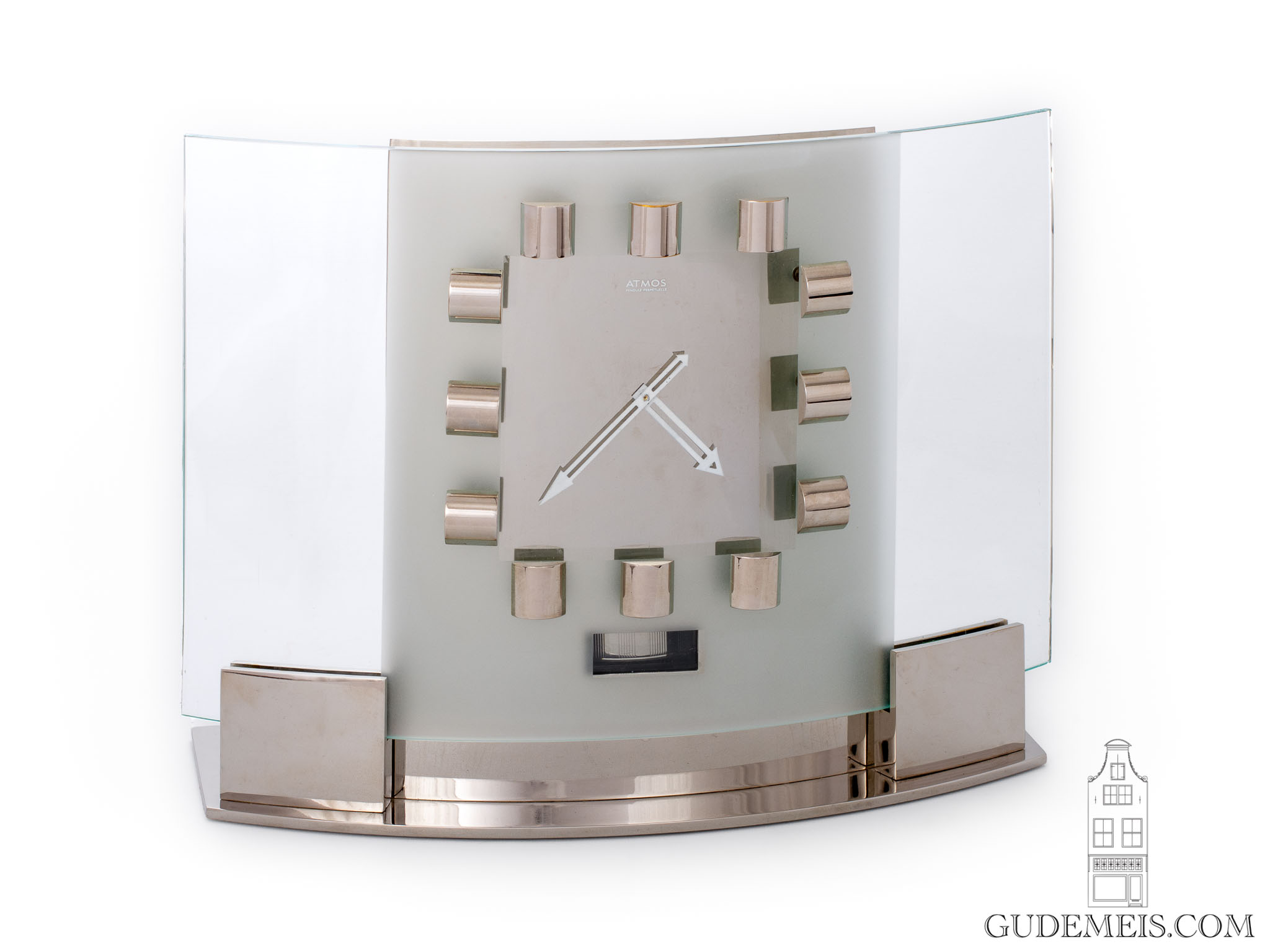
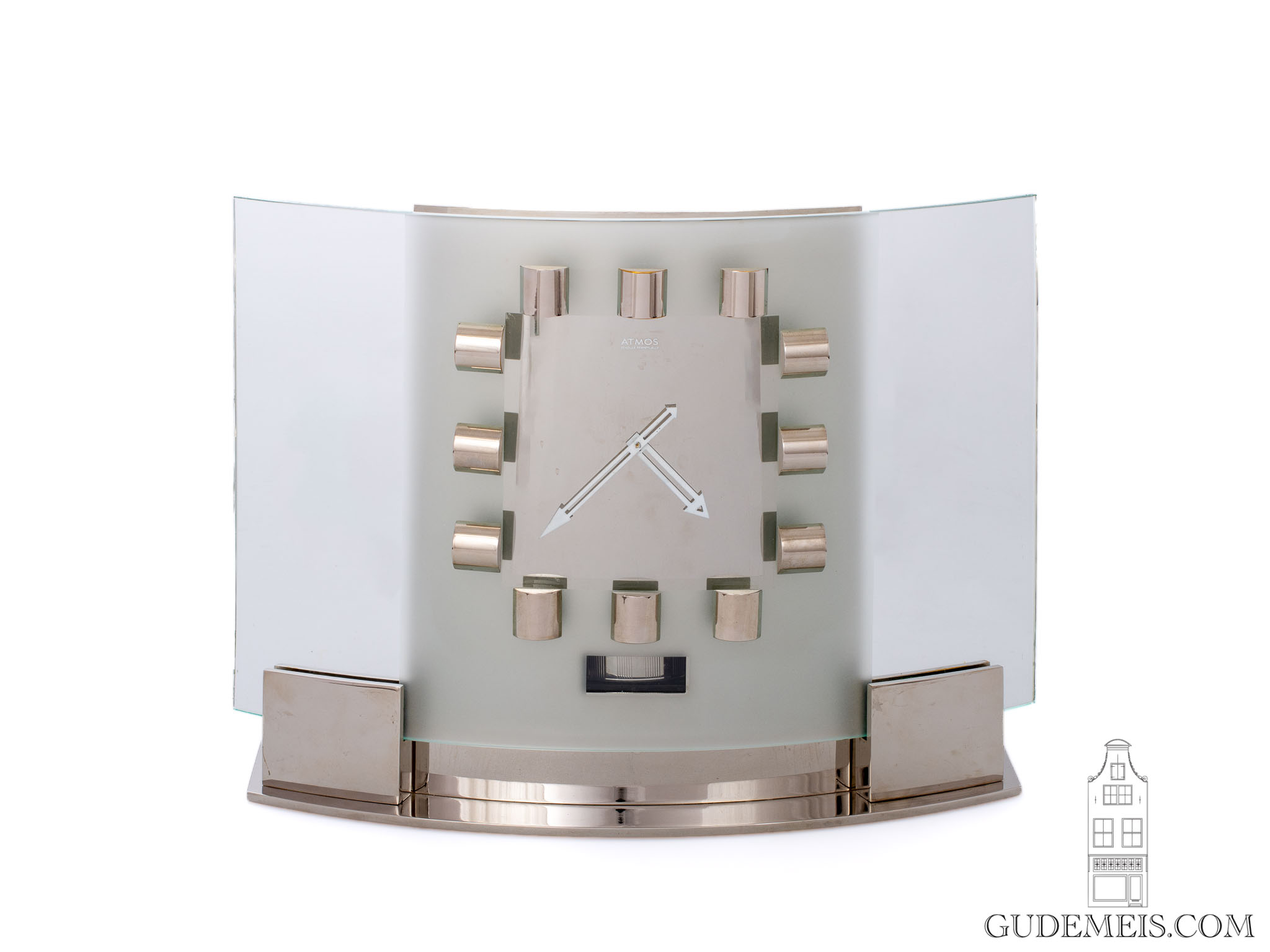
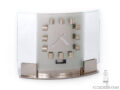
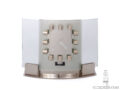
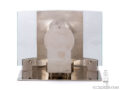
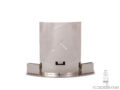
A rare French Art Deco chrome and glass Reutter patent atmos clock, model T5, circa 1933.
Description
Model T5
Jean-Léon Reutter presented his first prototype atmos clock in 1928. The ingenious movement that winds itself by means of temperature changes, received much appraisal and admiration. Around 1930 a commercial production was started of these clocks with many different cases. Besides the now known models with glass panels in a metal frame there were more traditional models based on antique clocks. There were also much more avant garde models. This large and rare clock is a magnificent piece of top design and a true example of Art Deco. The use of glass and chrome is ingeniously incorporated into the design, which cleverly features a two-part dial with a see-through section. This creates an interesting interplay of lines that accentuates the geometric aspect and thus fits perfectly with the style. The clock was likely far too avant-garde for the tastes of the time, as very few examples are known to exist. This clock is technically interesting but, above all, a stunning Art Deco design piece.
Pendule Perpetuelle
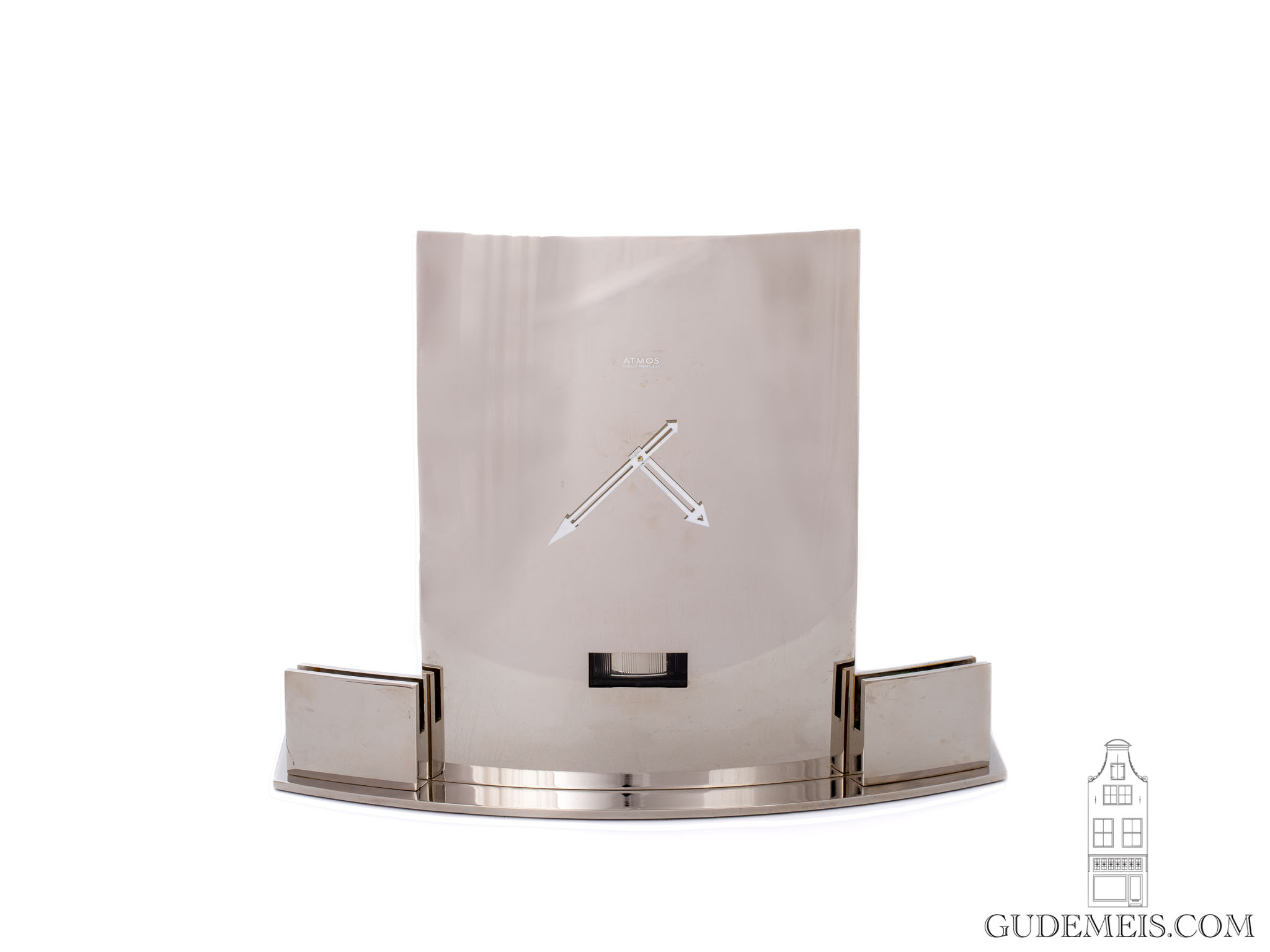
The dial consists of a curved chromed plate on which the white arrow-shaped hands are mounted. At the top center is the inscription “ATMOS pendule perpetuelle.” In front of this plate is a curved glass planel with a frosted square section on which chromed hour marks are fitted. Below is a rectangular aperture that provides a view of the large balance wheel.
J.L. Reutter Patent
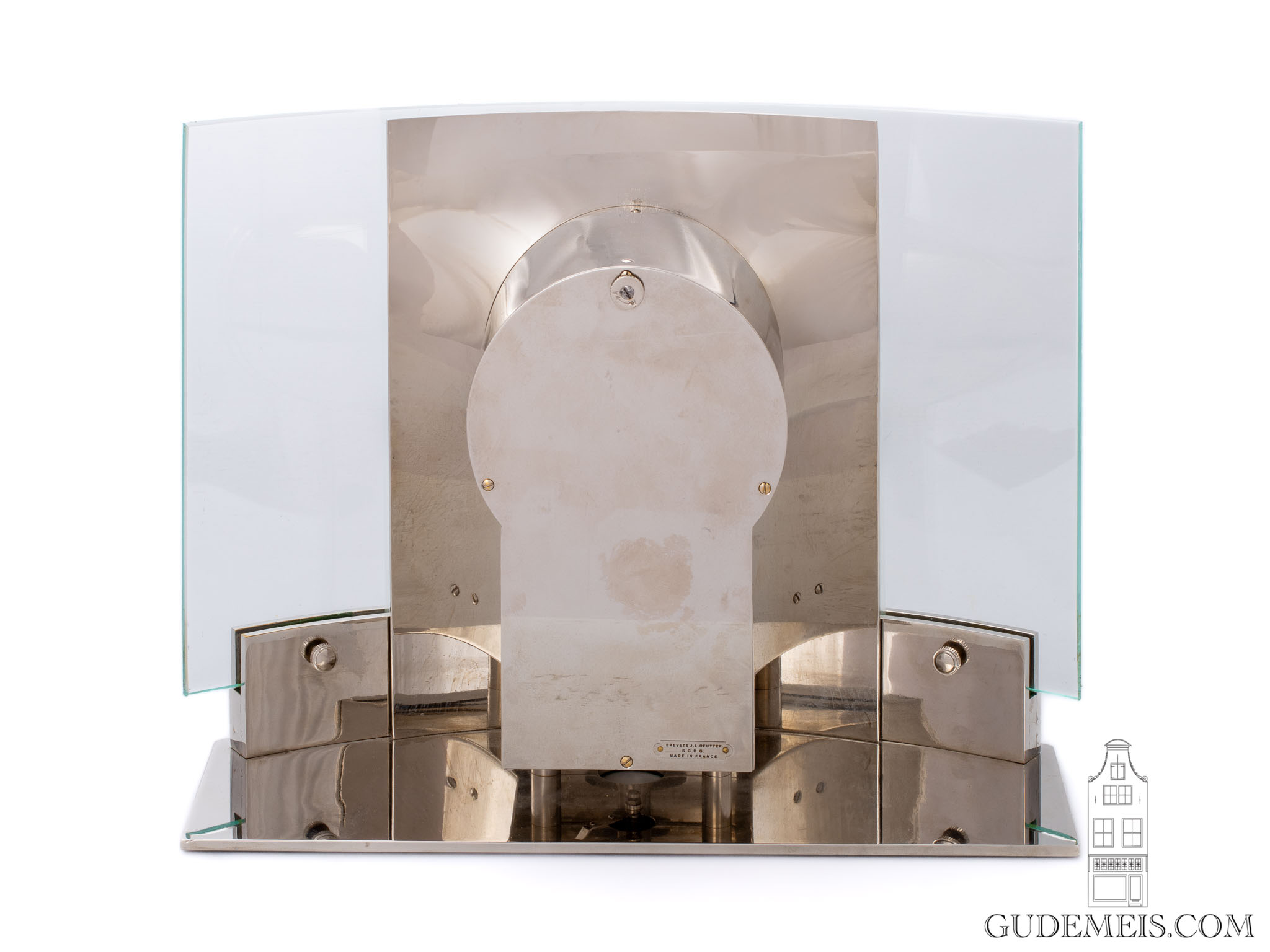
The timepiece is driven by a mainspring. This mainspring is wound by the rotational movements of the drum, which are caused by temperature differences. The movement requires so little energy that it continues to run for 48 hours with a temperature difference of just one degree. The large balance wheel, visible through the window at the bottom, has a rotation period of 30 seconds. Because temperature differences are always present, the clock winds itself continuously. This movement is housed in a keyhole-shaped chromed case, on which a plaque is fitted bearing the inscription “BREVETS J.L. REUTTER S.G.D.G. MADE IN FRANCE.” At the top is the adjustment knob used to set the clock.
Art Deco
The movement case and dial are mounted on a chrome base with a curved front. The geometric shapes incorporated in the design of the case are characteristic of the Art Deco style, which was prevalent in the 1930s. The see-through effect and the clever design of the case make this a beautiful Art Deco object.