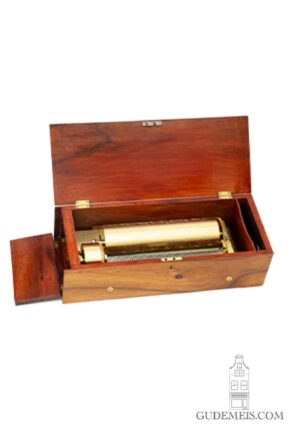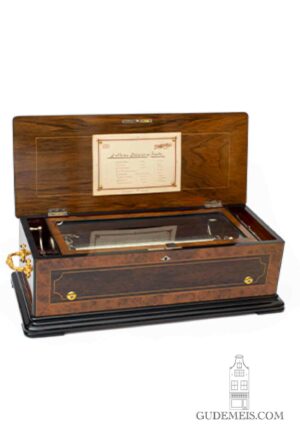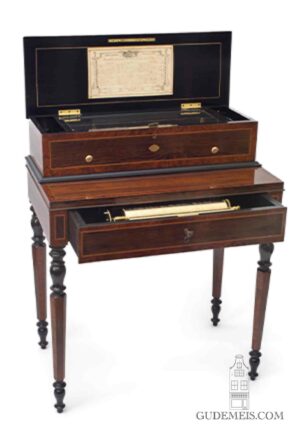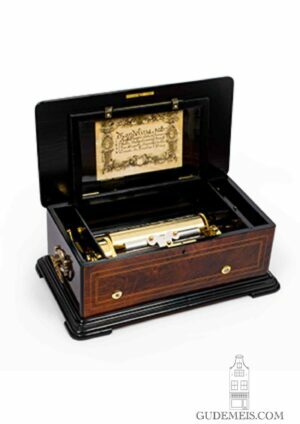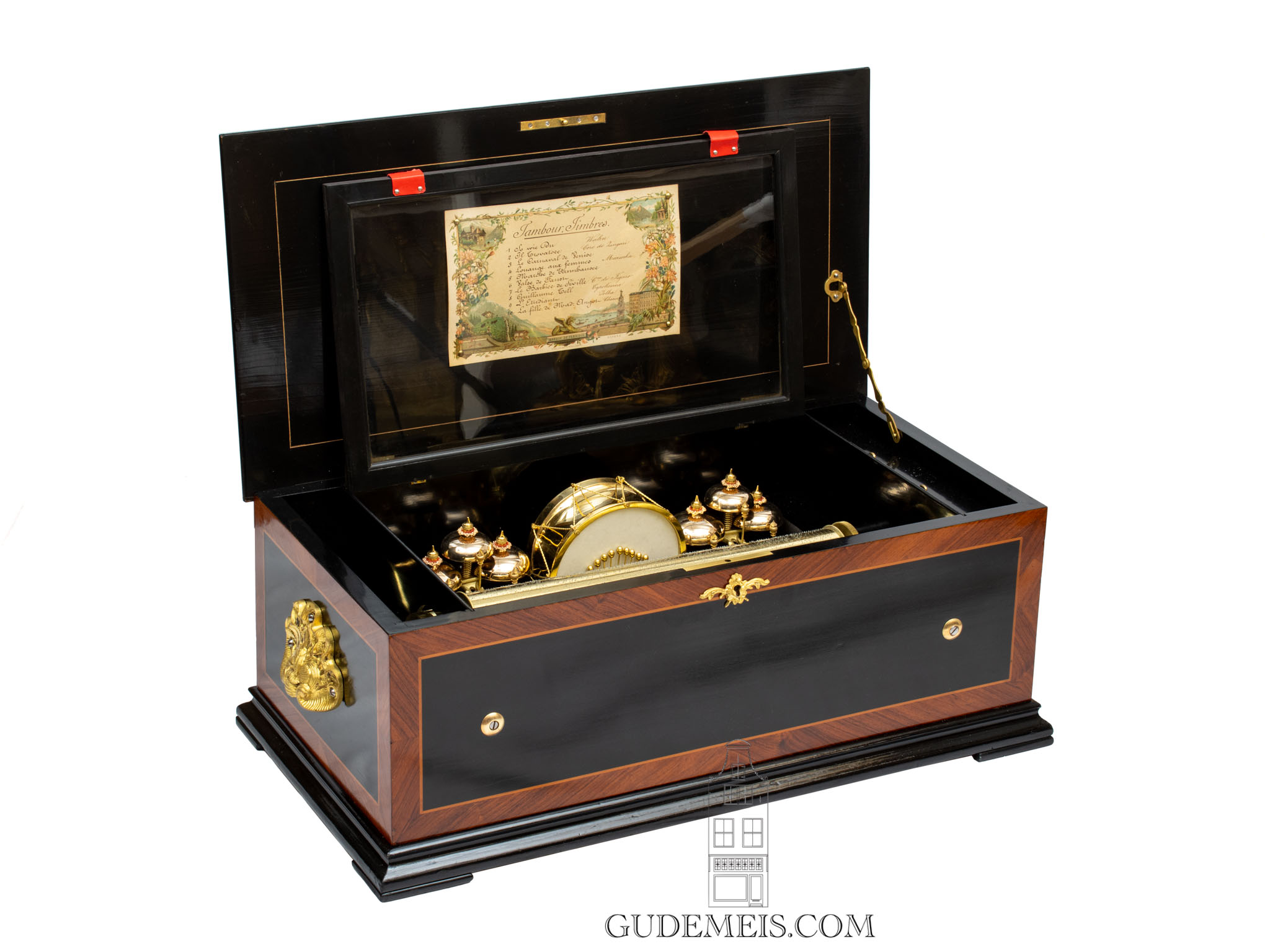
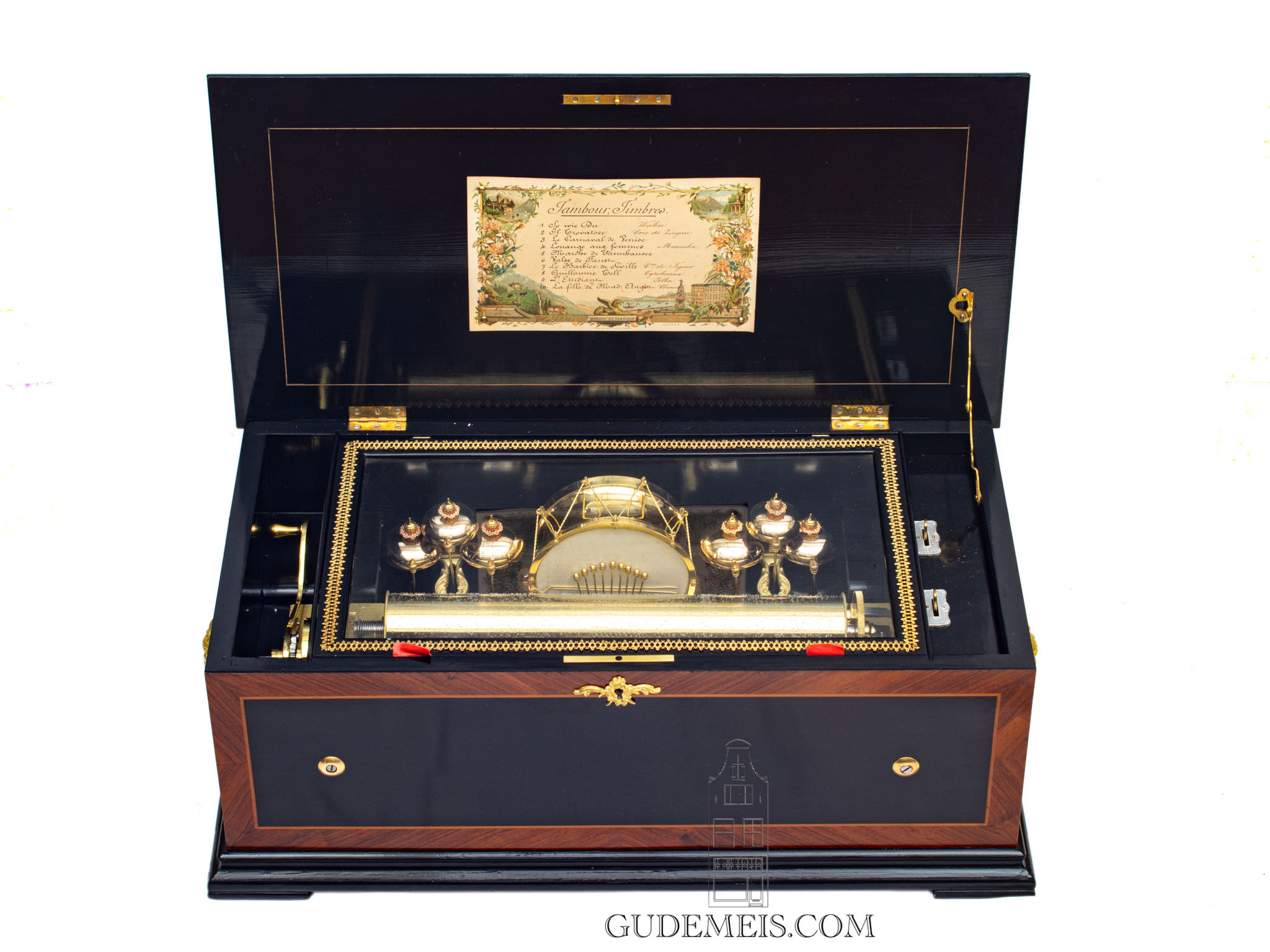
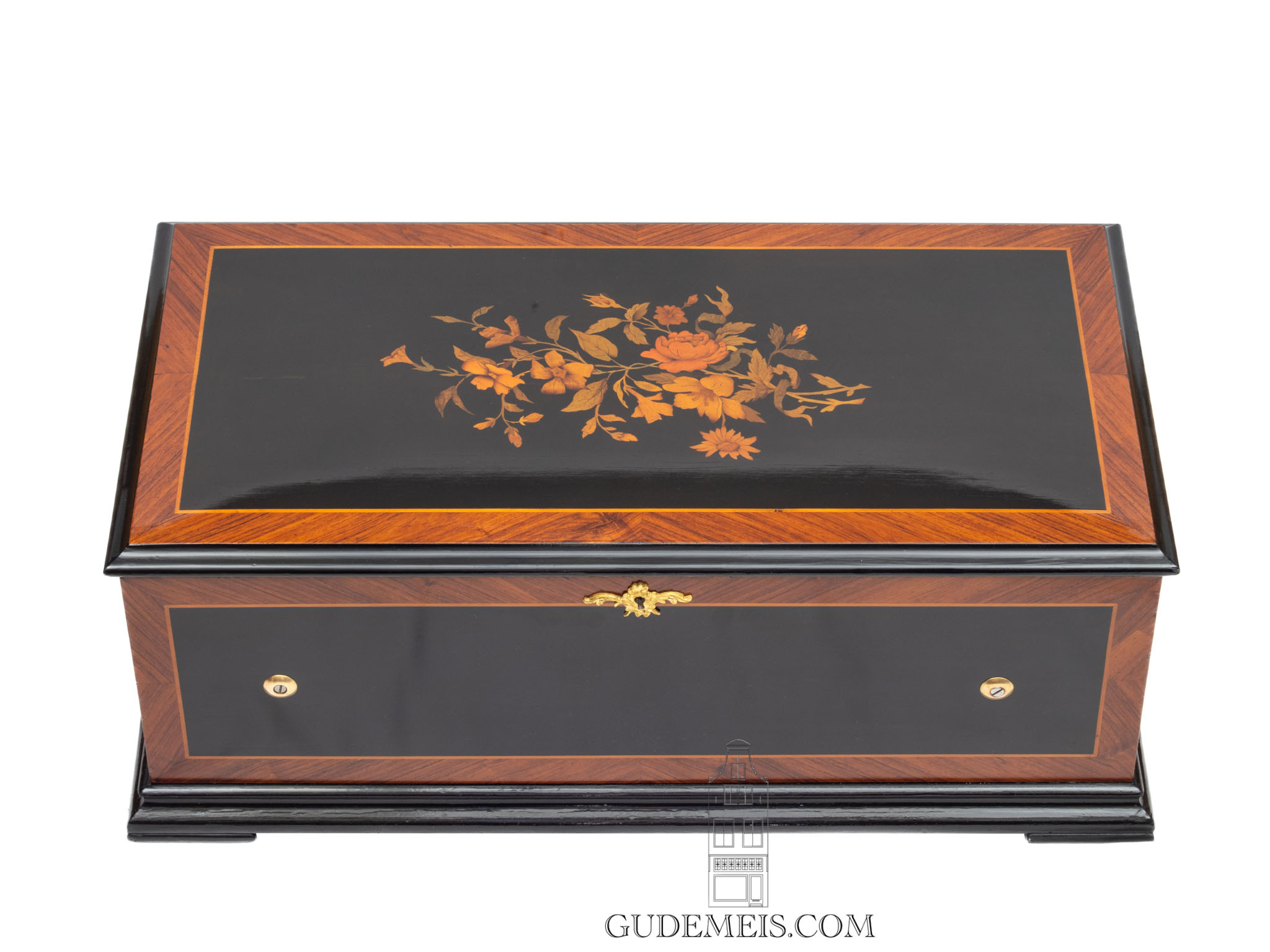
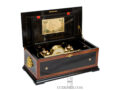
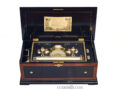
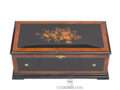
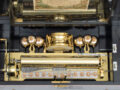
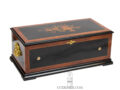
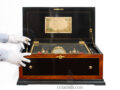
A large Swiss ‘bells and drum’ cylinder music box, Rivenc, circa 1880.
Description
Cylinder music boxes
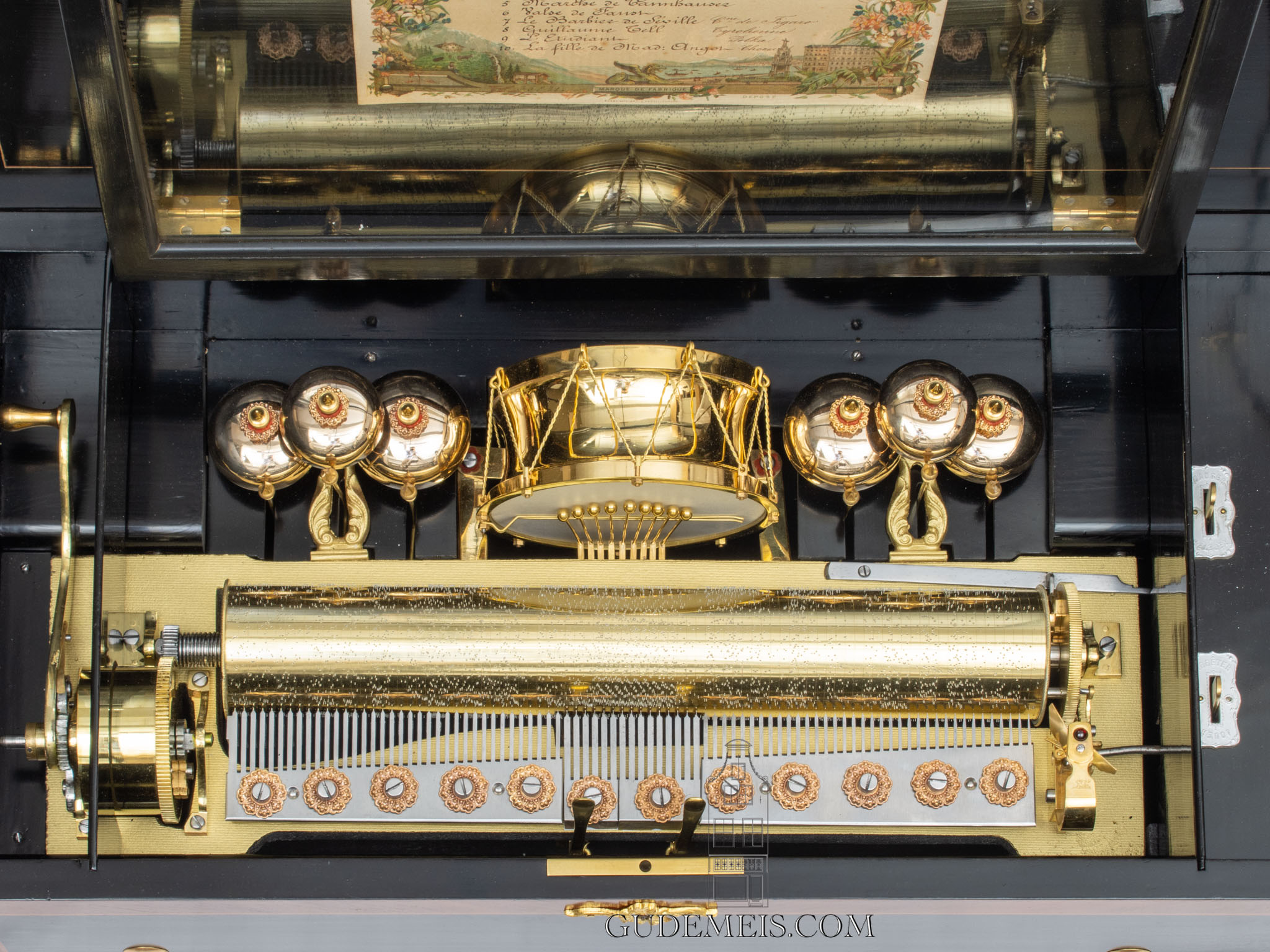
The first cylinder music boxes were created early in the nineteenth century. Initially, the teeth were screwed down separately, but soon larger ‘combs’ were made. During the second quarter of the century, the combs were perfected, and the quality of the sound became increasingly better. The makers didn’t stop at that point and began experimenting with other inventions to make the music boxes better and more attractive. After the middle of the century, some makers started to add bells, drums, castanets, and even organs to play alongside the comb. These accessories were also visually appealing when playing. A music box, once being an object to impress others with its sound, had now also become a visual spectacle for the nineteenth-century beholder. This grand piece still has the same attraction today, with its beautiful grand case and wonderful playing motion and sound.
The mechanism
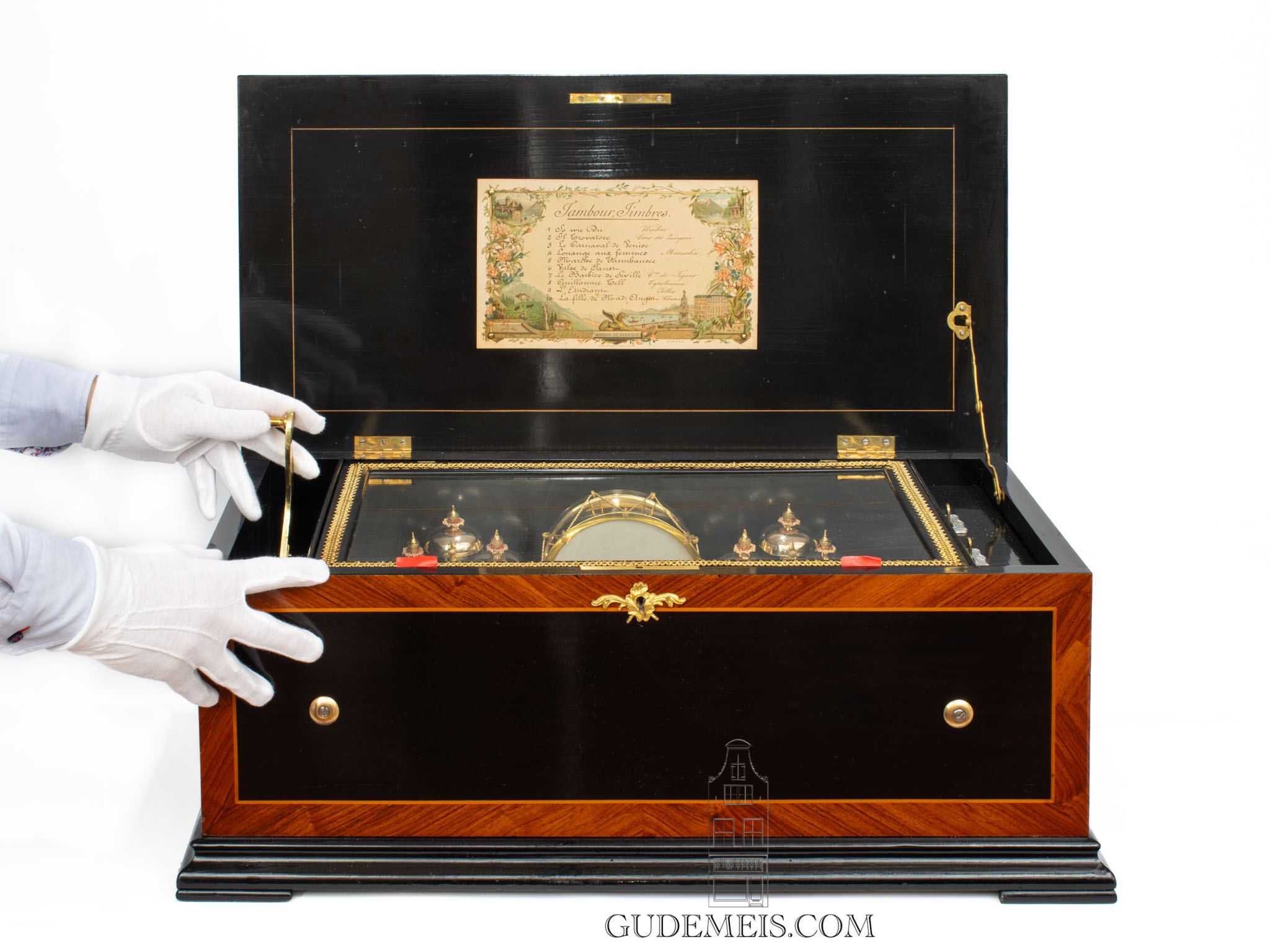
The brass mechanism is driven by a spring barrel with a fixed winding handle. it plays one of ten airs with a 38-cm pinned cylinder on two combs, a drum and six saucer bells in vue. There are levers for start/stop and change/repeat.
The box
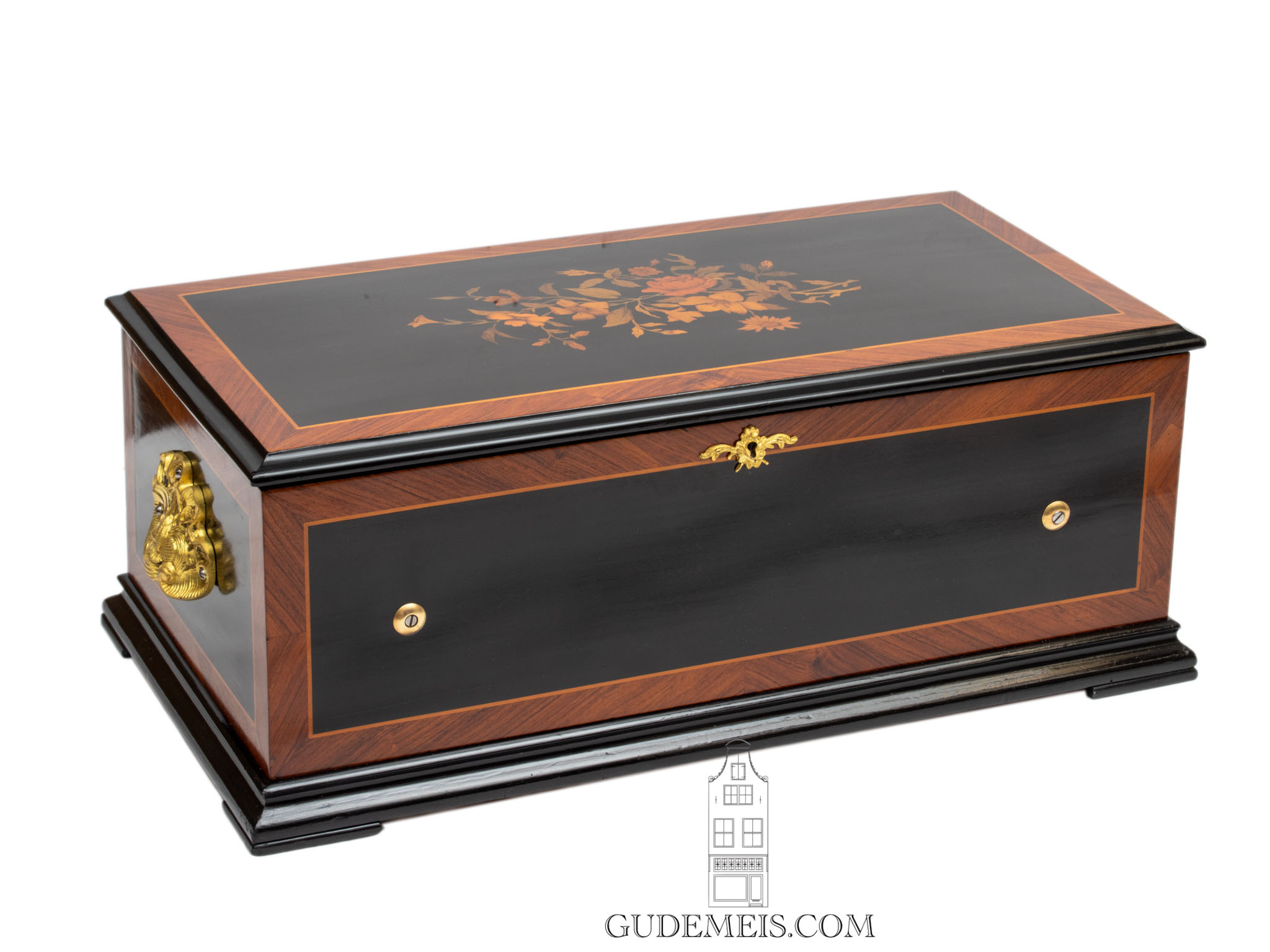
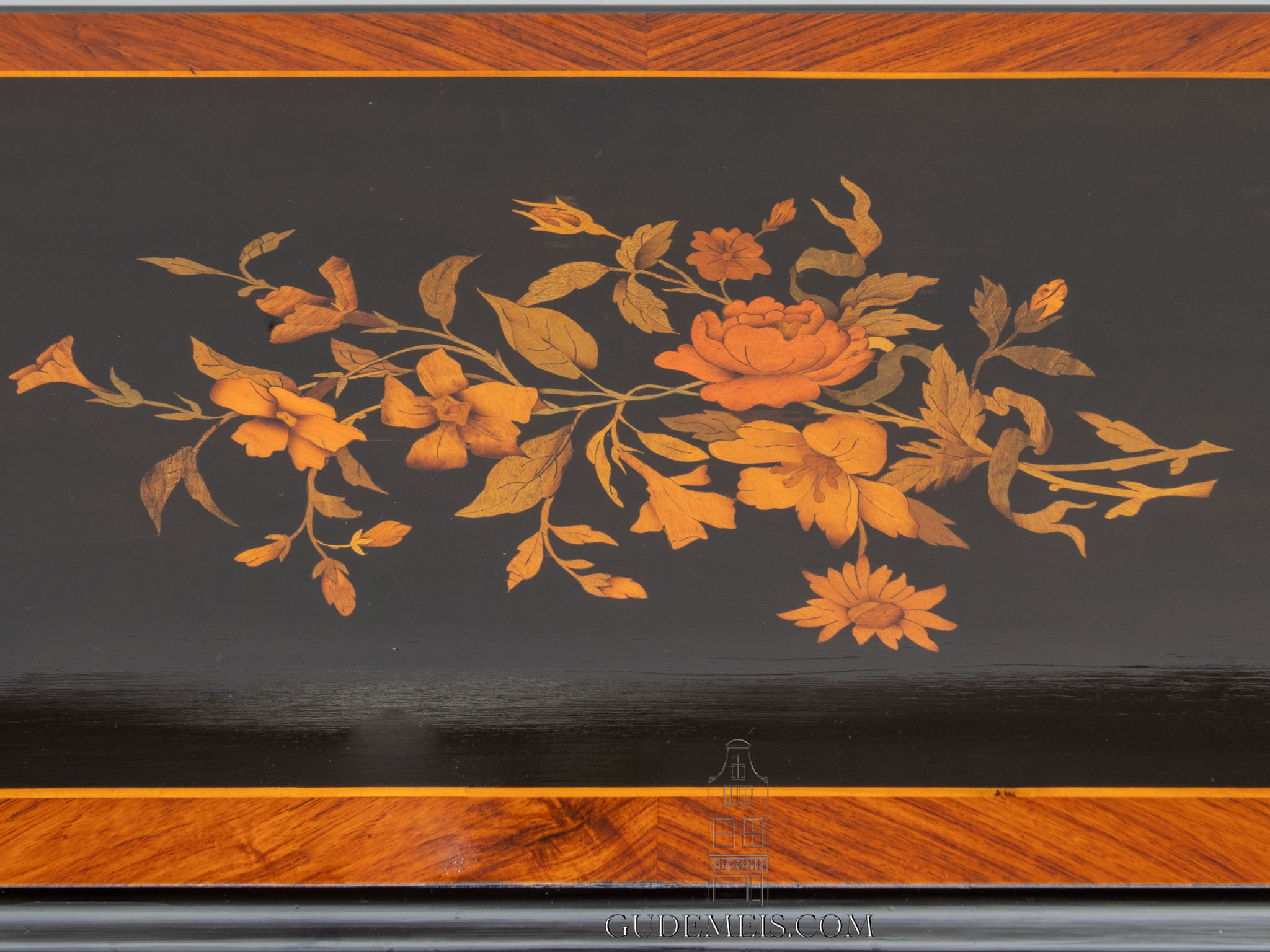
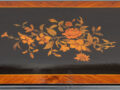
The rectangular box has a moulded ebonized lid with kingswood crossbanded veneered borders and flower marquetry inlay. There are well cast brass handles to the sides. The moulded plinth is raised on flat feet.
Tune sheet
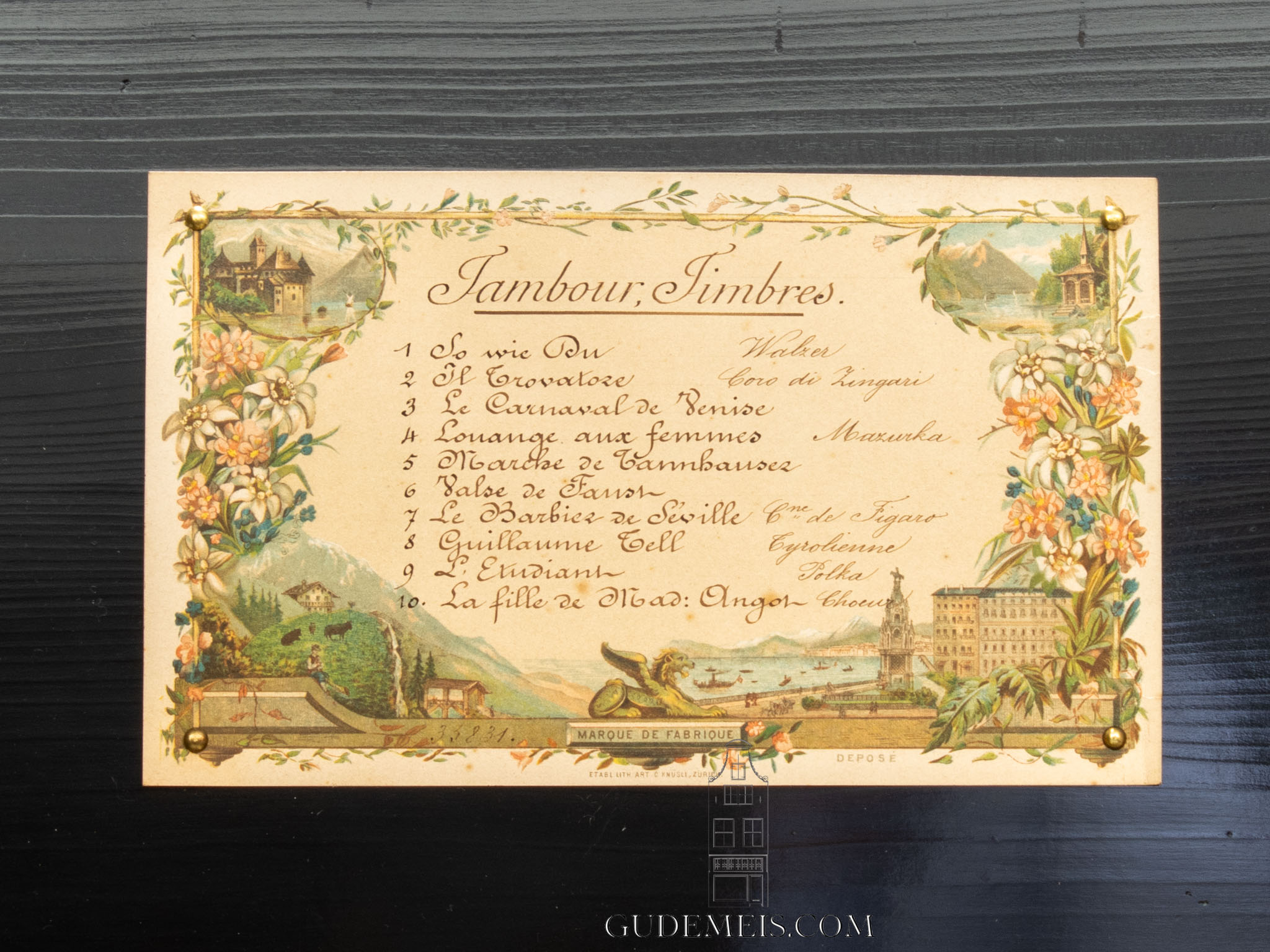
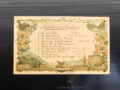
On the inside of the lid is the tune sheet listing the airs.
Tambour, Timbres.
1. So wie du Walzer
2. Il Trovatore Coro di Zingari
3. Le Carnaval de Venise
4. Lonange aux Femmes Mazurka
5. Marche de Tannhauser
6. Valse de Faust
7. Le Barbier de Séville C ne de Figaro
8. Guillaume Tell Cyrolienne
9. L’Etudiant Polka
10. La Fille de Mad. Angot Choeur