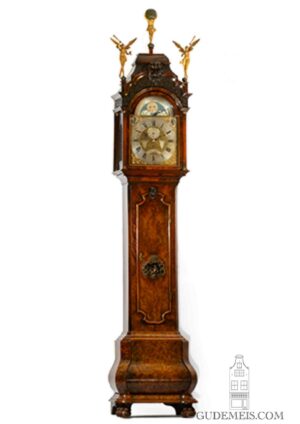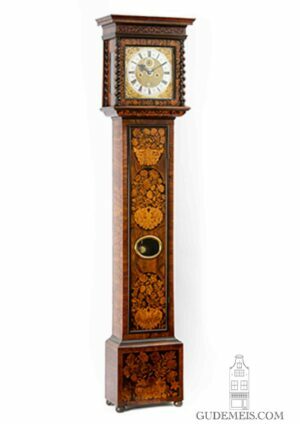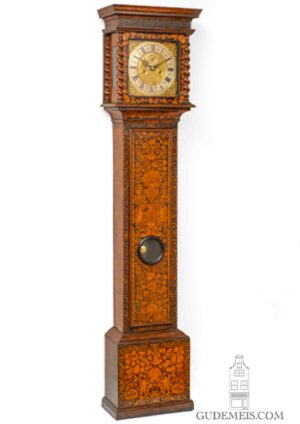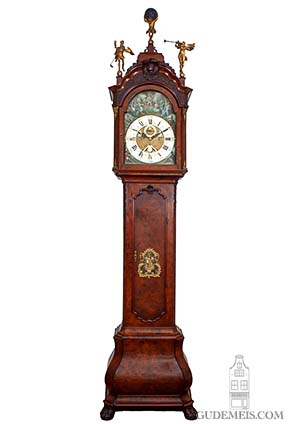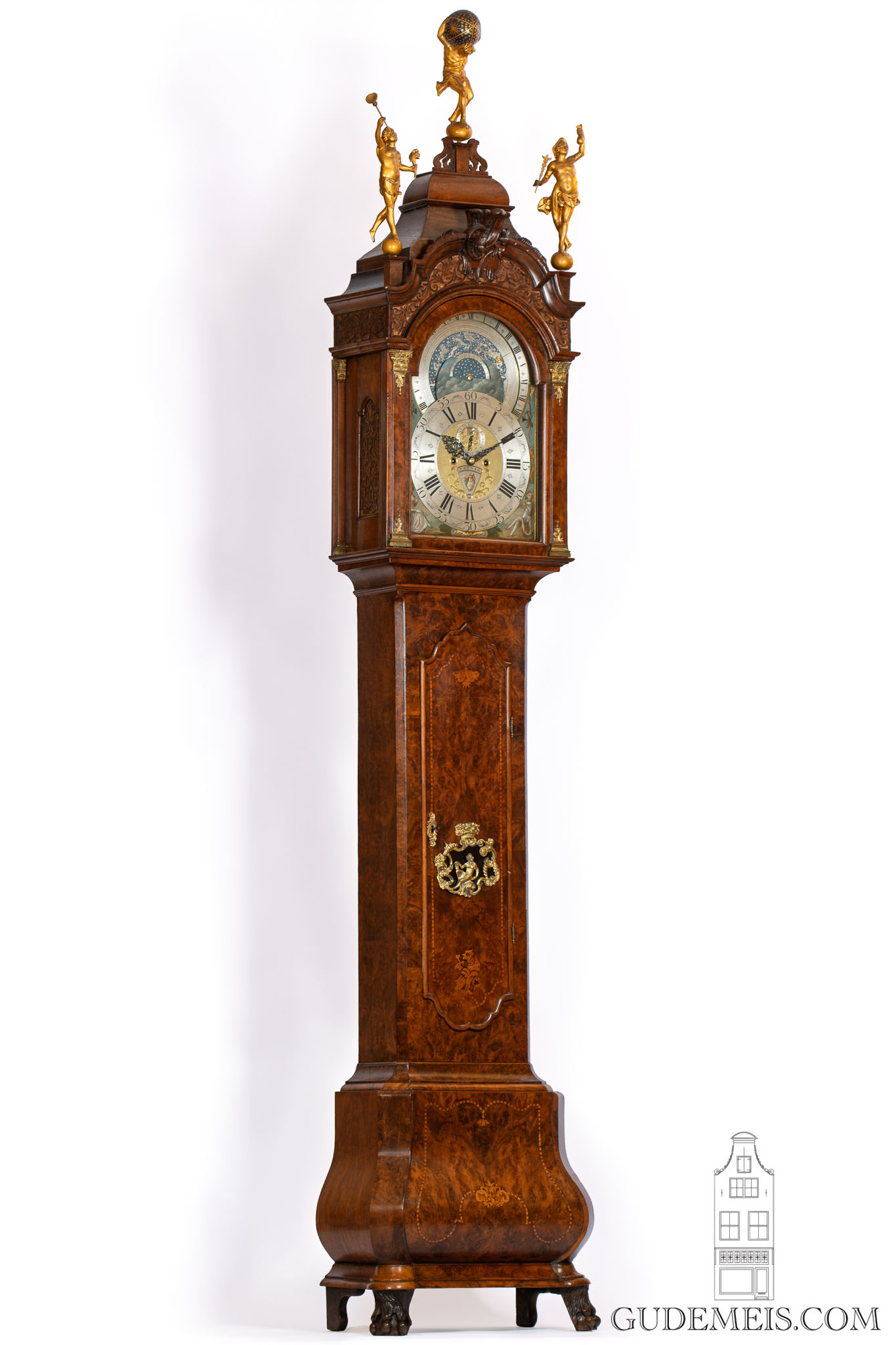
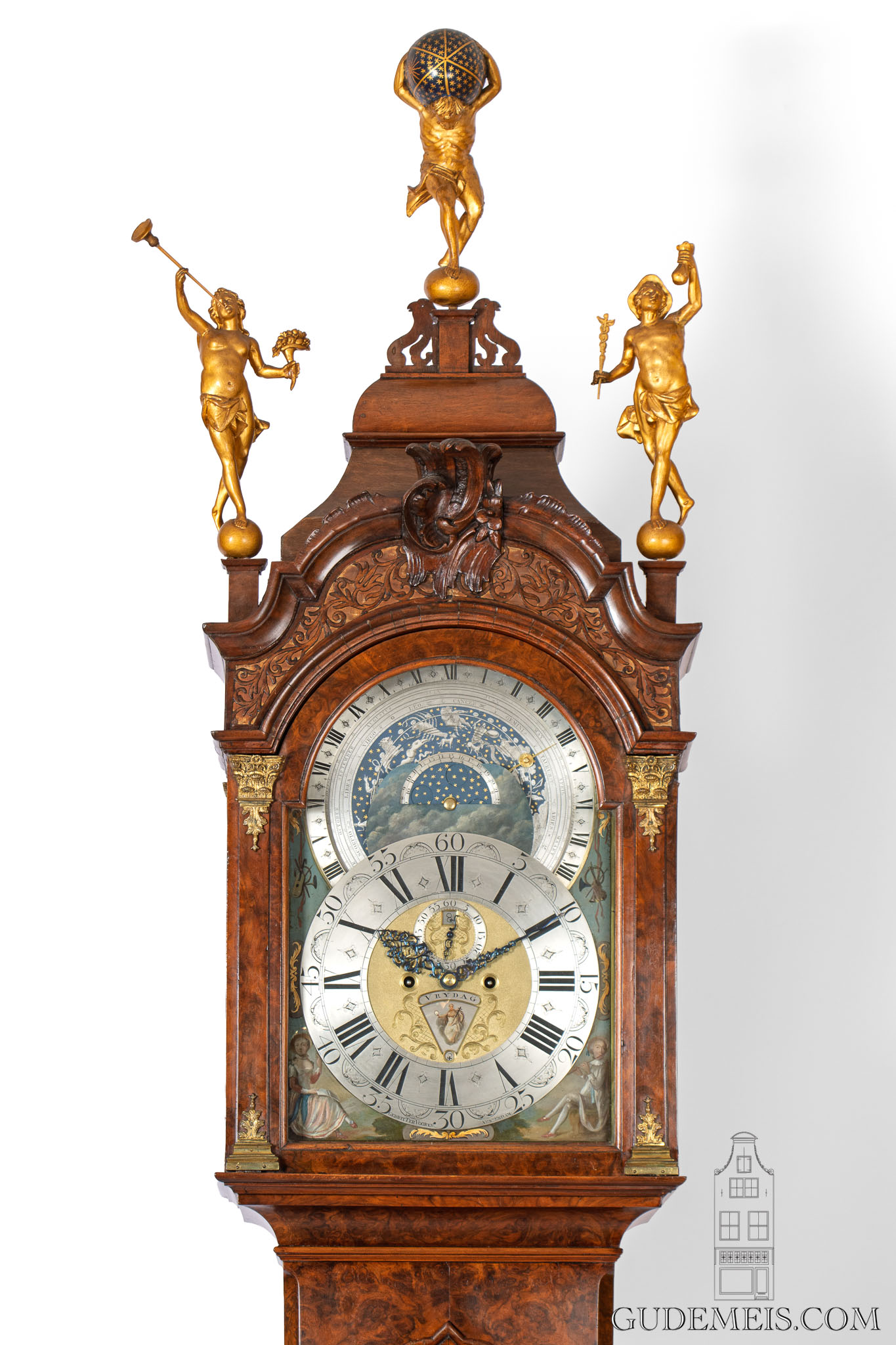
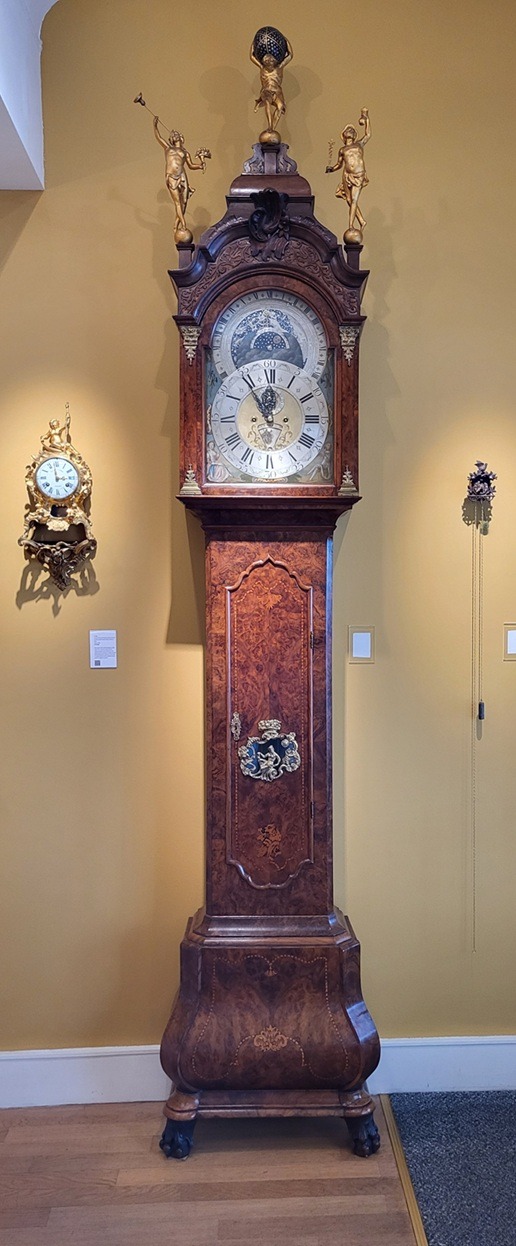
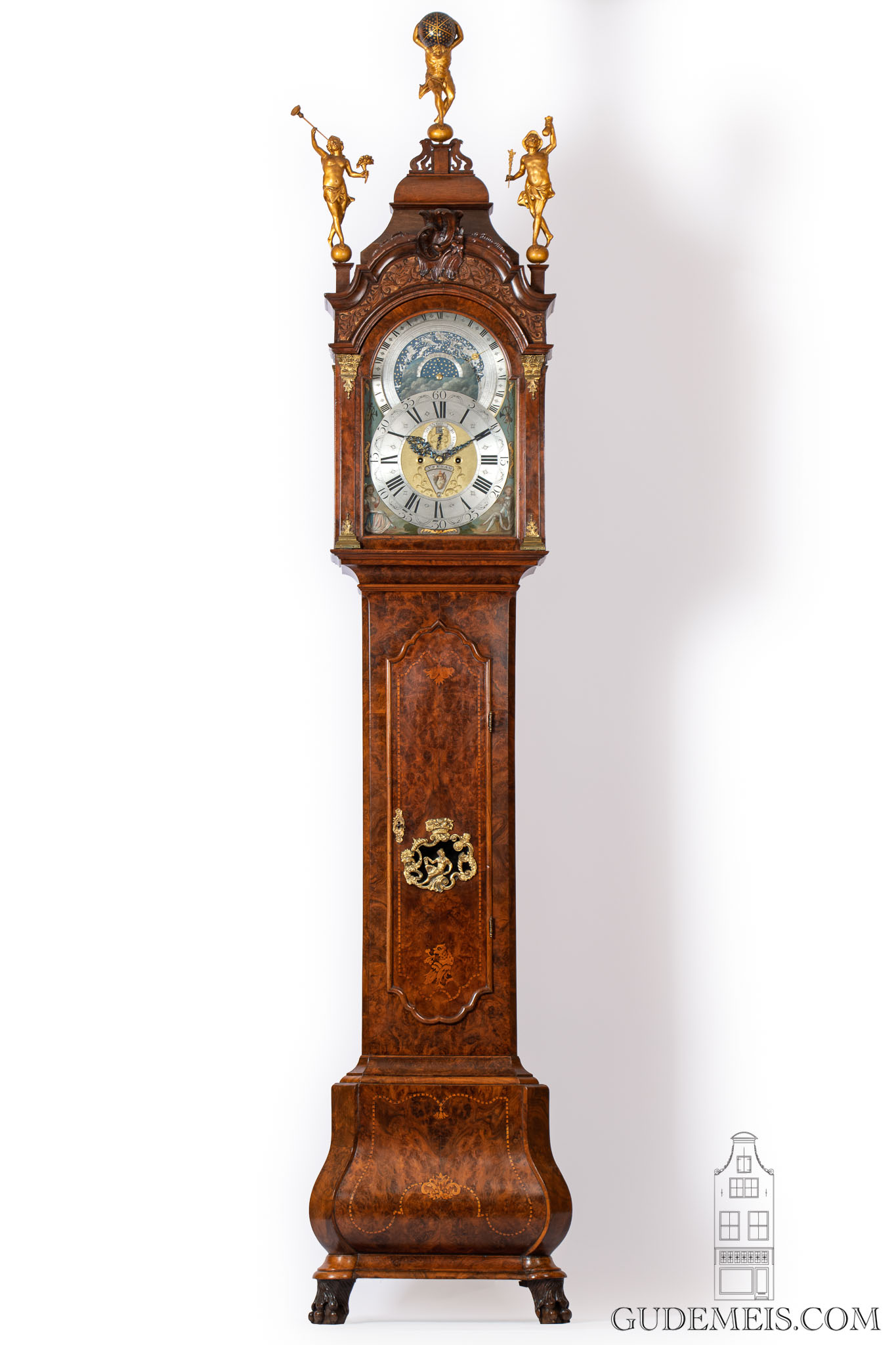
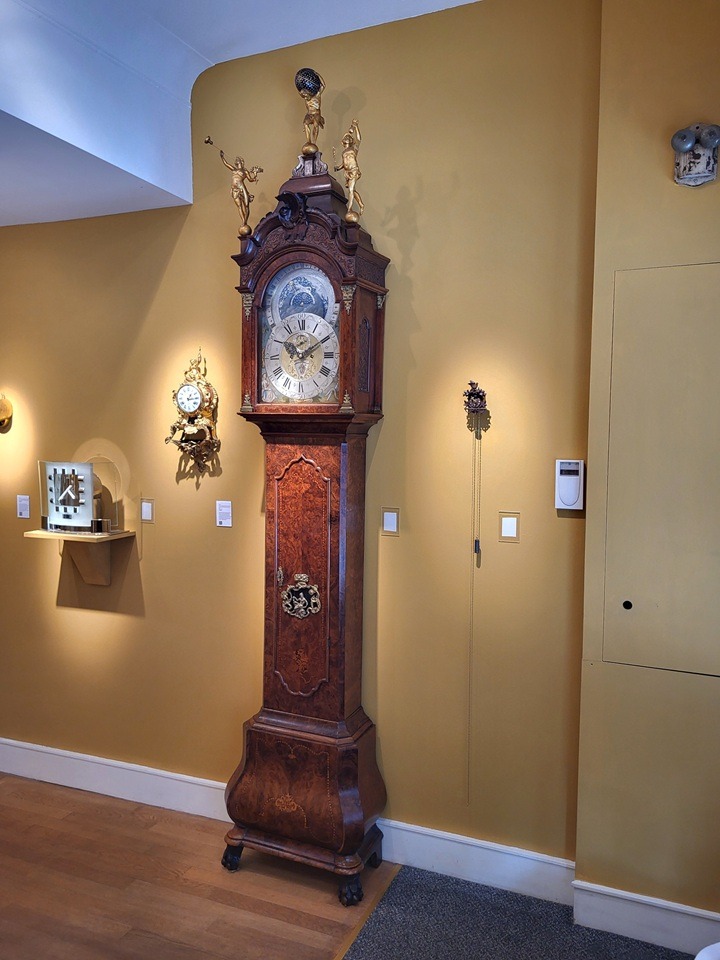
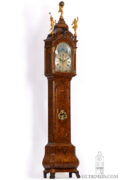
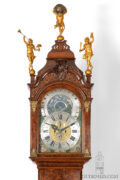
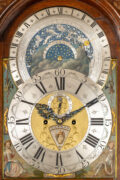
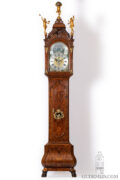
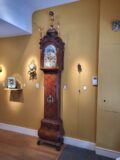
A rare Dutch burr walnut Amsterdam longcase clock with planisphere, Gerrit ter Vooren, circa 1760.
Description
Planetary or planisphere
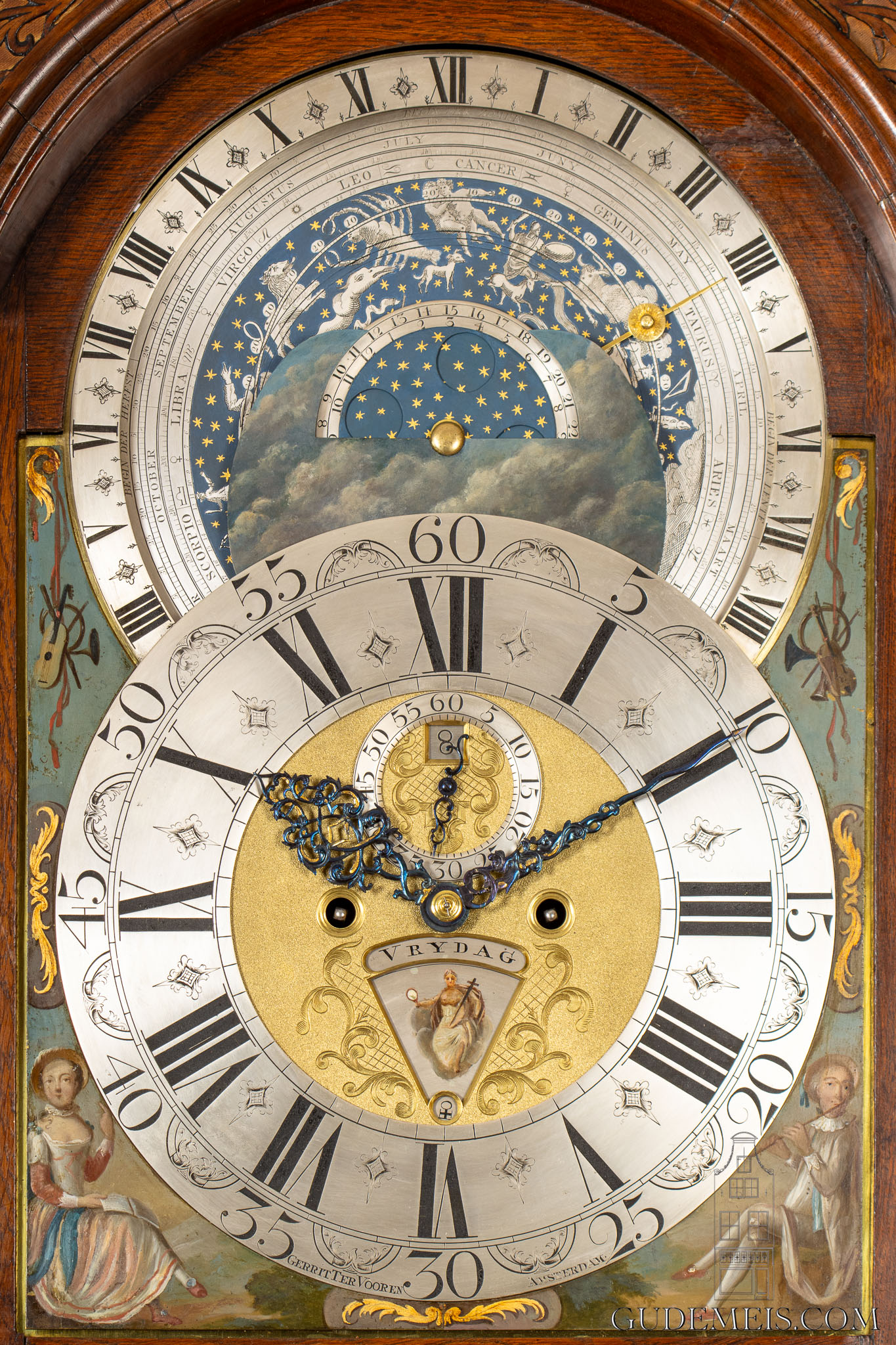
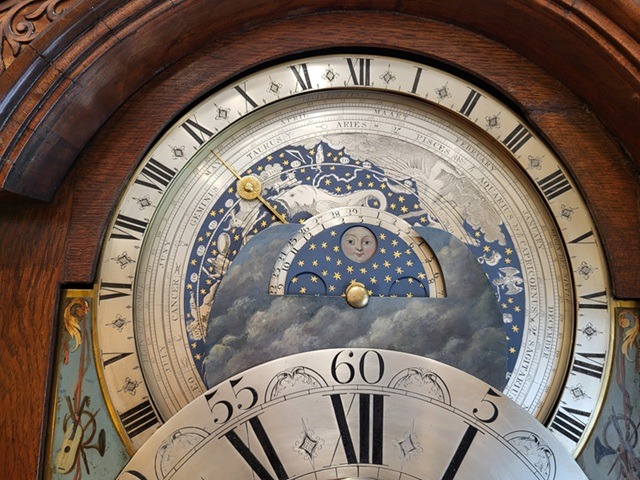
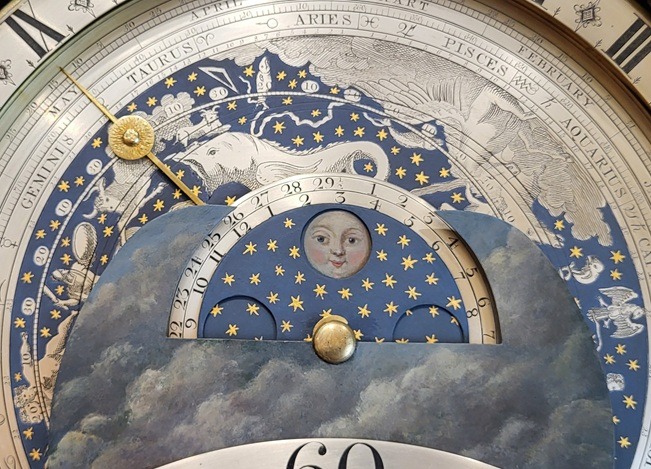
The Dutch ‘Amsterdam’ longcase clocks made in the third quarter of the 18th century were more than just timekeepers. They were, for example, also interior pieces that adorned the homes of wealthy merchants and, due to their size and beautiful craftsmanship, were true status symbols. They also served as household calendars, displaying the date, the days of the week, possibly the months, and the phase of the moon. The latter was also useful because one can determine the occurence of high and low tide by the moon cycle—something that was particularly handy in a low-lying country like The Netherlands. Even more special were clocks with musical mechanisms that played a melody every half hour, or clocks with mechanisms featuring, for example, ships moving back and forth, making them a delight to behold. But of all the clocks made in the Amsterdam tradition, those featuring a planisphere are the rarest. This is an annual calendar featuring the signs of the zodiac. The date is indicated by a hand with a small sun that also marks the time of sunrise and sunset. These clocks are often mistakenly referred to as a planetary, but that term is reserved for three-dimensional representations of the planets. Since this is a flat representation of the northern night sky, we refer to it as a planisphere. With the calendar only needing to be adjusted once every four years this is quite a technical accomplishment. A beautiful object, a highlight in any interior, or the crowning jewel of a collection.
Signs of the Zodiac
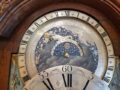
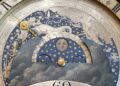
The 31-cm diameter silvered and engraved chapter ring is signed Gerrit Ter Vooren Amsterdam and has Roman numerals for the hours and is bordered with five-minute numerals between minute arches. In the center are the subsidiary seconds and apertures for the date and days of the week. The hands are beautifully cut and made of blued steel. In the lower corners are paintings of a seated lady and a seated gentleman with a flute. Above these are painted ornaments featuring musical instruments and ribbons. Above the dial, in the arch, is the planisphere surrounded by a silvered sector with Roman numerals indicating the time of day. The disc features several engraved circles with various markings. The outermost ring indicates the beginning of the seasons. Inside that is the ring for the date, positioned outside the ring for the months. Inside that is a 360-degree scale bearing the names of the constellations. The innermost ring indicates the difference in minutes between solar time and mean time, known as the equation of time. The innermost part of the disc features engraved signs of the zodiac on a blue background adorned with stars. At the center of the disc, the moon phase is displayed along with the days of the lunar cycle and the hours of high tide.
Dutch quarter striking
The clock is driven by two weights and has a duration of eight days. It is regulated by anchor escapement in combination with a pendulum. The clock has Dutch quarter striking on two alternating bells.
Burr Walnut
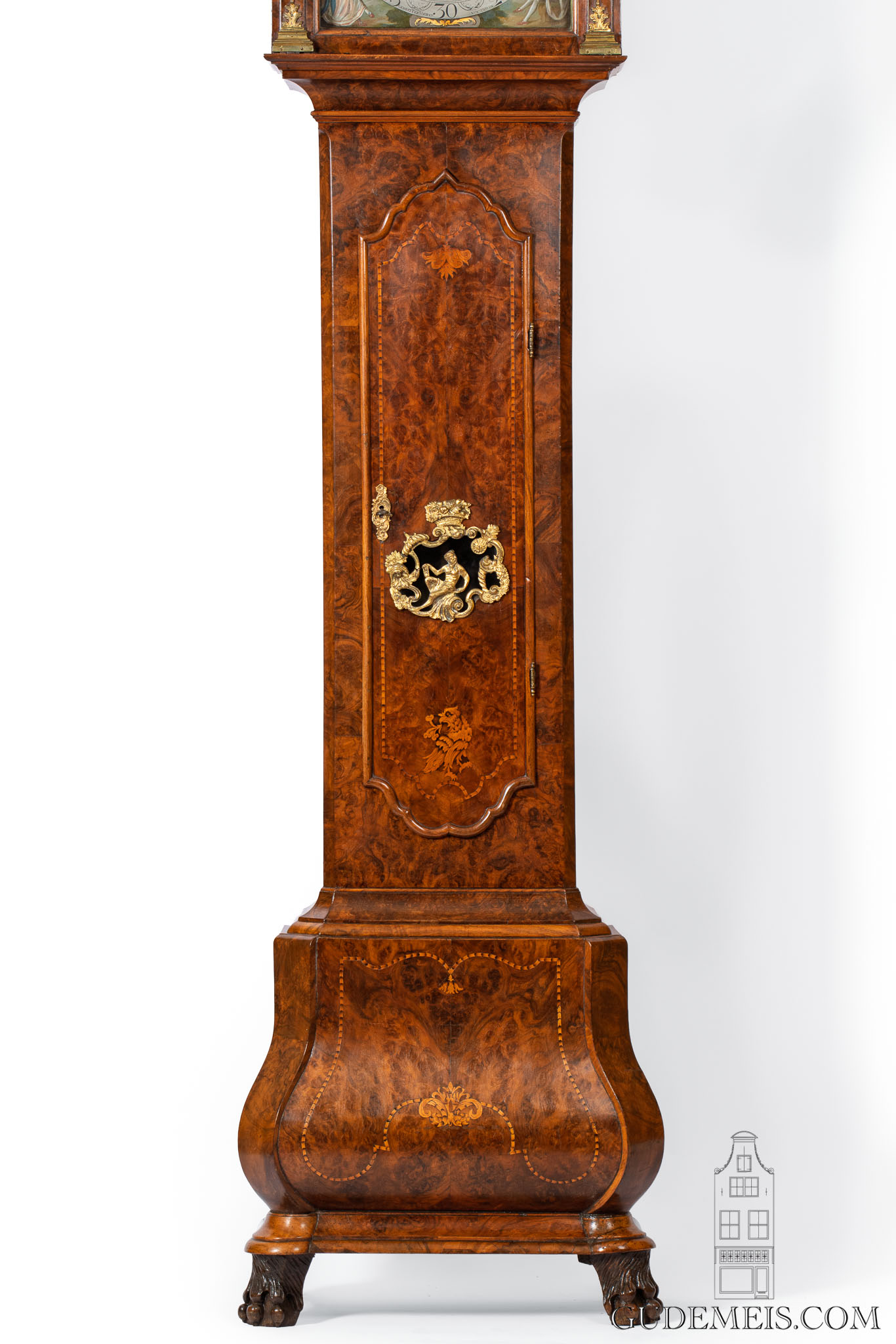
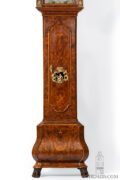
The beautiful case is made of oak veneered with well figured burr walnut. The hood is adorned with foliate pierced fretwork and is surmounted by an Atlas, a Victory, and a Mercury. The glazed door is flanked by pilasters with brass capitals and bases. The slender trunk has beveled corners and a long shaped door with a Chronos lenticle. The bombed base is raised on claw feet.