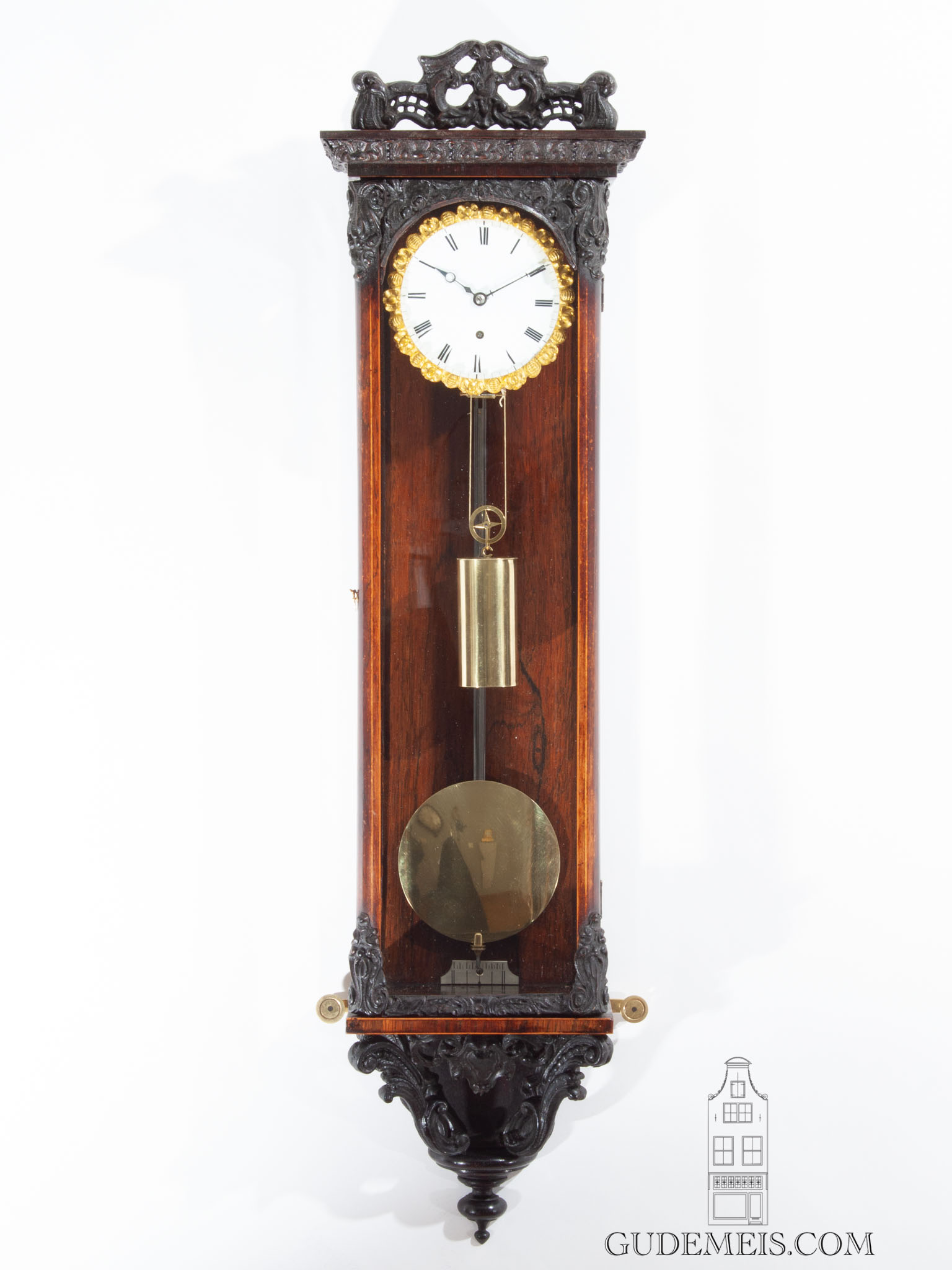
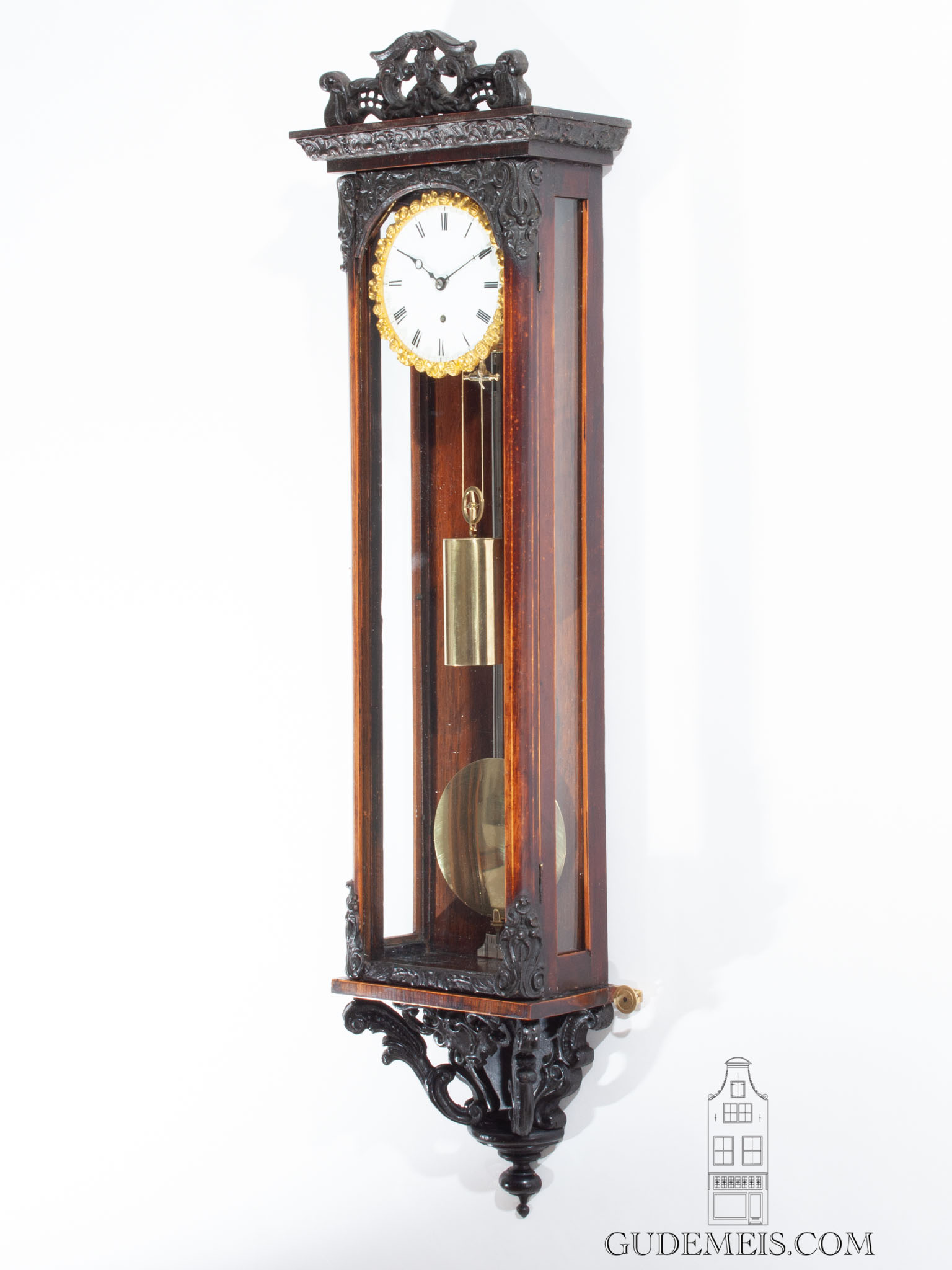
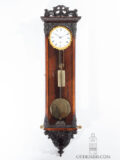
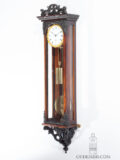
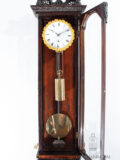
A small Austrian Vienna rosewood wall clock, circa 1850.
Description
Vienna regulator
In the Austro-Hungarian Empire, with Vienna as its centre, a clockmaking tradition evolved with its own identity. Some other traditions relied on heavily executed movements that required strong springs and heavy weights. Contrary to this, the Viennese makers opted for more lightly built and well-finished movements that required less power. Although not many of these clocks have compensated pendulums or other inventions to improve timekeeping, the quality of the finishing ensures these movements run very well. In the late eighteenth century, clocks began to be made with slender cases and glass panels on all sides. After the middle of the nineteenth century, while the cases remained slender, these wall clocks became more ornate, reflecting the trends of the interiors. This clock stands out because of its rare, small proportions, giving it an endearing quality. The originality of the case and the lovely dial add to its appeal. Finally, it is also practical, as the clock runs for a full week on a single winding. An attractive and rare small clock.
Ormolu bezel
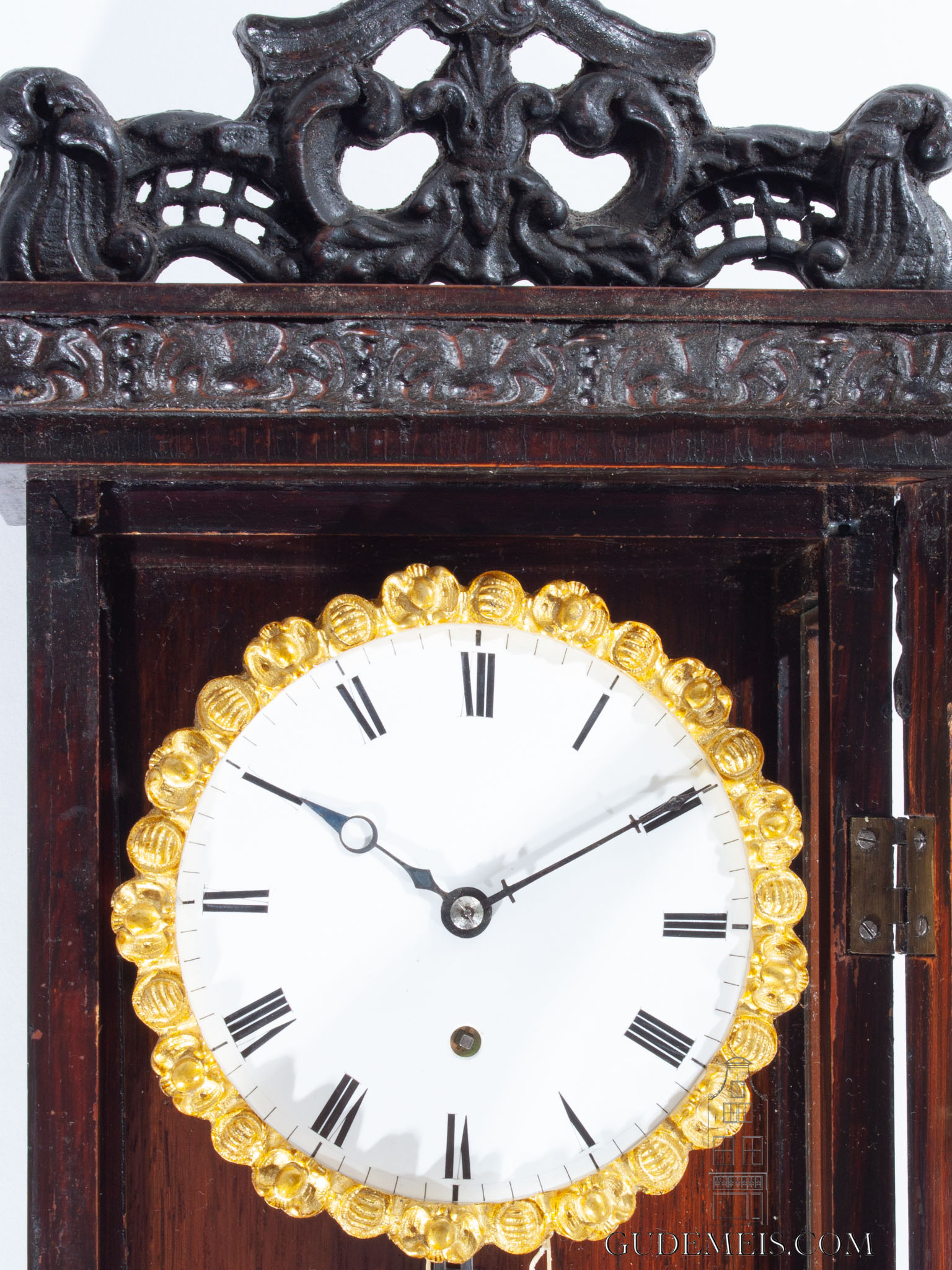
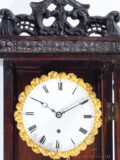
The 8.5-cm enamel dial has Roman numerals. It is fitted with a well cast and chiseled ormolu bezel adourned with flowers. The hands are made of blued steel.
Weight driven
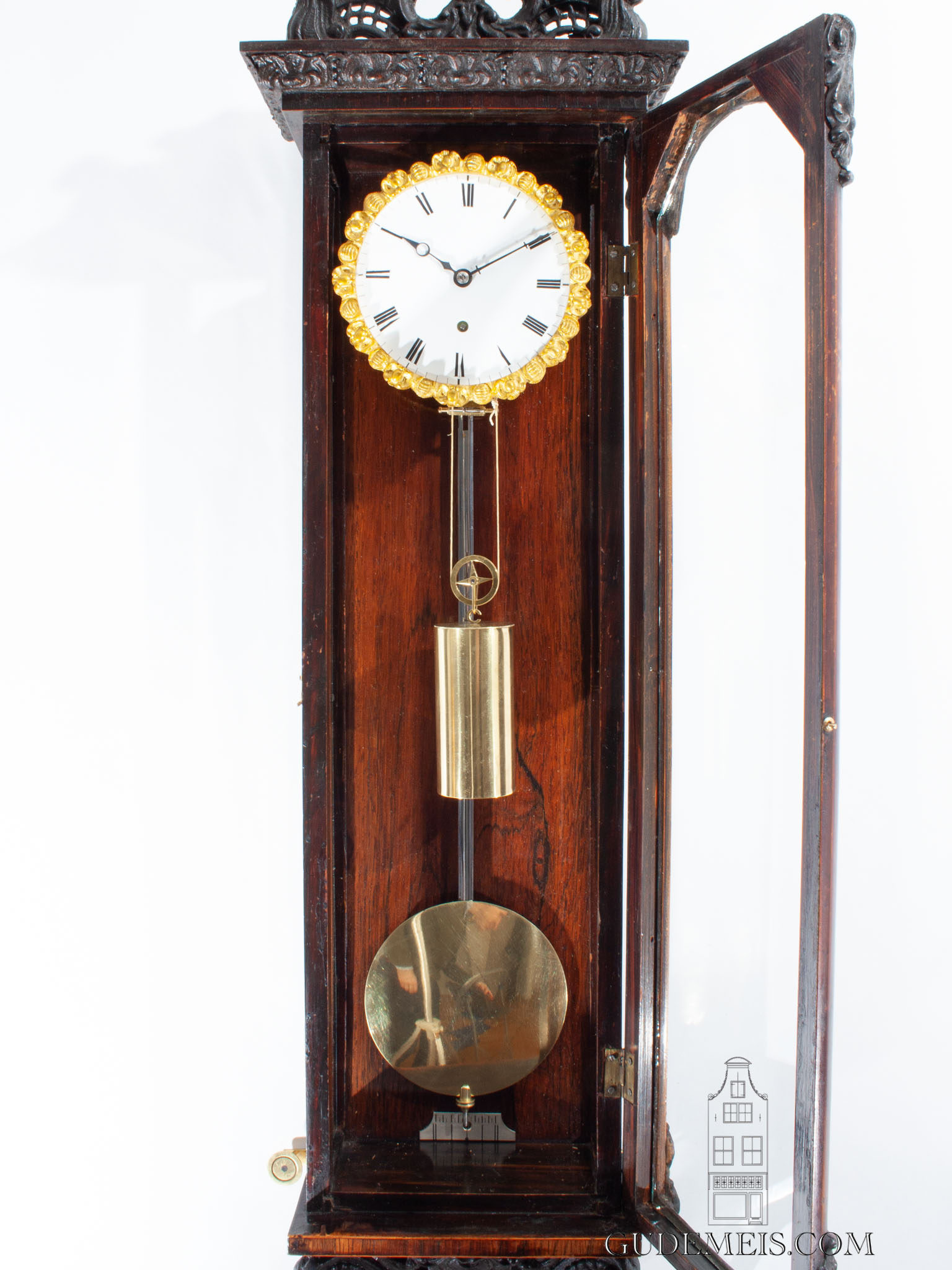
On a separate brass plate mounted on the back panel the movement is suspended with key hole locking. It is weight driven and has a duration of a week. There is stopwork preventing the clock to be overwound. It is regulated by anchor escapement in combination with a separate suspended pendulum. This pendulum has a steel rod which is a mark of quality. There is fine regulation to the crutch.
The case
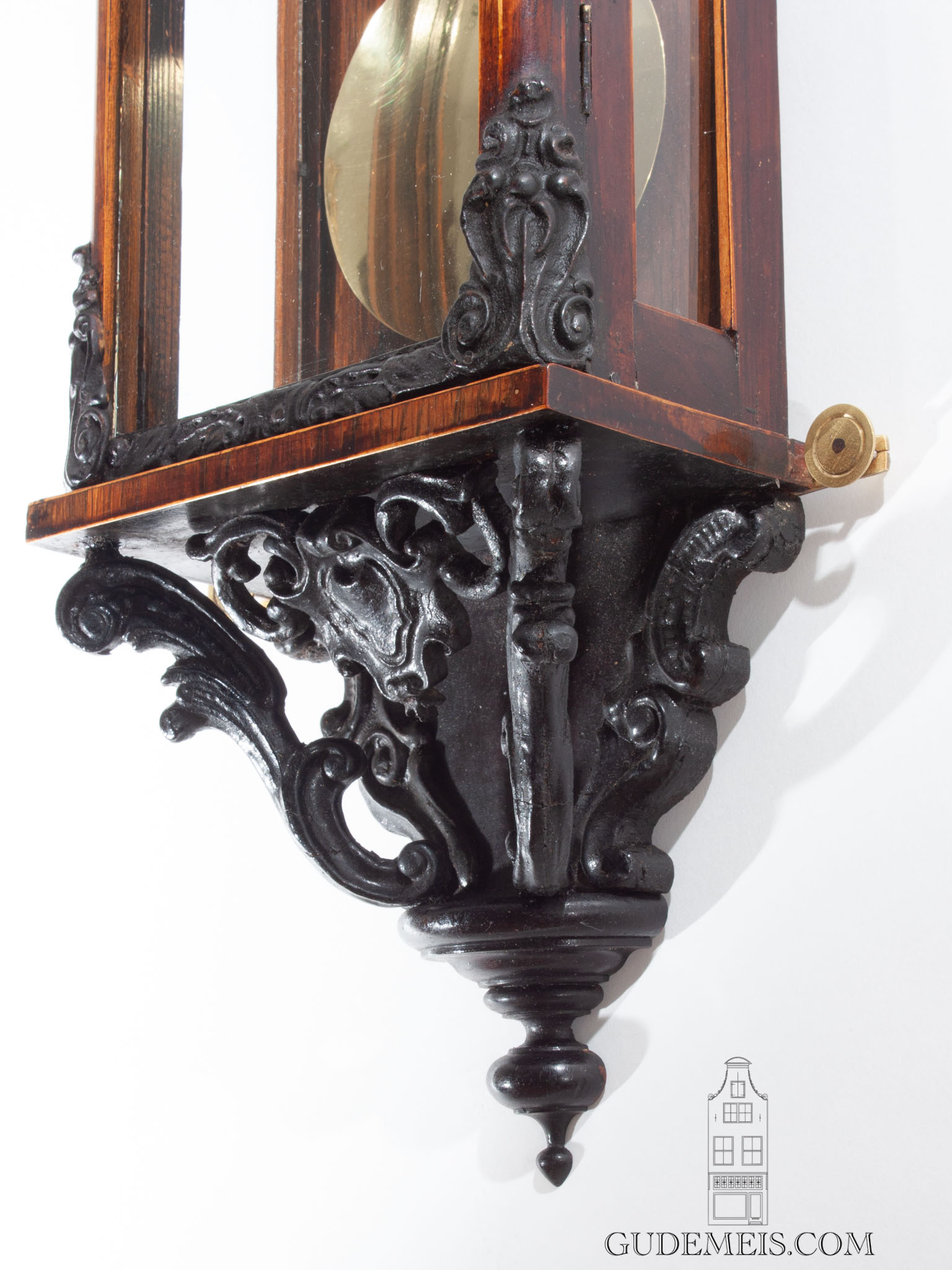
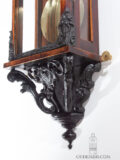
The straight rosewood case is adourned with foliate gesso mounts. The movmement and pendulum are nicely visible because of the three glass panels. The case terminates in a lovely open bracket with finial.