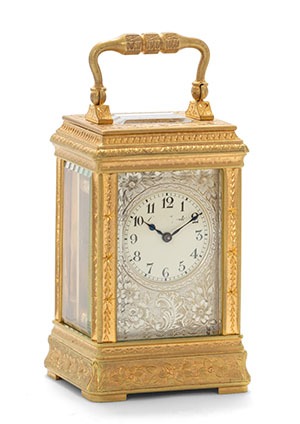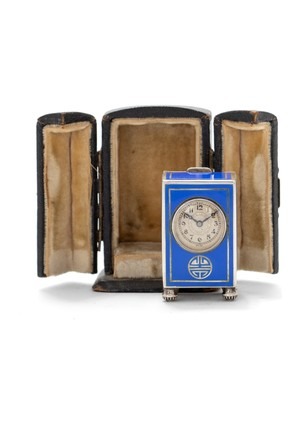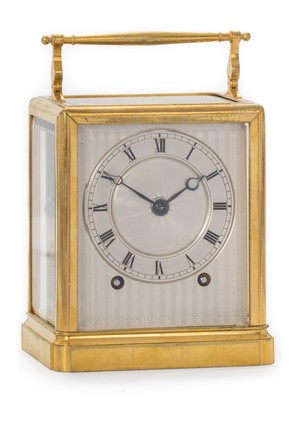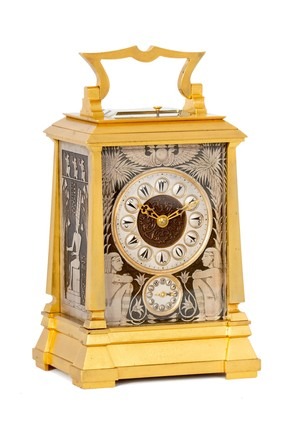
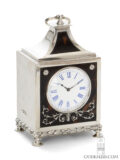
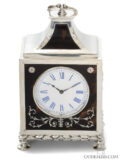
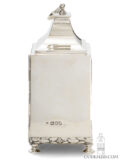
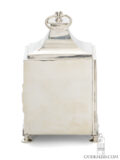
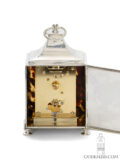
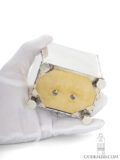
An English silver travel clock by William Comyns & Sons, 1909
Description
William Comyns & Sons
William Comyns his business in 1858 after completing his apprenticeship with George J. Richards. The firm quickly gained a good reputation. This was due to the elegant designs and exquisite craftsmanship, but also to William’s business acumen. He ensured that his pieces were sold through the finest retailers, such as Tiffany & Co. and The Goldsmiths and Silversmiths Company. In 1885, his sons Charles and Richard joined the business, which from then on was known as Williams Comyns & Sons. Under various owners, the firm continued to operate until 1987.
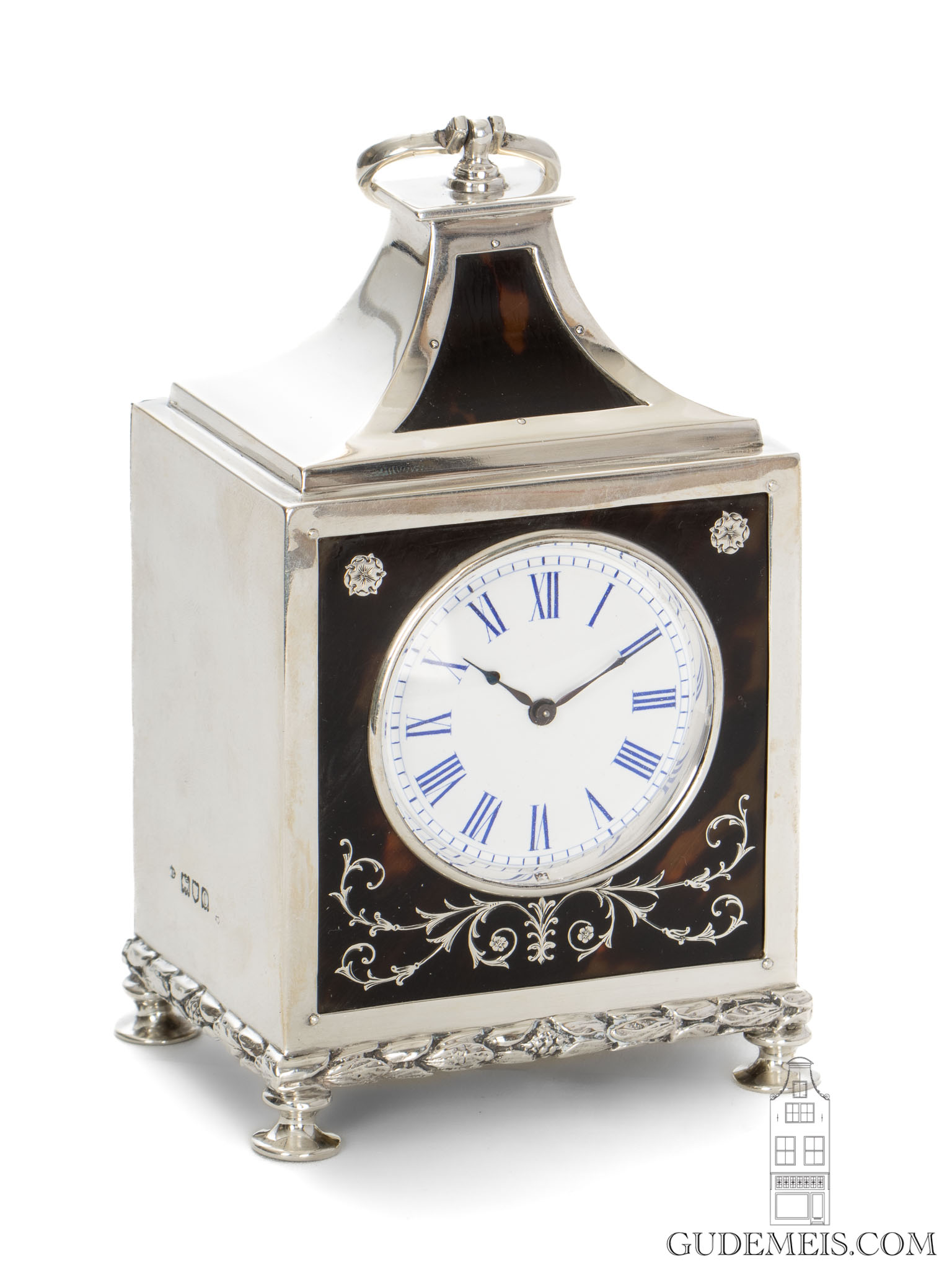
In the 19th century, England was very wealthy, with a large middle class that had disposable income. This created a large market for luxury objects crafted in the prevailing styles. In addition to the more ususal silver objects the firm also produced clocks—or rather, clock cases. The timepieces for these were imported from France and fitted with a case in the workshops of Comyns & Sons. This is also the case with this small clock, which at first glance appears fairly simple. But the delicate silver inlay in the tortoiseshell shows that it was made with great skill. A beautiful little gem created for the English elite.
Roman numerals
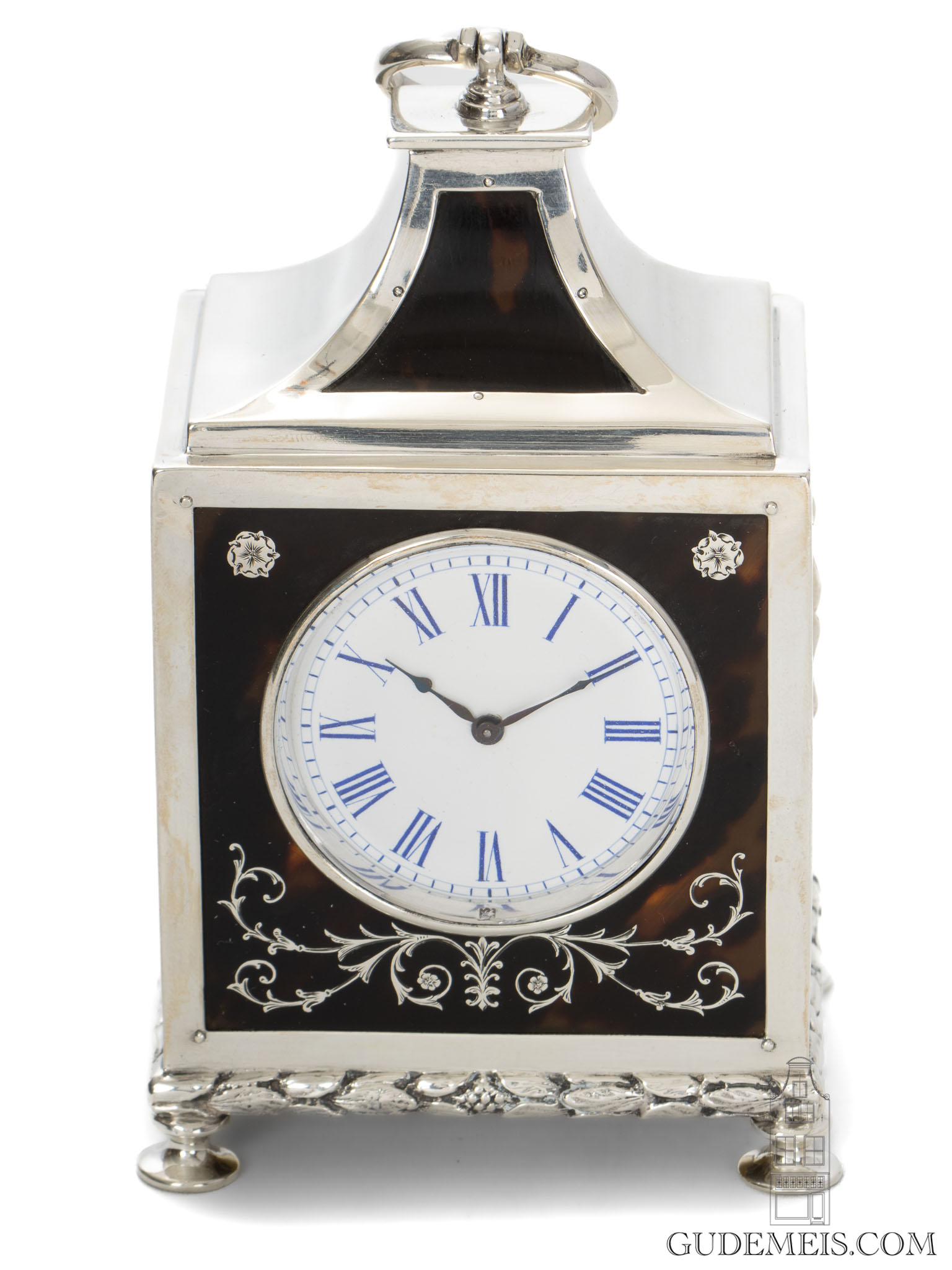
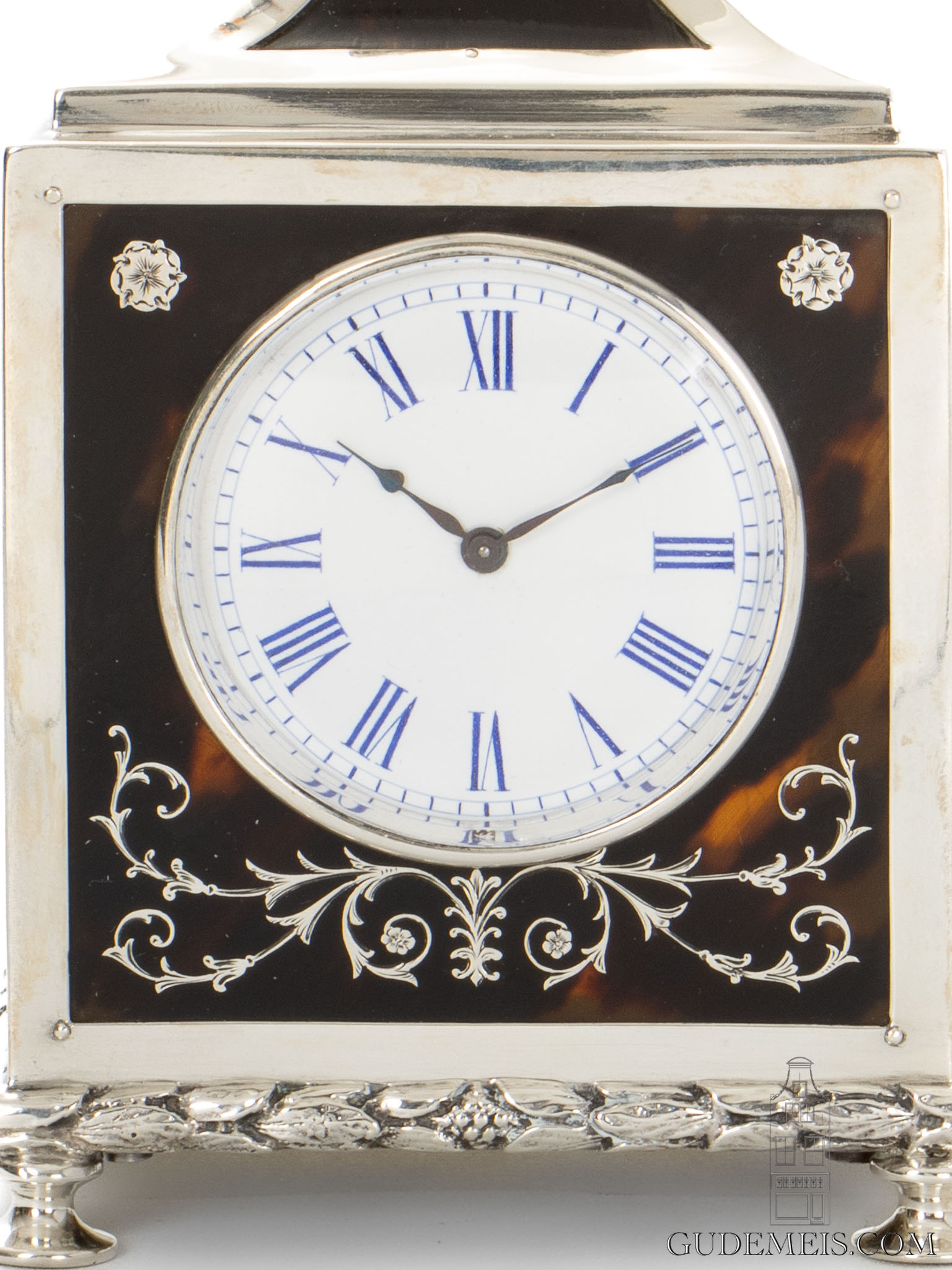
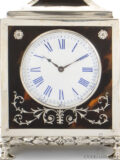
The 5-cm enamel dial has blue Roman numerals. The “spade hands” are made of blued steel.
French Movement
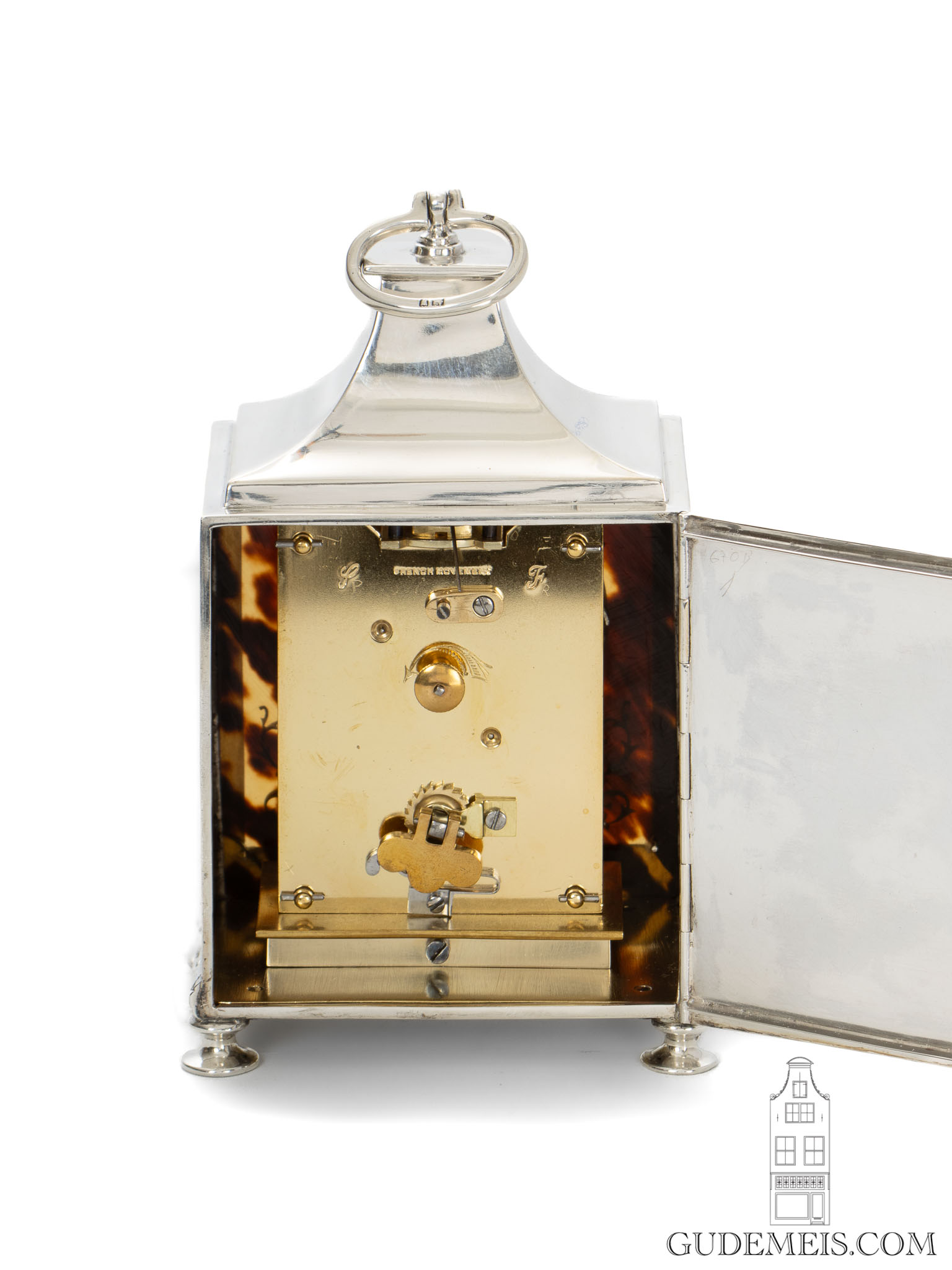
The movement is driven by a springbarrel with fixed winding and is of eight day duration. It is regulated by an anchor platform escapement in combination with a balance wheel. The movement’s back plate is marked “French movement.”
Sterling silver
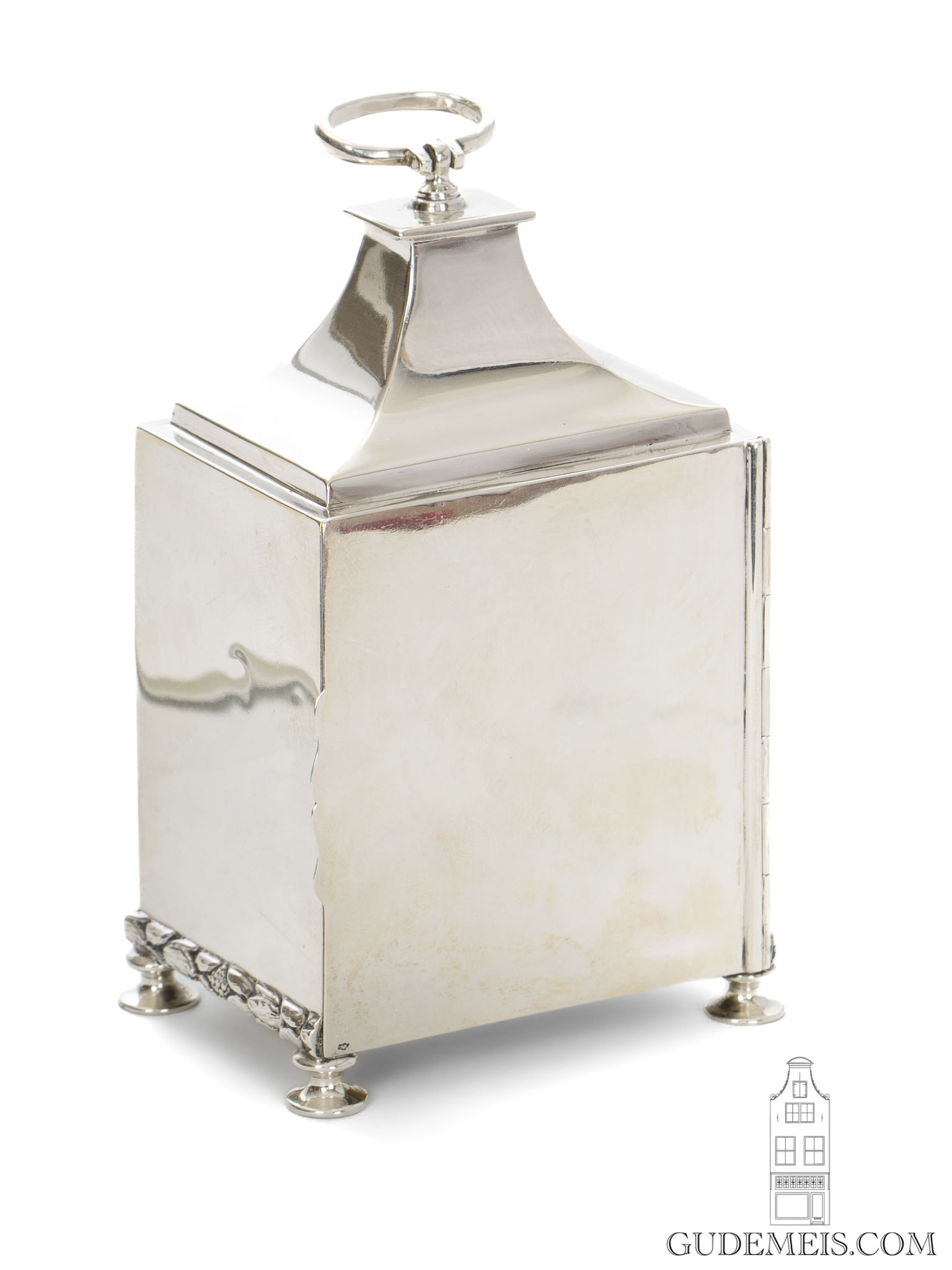
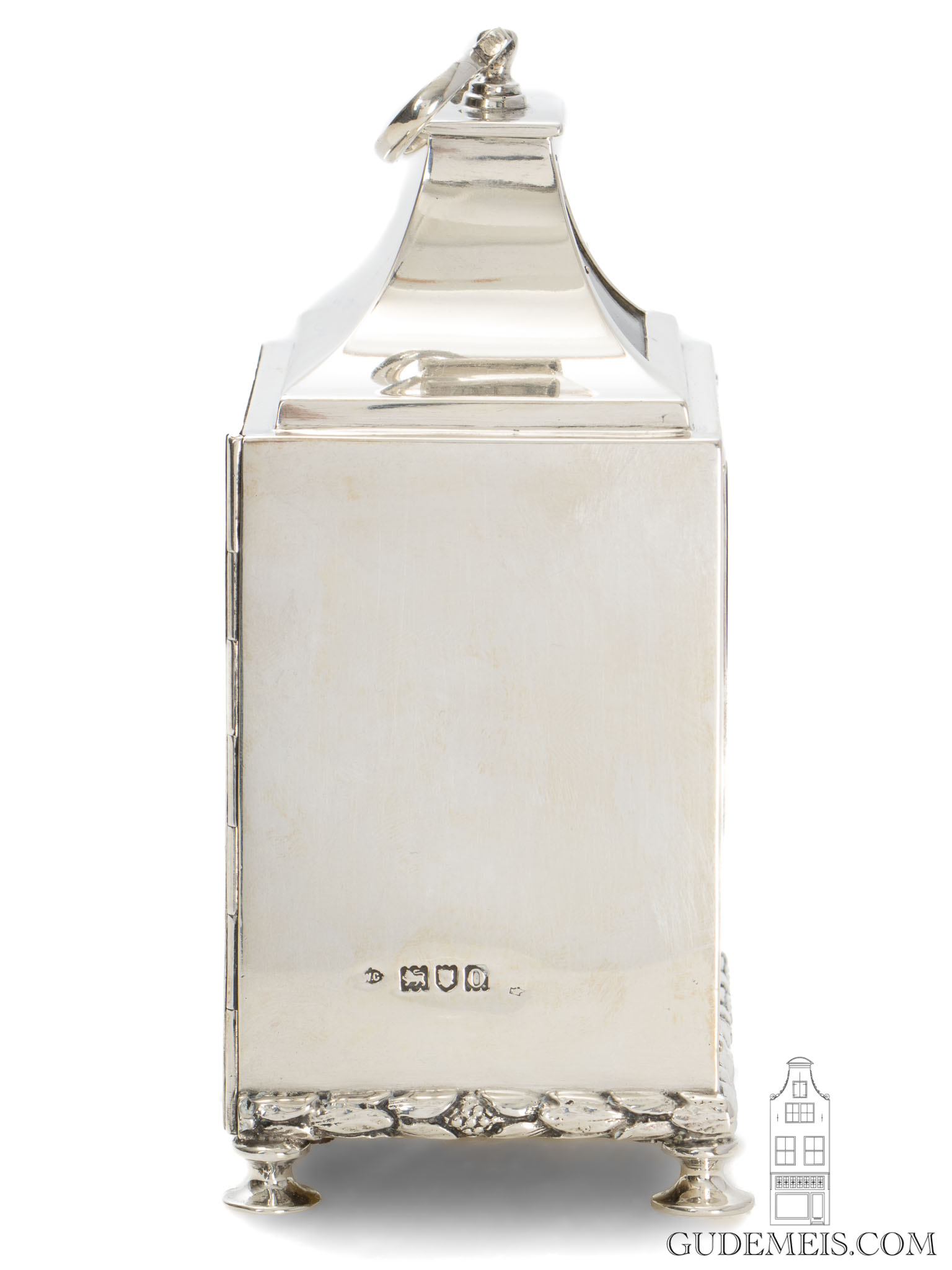
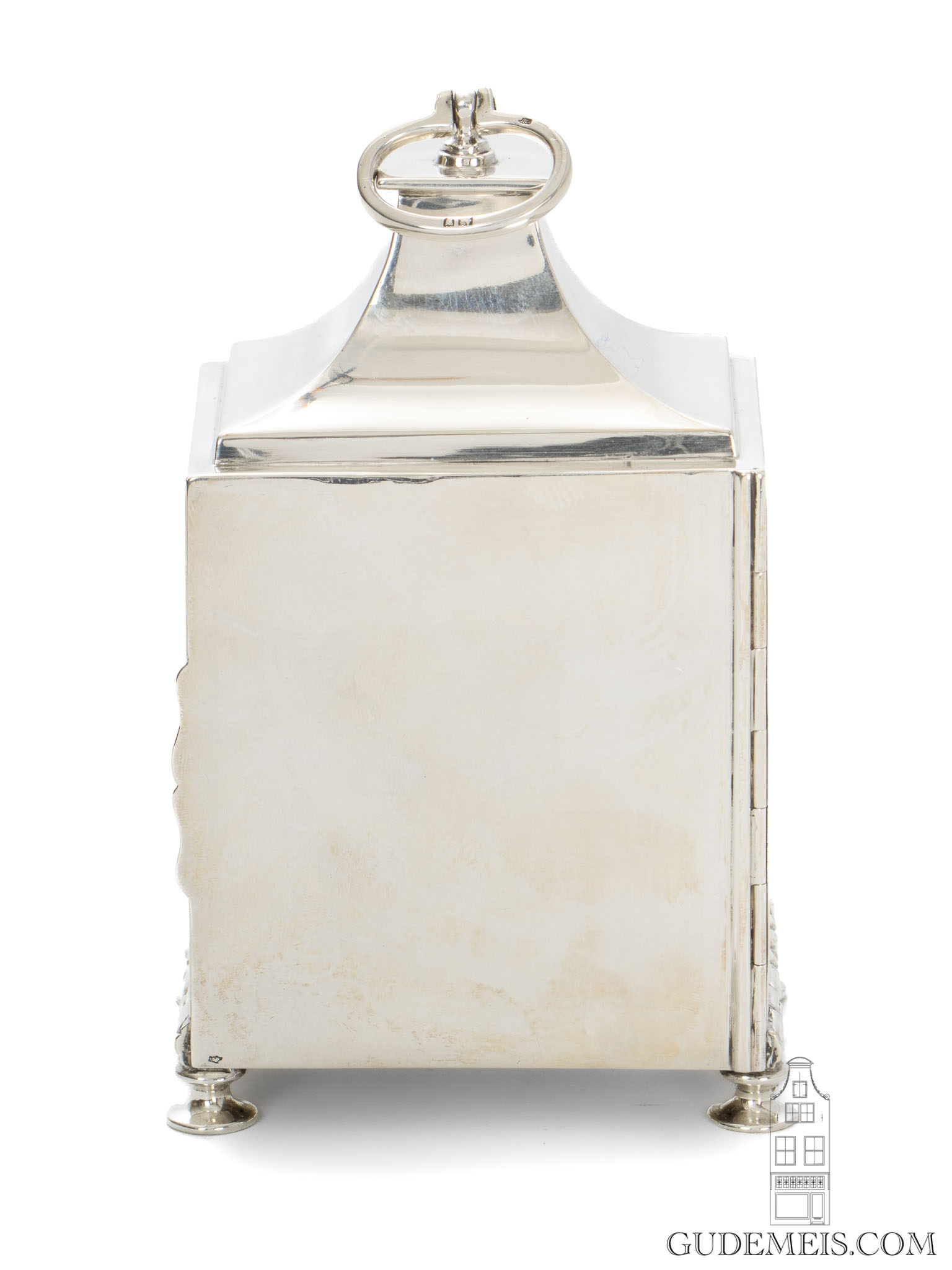
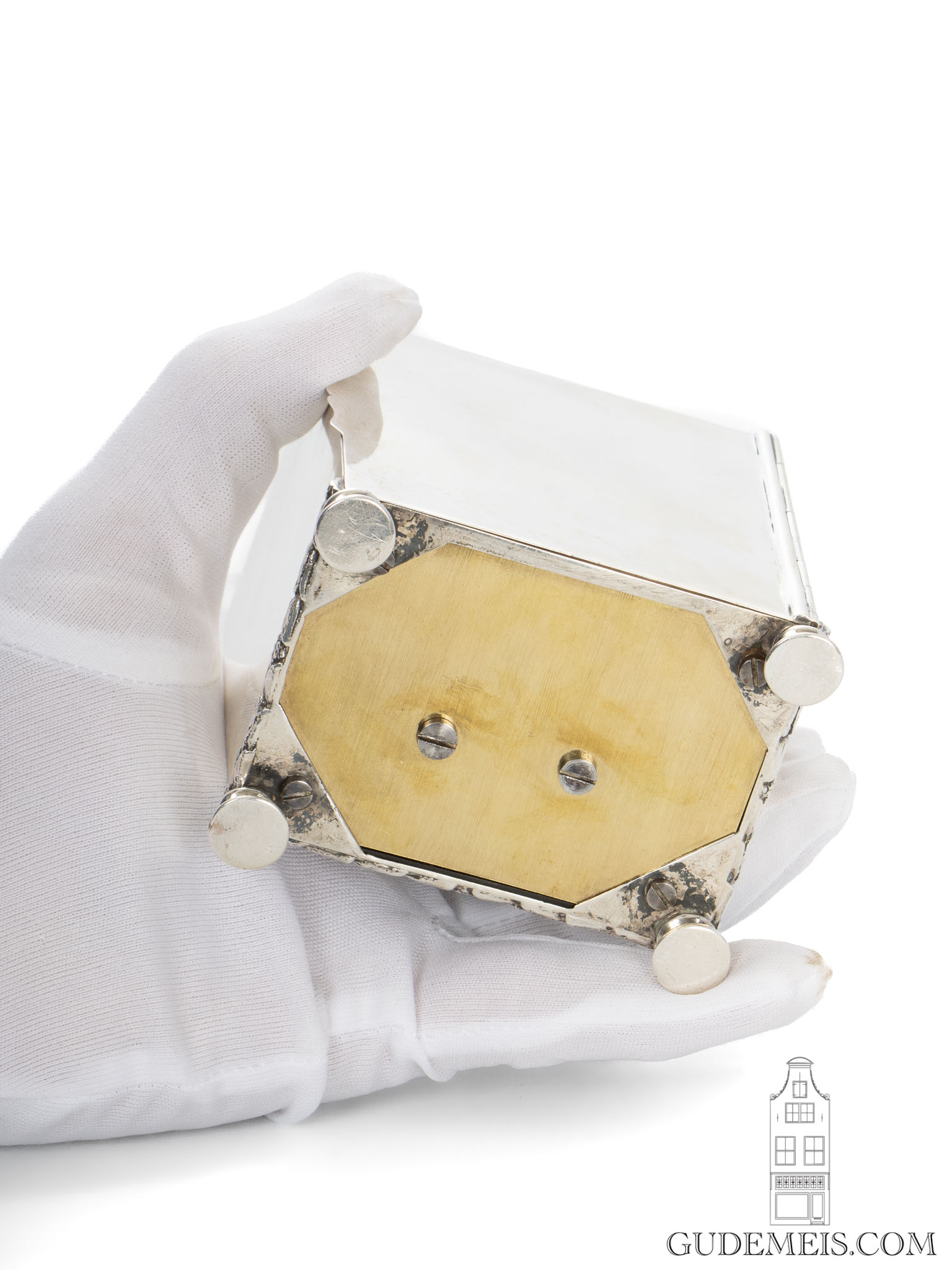
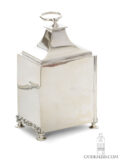
The case is made of silver. It has a top with convexly curved sides inlaid with a tortoiseshell panel on the front, surmounted by a small handle. The dial is set in a tortoiseshell mask with rosettes in the upper corners and foliate inlay below. The base is lined with a leaf border and is raised on turned 2feet. The silver is marked with the running Lion for Sterling Silver (925/1000), the leopard’s head for London, the year letter ‘O’ for 1909, and the Comyns mark of ‘W.C.’ within a diamond.