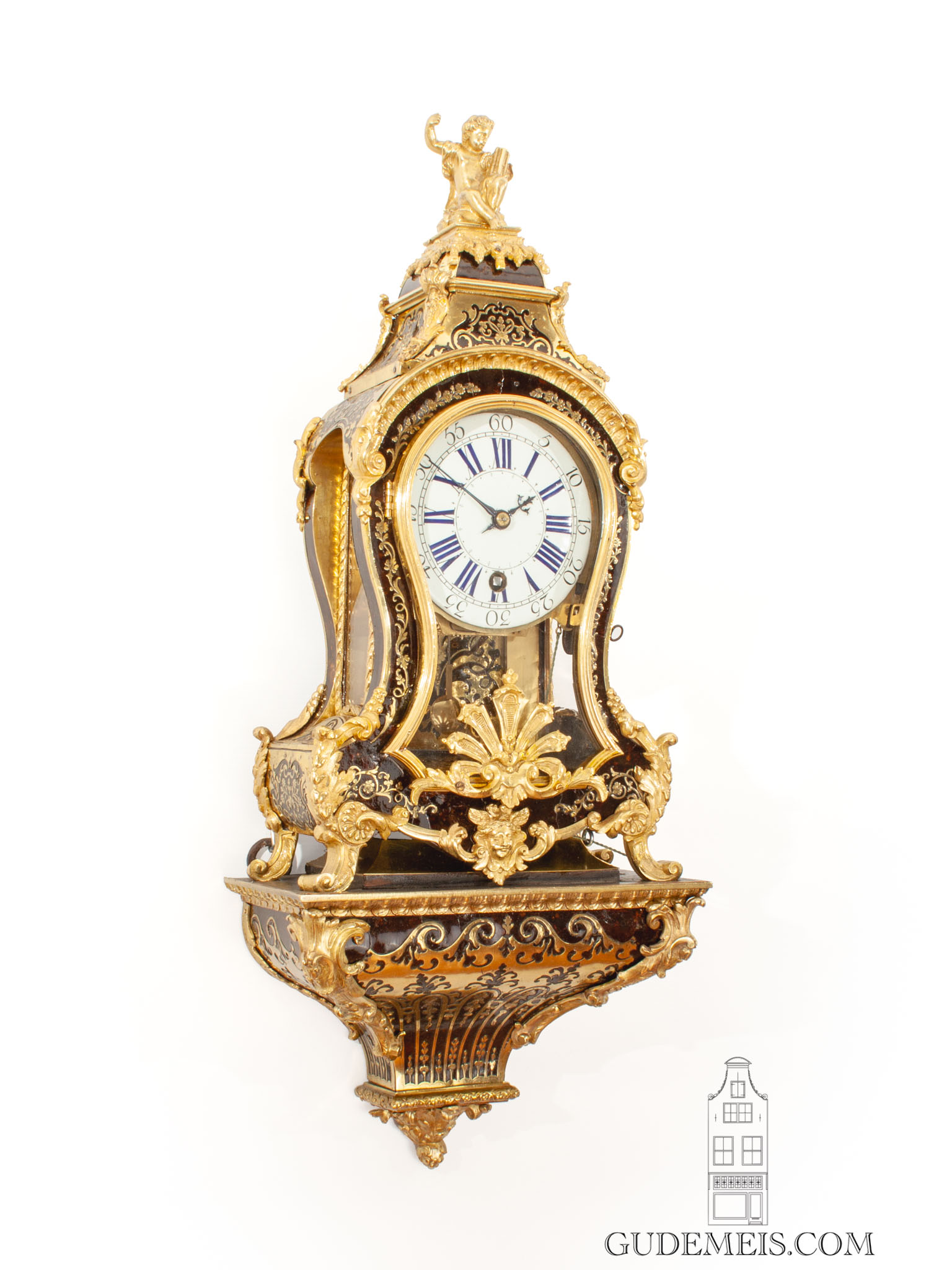
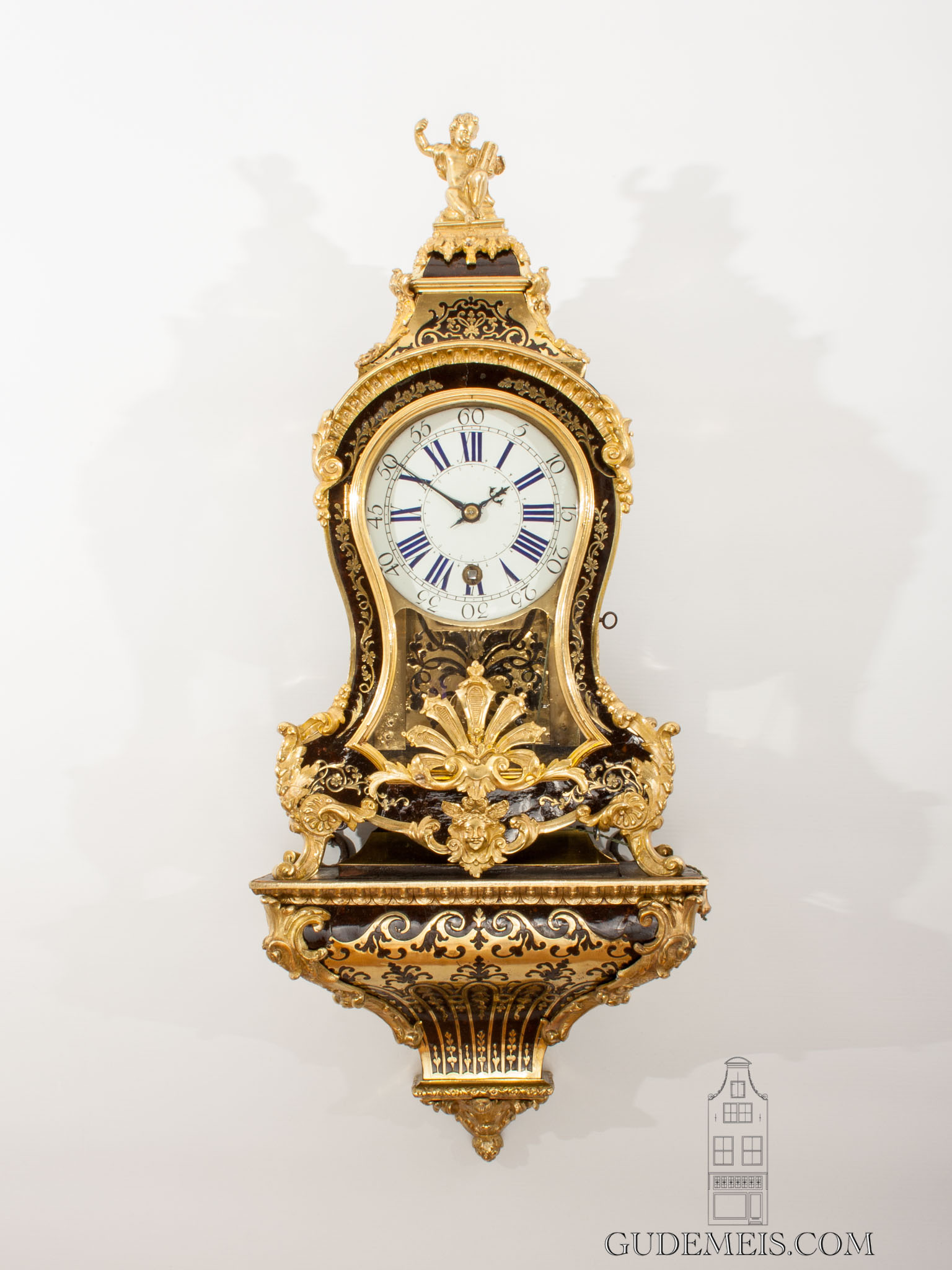
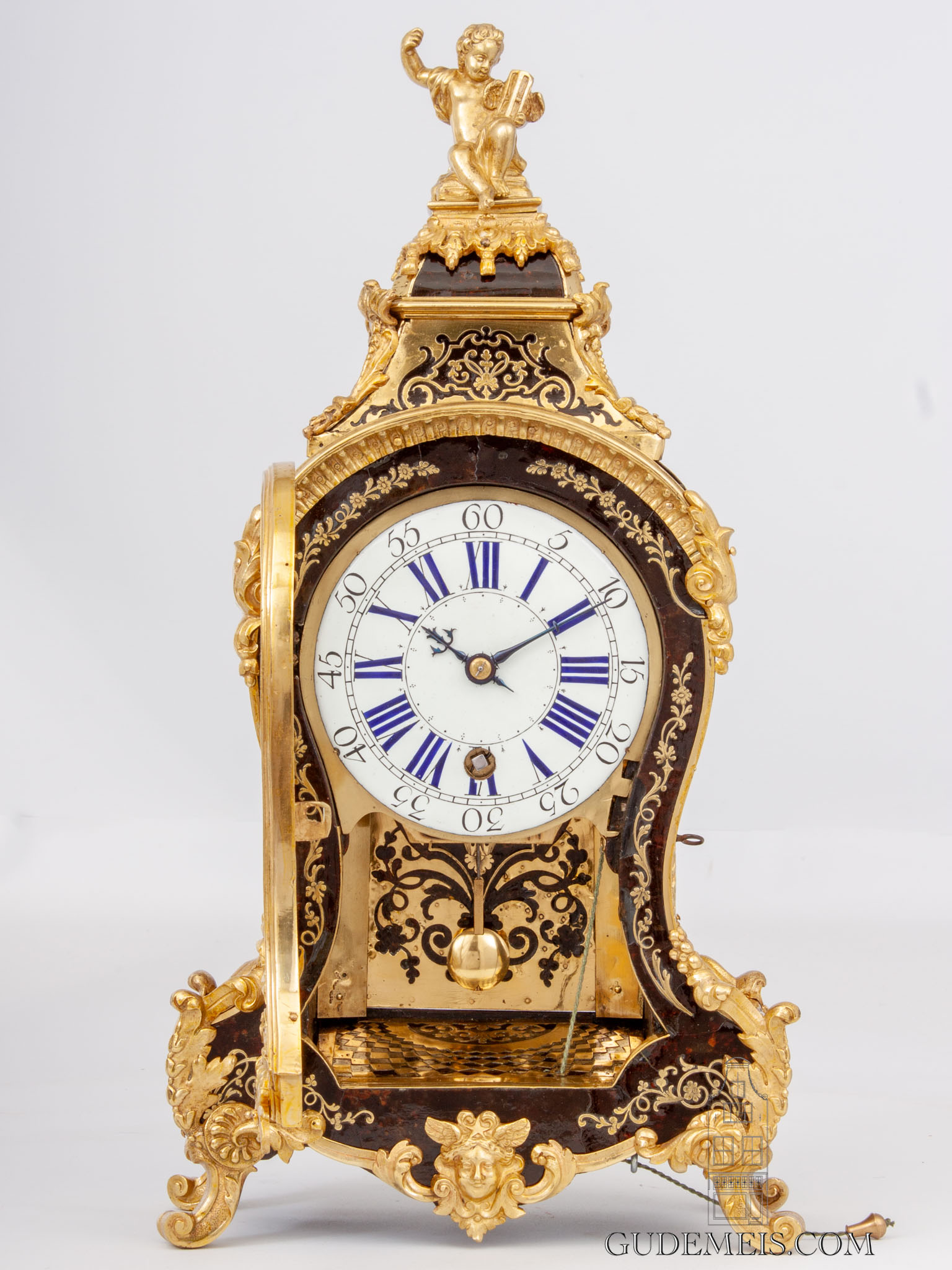
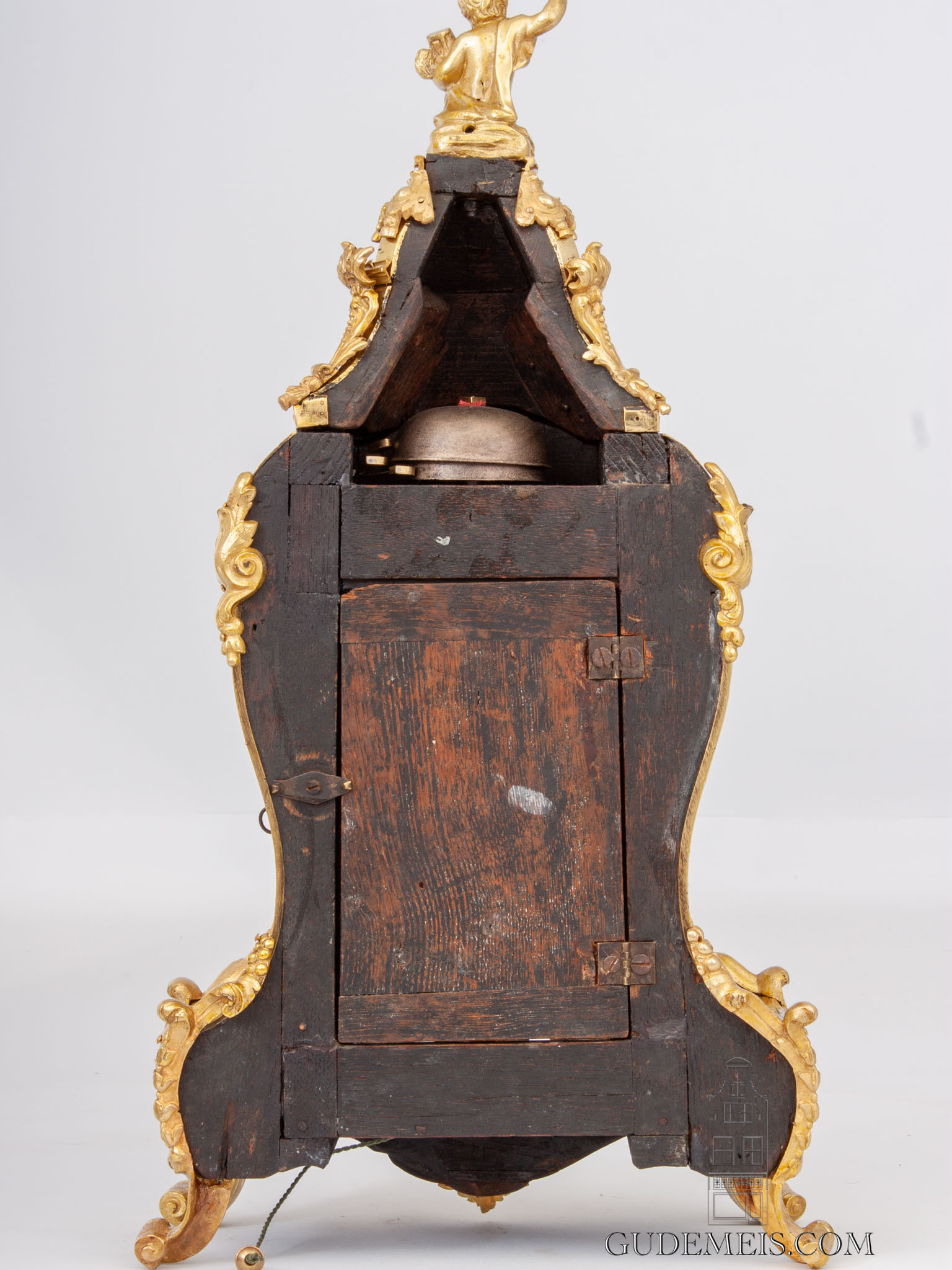
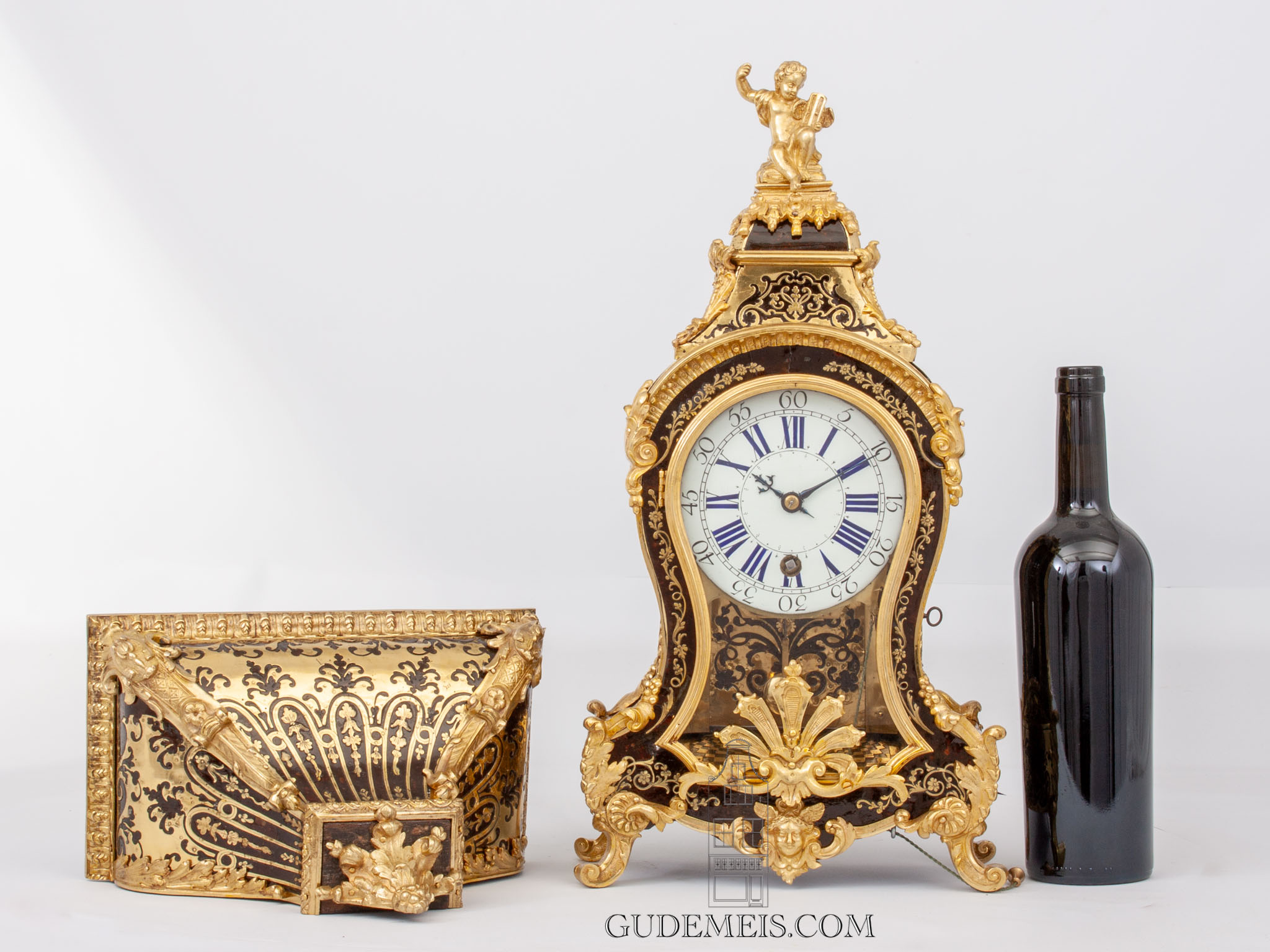
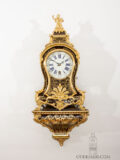
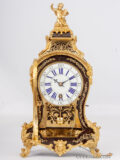
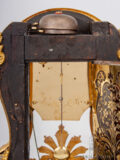

A small French Regence Boulle inlaid quarter repeating bracket clock, Lieutaud, circa 1730.
Description
French bracket clock
The French bracket clock evolved from the ‘pendule religieuse’, the first French pendulum clocks. These were mostly hung on the wall or placed on matching stands. While the clocks became larger and more ornate at the end of the seventeenth century, it was also just a small step to add a wall bracket to place these clocks on. The type became popular during the Regence and Louis XV period. The small dimensions and elegant design of the clock and bracket make the whole attractive to many who see it. Besides its good looks, it is also a good stylistic example of a Régence bracket clock, admired and appreciated already for centuries. The ornate shape is further embellished with a veneer of brass and tortoiseshell combined. The process for achieving this involves laying a sheet of brass and tortoiseshell on top of each other and then jigsawing the design. This creates two sets of ornaments: one with more tortoiseshell than brass, known as “première partie” (first part), and another with more brass than tortoiseshell, called “seconde partie” (second part). This technique was invented by Charles-André Boulle, a renowned ébéniste who worked in the service of Louis XIV. His name became synonymous with the technique for which he became famous. It was highly valued in its time, as it still is because of the fine details and decorative quality. This lovely clock of small proportions adorned with this beautiful technique is a treasure for any home.
This particular one, which lacks striking work but has pull quarter repeating, was probably made for the sleeping quarters.
The dial
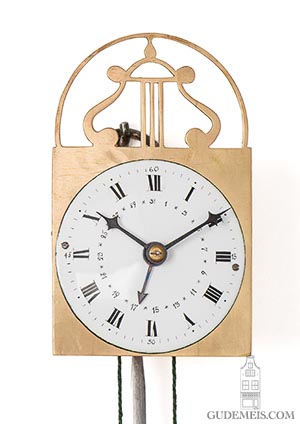
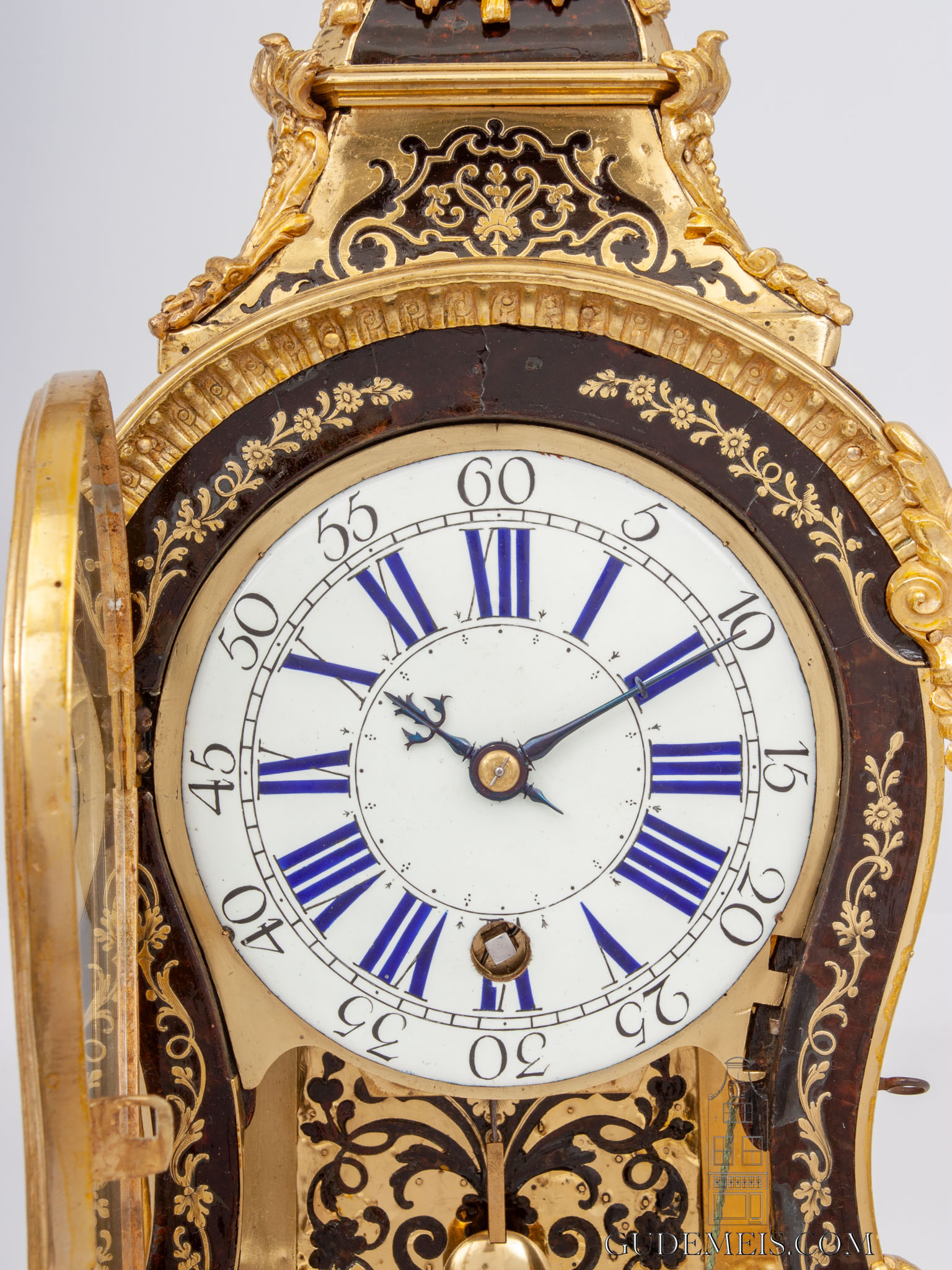
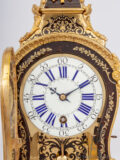
The 12.5-cm enamel dial has Blue Roman numerals for the hours and Arabic numerals for the five minute indication. The beautiful shaped and engraved hands are made of blued steel.
Lieutaud
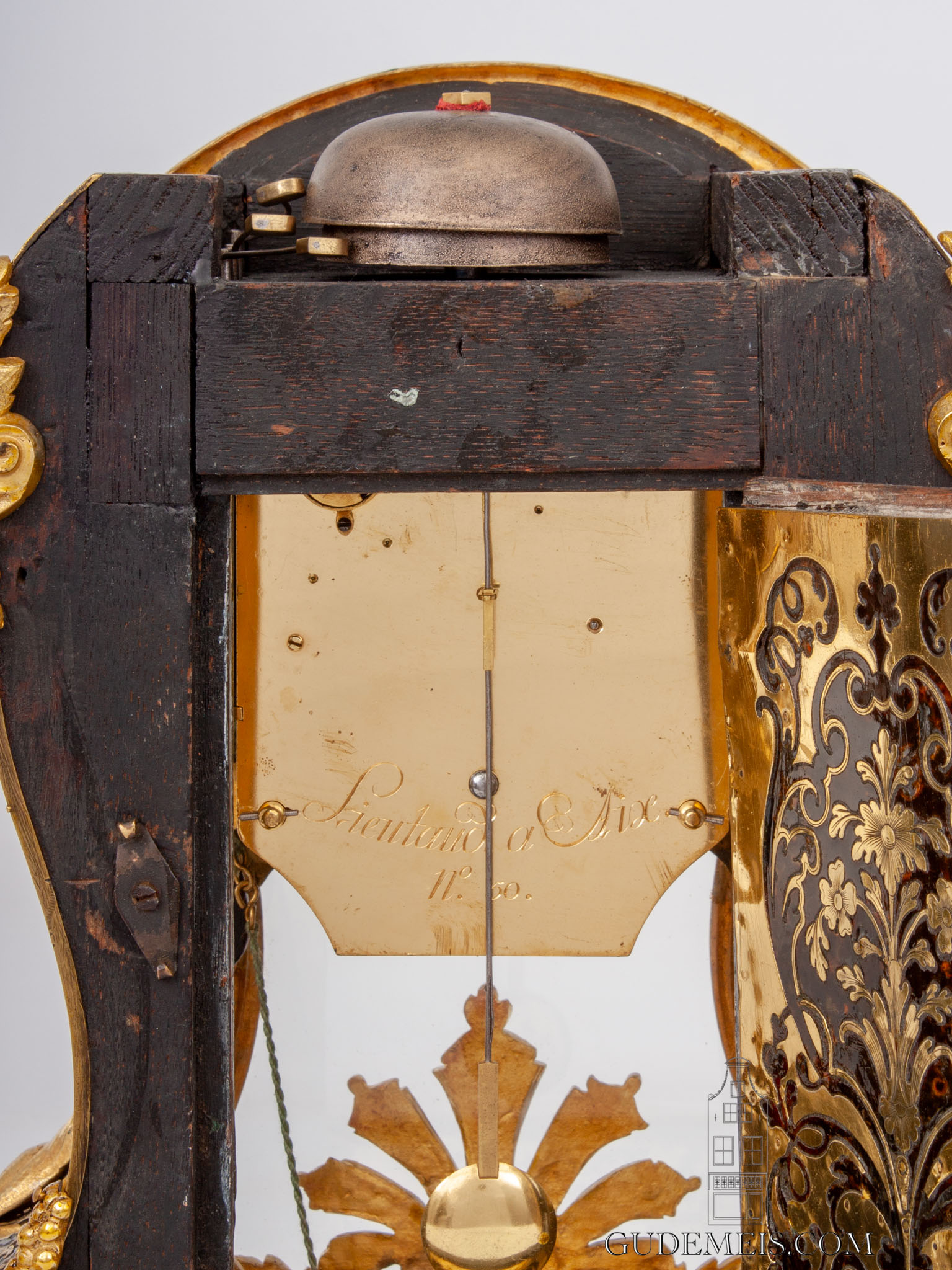
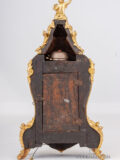
The movement is driven by a spring barrel and has a duration of at least eight days. It is regulated by tic-tac escapement or roll anchor in combination with a silk suspended pendulum. The plates are joined with well shaped baluster pillars and the back is signed Lieutaud A Aix. The clock has pull quarter repetition on three bells. This feature was very useful of course in a time when one just couldn’t turn on the light. With quarter repetiton one could hear what time it was.
Charles-André Boulle
The waisted case is throughout veneered with a combination a engraved brass and tortoiseshell. This type of decoration is called Boulle-work and was named after its inventor Charles-André Boulle who worked for Louis XIV. The whole is surmounted by a putto holding an hour glass. The case is further embellished with foliate and classical bronze mounts. The front and sides have glass panels. The clock is placed on a matching ogee shape wall bracket.