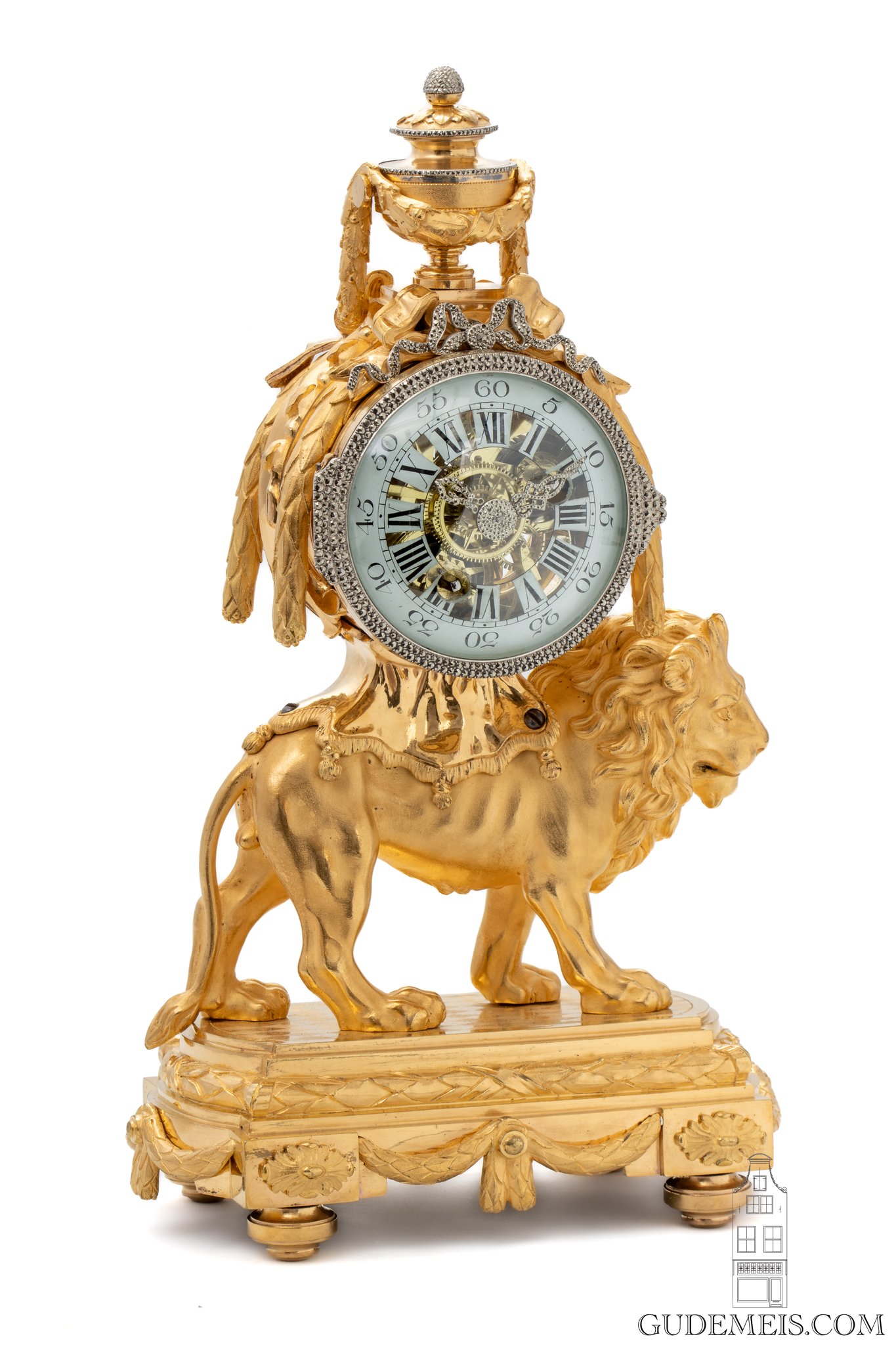
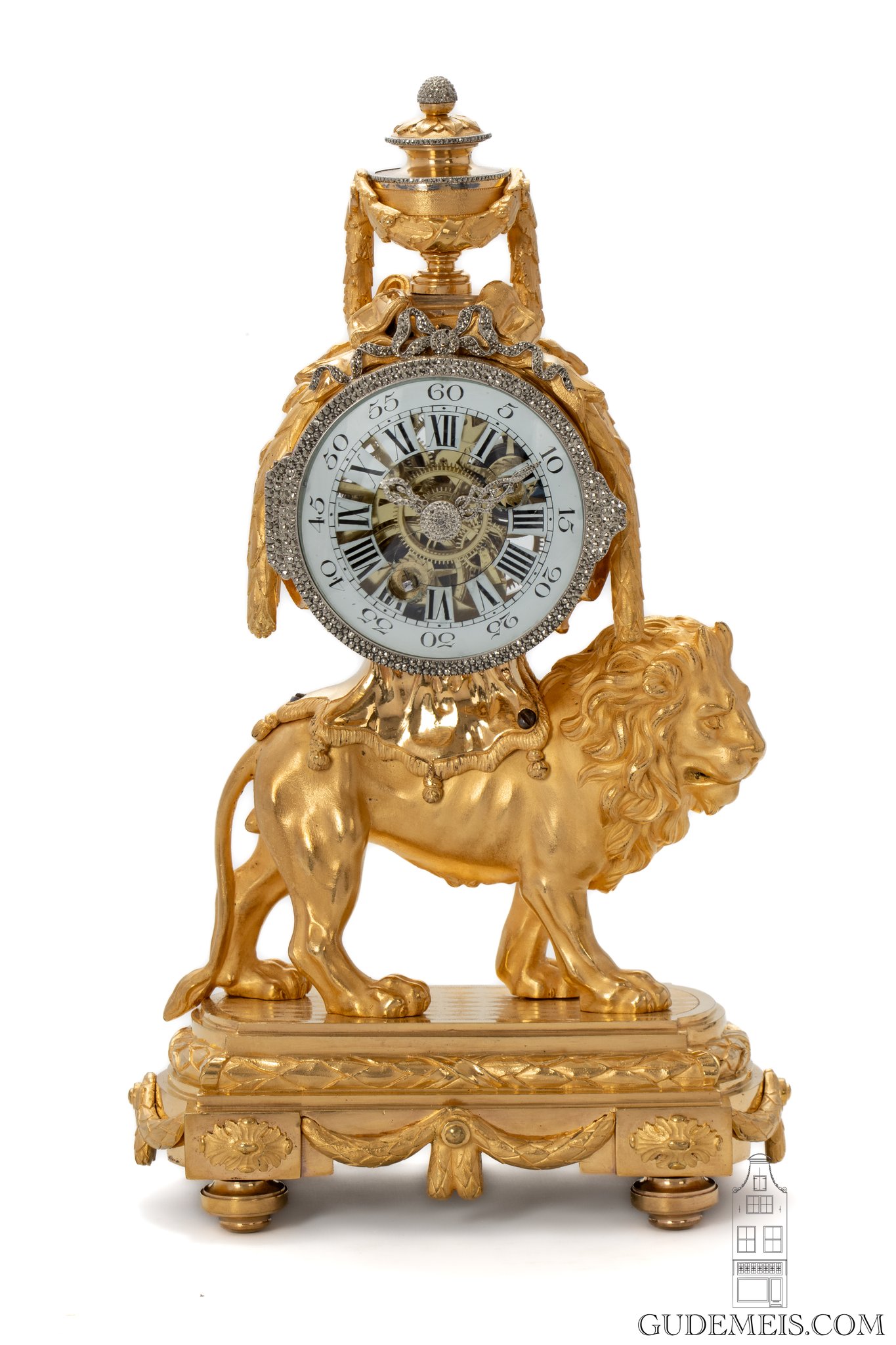
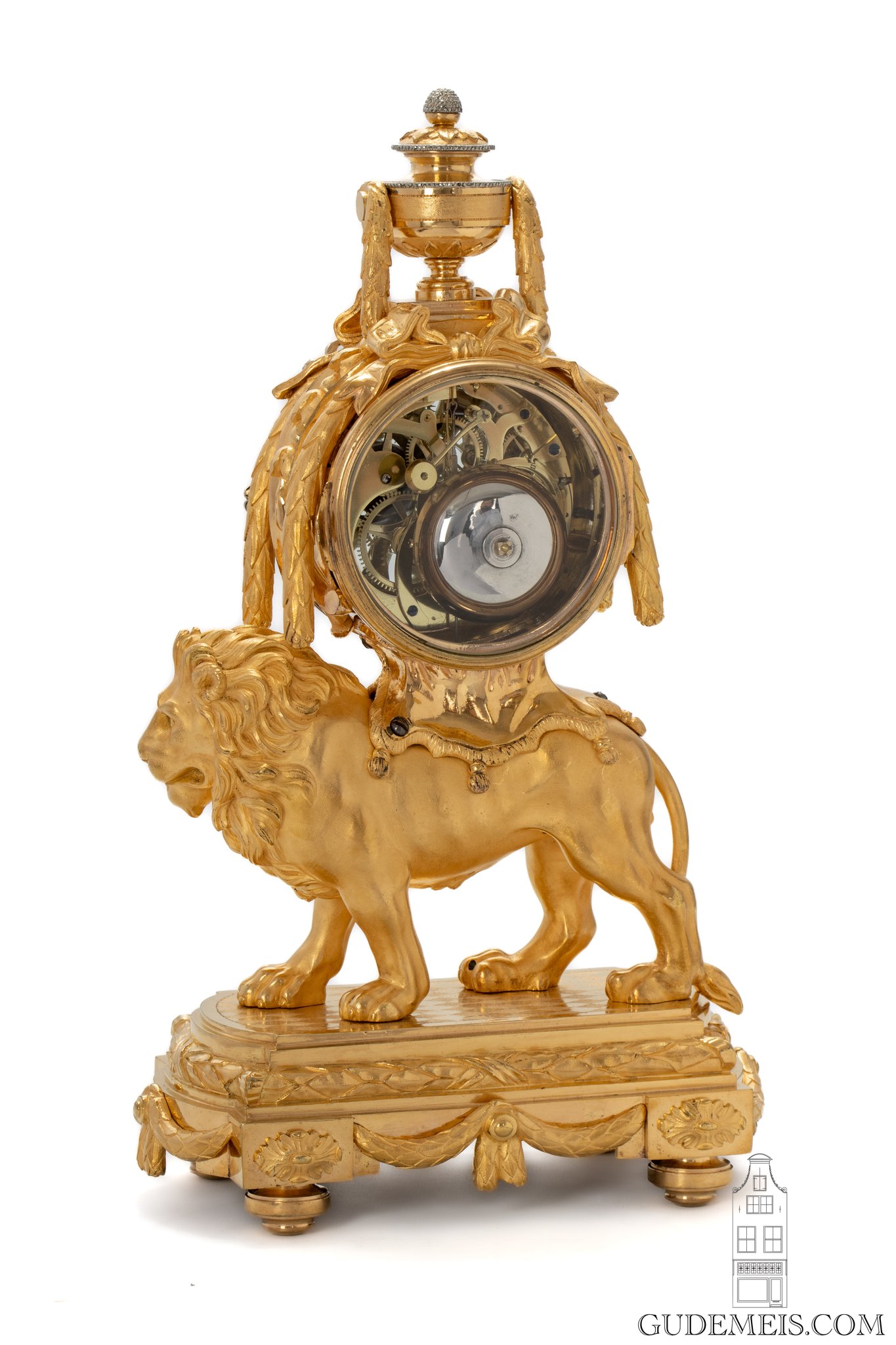

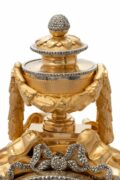
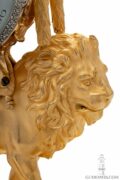
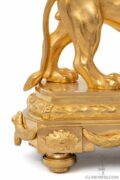
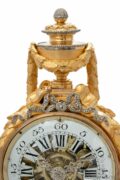
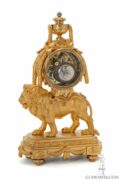
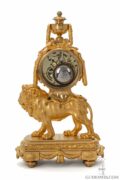

An exceptional French Louis XVI ormolu marcasite-mounted mantel clock ‘au lion’, attr. to Jean-Joseph de Saint-Germain, circa 1770.
Description
Jean-Joseph de Saint-Germain
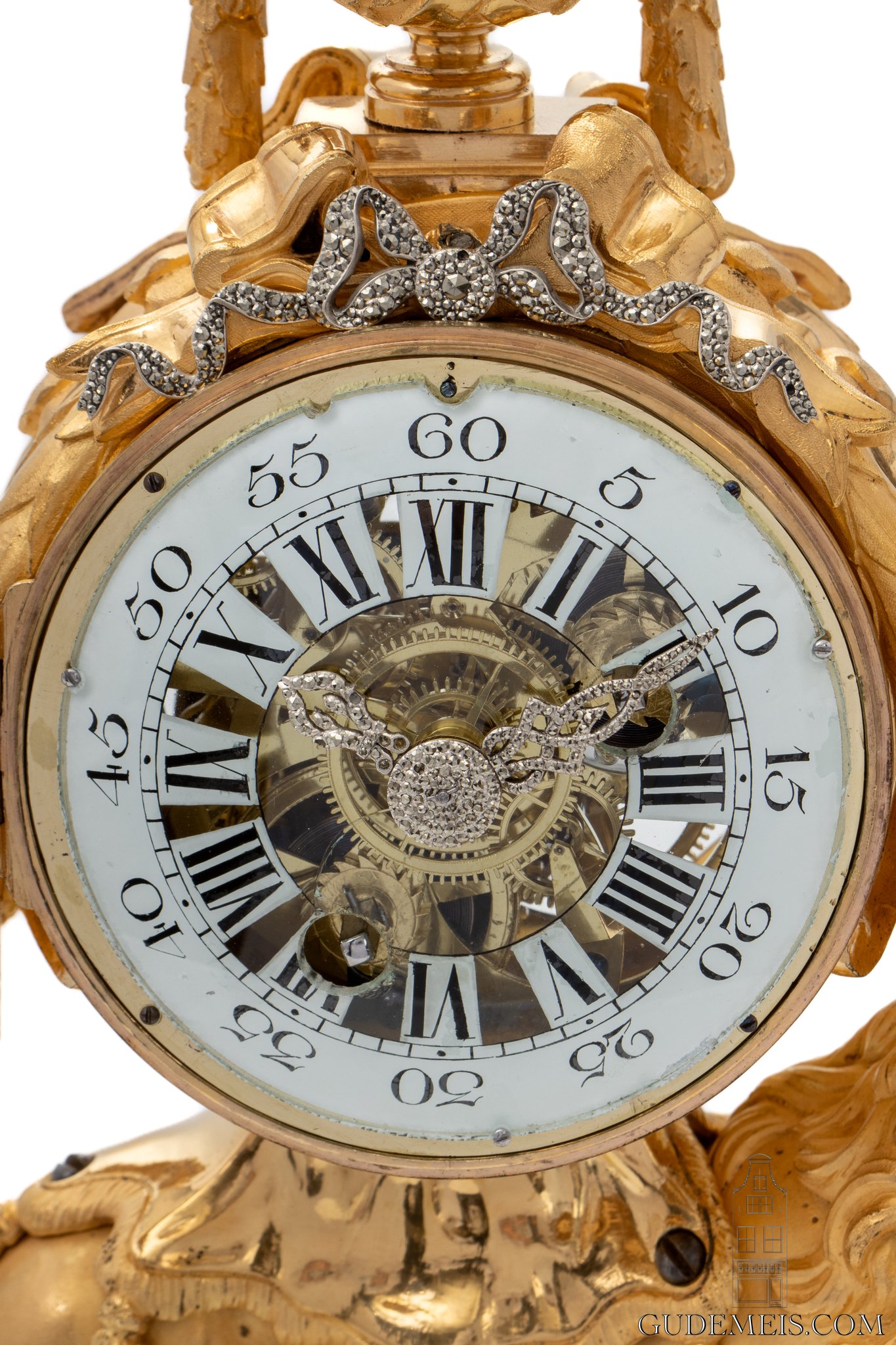
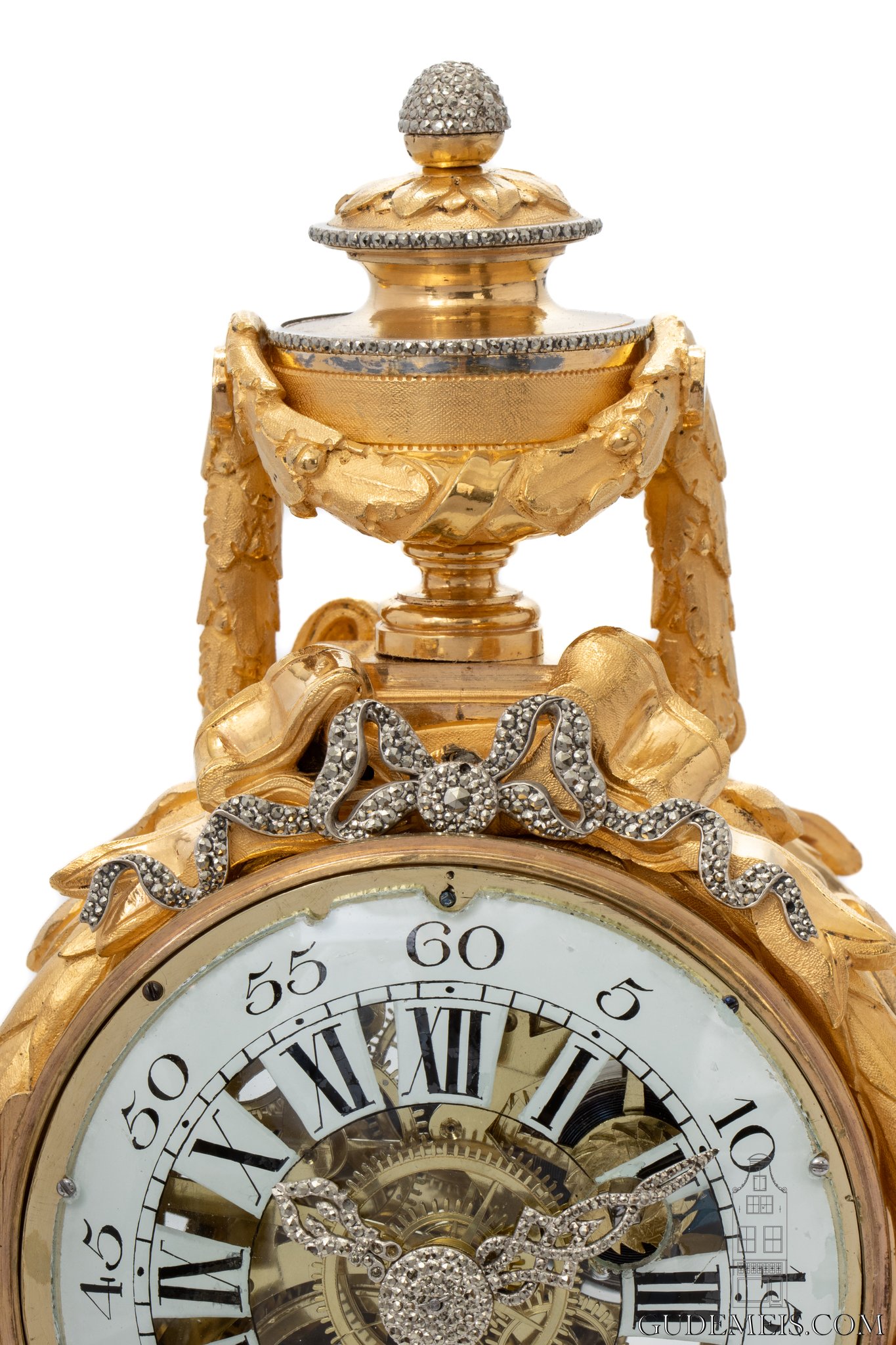
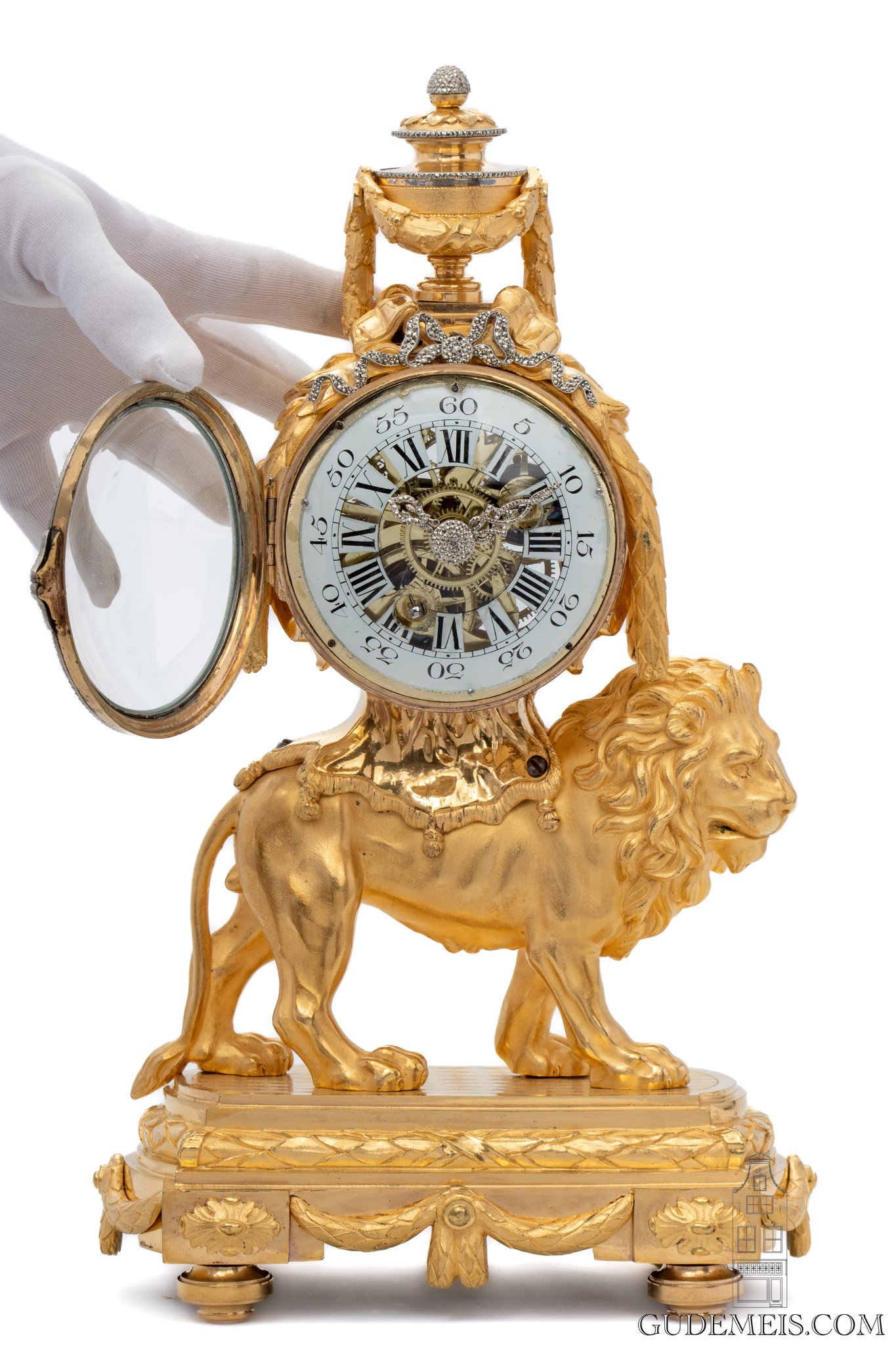
I am always trying to explain in a few sentences why an object is special to us. Usually there are one or two perspectives that clearly stand out, which I then use in my argument. But with this rare clock, there might be too many special features to keep this story short. There is the famous bronzier Jean-Joseph de Saint-Germain (active 1742 – 1776) who was a leading maker and designer of bronze clocks and other objects. Not only are there similar versions of this model signed by him, but the quality of the casting and gilding is so high that we can safely attribute this clock to him as well. But there are three further features that make this clock truly special. First there is the use of marcasite to embellish the case, bezel and hands, which is very rare. The use of this marcasite can be explained. When we keep in mind that the use of gilt bronze was popular because it brightened the interior, an important part of the appreciation lay in the fact that candlelight is reflected differently by the shiny and matte details of the ormolu, which results in playful shimmering. Therefore, it is easy to reason that the use of marcasite was probably not just done to make the piece look more expensive; it also enhanced this shimmering effect. The second special feature is the glass dial, which is seen on only a few other mantel clocks. It provides a view of the skeletonised movement, which is another rare feature. Instead of having solid brass plates, the mechanism is beautifully constructed of elegant cut-out parts and bridges of a unique design, which one can actually look through. The combination of the exceptional workmanship, the beautiful design and the rare features, all in great condition, comes together in a museum-worthy objet d’art.
Glass dial
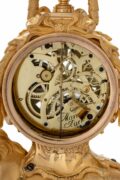
A very rare feature is the 9-cm glass dial with reverse painted Roman numerals for the hours and Arabic numerals for the five minute indication. The pierced hands are set with marcasite stones.
Skeletonised movmenent
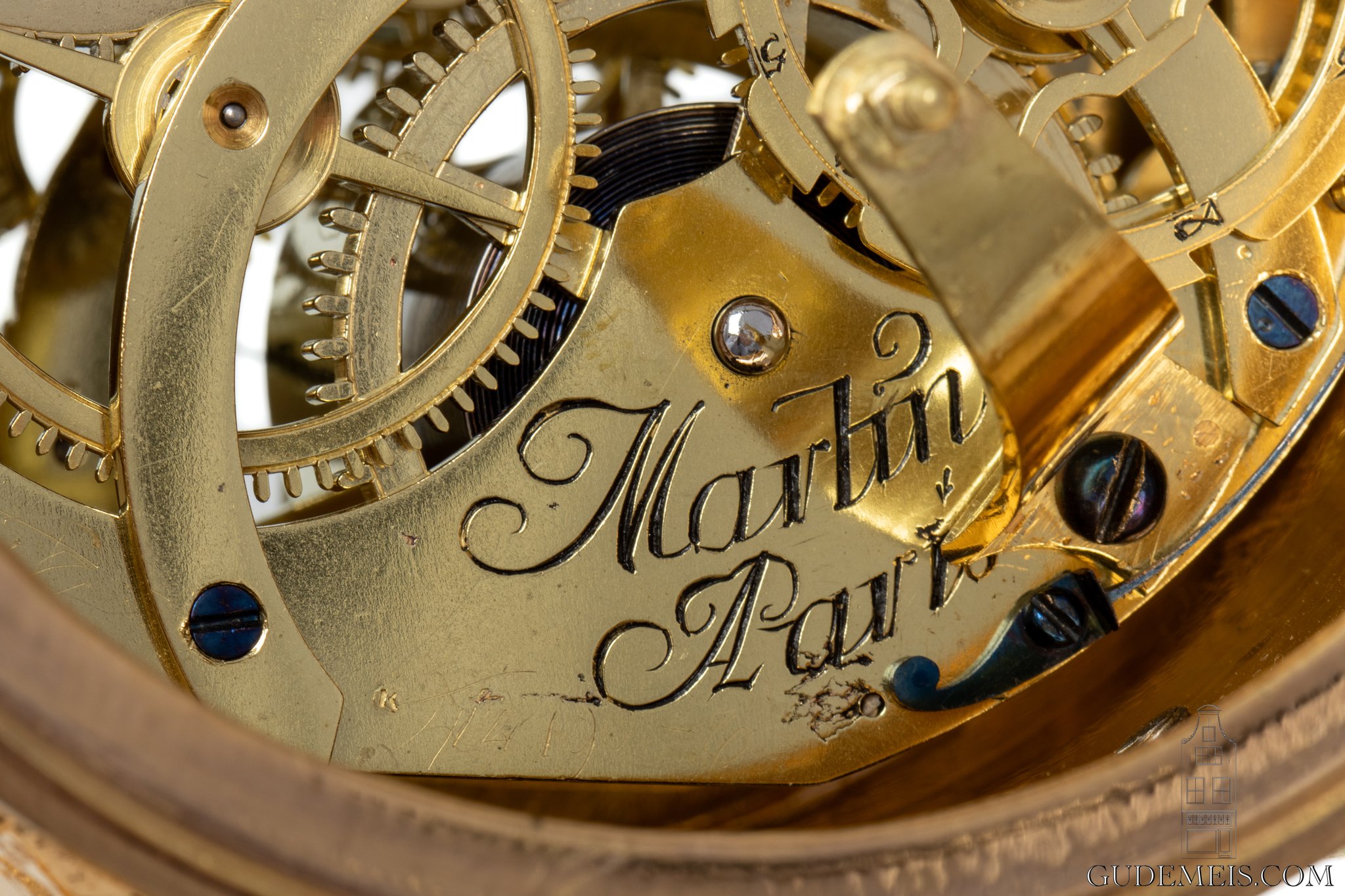
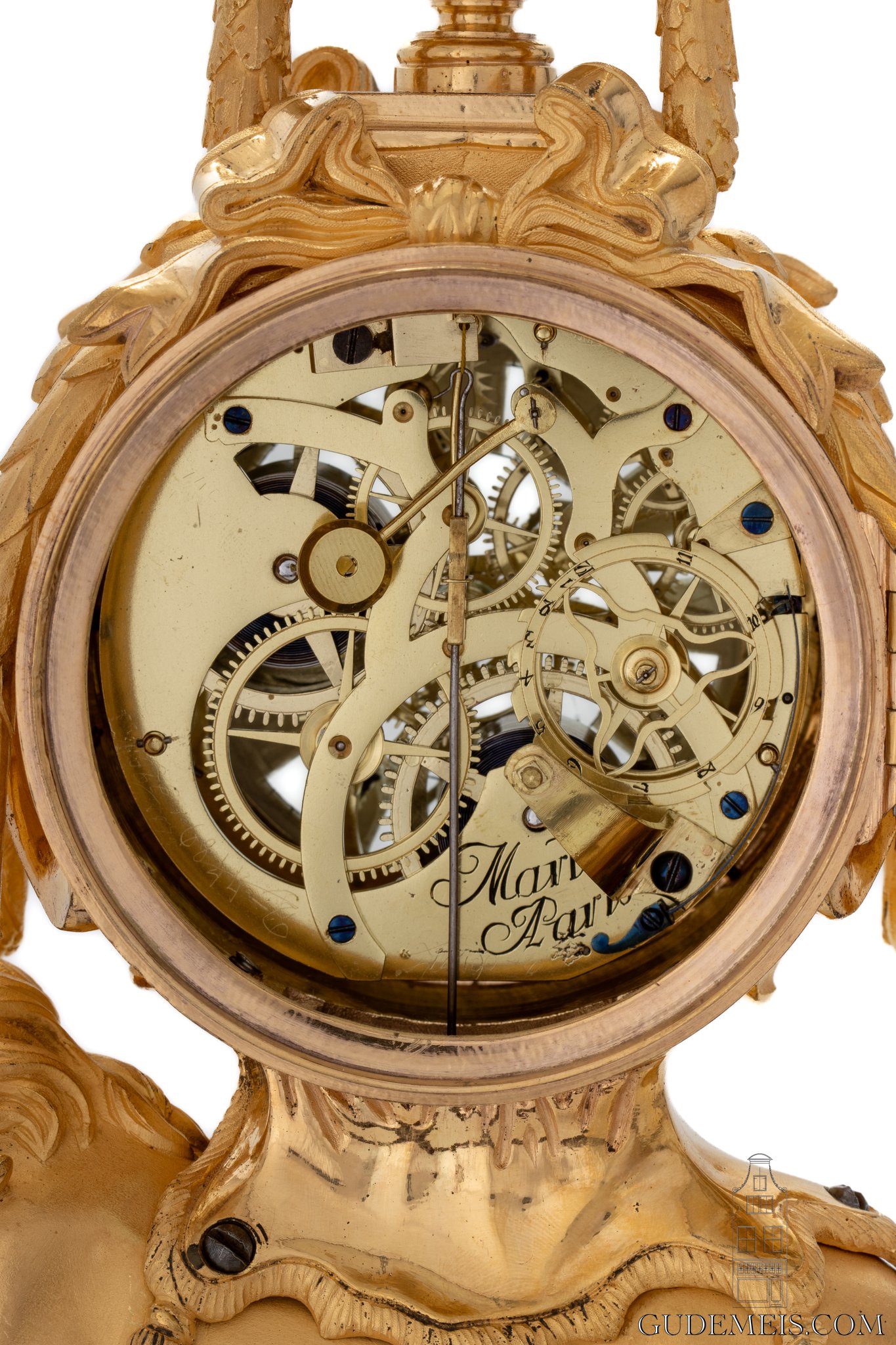
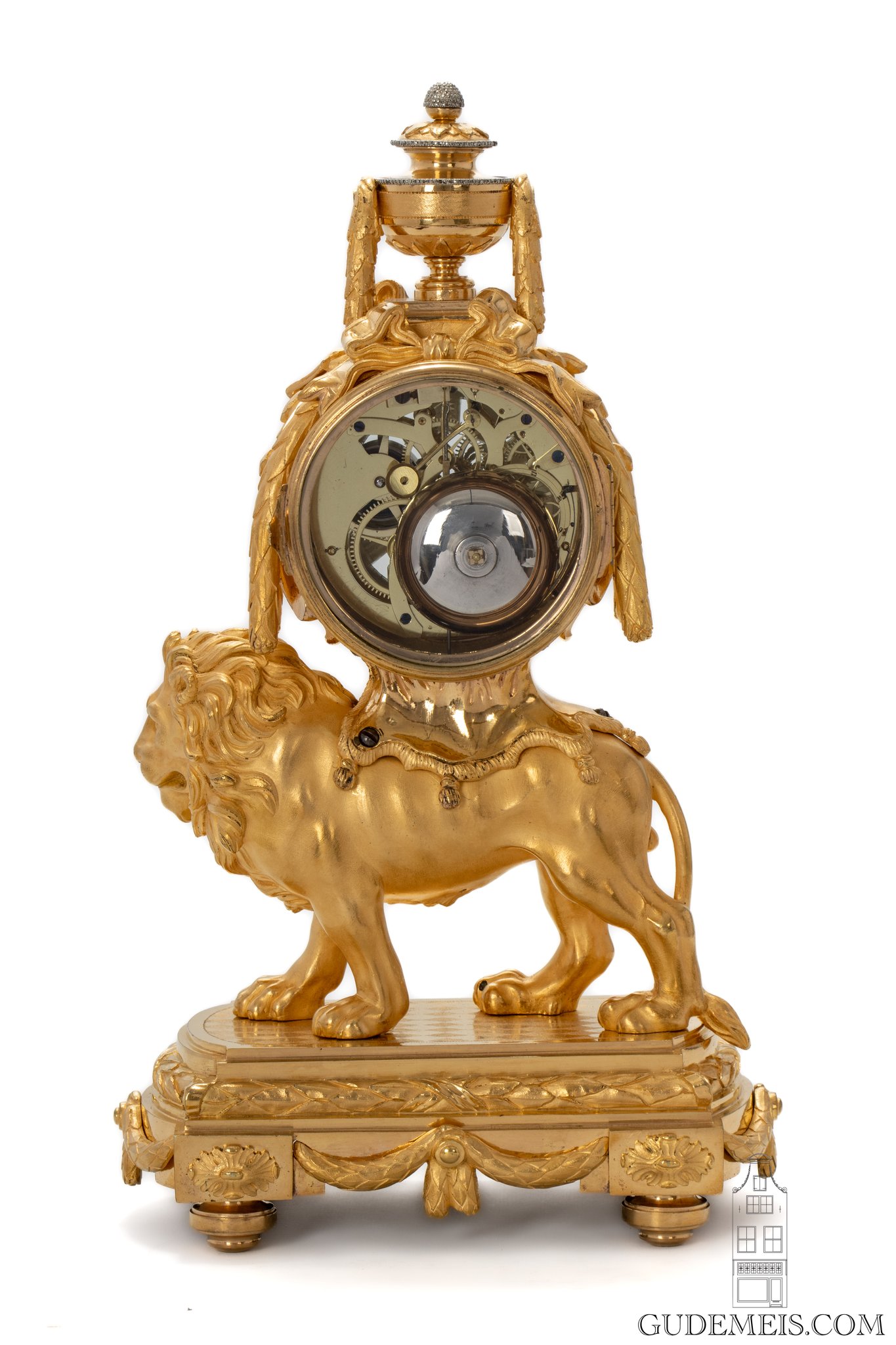
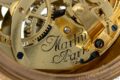
The movement is fully skeletonised with a combination of pierced plates and bridges. Even the two assymetrical positioned spring barrels that drive the movement are open. Because of that one can actually look through the movement. The clock is regulated by anchor escapement in combination with a silk suspended pendulum. The clock has half hour striking on a bell by means of a numbered countwheel. The back of the movement is signed by the clockmaker Martin A Paris.
Marcasite
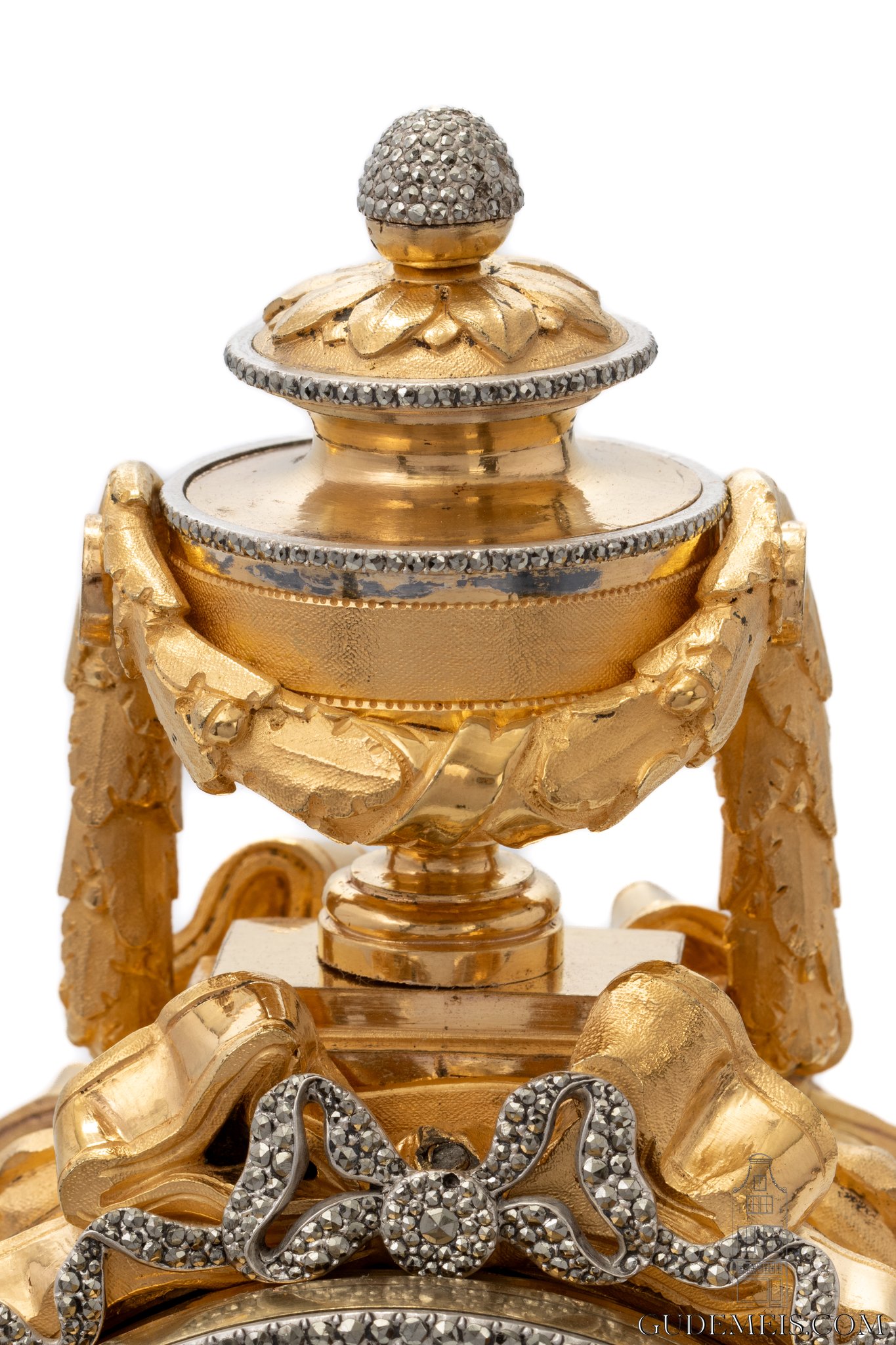
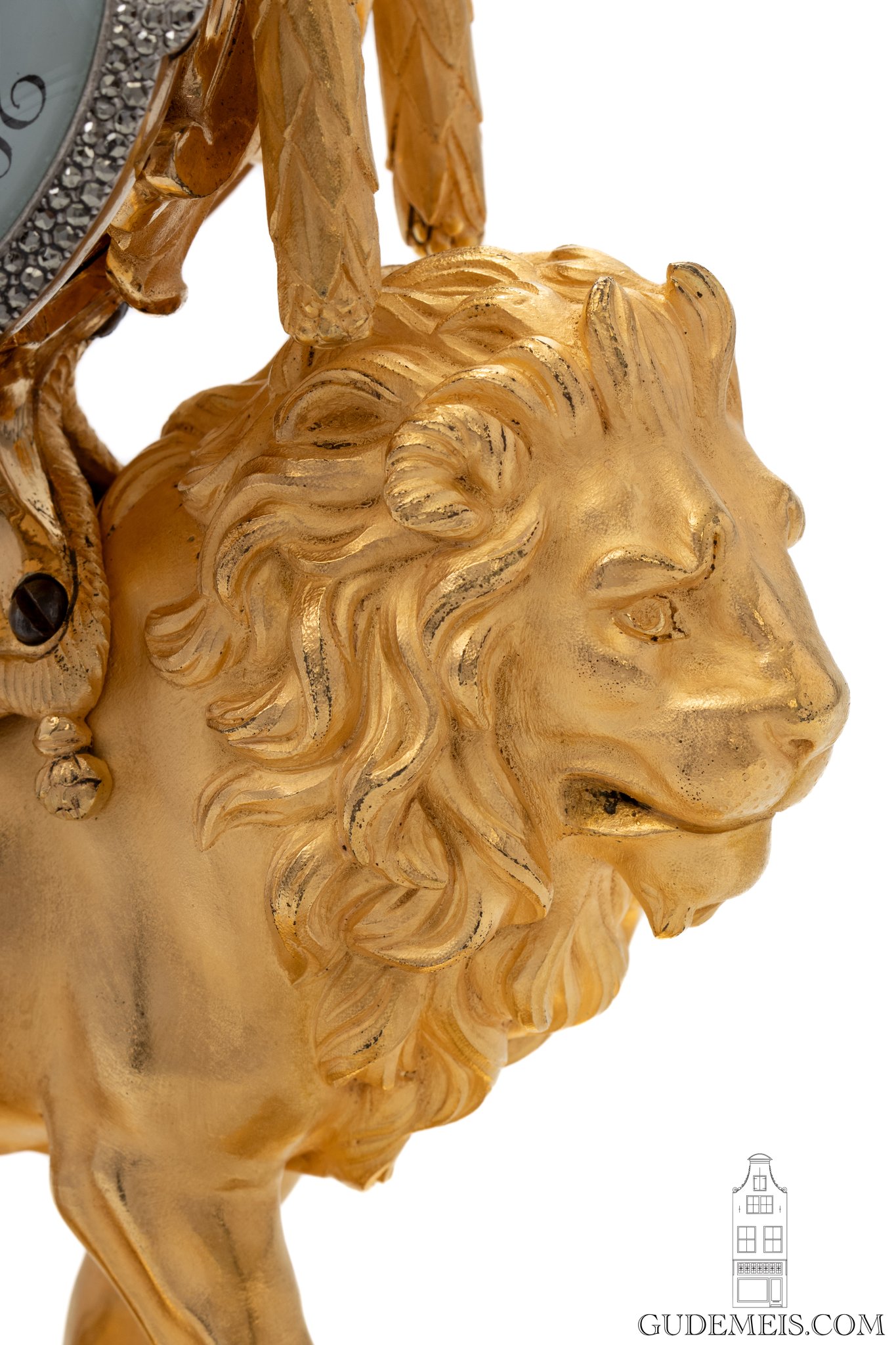
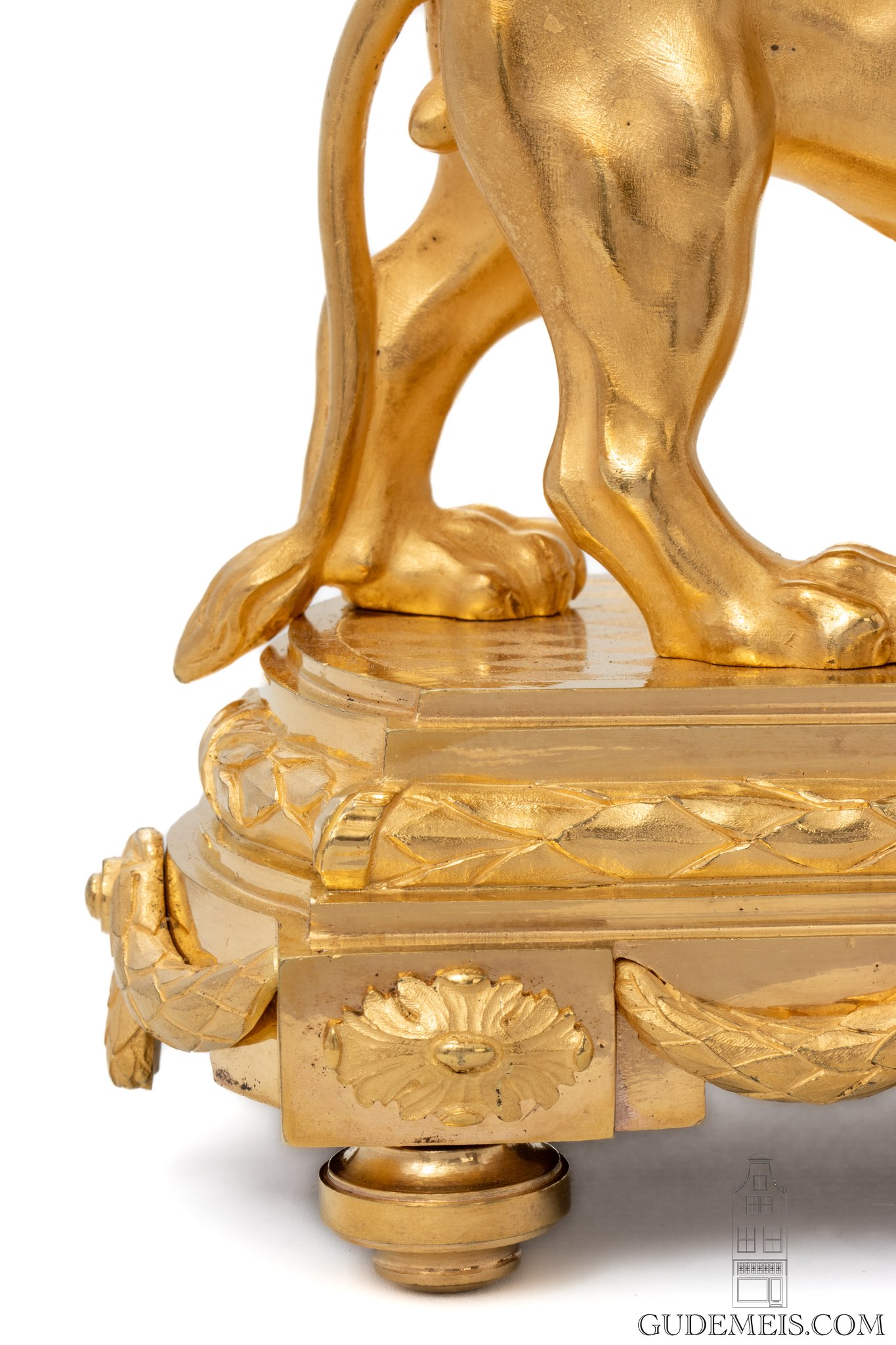
The movement is fitted in a finely chiseled ormolu drum case of which even the inside is gilt. It is surmounted by an urn with trailing garlands inset with marcasite. The bezel and a bow are also inset with marcasite stones. The case is supported by a striding lion. The whole is placed ona stepped oval base with diamond pattern top and lined with a acanthus leaf border, Between the feet are further garlands between rosettes.
François Vion
There are a few other versions of this clock known that have the marcasite embellishment, one of which was formerly in the collection of the ‘Duc de Richelieu’ and was sold in Monaco in October 2023. Another less adorned version of this model is signed Saint-Germain and was sold in Zürich in September 2024. The ‘Petit Palais Museum’ in Paris has an ormolu and bronze version in its collection.
A similar design of a pendule au lion by François Vion stil exists. It is kept in Bibliothèque Doucet in Paris. We know of two mantel clocks ‘au lion’ by the design of François Vion that have marcasite embellishment similar to this clock. One of these two also has a glass dial. There is one in the Ministère d’Etat, now at the Ministry of Finance, Paris. One is in the Pavlosvsk palace, St. Petersburg.
Drawing and a less ornate version illustrated in H. Ottomeyer and P. Pröschel, Vergoldete Bronzen, Munich, 1986, vol. I, p. 193, no. 3.11.6.